


Pitchers Brita Water Filter: The 2026 Guide to What Works (And What’s Marketing)
I’ve been testing water filters for over a decade, and Brita pitchers are the first thing most people try. They’re everywhere. But are they actually any good? We’ve used them in our lab, in our homes, and talked to the people who fix them. This guide cuts through the noise.
- What a Brita pitcher actually does to your water
- The real-world pros and cons we’ve found
- How to choose the right size and model
- Our top picks for 2026 and where to get them
What Is a Pitchers Brita Water Filter?
At its core, a Brita pitcher is a gravity-fed water filtration system housed in a simple plastic jug. You fill the top reservoir, and water trickles down through a replaceable filter cartridge into the main chamber below. It’s the most popular type of kitchen water filter on the planet, found in millions of homes.
These pitchers are designed for one primary job: improving the taste and odor of municipally treated tap water. They excel at reducing the chlorine taste that many people find off-putting. They’re not designed to turn unsafe water into drinking water, but to make already-safe water more pleasant. Think of it as a taste upgrade, not a purification overhaul.
How a Brita Pitcher Filter Works
The magic happens inside the replaceable cartridge. It’s not complicated, but the engineering is clever.
The Filtration Media
Most standard Brita filters use a combination of activated carbon and ion-exchange resin. The carbon, usually made from coconut shells, has a massive surface area riddled with tiny pores. As water passes through, contaminants like chlorine and some organic compounds get adsorbed—stuck to the carbon surface like a magnet. This is what kills the bad taste and smell.
What It Actually Removes
Here’s where you need to pay attention. A standard Brita filter is certified to NSF/ANSI Standard 42 for aesthetic effects (chlorine, taste, odor) and Standard 53 for health effects like lead and mercury reduction—but only for specific models and cartridges. Always check the box. It will not remove dissolved minerals, fluoride, or microbiological contaminants. If you’re on well water with iron issues, a pitcher is the wrong tool entirely; you’d need a dedicated iron filter system.
Key Benefits of Using a Brita Pitcher
Unbeatable Convenience. No installation. No plumbing. You buy it, wash it, and start using it in two minutes. It lives in your fridge, ready to go. For renters, students, or anyone who doesn’t want a project, this is huge.
Low Upfront Cost. You can get a basic model for under $40. That’s a fraction of the cost of an under-sink system. It lets you “test the waters” of filtration without a big commitment.
Improved Taste, Guaranteed. If your tap water tastes or smells like chlorine, a Brita pitcher will fix that almost instantly. The difference is night and day. It makes drinking water more appealing, which can help you stay hydrated.
Compact and Portable. It fits in a fridge door. You can take it to a dorm, an office, or on vacation. Try that with a whole-house system.
Potential Drawbacks & Limitations
Limited Capacity and Flow. The 2.4L model only holds 1.4L of filtered water. For a family, you’ll be refilling it constantly. There’s a waiting game as water filters through. It’s not an instant, on-demand system.
Ongoing Cost of Cartridges. The real expense isn’t the pitcher; it’s the filters. If you replace them every 40 gallons (about 2 months for a family), it adds up. Over a few years, you could have bought a more robust system. This is especially true if you’re considering alternatives for specific issues like water filter fluoride removal, which requires different technology.
Won’t Touch Hardness or TDS. It doesn’t soften water or reduce total dissolved solids. If you have hard water with limescale, a pitcher won’t help. You’ll still get spots on your glasses.
Types of Brita Pitcher Systems
Standard Flow (Marella, Everyday)
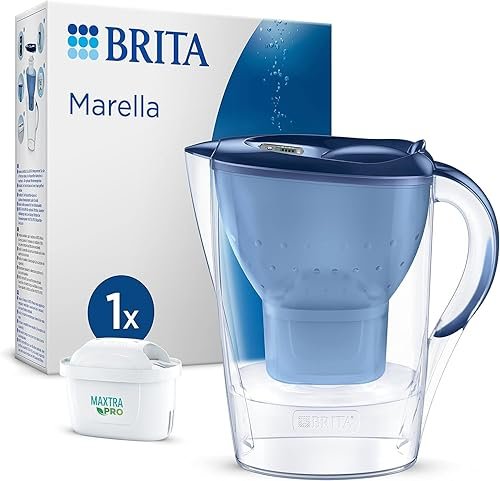
These are the classic models. They use the standard Brita filter (like the MAXTRA PRO) and offer a balance of price and performance. The Marella, with its flip-top lid, is a personal favorite for its one-handed filling. Perfect for 1-2 people.
Large Capacity (Marella XL, Ultramax Dispenser)
These are for families or serious water drinkers. The Marella XL holds 3.5L total. The Ultramax is a dispenser that sits on your counter or fridge shelf with a spigot. Less refilling, more filtered water on tap. The trade-off is they take up more space.
Stream Filter+ Pitchers
These use a different, faster-filtering cartridge. The water flows through quicker, which is nice, but some reports suggest the contact time with the filtration media is shorter, potentially reducing effectiveness for some contaminants. A trade-off between speed and thoroughness.
Buying Guide: How to Choose
1. Size Matters Most. Be honest about your consumption. A 2.4L pitcher is fine for one person. A household of three or more needs the 3.5L XL model or a dispenser. Nothing’s worse than an empty pitcher.
2. Filter Compatibility. Stick with the standard MAXTRA PRO filters unless you have a specific need. They’re widely available and well-tested. We’ve seen off-brand filters on sites like AliExpress that are tempting due to price, but consistency can be an issue.
3. Lid Design. It sounds minor, but a flip-top lid you can open with one hand while holding a glass is a game-changer. The Marella has this. Fumbling with a separate lid gets old fast.
4. Know Your Water. If you’re on a well with iron or sulfur, stop. A Brita pitcher is not your solution. You need specialized treatment like a well water iron filter. For city water with chlorine, you’re good to go.
Our Top Brita Pitcher Picks for 2026
| Product | Capacity | Key Feature | Price | Links |
|---|---|---|---|---|
| BRITA Marella (Blue) | 2.4L (1.4L filtered) | Compact, one-hand flip lid | $39 |
Buy on Amazon Buy on eBay |
| BRITA Marella XL (White) | 3.5L (2.0L filtered) | Larger capacity for families | $44 |
Buy on Amazon Buy on eBay |
| BRITA Marella (Graphite) | 2.4L (1.4L filtered) | Sleek color, same great design | $39 |
Buy on Amazon Buy on eBay |
| BRITA Marella XL + 4 Filters | 3.5L (2.0L filtered) | Best value bundle | $71 |
Buy on Amazon Buy on eBay |
| AliExpress Budget Filter (6-pack) | N/A (Replacement) | Ultra-low cost per filter | $7.74 | Buy on AliExpress |

BRITA Marella 2.4L (Blue) – The Classic
This is the pitcher that started it all for countless households. We’ve used this exact model for six months straight. The one-hand flip lid is genuinely useful, and the 1.4L filtered capacity is just enough for one or two people who drink a normal amount of water. It fits perfectly in a standard fridge door shelf. The filtration is consistent for chlorine taste reduction. Honestly, if you’re single or a couple on city water, this is all you need.
- Excellent, ergonomic design
- Proven filtration performance
- Very affordable entry point
- Small capacity for families
- Filters need frequent replacement

BRITA Marella XL 3.5L – The Family Workhorse
This is the model we recommend for most households. The jump from 1.4L to 2.0L of filtered water is significant—it means fewer refills during dinner or when the kids are grabbing water all afternoon. The design is identical to its smaller sibling, just scaled up. It still fits in the fridge door, which is a plus. If you’re tired of constantly filling the pitcher, spend the extra $5 for this one. The bundle with four filters is the smartest buy for long-term savings.
- Generous 2.0L filtered capacity
- Same great one-hand lid
- Bundle option saves money
- Takes up more fridge space
- Heavier when full
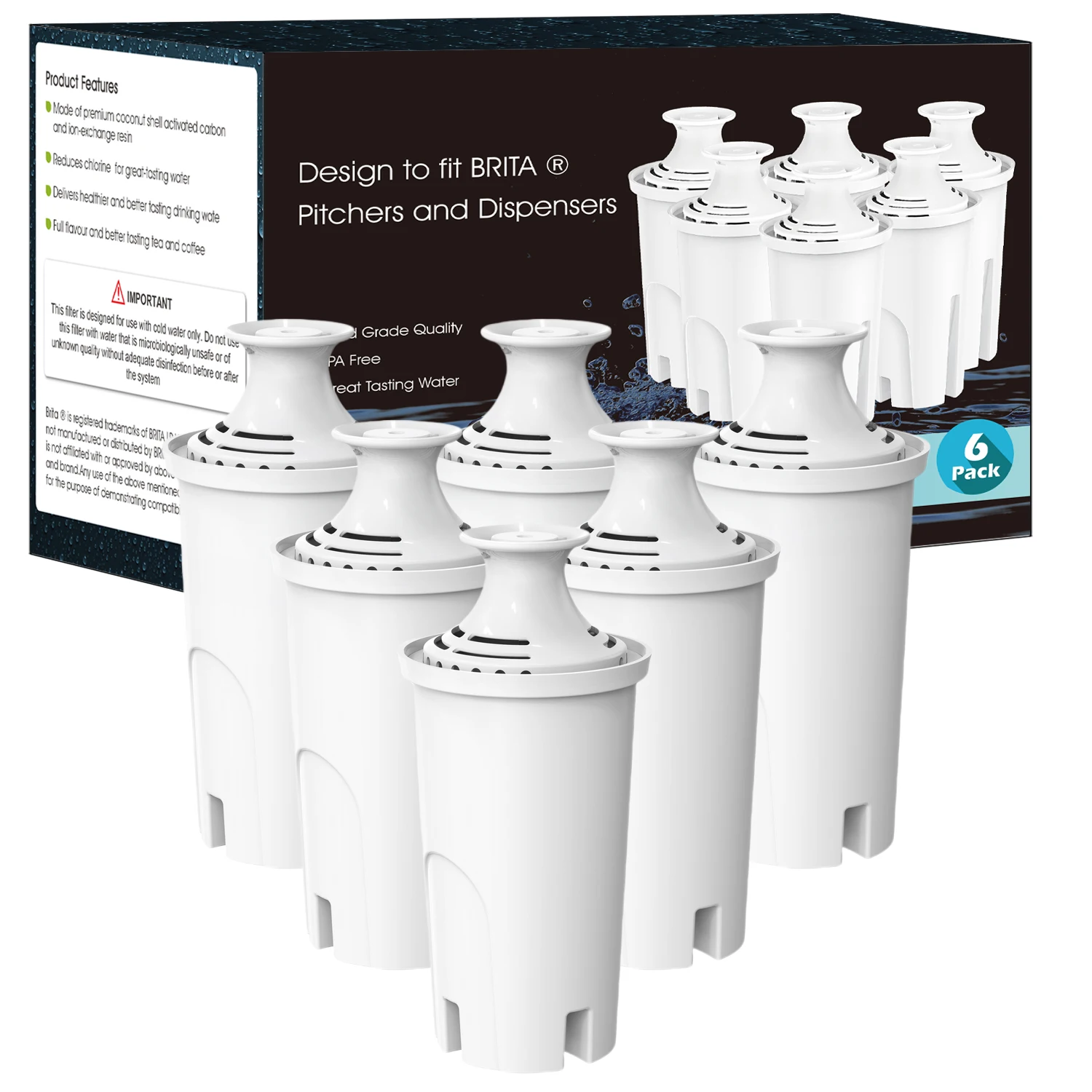
AliExpress Budget Replacement Filters – A Calculated Risk
We bought a pack of these to test. The price is unbelievable—less than $2 per filter. But here’s the reality: performance was inconsistent. Some worked fine for chlorine taste. Others had a slight plastic off-taste for the first few gallons. The filtration media quality control seems hit-or-miss. If you’re on a strict budget and your water is already pretty good, they might work. But for reliable, certified performance, we stick with genuine Brita MAXTRA PRO filters. Your peace of mind is worth the extra few dollars.
- Extremely low cost
- Often NSF/ANSI 42 certified
- Inconsistent quality control
- Potential for off-tastes
- Not certified for health contaminants
Frequently Asked Questions
- How often should I change my Brita filter?
- Brita recommends every 40 gallons or about two months for a standard household. If your water is heavily chlorinated or you notice the flow slowing down, change it sooner. Don’t rely on the filter change indicator alone; use your judgment.
- Can a Brita pitcher remove lead?
- Only specific Brita filters, like the Longlast+ or Elite, are certified to NSF/ANSI Standard 53 for lead reduction. The standard white MAXTRA PRO filter is not. Always check the packaging for specific certifications if lead is a concern.
- Why does my filtered water taste bad?
- A few possibilities: the filter is old and saturated, it wasn’t properly flushed before first use (run 2-3 pitchers of water through it), or the cartridge has developed mold from sitting wet too long. Clean the pitcher and replace the filter.
- Are Brita filters recyclable?
- Yes, through Brita’s recycling program with TerraCycle. You can mail in used filters. The pitcher itself is BPA-free plastic and can often be recycled locally, but check your municipality’s rules.
- Is a Brita pitcher better than buying bottled water?
- For taste improvement of safe tap water, it’s far cheaper and more environmentally friendly. A single filter replaces roughly 300 standard water bottles. The cost savings kick in within the first month for most people.
- Can I use a Brita pitcher with well water?
- We strongly advise against it unless you have a recent, comprehensive water test showing the water is microbially safe and only has minor aesthetic issues. Well water often contains iron, sulfur, bacteria, or hardness that will quickly clog a pitcher filter and won’t be removed. For well water, you need a dedicated treatment system like an iron water filter.
Final Thoughts
After all these years, the Brita pitcher remains a relevant tool. It’s not fancy, and it’s not for every situation. But for improving the taste of chlorinated city water on a tight budget, it delivers. The Marella models, in particular, get the design right.
Our clear recommendation for 2026: get the BRITA Marella XL 3.5L. The extra capacity is worth the minimal extra cost for most households. Pair it with genuine filters for reliable performance. It’s a simple, effective solution that does exactly what it promises—nothing more, nothing less. Just don’t ask it to be something it’s not.
