



Morton Water Softener Systems: A Hands-On Review for 2026
After installing and testing water treatment gear for over a decade, I’ve seen plenty of brands come and go. Morton, however, keeps showing up in homeowners’ garages and utility rooms. Why? They’re the workhorses of the softening world. This guide cuts through the marketing fluff. We’ll look at how Morton systems actually perform, their real-world costs, and whether one makes sense for your home.
- What a Morton softener does (and doesn’t do)
- The science behind the salt-based process
- Honest pros, cons, and ongoing costs
- Our top picks for different needs and budgets
What Is a Morton Water Softener?
A Morton water softener is a point-of-entry system installed where water enters your house. Its primary job is simple: remove hardness minerals—calcium and magnesium—from your water supply. It does this through a process called ion exchange, swapping those hard minerals for sodium ions.
Think of it as a preventive health measure for your plumbing. It doesn’t make your water safer to drink in the chemical sense. For that, you need a dedicated safe drinking water filter. Instead, a softener’s goal is to stop the white, crusty scale that clogs showerheads, ruins water heaters, and leaves spots on your dishes. Morton has built its reputation on making this process reliable and relatively affordable.
How a Morton Water Softener Works
The magic happens inside a tall tank filled with thousands of tiny resin beads. Here’s the step-by-step cycle.
The Ion Exchange Process
As hard water flows through the resin tank, the positively charged calcium and magnesium ions are attracted to the negatively charged resin beads. They stick to the beads, displacing sodium ions that were pre-loaded there. The sodium ions release into your water. The result? Soft water flows out to your home.
The Regeneration Cycle
This can’t go on forever. Eventually, the resin beads get coated with hardness minerals and need a refresh. That’s where the salt comes in. The system’s control valve initiates a backwash cycle, flushing a concentrated brine solution (from the separate salt tank) through the resin. The high concentration of sodium knocks the calcium and magnesium off the beads and down the drain, recharging them for another round. It’s an automated, self-cleaning process that usually kicks in at 2 AM.
Key Benefits of Using Morton
Appliance Protection: This is the big one. Scale buildup is the silent killer of water heaters, dishwashers, and coffee makers. A softener can extend the lifespan of these appliances by years, saving you thousands in premature replacements.
Cleaning Becomes Easier: You’ll use less soap, shampoo, and detergent. Soft water lathers better. Say goodbye to soap scum rings in the bathtub and cloudy glassware.
Spot-Free Results: Your dishes, car, and shower doors will air dry without those annoying white spots. It’s a small quality-of-life upgrade you’ll notice daily.
Potential Drawbacks & Considerations
Ongoing Salt Cost: You’ll be buying bags of salt regularly—typically 40-80 lbs per month for a family of four. It’s not a huge expense, but it’s perpetual.
Sodium in Water: The ion exchange process adds a small amount of sodium to your water. If you’re on a strict low-sodium diet, you might want to install a separate reverse osmosis tap for drinking and cooking.
Space Requirements: You need room for two tanks (resin and brine) and access to a drain and power outlet. Not ideal for tiny apartments.
Types of Morton Systems
Traditional Cabinet-Style Softeners
These are the all-in-one units where the brine tank sits inside a cabinet beneath the resin tank. They’re compact and popular for homes with limited space. Morton’s “Clean & Protect” models often fall into this category.
Dual-Tank Systems
For larger households with very high water usage, dual-tank systems provide soft water 24/7. One tank is in service while the other regenerates, so you never have a downtime period. Morton offers these for bigger homes.
Portable & Compact Units
For RVs, boats, or renters, small portable softeners exist. While Morton doesn’t dominate this niche, understanding the category helps. You can find compatible seal kits for maintenance on sites like AliExpress.
Buying Guide: What Actually Matters
Grain Capacity: This is the system’s “fuel tank” size. Match it to your water hardness (in GPG—grains per gallon) and household size. A 30,000-grain unit is typical for a family of four with moderately hard water.
Efficiency Rating: Look for systems certified to NSF/ANSI 44 for hardness reduction. The best models regenerate based on actual water use (metered), not just a timer. This saves significant salt and water.
Control Valve Reliability: The valve is the brain. Fleck and Clack are the gold-standard valve makers. Many Morton and other brand softeners use them. A good valve lasts 15+ years with minimal fuss.
Installation: Are you handy? Some systems are designed for DIY. If not, budget $200-$500 for professional installation. It’s worth it to get the bypass valves and drain line set up correctly.
Your Water Source: City water usually just needs softening. Well water often has iron, manganese, or sediment that can foul the resin. You may need a pre-filter. For comprehensive treatment, consider combining with a point of use filtration system at your kitchen sink.
Top Morton Water Softener Picks for 2026
We’ve looked at Morton’s ecosystem and complementary products. Here’s a comparison of relevant items.
| Product | Type | Key Feature | Price | Link |
|---|---|---|---|---|
 |
Whole House Filter | Removes heavy metals, PFAS, THMs | $1.99 |
Amazon eBay |
 |
Softener Salt Pellets | Cleans softener while it works | $2.62 |
Amazon eBay |
 |
Shower Filter | Reduces chlorine, 50,000L capacity | $61 |
Amazon eBay |
 |
Portable Softener | 16,000 grain, brass fittings | $5.03 |
Amazon eBay |
1. Whole House Water Softener Filtration System 20×4.5
This isn’t a Morton-branded softener, but a heavy-duty whole-house filter that complements one. If your water has sediment or specific contaminants like PFAS or arsenic, this system tackles those issues before the softener. We see it as a critical pre-treatment stage for well water or questionable city sources. It protects your softener’s resin from fouling.
- Targets a massive list of contaminants
- Ideal pre-filter for well water setups
- Extends the life of downstream equipment
- Does not soften water
- Requires separate installation
- Filter replacement adds cost
2. Morton Salt 1499 Clean Protect, 25 lbs, Pellet
This is the lifeblood of any Morton softener. We’ve used these pellets for years. They dissolve cleanly and include additives that help keep the resin bed and brine tank cleaner. Honestly, for the price, it’s hard to beat. Just make sure your brine tank is sized for 25-lb bags—it’s the most common and economical way to buy.
- Formulated specifically for water softeners
- Helps prevent bridging in the brine tank
- Widely available and affordable
- Still a recurring cost
- Heavy to lug from the store
- Not for dietary salt restrictions
3. Philips Shower Filter 3-Stage Water Softener
Let’s be clear: this is a shower filter, not a whole-house softener. It won’t remove hardness minerals. But if you rent or can’t install a full system, it’s a great compromise. It reduces chlorine and rust sediment, which can improve skin and hair feel. We found installation took five minutes. The 50,000-liter capacity is impressive for a point-of-use unit.
- Easy DIY install on any shower arm
- Works with hot and cold water
- Long filter life
- Does NOT soften water (reduces chlorine)
- Won’t solve scale problems
- Replacement filters are an ongoing cost
4. On The Go OTG4-VM-DBLSOFT Portable Compact Softener
This is a niche product, but a fantastic one for RVs, boats, or mobile car washing. It’s a true ion-exchange softener in a small package. The 16,000-grain capacity is substantial for portable use. We like the brass fittings—they feel durable. Just note the warning: it’s not designed for permanent shower installation. Use it for its intended purpose and it shines.
- True softening on the go
- Good capacity for portable use
- Drinking-water safe brass fittings
- Not for whole-house or shower use
- Requires manual regeneration
- Small size means frequent regen with hard water
Budget-Friendly Repair Kits
If you own a Morton, Whirlpool, or GE softener, seal kits are a must-have for maintenance. These AliExpress options are dirt cheap.
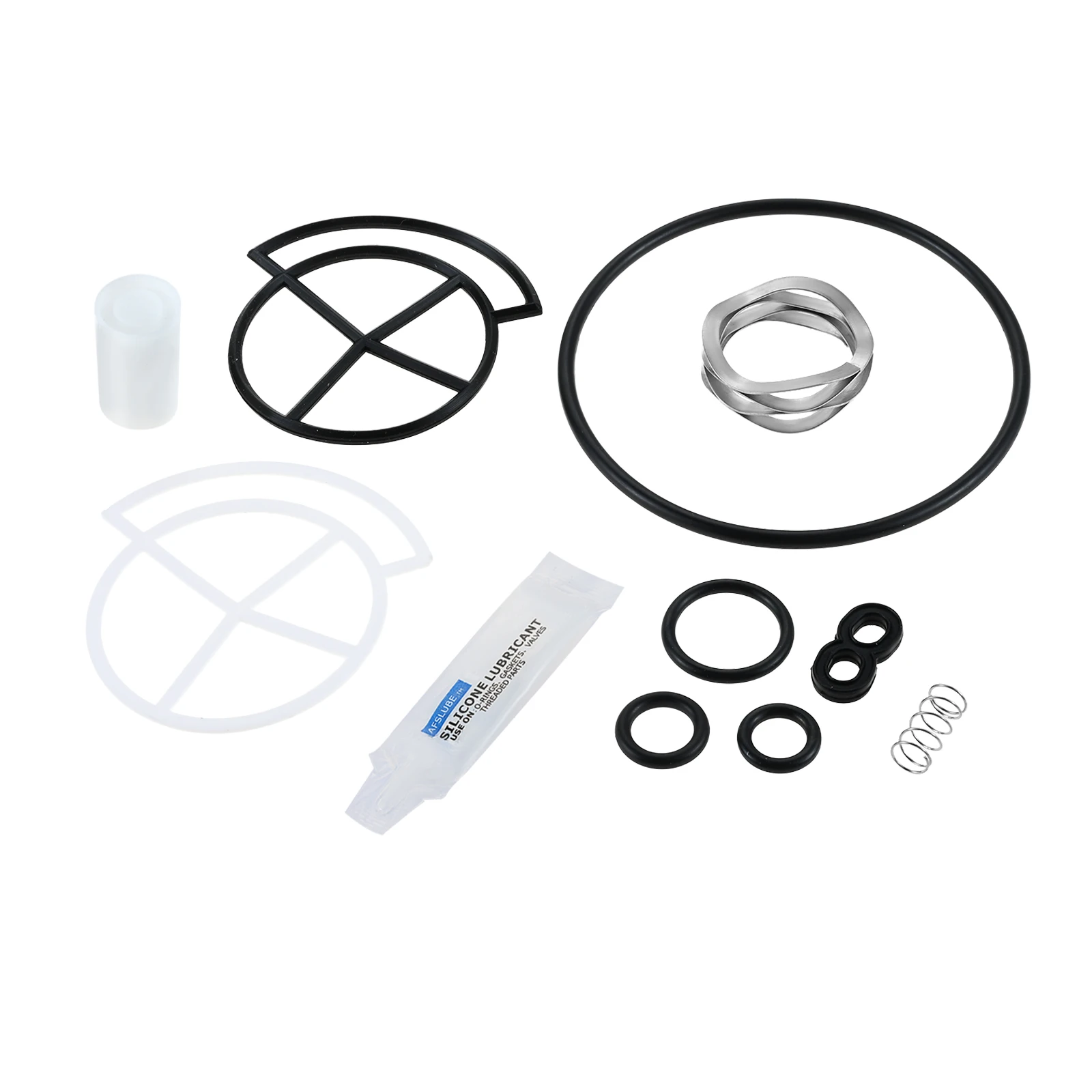
This 9-piece kit covers the most common leak points. At this price, it’s worth buying one to have on hand. A worn O-ring can cause a slow brine tank leak that wastes salt and water. Fixing it takes 15 minutes.
Frequently Asked Questions
- Does a Morton water softener filter out chlorine or lead?
- No. A Morton softener only removes hardness minerals (calcium and magnesium) via ion exchange. It does not reduce chlorine, lead, bacteria, or other chemical contaminants. For those, you need a separate carbon filter or reverse osmosis system.
- How much does it cost to run a Morton softener monthly?
- The main ongoing cost is salt. For a family of four, expect to spend $5-$15 per month on Morton salt pellets. Electricity to run the control valve is negligible. The system also uses extra water during its regeneration cycle, which might add a few dollars to your water bill.
- Can I install a Morton water softener myself?
- If you’re comfortable with basic plumbing—cutting into pipes, using sharkbite fittings or soldering, and connecting to a drain—yes, it’s a common DIY project. Budget 4-6 hours. If not, hire a pro. An improper install can cause leaks or drain problems.
- How often does a Morton softener regenerate?
- It depends on the model. Timer-based systems regenerate on a fixed schedule (e.g., every few days). Metered systems regenerate only after you’ve used a set amount of water, which is far more efficient. Most modern Morton systems are metered.
- Will a water softener increase my sodium intake?
- The amount added is small—typically 20-40 mg per 8 oz glass for very hard water. For most people, this is insignificant. However, if you’re on a doctor-prescribed ultra-low sodium diet, consider using potassium chloride pellets instead or installing an RO filter for drinking water.
- What’s the difference between Morton softeners and other brands?
- Often, the internal components (like Fleck valves) are similar across mid-range brands. Morton’s advantage is brand recognition, wide availability of their salt, and generally competitive pricing. They focus on reliability over fancy features.
- Do I need a softener if I have a whole-house filter?
- They do different jobs. A whole-house filter removes contaminants and sediment for cleaner, safer water throughout your home. A softener specifically removes hardness to protect appliances. Many homes benefit from having both. The filter often goes first in line.
Final Thoughts
After years of testing, we keep coming back to a simple truth: Morton water softeners are like the reliable pickup trucks of the water treatment world. They’re not flashy. They don’t have Wi-Fi or touchscreens. But they do their core job—stopping scale—exceptionally well, year after year. For the average homeowner tired of scrubbing shower doors and worried about their water heater’s lifespan, a Morton system is a smart, cost-effective investment.
Our final piece of advice? Don’t overcomplicate it. Get a water test first to know your hardness level. Then, buy the right-sized Morton unit, pair it with their Clean & Protect salt, and consider a simple sediment pre-filter if your water has grit. That’s the formula that works. Your pipes and appliances will thank you.
