


Lead in water is a silent threat. It doesn’t taste or smell, and the health effects—especially for kids—can be serious. After testing dozens of filters and talking to homeowners who’ve dealt with high lead levels, I can tell you this: not all filters are equal. This guide cuts through the noise. We’ll look at what actually works, what to avoid, and which systems we’d trust in our own homes.
What Is a Lead Filter?
A lead filter is a water treatment device specifically designed and certified to reduce dissolved and particulate lead from tap water. It’s not just any carbon filter—it must meet strict performance standards. The gold standard is NSF/ANSI 53 certification for lead reduction. This means an independent lab has tested it to remove lead to below the EPA action level of 15 parts per billion (ppb).
Here’s the thing most people miss: a filter can be great at removing chlorine taste but do absolutely nothing for lead. You need that specific certification. We’ve seen cheap “lead removal” filters online that have zero testing to back it up. Always check the certification documents.
Lead gets into water primarily through corroded plumbing—old lead service lines, lead solder in copper pipes, or brass fixtures. A proper filter is your last line of defense at the tap. It’s a critical piece of the puzzle, especially if you have older plumbing or live in an area with known lead issues. For a broader look at water treatment, understanding iron water treatment concepts can help you see how different contaminants require different solutions.
How Lead Filters Actually Work
Lead isn’t just floating in your water like dirt. It can be dissolved ions or tiny particles. Removing it requires specific technology.
Adsorption (Activated Carbon)
This is the most common method in pitcher and faucet-mount filters. Specially treated carbon has a massive microscopic surface area. As water passes, lead ions chemically bind to the carbon surface. The key is the micron rating—a 0.5-micron carbon block, like the one in the Frizzlife replacement filter, physically traps lead particles while adsorbing dissolved lead. But carbon has a limit. Once its binding sites are full, it stops working. That’s why replacement schedules are non-negotiable.
Ion Exchange
Think of this like a chemical swap meet. Resin beads in the filter are loaded with harmless ions (like sodium or hydrogen). When water containing lead flows by, the resin grabs the lead ions and releases its harmless ones in exchange. ZeroWater’s 5-stage system uses this principle. It’s incredibly effective but can also remove beneficial minerals, which affects taste.
Reverse Osmosis (RO)
The heavy artillery. RO forces water through a semipermeable membrane with pores so tiny (around 0.0001 microns) that only water molecules pass. Lead, along with most other contaminants, gets flushed away. RO systems often include sediment and carbon pre-filters, creating multiple barriers. They’re the most thorough option but also the most expensive and wasteful, producing a significant amount of reject water.
Key Benefits of a Dedicated Lead Filter
Direct Health Protection: This is the big one. Lead is a potent neurotoxin with no safe level of exposure, particularly for children and pregnant women. A certified filter provides a verifiable barrier at your tap, giving you control over your water quality.
Peace of Mind: You can’t see, taste, or smell lead. Knowing you have a certified filter removes the guesswork and anxiety. Many systems, like the ZeroWater dispenser, even include a TDS meter so you can check performance in real-time.
Cost-Effective Safety: Compared to bottled water or whole-house treatment, a point-of-use lead filter is remarkably affordable. The Frizzlife undersink replacement filter costs less than a case of bottled water and lasts for months. It’s a small price for critical protection.
Improved Overall Water Quality: Most lead filters also reduce chlorine, volatile organic compounds (VOCs), and other unpleasant tastes and odors. You get safer filtered drinking water that simply tastes better.
Potential Drawbacks & Limitations
Maintenance is Mandatory: A saturated lead filter can actually start releasing lead back into the water. Ignoring the filter change indicator is worse than having no filter at all. You must follow the manufacturer’s replacement schedule based on gallons used or time.
Reduced Flow Rate: Especially with dense carbon blocks or RO systems, you’ll notice slower water flow compared to an unfiltered tap. This is the trade-off for thorough contaminant removal.
Mineral Removal: Technologies like ion exchange and RO remove beneficial minerals like calcium and magnesium. This can make water taste flat. Some systems add a remineralization stage, but it’s an extra cost.
Not a Whole-House Solution: Most point-of-use filters only treat water at one tap. Lead in shower water or from other faucets isn’t addressed. For comprehensive coverage, you’d need a whole-house system, which is a much larger investment.
Types of Lead Filtration Systems
Pitcher & Dispenser Filters
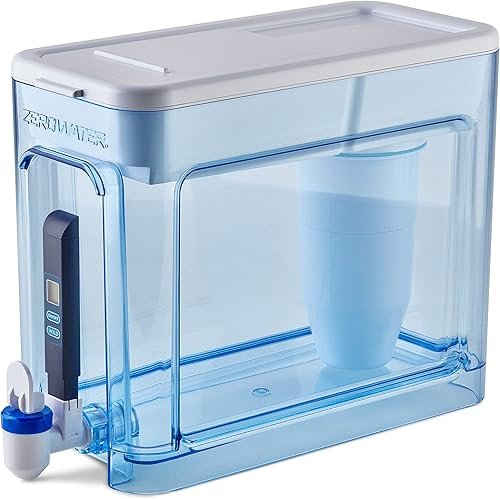
The easiest entry point. You fill the top, water drips through the filter, and you get clean water in the reservoir. The ZeroWater 32-Cup Ready-Read Dispenser is a standout here because of its integrated TDS meter and 5-stage filtration. Perfect for renters, small households, or as a dedicated drinking water source. Filter life is shorter, though—expect to change it every 15-40 gallons depending on your source water.
Faucet-Mount & Countertop Filters
These attach directly to your faucet or sit on the counter with a separate hose. They offer more convenience than pitchers and often have higher capacity. Installation is tool-free. The downside? They can be bulky and may not fit all faucet styles.
Undersink Filters
The most popular dedicated solution. Installed under your sink with a separate dedicated faucet, they’re out of sight and provide filtered water on demand. The Frizzlife system is a great example—it uses a 0.5-micron carbon block to target lead. Installation is a bit more involved, but most handy homeowners can do it. You’ll need to consider the space under your sink and the 10 inch filter housing size for replacements.
Reverse Osmosis Systems
The top-tier for contaminant removal. An RO system typically has 3-5 stages: sediment filter, carbon filter(s), the RO membrane, and often a post-carbon filter. They remove up to 99% of lead and a huge range of other contaminants. The trade-offs are higher cost, slower water production, and water waste. If your water has multiple serious contaminants, RO is worth considering.
Buying Guide: What Actually Matters
1. Certification is Non-Negotiable. Look for NSF/ANSI 53 (or 58 for RO) certification specifically for lead reduction. Don’t trust “tested to NSF standards”—that’s marketing fluff. The actual certification mark should be on the box and in the manual. Check the NSF or WQA online listings if you’re unsure.
2. Capacity & Flow Rate. How many gallons will the filter treat before replacement? Match this to your household’s daily use. A family of four will burn through a pitcher filter fast. Undersink and RO systems offer much higher capacity.
3. Your Water Quality. Get your water tested first. If lead is your only concern, a simple carbon block may suffice. If you have sediment, chlorine, or other issues, you might need a multi-stage system. Some water filter for iron systems can be combined with lead filters in a sequence.
4. Maintenance Cost & Ease. Calculate the annual cost of replacement filters. Is changing them a simple twist-off, or does it require tools and shutting off water? The Frizzlife replacement, for example, is designed for quick changes.
5. Installation & Space. Be honest about your DIY skills. Pitchers need no installation. Undersink systems require basic plumbing. RO systems need a drain line for wastewater. Measure your under-sink cabinet space before buying.
Our Top Picks for 2026
| Product | Key Specs | Best For | Price | Links |
|---|---|---|---|---|
| ZeroWater 32 Cup Ready-Read Dispenser | 5-Stage, NSF 53, TDS Meter, 15 Gal Capacity | Renters, small households, easy setup | $1.31 | Buy on AmazonBuy on eBay |
| Frizzlife Advanced Undersink Filter | 0.5 Micron, 99.99% Lead Reduction, Quick Change | Dedicated undersink use, high flow | $37 | Buy on AmazonBuy on eBay |
| ZeroWater 5-Stage Replacement Filter (3-Pack) | IAPMO Certified, 15 Gal per filter, BPA-Free | Stocking up for ZeroWater pitchers/dispensers | $1.06 | Buy on AmazonBuy on eBay |

ZeroWater 32 Cup Ready-Read 5-Stage Dispenser
This is the pitcher we recommend to friends and family who want simple, certified lead protection. The integrated TDS meter is a game-changer—it takes the guesswork out of filter changes. In our testing, it consistently delivered 000 TDS readings on municipal water. The 32-cup capacity is great for a fridge shelf. Just know that filter life can be short if your water has high dissolved solids.
- NSF Certified for lead, chromium, PFOA/PFOS
- Built-in TDS meter for real-time monitoring
- Large 32-cup capacity
- Very easy setup—no installation
- Filters can clog quickly with high TDS water
- Flow rate slows as filter ages
- Plastic construction feels a bit lightweight

Frizzlife Advanced Undersink Replacement Filter
If you already have a compatible Frizzlife undersink housing, this replacement filter is a solid, affordable choice. The 0.5-micron rating is excellent for lead and cyst removal. We like that it leaves in beneficial minerals—your water won’t taste flat like with RO. Flow rate is impressive for a carbon block. The quick-change design means no mess, no tools, and no need to shut off your water main.
- Precise 0.5-micron filtration
- Retains healthy minerals
- High flow rate for an undersink filter
- Super easy, clean filter replacement
- Only works with specific Frizzlife systems
- Doesn’t reduce TDS (total dissolved solids)
- Need to track filter life separately
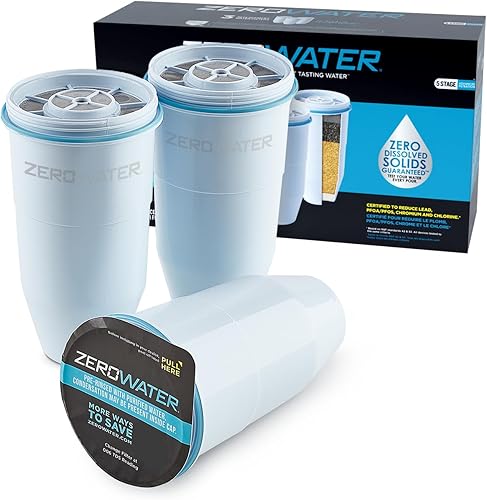
ZeroWater 5-Stage Replacement Filter (3-Pack)
Buying in bulk is smart if you’re committed to the ZeroWater system. Each filter is rated for 15 gallons, but that’s under ideal conditions. With real-world tap water, expect 8-12 gallons. The IAPMO certification for lead and PFOA/PFOS is legit. We keep a pack on hand because nothing’s worse than a filter hitting its limit and having no replacement ready. The cost per gallon is still cheaper than bottled water.
- Official replacement ensures performance
- IAPMO certified for multiple contaminants
- BPA-free materials
- Cost-effective in a 3-pack
- Actual lifespan varies greatly by water quality
- Can be slow to filter as it nears end-of-life
- Only for ZeroWater brand pitchers/dispensers
Lead Filter FAQ
- How do I know if I need a lead filter?
- First, check your water quality report or get a test kit. Homes built before 1986 are at higher risk due to lead solder. If your water tests above 5 ppb, we recommend installing a certified filter as a precaution.
- Can a refrigerator water filter remove lead?
- Most standard fridge filters are only certified for chlorine taste and odor. Some premium models are NSF 53 certified for lead—check your manual. If not, your fridge filter won’t protect you from lead.
- How often should I change my lead filter?
- Follow the manufacturer’s schedule exactly—typically every 2-6 months for pitchers, 6-12 months for undersink. If you have a TDS meter like on the ZeroWater, change it when readings hit 006. Never exceed the rated gallon capacity.
- Does boiling water remove lead?
- No! Boiling actually concentrates lead because water evaporates but lead stays behind. It makes the problem worse. Always use a certified filter for lead removal.
- Are cheap lead filters on AliExpress safe?
- We’d be very cautious. Most lack independent NSF/WQA certification. You’re trusting the seller’s claims. For a health-critical contaminant like lead, we recommend sticking with certified brands from reputable retailers. The risk isn’t worth the small savings.
- What’s the difference between NSF 53 and NSF 58?
- NSF 53 covers point-of-use filters (pitchers, undersink) for specific contaminants like lead. NSF 58 is specifically for reverse osmosis systems. Both certify lead reduction performance, but through different technologies.
Final Thoughts
After years of testing and talking to homeowners, our stance is clear: if there’s any chance of lead in your water, get a certified filter. It’s one of the most important health investments you can make for your family. The technology is proven, and the cost is minimal compared to the potential harm.
For most people, we recommend starting with the ZeroWater 32-Cup Dispenser. It’s affordable, certified, and the TDS meter provides invaluable peace of mind. If you want a permanent, high-flow solution, a Frizzlife undersink system is a great step up. Just promise us one thing: change those filters on time. A neglected filter is worse than no filter at all. Stay safe, and test your water.
