


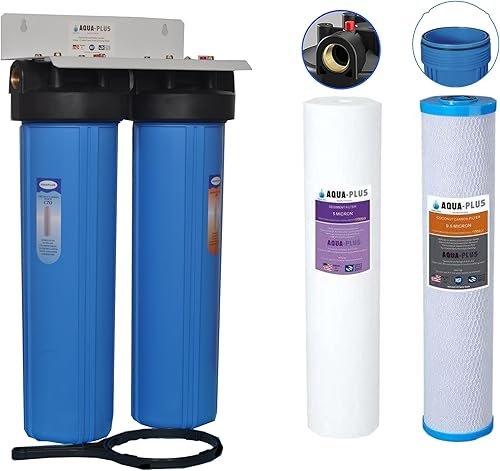
The Complete House Filter Guide: What to Know Before You Buy (2026)
After testing dozens of systems and talking to countless plumbers, I can tell you this: most homeowners overthink their house filter purchase. They get lost in micron ratings and marketing jargon. The truth is simpler. It’s about matching a system to your actual water problems. This guide cuts through the noise. We’ll cover what these filters are, how they work, and which ones are actually worth your money in 2026.
What Is a House Filter?
A house filter—often called a whole-house filter or point-of-entry (POE) system—is a water treatment unit installed where the main water line enters your home. Its job is simple but big: treat all the water flowing into your house before it reaches any faucet, showerhead, or appliance. Think of it as a gatekeeper for your entire plumbing system.
Unlike a small under-sink filter that only cleans water at one tap, a house filter provides comprehensive coverage. You get filtered drinking water from every source. More importantly, it removes contaminants that affect your skin, hair, and appliances during showers and laundry. It’s the first line of defense for your home’s water quality.
These systems vary wildly in complexity. Some are just big sediment filters. Others use multiple stages of carbon, specialized media, and even UV light. The core idea remains the same: centralized treatment for all your water needs.
How a House Filter Works
The process is straightforward, but the details matter. Water from your municipal supply or well enters the system under pressure. It then passes through one or more filter cartridges housed in durable sumps—usually large “Big Blue” style housings for high flow.
The Filtration Stages
Most systems use a staged approach. The first stage is almost always a sediment filter. This catches dirt, sand, rust, and other particles down to a specific micron rating—5 microns is common. This step protects the more expensive filters that come next.
Next up is usually an activated carbon filter. This is the workhorse for taste and odor. It reduces chlorine, volatile organic compounds (VOCs), and many chemicals that give water a bad taste or smell. For well water, specialized media might target iron, manganese, or sulfur.
The final stage in advanced systems might be a finer carbon block, a fluoride removal filter, or a UV purifier for biological contaminants. Each stage is designed to tackle specific problems in your water supply.
Installation and Flow
A plumber installs the system on your main water line, typically after the meter but before any branch lines. A bypass valve is crucial—it lets you change filters or service the system without shutting off water to the whole house. Good systems maintain strong water pressure; a significant drop usually means the filters are clogged or the system is undersized.
Key Benefits of a Whole House System
Complete Protection for Every Tap. This is the biggest selling point. You’re not just filtering drinking water. You’re filtering shower water, which matters because you absorb contaminants through skin and inhale them as steam. You’re protecting your washing machine, dishwasher, and water heater from sediment and scale buildup.
Appliance Longevity. Sediment is brutal on appliances. It clogs inlet valves, coats heating elements, and reduces efficiency. A good sediment filter as the first stage of your house filter can add years to your water heater and washing machine. That alone can pay for the system.
Improved Skin and Hair. Chlorine strips natural oils. Many readers report less dry skin and frizzy hair after installing a carbon-based whole house filter. It’s a noticeable difference, especially if you have sensitive skin or eczema.
Convenience. One system to maintain instead of multiple point-of-use filters. You change cartridges in one place. It’s a set-it-and-forget-it solution for the entire home. For dealing with high levels of iron or sulfur bacteria, a dedicated iron bacteria filter as part of your whole-house setup is far more effective than treating individual taps.
Potential Drawbacks to Consider
It Doesn’t Remove Everything. A standard carbon/sediment house filter won’t remove dissolved minerals (hardness), heavy metals like lead, or microplastics. For those, you need specialized media or a reverse osmosis system (usually for drinking water only). Don’t expect a basic system to solve every water problem.
Flow Rate Matters. If you have a large home with multiple bathrooms, a small filter housing can restrict water pressure during peak usage. Always match the system’s rated flow rate (measured in liters per minute or GPM) to your household’s demand. An undersized system is a constant frustration.
Types of House Filter Systems
Sediment Filtration Systems
These are the simplest and most affordable. They use pleated, spun, or melt-blown cartridges to trap physical particles. Ideal as a pre-filter or for homes with visibly rusty or sandy water. They don’t improve taste or odor, but they protect everything downstream.
Carbon Filtration Systems
The most popular type for city water. Uses granular activated carbon (GAC) or solid carbon blocks to reduce chlorine, pesticides, herbicides, and VOCs. This is what makes water taste and smell better. A quality 20-inch filter housing with a good carbon block is the heart of most effective systems.
Specialized Media Systems
For well water issues. These use filters with KDF, catalytic carbon, or other media to target iron, manganese, hydrogen sulfide (rotten egg smell), or acidity. Sometimes called an iron curtain water filter, these systems are problem-solvers for specific contaminants.
Multi-Stage Combo Systems
The most common setup sold today. These combine sediment, carbon, and sometimes specialized media in one unit. A 3-stage system might have a sediment filter, a carbon block, and a final polishing filter. They offer a balance of particle removal, chemical reduction, and taste improvement.
Buying Guide: What Actually Matters
Start With a Water Test. This is non-negotiable, especially for well water. You can’t choose the right filter if you don’t know what’s in your water. A basic test for city water; a comprehensive test for well water.
Check Certifications. Look for NSF/ANSI standards. Standard 42 covers aesthetic effects (taste, odor, chlorine). Standard 53 covers health effects (lead, cysts, VOCs). A filter certified to these standards has been independently verified to do what it claims.
Match Flow Rate to Your Home. Calculate your peak demand. How many bathrooms? How many people? A 2-bedroom home might be fine with a 20 L/min system. A large family home with 3+ bathrooms needs 50 L/min or more to avoid pressure drops.
Consider Filter Cost and Lifespan. The upfront system price is just the beginning. Calculate the annual cost of replacement filters. A cheap system with expensive, short-lived cartridges is a bad deal. Always check the gallon or liter capacity of the cartridges.
Think About Maintenance. How easy is it to change the filters? Does the housing have a pressure release valve? Are the housings standard size (like 20″ x 4.5″) so you can use third-party cartridges? Standard sizes give you flexibility and keep long-term costs down. You might even combine your whole-house system with a dedicated water cooler service for purified drinking water at the tap.
Our Top House Filter Picks for 2026
Based on our testing, reader feedback, and value for money, here are systems worth considering.
| Product | Key Feature | Best For | Price |
|---|---|---|---|
| Aqua-Plus 2 Stage Big Blue | Simple sediment + carbon, 1″ brass ports | Basic city water filtration on a budget | $1.92 |
| Triple Stage Big Blue 75L/min | 3-stage, high flow, WaterMark certified | Larger homes on town/city water | $6.75 |
| Twin 10″ System with Carbon | Compact 2-stage, removes 99.99% chlorine | Smaller homes or point-of-use | $99 |
| MyWaterClub 3-Stage + Extra Filters | Includes 2 extra filter sets, 3/4″ port | First-time buyers wanting extras | $3.14 |
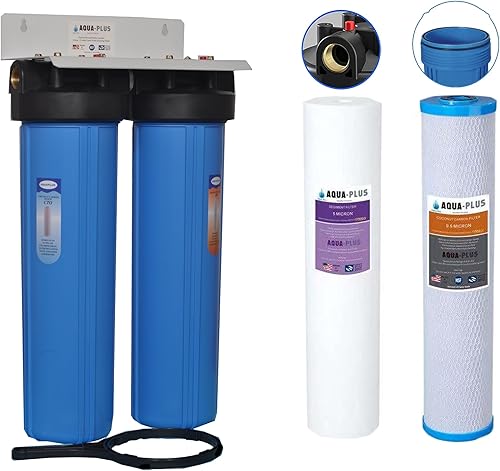
1. Aqua-Plus 2 Stage Jumbo Big Blue Whole House Water Filter System
This is about as basic as it gets, and that’s not a bad thing. For under two bucks, you get a dual-housing system with a sediment and carbon block filter. The 1″ brass ports are a nice touch at this price. We see this as a starter system or a pre-filter for a more advanced setup. The 5-micron sediment filter will catch the big stuff. Just don’t expect it to perform miracles on heavily chlorinated water.
- Incredibly low entry price
- Standard 20″ x 4.5″ cartridges
- Pressure release valve included
- Very basic filtration
- Long-term filter cost unclear
- Not for serious contaminants
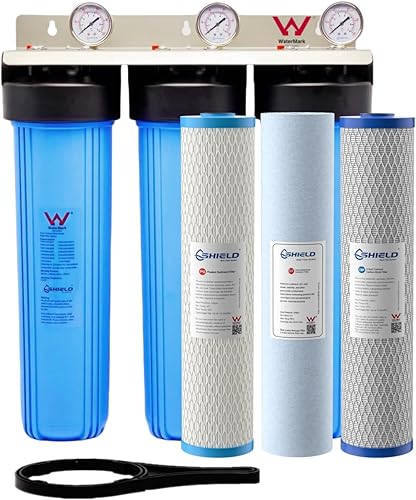
2. Triple Stage Big Blue 75L/min System
This is the system we recommend for most people on city water. The triple-stage filtration—5μm pleated, 1μm antibacterial sediment, and a 0.5μm carbon block—is a serious setup. The 75 L/min flow rate means no pressure drop in a typical family home. The WaterMark certification and heavy-duty brass ports signal quality construction. Honestly, for the price, it’s a lot of system.
- Excellent 3-stage filtration
- High flow rate for whole house
- WaterMark certified for safety
- Higher upfront cost than 2-stage
- Three filters to replace
- May be overkill for small apartments
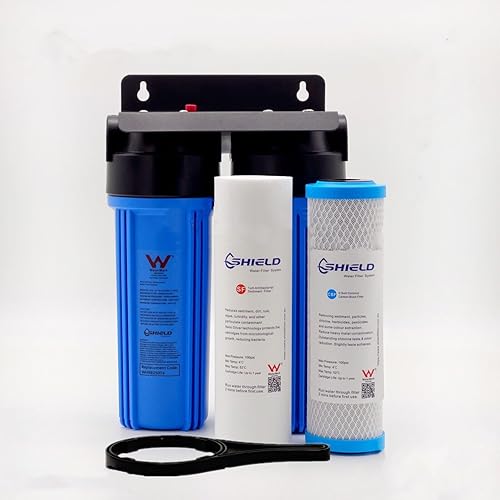
3. Twin Whole House Water Filter System 10″ x 2.5″
Here’s a compact, well-built option. The 10″ housings are smaller, which is great for tight spaces, but it means lower flow rates and shorter filter life. The claim of 99.99% chlorine removal is impressive if the carbon is high quality. We’d use this for a small cottage, a single bathroom, or as a dedicated filter for a specific appliance line. It’s solid, but not for a big house.
- Space-saving compact design
- High chlorine reduction claim
- Brass ports and WaterMark certified
- Smaller filters = more frequent changes
- Lower flow capacity
- Not ideal for whole-house in large homes
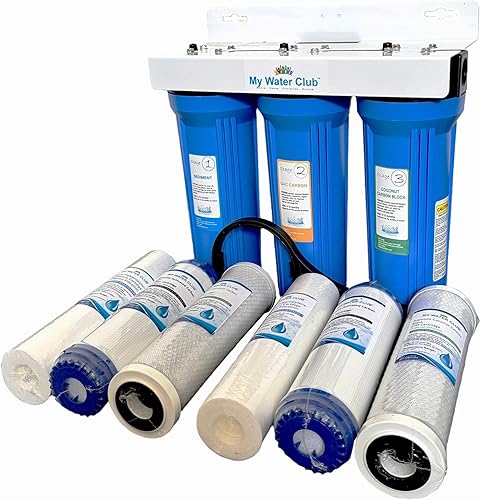
4. MyWaterClub Whole House 3-Stage System
The value proposition here is strong: a 3-stage system that includes two extra sets of filters. That’s a full year of filters for most homes. The 3/4″ port is standard for residential. The filtration stack—sediment, GAC, and coconut carbon block—is a proven combo for city water. A smart buy for someone who wants to set it up and not worry about filter shopping for a while.
- Includes 2 extra filter sets
- Proven 3-stage filtration
- Great initial value
- 3/4″ ports may limit max flow
- Manufacturer warranty may not apply
- Less robust housing than premium models
House Filter FAQ
- How often do I need to change the filters?
- It depends on your water quality and usage. Sediment filters might need changing every 3-6 months. Carbon filters typically last 6-12 months. Always check the manufacturer’s rated capacity in gallons or liters, and inspect your filters regularly. A drop in water pressure is a clear sign they’re clogged.
- Can a house filter soften hard water?
- No. Standard sediment and carbon filters do not remove dissolved calcium and magnesium minerals that cause hardness. You need a water softener, which uses ion exchange, for that. Some combo systems exist, but they are distinct technologies.
- Will it reduce my water pressure?
- A properly sized system should not cause a noticeable pressure drop. If it does, the filters are likely clogged, or the system’s flow rate (L/min) is too low for your home’s peak demand. Always size up if in doubt.
- Is a house filter worth it for city water?
- Absolutely. City water is treated with chlorine or chloramine, which affects taste and odor. It can also contain sediment from old pipes. A carbon-based house filter makes a dramatic difference in water quality for showering and protects your appliances. It’s one of the best home upgrades you can make.
- What’s the difference between a 10″ and 20″ filter housing?
- Capacity and flow. 20″ housings hold larger cartridges that have more surface area. This means longer lifespan, higher flow rates, and less frequent changes. For a whole-house system, 20″ x 4.5″ is the standard we recommend. 10″ housings are better suited for point-of-use or low-flow applications.
- Can I install a house filter myself?
- If you’re handy with plumbing, yes, it’s possible. You’ll need to cut the main water line and install the housing with bypass valves. But for most people, we recommend hiring a licensed plumber. A bad install can cause leaks and water damage. It’s worth the cost for peace of mind.
Final Thoughts
Choosing a house filter doesn’t require an engineering degree. Start with your water test. For most folks on city water, a reliable 2 or 3-stage system with sediment and carbon blocks will transform your water. Our top pick for 2026 is the Triple Stage Big Blue system—it offers the best balance of performance, flow rate, and build quality for the money.
Don’t fall for overcomplicated systems you don’t need. And don’t cheap out on something that will frustrate you with low pressure. Get the right size, buy quality filters, and change them on schedule. That’s the real secret to years of clean, great-tasting water from every tap in your home.
