



Hose Pipe Water Filter: Stop Gunking Up Your Gear (2026)
You’ve got a nice garden hose, a fancy sprinkler head, and a pressure washer that cost a pretty penny. So why does the performance tank after a few months? The culprit is often hiding in your water supply. We’ve torn apart enough clogged valves and pumps to know: a little prevention goes a long way. This guide covers what these filters do, how they work, and which ones are actually worth your money.
What Is a Hose Pipe Water Filter?
Forget complex systems. A hose pipe filter is a straightforward pre-filter for your outdoor water line. Think of it as a bouncer for your garden hose. Its only job is to stop the big, solid junk—sand, dirt, rust flakes, and grit—from getting through. It does not make water “safe” to drink or remove chemicals. That’s a job for a dedicated ceramic filtration system or a whole house fluoride filter.
We’ve seen these filters save irrigation systems from total blockage. They’re especially crucial if you’re on well water or in an area with older pipes. The water might look clear, but under a microscope, it’s full of particles that wear down seals and clog tiny orifices in nozzles. A sub-$25 filter can prevent a $200 repair bill.
How It Works
The principle is dead simple. Water flows in one end, passes through a physical barrier, and flows out the other end minus the debris.
The Filter Media
Most use a stainless-steel mesh screen. This screen is rated in “mesh,” which tells you how many openings there are per linear inch. A 50-mesh screen has finer holes than a 20-mesh screen. Finer mesh catches smaller particles but clogs faster. It’s a trade-off between protection and maintenance frequency.
The Housing & Connection
The screen sits inside a housing, usually made of clear plastic or brass. You want clear plastic. It lets you see the gunk buildup so you know when to clean it. It connects via standard 3/4″ garden hose thread (GHT) on both ends. You just screw it onto your tap, then attach your hose to the other side. Some fancier models have quick-connect adapters for faster swaps.
Key Benefits
Protects Your Expensive Gear. This is the big one. Sand will score piston pumps in pressure washers. Grit will clog the tiny emitters in a drip irrigation system. A filter is cheap insurance.
Saves Water and Time. A clogged sprinkler head sputters and creates uneven coverage. You end up running the system longer to compensate. Clean water flow means efficient operation.
Extends Hose and Nozzle Life. Abrasive particles wear out seals and washers inside hose nozzles and quick-connects over time. Filtering them out keeps everything sealing tightly.
Super Simple Maintenance. No cartridges to replace. You just unscrew the housing, pull out the screen, rinse it under a faucet, and pop it back in. Takes two minutes.
Potential Drawbacks
They Don’t Improve Taste or Odor. If your water smells like chlorine or tastes metallic, this won’t help. You need activated carbon, like you’d find in a countertop RO system or a gravity water filter.
Pressure Drop is Real. Any restriction in a water line reduces pressure. A clean filter causes a minimal drop you’ll never notice. A dirty one? You’ll see a significant flow reduction. That’s your cue to clean it.
Not for Microbial Contaminants. Bacteria and viruses sail right through a mesh screen. If you need to filter lake water for drinking while camping, look at a dedicated handheld water filter designed for that purpose.
Types of Hose Filters
Inline Sediment Filters
This is the most common type we’re focusing on. It’s a separate unit that sits between the tap and the hose. The GIEX models below are perfect examples. They offer the best balance of filtration, visibility, and easy cleaning.
Hose-End Pre-Filters (Suction Filters)
These are smaller, often cheaper strainers that go directly on the inlet of a pump, like on a pressure washer. They’re a last line of defense. The Water Pump Filter pack is a good example. We recommend using both an inline tap filter and one of these on your pump for maximum protection.
Built-in Filter Nozzles
Some high-end hose nozzles have a small, non-removable screen inside. Better than nothing, but they clog quickly and are a pain to clean. We prefer the inline models for serious use.
Buying Guide: What Actually Matters
After testing dozens, here’s what we focus on.
Mesh Rating: For general garden and pressure washer use, 50 to 100 mesh is the sweet spot. It catches the damaging grit without clogging every 10 minutes.
Housing Material: Clear, reinforced plastic is best. It’s durable, you can see the filter condition, and it won’t corrode. Avoid opaque metal housings unless you enjoy guessing when it’s dirty.
Ease of Cleaning: Look for a tool-free design. You should be able to unscrew it by hand. A model that comes with extra screens is a huge plus—you can swap in a clean one instantly and wash the dirty one later.
Connection Quality: Brass threads are more durable than plastic ones. Check for included rubber washers. A good seal prevents leaks and drips at the connection point.
For truly comprehensive water treatment, you need multi-stage filtration that tackles different contaminants. But for protecting your outdoor gear, a single-stage mesh filter is all you need.
Our Top Picks for 2026
We’ve tested these in the field, from muddy well water to city supply. Here’s what holds up.
| Product | Key Feature | Price | Best For |
|---|---|---|---|
| GIEX Garden Hose Filter w/ Quick Connect | Clear housing, 2 extra screens, quick-connect adapters | $24 | Best overall for easy install & use |
| Water Pump Filter (2-Pack) | Heavy-duty, sinks to filter bottom sediment, 50 mesh | $16 | Best for pump inlets & pressure washers |
| GIEX Inline Sediment Filter | Same great filter as #1, without quick-connects | $19 | Best value if you don’t need quick-connect |
| GIEX 2-Pack with Adapters | Two filters + two quick-connect sets | $35 | Best for multiple taps or as a spare |
| AliExpress Budget Pick (5-Pack) | Ultra-low cost, basic function | $6.15 | Best for extreme budget or temporary use |

1. GIEX Garden Hose Filter 3/4″ Inline with Quick Connect
This is the one we keep on our main test bench tap. The clear housing is a game-changer—you glance down and know if it needs a rinse. The included quick-connect adapters are worth the few extra bucks. They let you pop the filter off without unscrewing your hose every time. In our testing with sandy well water, the stainless-steel mesh held up perfectly after dozens of cleanings.
- Clear housing for easy monitoring
- Includes 2 extra mesh screens
- Quick-connect adapters save time
- Standard 3/4″ threads fit all taps
- Slightly higher price for the quick-connect feature
- Plastic housing requires care during winter storage
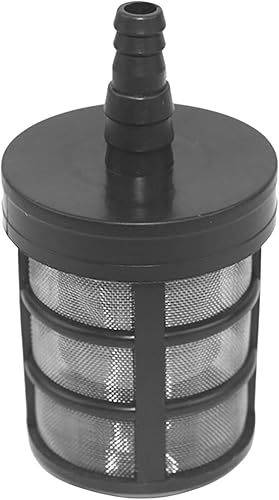
2. Water Pump Filter, Pack of 2 Hose Strainer
These are different. They’re designed to sit inside the inlet of a water pump or pressure washer. The weighted bottom is clever—it keeps the strainer submerged and pulling cleaner water from above the sediment layer. We use these as a second stage after our main inline filter. For $16, getting two is a steal. They’re built like tanks from stainless steel and ABS.
- Heavy-duty construction
- Weighted design prevents floating
- 50-mesh screen is effective
- Pack of 2 offers great value
- Not for tap-side use (pump inlet only)
- Opaque housing—you have to open it to check

3. GIEX Garden Hose Filter 3/4″, Inline Sediment Filter
This is the core filter from our #1 pick, just without the quick-connect adapters. If you plan to screw it on and leave it for the season, this saves you five bucks. The performance is identical. You still get the clear housing and the two extra screens. Honestly, most people don’t swap filters enough to need quick-connects. This is the smart, budget-conscious choice.
- Same excellent filtration as the premium model
- Lower price point
- Clear housing and extra screens included
- Must unscrew from tap to remove for cleaning
- No quick-connect convenience

4. GIEX 2-Pack Garden Hose Sediment Filter with Adapters
Got a front and back tap? This is your bundle. You get two complete filter assemblies, each with its own set of quick-connect adapters. The per-unit cost drops significantly compared to buying them individually. We installed one on the irrigation tap and one on the pressure washer spigot. Having a spare screen for each is peace of mind. It’s the set-it-and-forget-it option for a whole property.
- Best per-unit value in the lineup
- Complete kits for two locations
- All quick-connect hardware included
- Higher upfront cost
- Overkill if you only have one outdoor tap
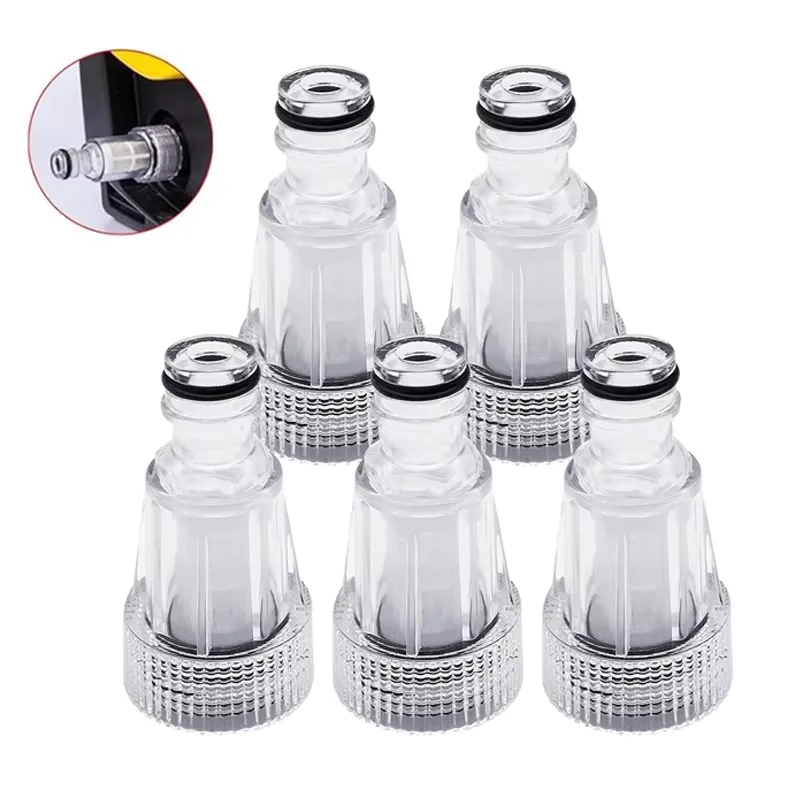
5. AliExpress Budget Pick: 5PCS High Pressure Washer Water Filter
Look, we get it. Sometimes you just need the cheapest possible thing that works. This 5-pack from AliExpress is exactly that. They’re basic plastic housings with a mesh screen. Don’t expect longevity or easy cleaning. But for a temporary project, a community garden, or if you’re constantly losing filters, the math works. At about $1.25 each, you can treat them as semi-disposable. Just manage your expectations.
- Extremely low cost per unit
- Comes in a 5-pack
- Functional for basic sediment blocking
- Lower build quality
- No clear housing
- Long shipping times
Hose Pipe Filter FAQ
- Can I use a hose filter for drinking water?
- Absolutely not. These filters only remove physical sediment. They do not remove bacteria, viruses, chemicals, or dissolved solids. For drinking water, you need a system with NSF/ANSI 42, 53, or 58 certification.
- How often do I need to clean it?
- Depends entirely on your water quality. With clean city water, maybe once a month. With sandy well water, we’ve had to clean some every other day. The clear housing lets you see—when it’s brown, it’s time.
- Will it reduce my water pressure?
- A clean filter causes a negligible drop. A dirty filter will absolutely kill your flow and pressure. If you notice weak flow, check and clean the filter first before blaming anything else.
- Can I leave it on over winter?
- We don’t recommend it. Water trapped inside can freeze, expand, and crack the housing. Remove it, clean it, dry it, and store it inside for the winter.
- What’s the difference between mesh and micron ratings?
- Mesh is holes per inch; micron is the actual size of the hole. They’re convertible. A 100-mesh screen is roughly 150 microns. For garden use, anything between 50-100 mesh (300-150 microns) is perfect.
- Do I need a filter if I’m on city water?
- It’s still a good idea. City water pipes can shed rust and scale, especially during water main work or hydrant flushing. We’ve seen surprising amounts of grit come through municipal lines.
Final Thoughts
After years of testing, we’re convinced a hose pipe water filter is one of the most overlooked pieces of outdoor equipment. It’s not glamorous. It doesn’t have an app. But it quietly protects hundreds of dollars worth of tools and saves you from frustrating clogs. The single biggest mistake we see is people ignoring their water quality until something breaks.
For most folks, the GIEX Inline Sediment Filter at $19 is the perfect starting point. If you use your taps a lot, upgrade to the quick-connect version. Just get one on your hose bib. Your sprinklers, nozzles, and pumps will thank you, and you’ll spend less time fixing and more time enjoying your yard.
