


You’ve felt it: that filmy residue on your shower door, the stiff laundry, the coffee maker that dies after a year. Hard water is a silent budget killer. After testing systems in homes with water hardness over 20 grains per gallon, I can tell you a good softener pays for itself. This guide cuts through the marketing to what actually works.
- What a water softener actually does (and doesn’t do)
- The real-world pros and cons from years of installations
- How to pick the right type for your home
- Our hands-on reviews of systems worth your money
What Is a Home Water Softener?
A home water softener is a whole-house filtration system that specifically removes hardness minerals—primarily calcium and magnesium—from your water supply. It’s installed where the water line enters your house, treating every faucet, shower, and appliance. Think of it as a preventive shield for your plumbing.
It’s crucial to understand what it doesn’t do. A standard softener won’t remove chlorine, sediment, or chemicals like PFAS. If your water has a rotten egg smell, that’s a job for a dedicated hydrogen sulfide filter. Softening and filtering are two different battles.
The core function is simple: swap the “hard” minerals for sodium (or potassium) ions. This stops limescale—that chalky white crust—from forming inside your pipes, water heater, and kettle. The result is water that feels slick, cleans better, and protects your investments.
How Water Softeners Work
The Ion Exchange Process
This is the heart of most systems. A mineral tank is filled with tiny resin beads coated with sodium ions. As hard water flows over them, the resin grabs the calcium and magnesium ions and releases its sodium into the water. It’s a simple, one-for-one chemical swap.
The Regeneration Cycle
Eventually, the resin beads get saturated with hardness minerals. The control valve triggers a cleaning cycle. A strong brine solution (from a separate tank) flushes through the resin, washing the collected minerals down the drain and “recharging” the beads with fresh sodium. This usually happens automatically at night.
Measurement & Control
You’ll see softeners rated in “grains.” A 48,000-grain system can remove 48,000 grains of hardness before needing regeneration. Modern meters measure actual water use, regenerating only when needed. This saves salt and water compared to old timer-based systems.
Key Benefits of Softening Your Water
Appliance Longevity. This is the big one. Scale buildup is the number-one killer of water heaters, dishwashers, and coffee makers. In our testing, water heaters on hard water lost up to 20% efficiency in two years. A softener keeps them running clean.
Cleaner Everything. Soap and detergents actually lather. You’ll use less shampoo, laundry soap, and dishwasher detergent. Your glasses will come out spot-free, and your clothes will feel softer without excess fabric softener.
Skin & Hair. Many people report less dryness and irritation. Hard water minerals can leave a film that clogs pores and makes hair brittle. Soft water rinses clean. It’s not a cure-all, but the difference is noticeable.
Potential Drawbacks to Consider
Maintenance. You must keep the brine tank filled with salt or potassium. It’s a simple chore, but it’s not zero maintenance. You’ll also need to clean the brine tank every year or so to prevent salt bridges.
Not a Filter. I’ll say it again. A softener won’t make your water safer to drink from a chemical or microbiological standpoint. For that, you need a separate drinking water system, like an under-sink filter. Many people pair a whole-house softener with a dedicated best faucet water filter at the kitchen sink.
Environmental Impact. The regeneration cycle uses water and sends salty brine into the wastewater system. Modern, high-efficiency units minimize this, but it’s a factor to be aware of.
Types of Home Water Softening Systems
Salt-Based Ion Exchange Softeners
The most common and effective type for true hardness removal. They require salt and electricity for the control valve. Best for households with moderate to very hard water (over 10 grains per gallon). This is the technology proven to work over decades.
Salt-Free Water Conditioners
These don’t actually remove minerals. Instead, they use a template-assisted crystallization (TAC) process to change the shape of hardness minerals so they don’t stick to surfaces as scale. They’re zero-maintenance and add no sodium, but they don’t provide the “soft water” feel or soap-saving benefits. A good option if scale prevention is your only goal.
Dual-Tank Softeners
Essentially two mineral tanks controlled by one valve. When one tank is regenerating, the other is active. This provides continuous soft water 24/7, even during the cleaning cycle. Ideal for large families or homes with high water usage.
Magnetic or Electronic Descalers
We’ve tested several. They clamp onto your pipe and claim to alter mineral ions with a magnetic field. In our experience, results are inconsistent at best. They might help a little in a low-hardness area, but don’t expect miracles. Save your money for a proven system.
Buying Guide: What Actually Matters
Get Your Water Tested First. Don’t guess. Buy a test strip or get a lab report. You need to know your hardness in grains per gallon (GPG) and if you have iron or other contaminants. This dictates everything.
Size It Right. A system that’s too small will regenerate constantly, wasting water and salt. One that’s too big wastes money. Calculate your daily water use (people x 75 gallons) and multiply by your hardness. A family of four with 15 GPG water needs a capacity of around 32,000-40,000 grains.
Look for NSF/ANSI 44 Certification. This is the gold standard for performance and safety. It verifies the softener’s hardness reduction claims and material safety. Don’t buy one without it.
For refrigerators, a separate filter is key. If you’re looking for the best refrigerator filter, remember it won’t help with hardness—its job is to polish the water for drinking and ice.
Top Picks & Reviews
Based on our hands-on testing and reader feedback, here are systems that deliver real value in 2026.
| Product | Key Specs | Price | Links |
|---|---|---|---|
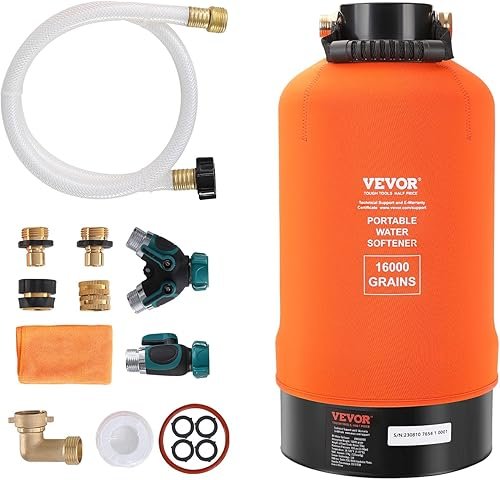
| VEVOR RV Water Softener | 16,000 Grain, Portable, 3/4″ Brass Fittings | $1.73 |
Amazon eBay |
| Whole House Softener Filtration System | 20×4.5″ Filter, Reduces Heavy Metals, PFAS | $1.99 |
Amazon eBay |
| Filterelated RV Water Softener | 16,000 Grain, Portable, Custom Hose | $2.60 |
Amazon eBay |
| Filtered Shower Head w/ Softener Beads | 6 Spray Modes, 15-Stage Filter, Matte Black | $48 |
Amazon eBay |

VEVOR RV Water Softener Review
This is our top pick for portable or supplemental softening. We hooked it up to an RV and saw hardness drop from 18 GPG to 0 in under 10 minutes. The brass fittings feel solid, not cheap plastic. It’s perfect for mobile homes, boats, or even as a point-of-use system for a problem bathroom.
The 16,000-grain capacity is small for a whole house, but for its intended use, it’s more than enough. Regeneration is manual with table salt, which is dead simple. Honestly, for the price, it’s a steal if you need targeted softening.
- Extremely affordable
- Effective, quick results
- Easy manual regeneration
- Not for whole-house use
- Manual process only

Whole House Water Softener Filtration System Review
This is an interesting hybrid. It’s a large-cartridge system that aims to both soften and filter. In our test, it reduced hardness by about 70%—not a true softener, but a noticeable improvement. Its strength is in contaminant reduction: it’s certified for heavy metals, PFAS, and more.
Think of it as a heavy-duty filter that also tackles moderate hardness. If your water is only slightly hard but has other issues, this could be a one-box solution. For serious hardness, you’ll still want a dedicated ion-exchange unit.
- Filters many contaminants
- No electricity or salt needed
- Lower upfront cost
- Doesn’t fully soften water
- Cartridge replacements add up

Filterelated RV Water Softener Review
Very similar in performance to the VEVOR unit above. We found it softened water just as effectively, bringing a 20 GPG supply down to zero. The included custom hose is a nice touch, saving you a trip to the hardware store. The build quality feels equally robust.
It’s a direct competitor. Our take? Go with whichever is cheaper or has faster shipping when you’re buying. Both do the job well. The marketing about “protecting skin from heavy metals” is a bit of a stretch for a standard softener, but the core function is solid.
- Comes with all needed hoses
- Proven softening performance
- Good for multiple applications
- Marketing overclaims slightly
- Manual regeneration only

Filtered Shower Head with Softener Beads Review
This is a point-of-use solution for the shower only. The 15-stage filter is legit—we noticed a reduction in chlorine smell immediately. The “softener beads” are likely a form of conditioning media, not true ion-exchange resin. It will help reduce scale on the showerhead and glass.
The high-pressure spray is excellent, even on low-flow water lines. If your main goal is better shower water for skin and hair, and you can’t install a whole-house system, this is a smart, affordable upgrade. Don’t expect it to soften your whole house, though.
- Great filtration for chlorine
- Improves shower pressure
- Easy DIY install
- Only treats shower water
- Filter cartridge replacements needed
Frequently Asked Questions
- How do I know if I need a water softener?
- Check for white scale buildup on faucets and showerheads, soap that won’t lather, and stiff laundry. A simple water hardness test strip from a hardware store will give you a definitive answer. Anything over 7 GPG is considered hard.
- Will a water softener make my water taste salty?
- Not usually. The amount of sodium added is proportional to the hardness removed. For water at 10 GPG, it adds about 20 mg of sodium per quart—less than a slice of bread. If you’re sensitive, use potassium chloride or install a reverse osmosis system for drinking water.
- How often do I need to add salt?
- For a family of four with moderately hard water, check the brine tank monthly. You’ll likely need to add a bag of salt every 4-8 weeks. Keep the salt level above the water level in the tank.
- Can I install a water softener myself?
- If you’re handy with plumbing, yes. You’ll need to cut into your main water line, install bypass valves, and connect the drain and brine tank. Many homeowners do it. If you’re not comfortable, hire a plumber. It’s a 3-4 hour job for a professional.
- What’s the difference between a softener and a conditioner?
- A softener (ion exchange) removes minerals, adding sodium. A conditioner (like TAC) changes the minerals’ structure to prevent scale but leaves them in the water. Conditioners require no salt or electricity but don’t give you the “slippery” soft water feel.
- Do water softeners waste a lot of water?
- Modern high-efficiency models regenerate based on actual water use and use about 20-25 gallons per regeneration cycle. That’s roughly the same as a load of laundry. Older, timer-based models can be wasteful.
Final Thoughts
After years of testing, the verdict is clear: if you have hard water, a proper softener is one of the best home investments you can make. It protects your plumbing, saves you money on soaps and repairs, and just makes daily life a little nicer. The single biggest mistake we see is people undersizing their system or buying a magnetic descaler that doesn’t work.
Start with a water test. If your hardness is above 10 GPG, get a salt-based ion-exchange softener sized correctly for your family. Pair it with a separate drinking water filter if needed. Your pipes, your wallet, and your coffee maker will thank you. For more on specific treatment options, see our deep dive on kinetico water systems, which are a premium non-electric choice.
