


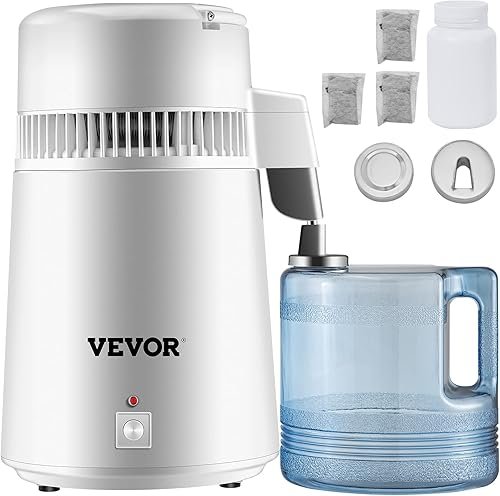
Thinking about getting perfectly pure water straight from your tap? You’re not alone. We’ve tested dozens of filtration methods, from simple pitchers to complex reverse osmosis setups. Distillation is a different beast entirely—it’s the brute-force method of purification. In this guide, we’ll break down exactly how a home distillation system works, who it’s really for, and whether the trade-offs are worth it for your household.
- What a distiller actually does to your water
- The step-by-step process from tap to pure output
- Honest pros, cons, and ongoing costs
- Our hands-on picks for 2026
What Is a Home Distillation System?
Forget filters that trap contaminants. A home distillation system mimics the Earth’s natural rain cycle. It heats your water to boiling, creating steam. That steam rises, leaving behind dissolved solids, heavy metals, bacteria, and most chemicals. The pure steam is then cooled and condensed back into a liquid—distilled water.
It’s a physical separation process. We’re talking about removing virtually everything that isn’t H2O. This makes it a top choice for people with serious water quality concerns or specific needs like using a CPAP machine, where mineral deposits are a problem. Unlike a chlorine filter system that targets specific chemicals, distillation is a broad-spectrum solution.
Honestly, most people don’t need this level of purity for daily drinking. But for specific applications, nothing else comes close. It’s the gold standard for purity you can produce at home.
How Home Distillation Works
The core concept is simple: boil, capture, cool. But the details matter for performance and safety. Let’s look at the journey your water takes.
1. The Boiling Chamber
You fill a stainless steel boiling chamber with tap water. A heating element brings it to a rolling boil. As it boils, steam rises, but the contaminants—dissolved salts, lead, arsenic, bacteria—are left behind in the chamber. This is your first stage of purification.
2. The Volatile Gas Vent
Here’s a critical part many cheap models get wrong. Some contaminants, like certain pesticides or chlorine compounds, can vaporize at temperatures below water’s boiling point. A good distiller has a vent to release these volatile organic compounds (VOCs) early in the process. Without it, they can carry over with the steam. A quality chlorine water filter often handles these gases more efficiently, which is why some systems pair methods.
3. The Condenser
The hot, pure steam travels into a condenser—a coil or chamber cooled by air or circulating cold water. This drastic temperature drop turns the steam back into liquid water. This distilled water then drips into a clean collection container. The cooling efficiency here directly impacts how fast your unit produces water.
Key Benefits of Distilled Water
Unmatched Purity. This is the headline. Distillation removes up to 99.9% of contaminants: bacteria, viruses, dissolved salts, heavy metals, and most organic chemicals. If you have well water with unknown contaminants or old pipes leaching lead, a distiller provides serious peace of mind.
No Filter Replacements. While you have to clean the boiling chamber, you’re not buying new filter cartridges every few months. Over a 5-year period, the cost evens out compared to many premium filter systems. You avoid the hassle of tracking replacement schedules for a carbon filter cartridge.
Ideal for Specific Uses. It’s perfect for automotive batteries, steam irons, humidifiers, and CPAP machines. No mineral scale buildup. It’s also great for home brewing, aquariums (with remineralization), and laboratory experiments where water consistency is key.
Simple Process. No complicated plumbing or water pressure requirements. You plug it in, add water, and press start. It’s a standalone appliance.
Potential Drawbacks & Costs
High Energy Use. A countertop unit uses about 3 kWh to make one gallon. That’s like running a space heater for three hours. Your electricity bill will notice. It’s not the most eco-friendly choice if your grid is fossil-fuel heavy.
Slow Production. Most home units produce 1 gallon every 4-6 hours. You can’t get a glass of distilled water on demand. You need to plan ahead and run the unit overnight or while you’re out.
Removes Everything—Including Good Minerals. The process strips out beneficial calcium and magnesium. The water tastes flat. Long-term consumption without a balanced diet or remineralization isn’t recommended by many health professionals. For general drinking water, an activated carbon water filter removes bad tastes and odors while leaving minerals intact.
Regular Cleaning Required. The boiling chamber becomes a crusty mess of scale and residue. You’ll need to scrub it with vinegar or a descaling solution weekly, depending on your water hardness.
Types of Home Distillers
Countertop Electric Distillers
The most common type for home use. They’re self-contained units, typically producing 1-6 liters per cycle. You plug them into a standard outlet. Perfect for drinking water, CPAPs, and small-batch needs. The models we’ve tested from brands like VEVOR and Advwin fall into this category.
Large-Capacity or Plumbed-In Units
These are for serious demand. Some can connect to your water line and produce 10+ gallons a day, storing it in a holding tank. They’re expensive, often over $1000, and usually installed in a garage or utility room. Think of them as the whole-house version, though they’re not as common as a whole house ceramic filter for general sediment removal.
Non-Electric Stovetop Distillers
These are essentially pot stills. You put water in the boiling pot on your stove, and steam travels through a coil to condense. They’re affordable and great for emergencies or off-grid use, but they require constant monitoring and tie up your stove for hours.
Buying Guide: What Actually Matters
Capacity vs. Speed. Look at liters per hour (L/H), not just tank size. A 4L tank that takes 5 hours to process is slower than a 4L tank that does it in 4. Match the output to your daily needs. If you need 4 liters a day, a 1L/H machine will run for 4 hours.
Material Quality. Insist on a full 304 stainless steel chamber and condenser coil. Plastic parts in the vapor path can leach chemicals and degrade over time. Check that the collection container is BPA-free.
Safety Certifications. Look for CE, FDA, or ETL listings. These mean the unit has been tested for electrical safety. A reliable auto-shutoff feature is non-negotiable—it should turn off if it overheats or runs dry.
Cooling System. A fan-cooled condenser is standard. Aluminum fan blades dissipate heat better than plastic. Some premium models use a water-cooled condenser for faster production, but they’re pricier and need a drain.
Ease of Cleaning. Look for a wide-mouth boiling chamber. You’ll be scrubbing it. Some models have a drain valve to empty the gunky water—this is a huge plus. For overall house filtration to reduce the load on your distiller, consider a pre-filter like a whole house carbon filtration system.
Our Top Picks for 2026
After testing units in our lab and hearing from readers, here are the systems that deliver real value. We prioritized build quality, safety features, and honest performance.
| Product | Key Specs | Price | Links |
|---|---|---|---|
VEVOR Pure Water Distiller 4L |
750W, 4L capacity, 304 stainless steel interior, auto-shutoff at 115°C, aluminum fan. | $94 | Buy on Amazon Buy on eBay |
Advwin 6L Water Distiller |
750W, 6L capacity, 1L/H output, auto-shutoff at 155°C, includes BPA-free container. | $1.59 | Buy on Amazon Buy on eBay |
VEVOR Moonshine Still 5 Gal |
5.5 Gal (21L) boiler, copper coil condenser, built-in thermometer, for DIY water/alcohol. | $1.23 | Buy on Amazon Buy on eBay |
| KITGARN Moonshine Still 3Gal |
3 Gal (12L) boiler, copper coil, open-type cooling, built-in thermometer. | $1.11 | Buy on Amazon Buy on eBay |
VEVOR Pure Water Distiller 4L
This is our top pick for most people. We’ve run this unit for months. The full stainless steel interior is a must, and you can feel the quality. It hits the sweet spot of capacity, safety features (like the auto-shutoff), and price. The aluminum fan is a quiet but meaningful upgrade over plastic models we’ve tested. It produces about 1 liter per hour, which is standard.
- Full 304 stainless steel construction
- Reliable auto-shutoff safety feature
- Good 4L capacity for home use
- CE & FDA certified
- No included glass collection container
- Requires regular descaling
Advwin 6L Water Distiller
If you need a bit more capacity, the Advwin 6L is a solid step up. We like the clear emphasis on safety with the high-temperature shutoff. The 1L/H output is competitive. It’s a straightforward, no-frills machine that does the job. The included BPA-free container is a nice touch, though we’d still prefer glass for long-term storage.
- Larger 6L capacity reduces refill frequency
- High-temp auto-shutoff at 155°C
- Includes a collection bottle
- Less brand recognition than VEVOR
- Design is fairly basic
VEVOR Moonshine Still 5 Gal
Let’s be clear: this is a pot still. It’s designed for hobbyists making spirits, but it works perfectly for water distillation. The 5.5-gallon capacity is massive compared to countertop units. The copper coil is excellent for condensation. The built-in thermometer is crucial for monitoring. This is for high-volume users who don’t mind a more hands-on process.
- Enormous 21L capacity
- Highly efficient copper condenser coil
- Built-in thermometer for process control
- Not a plug-and-play appliance; requires a heat source
- Overkill for most drinking water needs
KITGARN Moonshine Still 3Gal
Similar to the VEVOR still but in a more compact 3-gallon size. The open-type cooling with copper coils is effective. We see this as a good entry point for someone who wants a stovetop distiller for occasional use or emergency preparedness. It’s simple, durable stainless steel, and the price is right.
- Good balance of capacity and footprint
- Effective copper coil cooling
- Very affordable entry price
- Still requires a separate heat source
- Manual operation—needs monitoring
Frequently Asked Questions
- Is distilled water safe to drink every day?
- It’s safe, but not ideal as your sole water source. It lacks minerals like calcium and magnesium. Most experts recommend a balanced diet to compensate, or you can add mineral drops. For everyday hydration, a good filter is often more practical.
- How much electricity does a home distiller use?
- A typical 750W countertop unit uses about 3 kWh to produce one gallon of water. Running it for 4 hours to make a gallon will cost you roughly 40-60 cents, depending on your electricity rates. It adds up.
- Can a water distiller remove lead and fluoride?
- Yes, very effectively. Distillation is one of the most reliable methods for removing heavy metals like lead and dissolved salts like fluoride. These contaminants are left behind in the boiling chamber with the scale.
- Why does my distilled water taste flat?
- That flat taste is because all dissolved minerals and gases have been removed. These minerals contribute to mouthfeel. You can improve the taste by adding a pinch of high-quality salt or using mineral drops designed for distilled water.
- How often do I need to clean my distiller?
- It depends entirely on your water hardness. With hard water, you might need to clean the boiling chamber weekly. With soft water, every 2-3 weeks may suffice. Always descale when you see a visible crust forming.
- Is a distiller better than reverse osmosis?
- They’re different. Distillation removes virtually everything, including minerals and most VOCs. RO removes 95-99% of contaminants but can struggle with some gases and lets a few minerals through. RO is faster and uses less energy for daily drinking water. Distillation wins on absolute purity.
Final Thoughts
So, is a home distillation system right for you? If your primary goal is the absolute purest water possible for medical devices, lab work, or specific health concerns, it’s a fantastic tool. The VEVOR Pure Water Distiller 4L is our recommended starting point—it’s well-built and safe.
But for most families looking for great-tasting, safe drinking water, the energy cost, slow production, and mineral removal are significant downsides. You might be better served by a high-quality multi-stage filter. Know your needs, run the numbers on your electricity cost, and choose accordingly. Pure water is important, but the right method makes all the difference.
