


You’ve seen the countertop units and the big stainless-steel tanks. Maybe you’ve wondered if they actually work or if they’re just a pretty, powerless pitcher. After testing systems from cheap plastic models to high-end stainless setups, I can tell you this: a good gravity filter is one of the most underrated pieces of water gear you can own.
- What a gravity filter is and why it’s different
- The simple science of how it cleans your water
- The real pros and cons you need to know
- Our top picks for 2026, from budget to best
What Is a Gravity Water Filter System?
It’s exactly what it sounds like. You pour water into an upper chamber. Gravity pulls it down through one or more filter cartridges. Clean water collects in a lower chamber, ready to drink. No pumps, no wires, no connection to your plumbing.
These systems have been around for ages, but they’ve gotten seriously good. Modern versions can remove 99.99% of bacteria, parasites, and even microplastics. They’re a staple for campers, a lifesaver during boil-water advisories, and a daily driver for people who just want great-tasting water without the fuss of installation.
Think of it as the slow-cooker of water filters. Set it and forget it. The process is silent and steady, which is part of its charm.
How a Gravity Water Filter System Works
The Basic Mechanics
Two stacked chambers. The top one holds your source water—tap, river, or rain. The bottom one catches the filtered output. Between them sit the filter elements. The weight of the water above creates pressure, forcing water through the microscopic pores of the filter media.
What the Filters Actually Do
This is where the magic happens. Most quality systems use a multi-stage approach. A dense ceramic candle filter acts as the first barrier, physically trapping sediment, bacteria, and cysts down to 0.2 or even 0.1 microns. Then, a block of activated carbon absorbs chlorine, volatile organic compounds, and bad tastes.
The result? Water that’s not just safe, but tastes clean and flat—in a good way. It removes the chemical tang without stripping out all the minerals, which is a key difference from what you’d get comparing distilled vs filtered water.
Key Benefits of Going Gravity-Fed
Total Independence. No power? No problem. A hurricane knocks out the grid? Your filter still works. This reliability is the single biggest reason people buy them.
Simplicity and Low Maintenance. There’s literally nothing to break. No pumps, no solenoids, no electronic displays. You clean the chambers and replace the filters on a schedule. That’s it.
Excellent Contaminant Reduction. A well-made system with a 0.1-micron ceramic element and quality carbon block will outperform most cheap faucet-mount or pitcher filters on bacteria and protozoa. It’s a serious barrier.
Cost-Effective Over Time. The upfront cost can be higher than a pitcher, but the cost per gallon is often lower. You’re not buying proprietary plastic pods every month.
Potential Drawbacks to Consider
You can’t rush the process. If you need instant, on-demand filtered water for a big family, an under-sink system might be better. And while they reduce a huge range of contaminants, they are not a silver bullet. For instance, they generally do not reduce Total Dissolved Solids (TDS)—that salty or mineral taste from hard water. If that’s your main concern, you’d want to look at reverse osmosis. But honestly, most people don’t need low TDS; they need safe, good-tasting water. If you’re curious about your water’s mineral content, a simple TDS tester can tell you what you’re dealing with.
Types of Gravity Systems
Countertop Dispensers
These are the most common. They look like a water cooler jug or a sleek stainless-steel tower. They hold 1 to 4 gallons and sit right on your counter. Perfect for daily home use.
Portable & Camping Systems
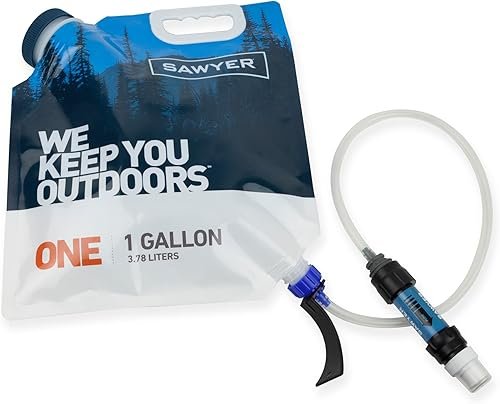
Smaller, often made of BPA-free plastic or lightweight materials. They might come with a collapsible reservoir. The Sawyer system we review below is a classic example. Built for the trail, not the kitchen.
Large-Capacity & Berkey-Style
These are the big guns. Often stainless steel with multiple filter elements, they can hold 2-6 gallons and serve a whole family or small group. They’re the go-to for serious emergency preparedness.
Buying Guide: What Actually Matters
Filter Certification & Micron Rating: This is non-negotiable. Look for independent lab testing against NSF/ANSI standards (like 42 for aesthetic effects, 53 for health contaminants). A 0.1-micron rating is the gold standard for bacteria removal.
Build Material: Plastic is cheaper and lighter. Stainless steel is more durable, doesn’t stain or hold odors, and looks better on your counter. For a daily-use system, we lean toward stainless.
Filter Lifespan & Cost: Calculate the cost per gallon. Some filters last 1,000 gallons; others 6,000. The cheapest system upfront can be the most expensive to maintain.
Flow Rate & Capacity: How much water do you drink? A 1.5-gallon system needs refilling twice a day for a family of four. Get the right size to avoid constant refilling.
Our Top Gravity Water Filter Picks for 2026
| Product | Key Specs | Price | Links |
|---|---|---|---|
| Sawyer One-Gallon System | 0.1 micron, 99.99999% bacteria, 1-gal bag | $61 |
Amazon eBay |
| PHOENIX GRAVITY 12L | Stainless steel, NSF Certified, 2 carbon filters | $2.96 |
Amazon eBay |
| Frizzlife G210-PRO | NSF Certified, reduces lead/chlorine, 2.25G | $1.89 |
Amazon eBay |
| Compact 3L System (AliExpress) | Removes bacteria, parasites, microplastics | $77.94 | AliExpress |
| Stainless-Steel 3.25G System (AliExpress) | NSF/ANSI 42 elements, includes fluoride filters | $135.08 | AliExpress |
1. Sawyer Products One-Gallon Gravity System
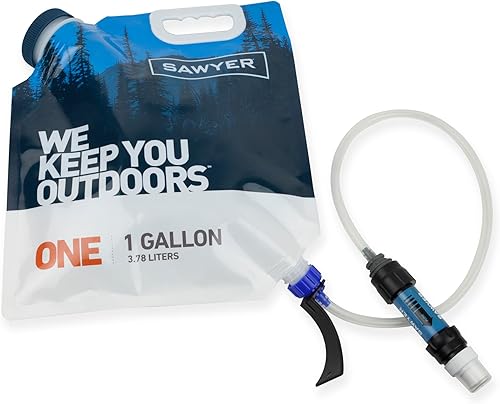
This is the backpacker’s best friend and our top portable pick. We’ve taken this system on countless trips. It’s dead simple: fill the bag, hang it from a tree, and let it drip. The 0.1-micron filter is a beast, removing 99.99999% of bacteria. The single biggest mistake we see is people not backflushing it regularly—that’s key to maintaining its legendary flow rate.
- Extremely lightweight and packable
- Proven 0.1-micron absolute filtration
- Filters 100% of microplastics
- The plastic bag can be awkward to fill and hang
- Not designed for countertop use
- Limited capacity (1 gallon)
2. PHOENIX GRAVITY 12-Liter Stainless Steel System
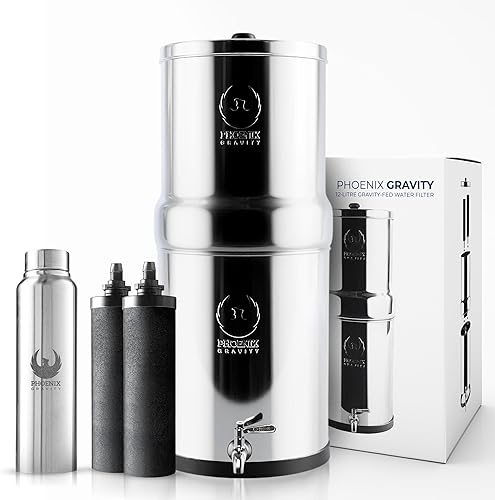
This one surprised us. For the price, the build quality is solid. The NSF certification against AISI 304 stainless steel gives us confidence. It comes with two smart carbon cartridges, which is a great value. It’s a no-frills, workhorse countertop unit that does its job well. If you want stainless without the premium brand markup, this is worth a serious look.
- Excellent value for a stainless steel system
- NSF Certified materials
- Includes two filter cartridges
- Brand is less established
- Filter performance data is less detailed than top brands
- Design is basic
3. Frizzlife G210-PRO Gravity System
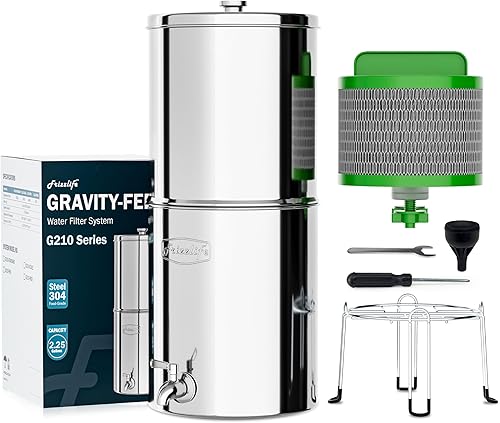
Frizzlife is making a name for itself with certified, effective filters at fair prices. This 2.25-gallon system is NSF certified to reduce lead, chlorine, and heavy metals. We appreciate their honesty: they clearly state it’s not for TDS reduction. It keeps beneficial minerals in. The stainless-steel stand is a nice touch that elevates the look and function.
- NSF/ANSI 42 certified for chlorine reduction
- Retains healthy minerals
- Sturdy build with included stand
- Not for those seeking low TDS water
- Smaller 2.25-gallon capacity
- Filter replacement cost needs monitoring

4. AliExpress Budget Pick: Compact 3L System
For the ultra-budget-conscious, this compact unit gets the job done. It claims to remove bacteria, parasites, and microplastics. We’d take those claims with a grain of salt without independent certification data, but the basic ceramic and carbon filtration principle is sound. It’s a decent starter or backup system, but don’t expect premium materials or longevity.
- Very low entry price
- Compact and lightweight
- Simple to use
- No independent certification listed
- Build quality is likely basic plastic
- Long-term durability is a question mark
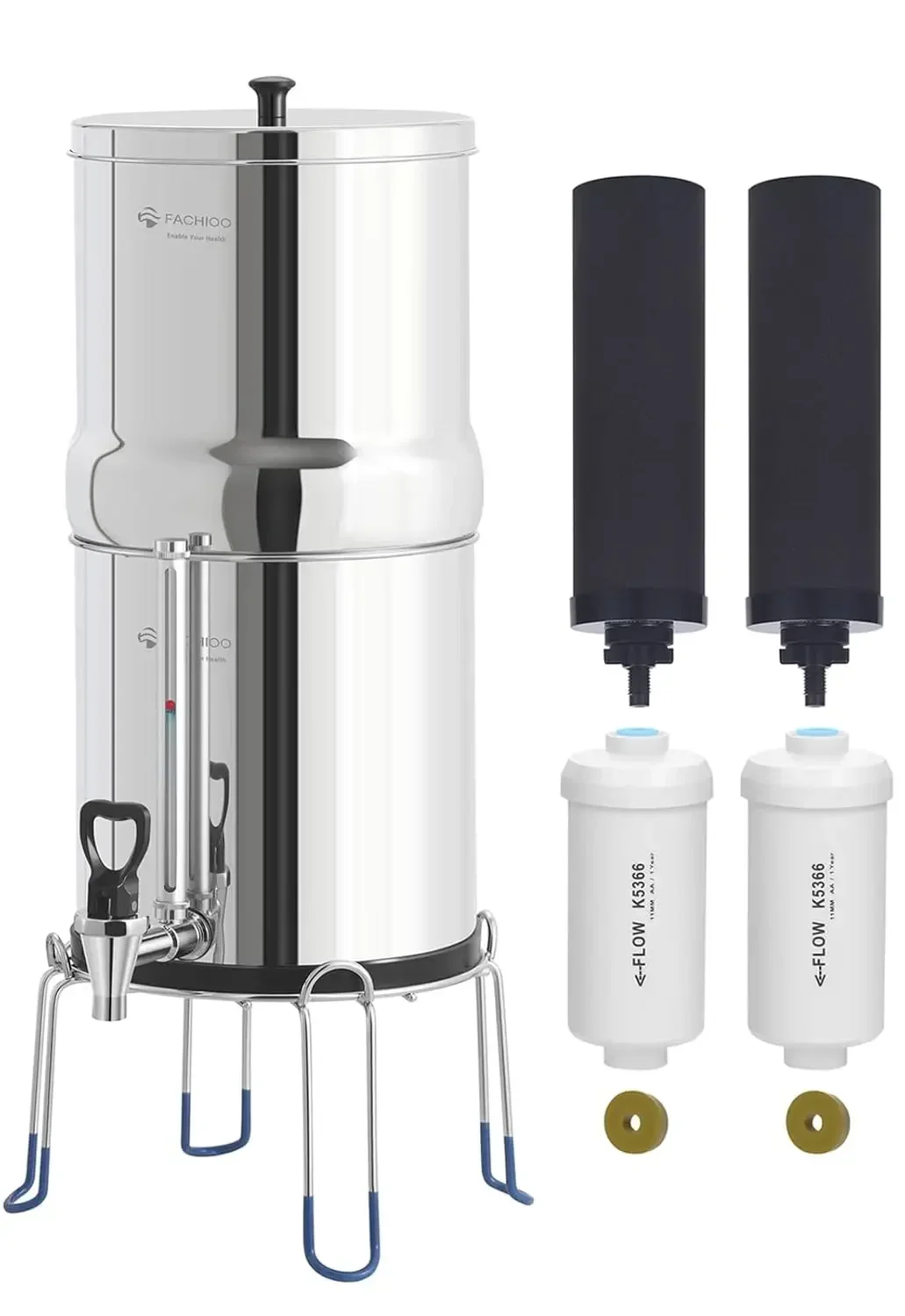
5. AliExpress Premium Pick: Stainless-Steel 3.25G System
This is a more serious contender from AliExpress. The stainless-steel build and inclusion of NSF/ANSI 42 certified black filters plus fluoride filters is compelling on paper. It’s a Berkey-style design at a potentially lower cost. The risk? Verification of the certification claims can be tricky. If legit, it’s a great value. We’d recommend proceeding with caution and checking seller reviews meticulously.
- Stainless steel construction
- Claims NSF/ANSI 42 certification
- Includes fluoride reduction filters
- Certification claims are harder to verify
- Higher price point for the platform
- Shipping and support may be less reliable
Frequently Asked Questions
- Do gravity water filters remove fluoride?
- Some do, but not all. You need a system with specific fluoride reduction filters, often made from activated alumina. Standard carbon filters won’t remove much. Always check the manufacturer’s test data for fluoride reduction claims.
- How often do I need to replace the filters?
- It depends on usage and water quality. Most ceramic filters last 6-12 months or 1,000-6,000 gallons. Carbon filters typically need replacing every 6 months. Flow rate slowing down is your best indicator it’s time.
- Can I use a gravity filter for well water?
- Absolutely, but get your well water tested first. A gravity filter is excellent for bacteria and cysts common in wells. If your well has heavy metals or chemical contaminants, you’ll need to ensure your specific filter elements are rated for those.
- Why does my filtered water sometimes taste flat or bland?
- That’s actually a sign it’s working! The filter is removing chlorine and other chemicals that give tap water its distinct taste. The “flat” taste is pure water. Some people notice it more than others. It’s not harmful—just different.
- Is a gravity filter better than a fridge water filter?
- They serve different purposes. A fridge filter is convenient for cold water and ice but is usually a simple carbon filter. A dedicated gravity system offers far superior contaminant removal, especially for bacteria and parasites. It’s a more robust barrier.
- Can these filters make me sick if not maintained?
- Yes, if neglected. A filter clogged with contaminants can become a breeding ground for bacteria. This is why regular cleaning and timely filter replacement are non-negotiable. Some people report water-induced nausea from improperly maintained systems, so stay on top of the maintenance schedule.
- Do I need to pre-filter my water?
- Not usually for municipal tap water. But if you’re using lake or river water with lots of silt, pre-filtering through a coffee filter or cloth can dramatically extend the life of your main ceramic element by preventing rapid clogging.
Final Thoughts
After years of testing, we keep coming back to gravity systems for their sheer reliability. They’re not the fastest, but they’re always ready. For daily countertop use, the stainless-steel PHOENIX or Frizzlife models offer fantastic value. For adventures, nothing beats the Sawyer’s packability.
The single biggest mistake is overbuying. Most families don’t need a massive 4-gallon tank. A 1.5 to 2.5-gallon system, filled twice a day, is plenty. Focus on certified filtration, solid build quality, and a reasonable filter replacement cost. Get that right, and you’ll have clean, great-tasting water for years, no matter what happens.
