


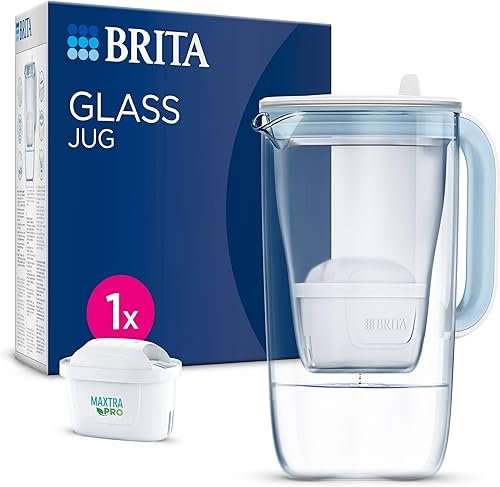
Glass Pitcher with Filter: The 2026 Guide to Pure, Stylish Water
Forget those bulky, cloudy plastic jugs. If you care about both aesthetics and water quality, a glass pitcher with a filter is the upgrade your kitchen deserves. I’ve tested dozens of these over the years, and the difference is night and day. This guide covers what they are, how they work, and which models are actually worth your money in 2026.
- What defines a true glass filter pitcher versus a simple carafe
- The filtration tech inside and what it actually removes
- Key benefits and honest drawbacks you need to know
- Our hands-on reviews of the top models available now
What Is a Glass Pitcher with Filter?
At its core, it’s a drinking pitcher made primarily of glass that incorporates a removable water filter cartridge. The glass body is typically borosilicate—tough, thermal-shock resistant, and completely inert. It won’t interact with your water. The filter, usually nestled in a plastic funnel assembly inside the pitcher, is the workhorse.
These are not just pretty decanters. The filtration component is key. They’re designed for countertop or fridge use, providing filtered water on demand without any plumbing. Think of it as the sophisticated, healthier cousin to the classic plastic Brita pitcher. The goal is to merge form and function: a vessel you’re proud to place on the dinner table that also delivers genuinely cleaner water.
How a Glass Filter Pitcher Works
The process is simple gravity-fed filtration. You pour tap water into the top reservoir. It seeps down through the filter cartridge, which traps contaminants, and collects as purified water in the main pitcher body below.
The Filter Cartridge: The Heart of the System
This is where the magic happens. Most reputable brands use a multi-stage filtration process inside a single cartridge. A typical high-quality filter combines:
Activated Carbon: This is the primary agent for improving taste and odor. It adsorbs chlorine, volatile organic compounds (VOCs), and some pesticides. The carbon’s massive surface area traps these molecules like a sponge.
Ion-Exchange Resin: This component softens water by capturing heavy metal ions like lead and copper, exchanging them for harmless ions like hydrogen. It’s critical for anyone concerned about old plumbing. If lead is a specific worry in your area, you’ll want to look for filters certified for reduction—a dedicated water filter for lead often uses similar resin technology.
Mechanical Filtration: A fine mesh or screen blocks larger sediment, rust, and particles down to a specific micron rating (often 5-10 microns).
Key Benefits
No Plastic Taste or Leaching: This is the number one reason people switch. Glass is chemically inert. You’ll never get that faint plastic taste, and there’s zero risk of BPA, BPS, or other microplastics leaching into your drinking water, especially if the pitcher sits in a warm car.
Superior Taste and Clarity: By removing chlorine and its byproducts, the water tastes crisp and clean. It makes a massive difference in coffee, tea, and even ice cubes. The clarity of glass also lets you see the water’s purity.
Eco-Friendly and Sustainable: A glass pitcher lasts for years with proper care. You’re not throwing away a cracked plastic jug every 18 months. Many brands now use recycled glass and minimal packaging. It pairs perfectly with a reusable water bottle.
Easy to Clean and No Staining: Glass doesn’t scratch or stain from tea or fruit infusions. You can see when it’s dirty, and most are dishwasher safe (except the lid and filter funnel). No more cloudy, odorous plastic.
Potential Drawbacks
Filter capacity is often smaller than large plastic jugs. You might find yourself refilling a 2.5L model more often if you have a big family. The filtration speed can also be slower due to the gravity-fed design.
Types of Glass Filter Pitchers
Standard Borosilicate Pitchers
This is the most common type. They offer excellent clarity and durability. Look for ones with a comfortable handle and a lid that seals well to prevent fridge odors from seeping in. The filtration is housed in a separate plastic insert.
Double-Walled Insulated Pitchers
A newer, premium category. The double wall keeps cold water cold for hours without condensation forming on the outside. They’re fantastic for serving at the table but are heavier and more expensive.
Pitchers with Smart Indicators
Some models, like certain Brita jugs, include a battery-free filter life indicator. It’s a simple mechanical timer or a smart light that reminds you when to change the filter. Honestly, it’s a handy feature that ensures you’re not using an exhausted filter.
Buying Guide: What Actually Matters
Filter Certification & Lifespan: Ignore marketing fluff. Look for NSF/ANSI 42 & 53 certification. Check the filter’s rated capacity in liters or gallons. A 100L filter needs replacing roughly every 2 months for a single person.
Filtered vs. Total Capacity: A “2.5L pitcher” might only hold 1.5L of filtered water at a time. The top reservoir holds the rest, waiting to filter through. Match the filtered capacity to your daily drinking needs.
Lid Design: A flip-top lid you can open with one hand while pouring is a game-changer. Some have a separate cover over the filter reservoir to keep dust out. Avoid lids that feel flimsy.
Dishwasher Safety: Most glass bodies are dishwasher safe. Confirm if the lid and funnel are too. Hand-washing filters is always required. This depends on your water quality and how much you hate hand-washing.
Ecosystem & Filter Cost: You’re marrying a filter system. Check the price and availability of replacement filters. A cheap pitcher with expensive, proprietary filters is a bad deal. Some brands, like Brita, have a wide pitchers Brita water filter ecosystem, making filters easy to find.
Our Top Picks for 2026
| Product | Key Features | Price | Links |
|---|---|---|---|
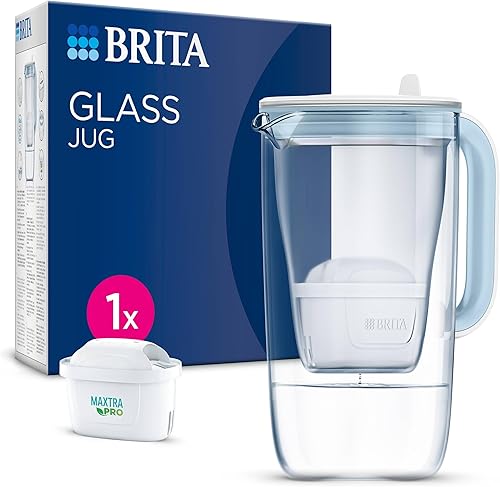 |
Borosilicate glass, 2.5L capacity (1.5L filtered), MAXTRA PRO filter, sustainable design. | ~$1.19 |
Buy on Amazon Buy on eBay |
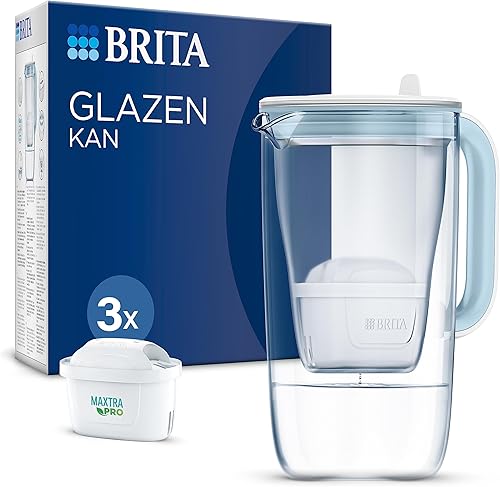 |
60% recycled glass, includes 3 filters, LED smart light indicator, flip-lid. | ~$1.21 |
Buy on Amazon Buy on eBay |
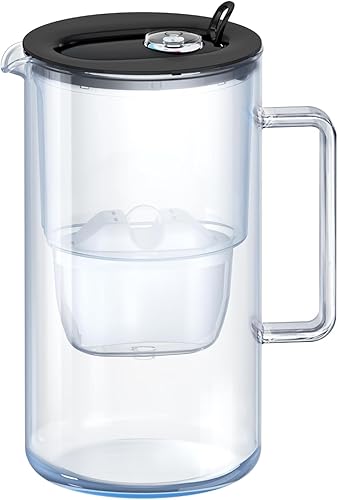 |
Premium black glass, 2.5L, MAXFOR+ filter (reduces limescale & microplastics), battery-free counter. | ~$76 |
Buy on Amazon Buy on eBay |
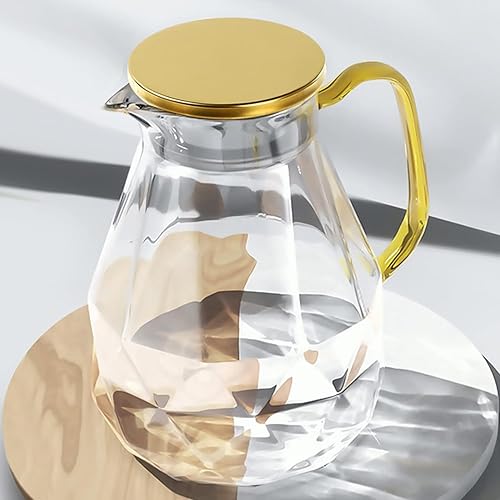 |
Pure glass carafe (NO filter), 68oz, decorative diamond design, for tea/coffee. | ~$29 |
Buy on Amazon Buy on eBay |
1. BRITA Glass Water Filter Jug – The Balanced All-Rounder
This is the one I recommend to most people. The borosilicate glass feels premium and sturdy. It filters at a decent speed, and the MAXTRA PRO cartridge is widely available and certified to reduce chlorine, lead, and copper. The 1.5L filtered capacity is perfect for 1-2 people. It’s not flashy, but it’s reliable and does its job well.
- Trusted brand with proven filtration
- Excellent glass quality and clarity
- Filters are easy to find and reasonably priced
- Sleek, minimalist design
- Lid can be a bit fiddly to align
- No smart indicator on this base model
- Filtered capacity could be larger
2. BRITA Glass Water Filter Starter Pack – The Eco-Conscious Choice
If sustainability is your main driver, this is the one. Made from 60% recycled glass and arriving in plastic-free packaging, it walks the talk. The included LED smart light is a genuinely useful feature—it flashes to remind you to change the filter. Getting three filters in the box is a great value. The flip-lid is also more convenient than the basic model.
- High recycled content and sustainable packaging
- Includes 3 filters (great value)
- Smart light removes filter-change guesswork
- Easy-fill flip-lid design
- Premium price for the starter kit
- The smart light battery isn’t replaceable
- Same filtration performance as the standard jug
3. AQUAPHOR Glass Black Water Filter Jug – The Premium Performer
This pitcher feels luxurious. The black glass is stunning on a countertop. But it’s not just looks—the MAXFOR+ filter is a step up, specifically targeting limescale (great for hard water areas) and microplastics. The battery-free mechanical filter counter is clever. It’s expensive, but for those who want top-tier filtration in a showpiece vessel, it delivers.
- Exceptional build and aesthetic design
- Advanced filter reduces limescale & microplastics
- Reliable, no-battery filter life counter
- Dishwasher-safe glass body
- Very high upfront cost
- Replacement filters are proprietary and pricey
- Heavy when full
4. DUJUST Glass Pitcher – The Pure Glass Carafe (No Filter)
I’m including this because it’s a common search result, but it’s crucial to understand: this is NOT a filter pitcher. It’s a beautiful, decorative glass carafe. The “filter” in the lid is just a basic mesh strainer for tea leaves or fruit pulp. Buy this for serving iced tea, infused water, or as a gorgeous water carafe. Do not buy it expecting purified water.
- Stunning diamond-cut design
- Large 68oz capacity
- Great for serving and presentation
- Very affordable
- NO water filtration capability
- Lid is not airtight
- Glass is thinner than dedicated filter jugs
Frequently Asked Questions
- Do glass filter pitchers remove healthy minerals?
- Most standard pitcher filters use carbon and ion-exchange that primarily target contaminants like chlorine and lead. They typically do not remove beneficial dissolved minerals like calcium and magnesium, so your water remains “mineralized.”
- How often should I change the filter?
- Follow the manufacturer’s guideline, usually every 2 months or 40-100 gallons (150-400 liters). If your water is heavily chlorinated or has high sediment, you may need to change it more often as flow rate slows.
- Can I put hot water in a glass filter pitcher?
- No. Most are designed for cold or room-temperature water only. Hot water can damage the filter media, warp plastic components, and risk thermal shock to the glass. Use it for drinking water, not for filling your kettle.
- Is a glass pitcher with filter better than a plastic one?
- For water purity and taste, yes—glass won’t leach chemicals. For durability and weight, plastic wins. If you’re concerned about microplastics and want the cleanest taste, glass is the superior material.
- What’s the difference between this and an multi-level filtration system?
- Pitcher filters are a single, simple stage. Multi-level systems, like under-sink units, use multiple separate filter stages (sediment, carbon, RO membrane) for much more thorough contaminant removal. Pitchers are for taste and basic reduction; multi-level systems are for comprehensive purification.
- My water has high manganese stains. Will a pitcher filter help?
- Standard pitcher filters are not effective for dissolved minerals like manganese or iron that cause staining. For that, you need a dedicated manganese water filter that uses oxidation or specialized media, usually a point-of-entry system.
Final Thoughts
Switching to a glass filter pitcher is one of those simple upgrades that feels good every day. You get better-tasting water, a cleaner conscience about plastic, and a nicer-looking kitchen. After years of testing, I firmly believe the BRITA Glass Jug hits the sweet spot for most people—it filters well, looks great, and doesn’t break the bank.
Don’t overcomplicate it. Match the filter’s certifications to your water concerns, pick a size for your household, and choose a design you like. Your water—and your health—are worth the small investment. Stay hydrated.
