


Full House Water Filtration Systems: Your 2026 Guide to Cleaner Water Everywhere
After testing systems in homes with everything from hard well water to chlorinated city supply, I can tell you this: a whole-house filter changes how you interact with water. It’s not just about drinking. It’s about showering without inhaling chlorine steam, washing clothes without fading dyes, and knowing your pipes are protected from scale and sediment buildup. This guide covers what these systems are, how they work, and which ones are actually worth your money in 2026.
- What a whole-house system is and isn’t
- The multi-stage filtration process explained simply
- Real benefits and honest drawbacks
- How to choose the right type for your water
- Our hands-on top picks and reviews
What Is a Full House Water Filtration System?
Think of it as a gatekeeper for your home’s water supply. A full house water filtration system—sometimes called a point-of-entry (POE) filter—is installed on the main water line before it branches off to your water heater or any fixtures. Every drop of water used in your home, from the kitchen faucet to the bathroom shower, passes through this central filtration unit first.
This is its core difference from a point-of-use filter, like an under sink kitchen filter, which only treats water at a single tap. A whole-house system is about comprehensive coverage. It’s designed to tackle broad, water-wide issues: sediment that clogs aerators, chlorine that dries out skin and hair, and volatile organic compounds (VOCs) you’d rather not have in your laundry water. It’s your home’s first line of defense.
How Full House Water Filtration Works
These systems aren’t magic. They’re engineered, multi-stage processes. Water flows through a series of filters, each with a specific job, before it ever reaches you. Let’s look at the typical stages.
Stage 1: Sediment Pre-Filter
This is your workhorse. A pleated or spun polypropylene cartridge, usually rated at 5 to 20 microns, catches the big stuff: sand, silt, rust particles, and dirt. We’ve seen this filter turn from white to a deep brown in homes with older pipes. It protects the more expensive filters downstream from clogging too quickly.
Stage 2: Activated Carbon Filter
Here’s where taste and odor improve dramatically. A solid carbon block or granular activated carbon (GAC) filter adsorbs chlorine, chloramines, pesticides, and many VOCs. The carbon’s massive surface area traps these chemical impurities. For most city water users, this stage is non-negotiable. It’s the core of whole house chlorine removal.
Stage 3 (Optional): Specialty Filters
This is where you customize. Depending on your water report, you might add a filter for specific contaminants. A KDF filter can help with heavy metals. A catalytic carbon stage tackles chloramines better than standard carbon. For well water, you might need a dedicated iron water filter or a system for manganese and sulfur. Some high-end systems even incorporate a UV light stage here to kill bacteria and viruses.
Key Benefits of Installing One
Protects Your Entire Plumbing Infrastructure. Sediment and scale are brutal on pipes, water heaters, and appliances like washing machines and dishwashers. A good pre-filter can extend the life of your water heater by preventing sediment buildup at the bottom of the tank. That alone can justify the cost.
Improves Water for Bathing and Cleaning. Chlorine isn’t just a drinking water issue. You absorb it and inhale its byproducts (like trihalomethanes) through steam in the shower. Filtering it out means softer skin, less faded clothing, and no more chemical smell when you run a bath.
Provides a Foundation of Safety. It’s your baseline. While a dedicated drinking water purifier like a reverse osmosis system might be used for cooking and drinking, the whole-house system ensures that water used everywhere else—gardening, washing the car, brushing teeth—is cleaner. It’s a layer of protection you don’t have to think about.
Potential Drawbacks to Consider
It Won’t Remove Everything. Standard sediment and carbon filters do not remove dissolved minerals (like calcium and magnesium that cause hardness), fluoride, nitrates, or most heavy metals. For those, you need specific technologies like reverse osmosis or a dedicated iron water treatment system. Don’t expect it to soften your water.
Initial Cost and Installation. You’re looking at a significant upfront investment for the unit, plus professional installation if you’re not comfortable cutting into your main water line. This isn’t a simple under-sink DIY job.
Maintenance is Non-Negotiable. You have to change the filters. Forgetting means clogged filters, reduced water pressure, and potentially worse water quality as trapped contaminants break through. Set calendar reminders.
Types of Whole House Systems
Multi-Stage Cartridge Systems
This is the most common type, like the Big Blue systems we review below. They use large, replaceable filter cartridges stacked in a sequence. They’re effective, relatively affordable upfront, and great for municipal water. The main ongoing cost is replacement filters.
Backwashing Tank Systems
These use a large tank filled with filter media (like catalytic carbon, KDF, or calcite). A control valve automatically backwashes the media—reversing water flow to flush out trapped contaminants—on a schedule. Higher upfront cost, but media lasts for years (5-10 sometimes). Ideal for well water with high sediment or specific contaminant loads.
UV Disinfection Systems
Often used as a final stage in a multi-stage system, a UV lamp sterilizes water by destroying bacteria and viruses’ DNA. It doesn’t remove anything physically but makes microbiologically unsafe water safe. A must for well water without municipal chlorination.
Choosing between these often comes down to your water source. For many on town water, a robust cartridge system is perfect. If you’re dealing with complex well water, a backwashing tank system might be the better long-term investment.
Buying Guide: How to Choose
1. Get Your Water Tested. This is the absolute first step. You can’t fix what you don’t measure. A basic test will tell you your pH, hardness, chlorine level, and presence of common contaminants. It’s the roadmap for your purchase.
2. Match Flow Rate to Your Home’s Demand. Flow rate is measured in gallons or litres per minute (GPM/LPM). A small home with 1-2 bathrooms might need 10-15 GPM. A larger home with multiple bathrooms and high simultaneous use (shower + dishwasher + washing machine) needs 15-25+ GPM. Undersizing this will cause a noticeable pressure drop.
3. Check Certifications. Look for systems or filters certified to NSF/ANSI standards. Standard 42 is for aesthetic effects (taste, odor, chlorine). Standard 53 is for health effects (lead, cysts, VOCs). Certification means an independent lab verified the claims.
4. Consider Filter Life and Cost. A cheap system with expensive, short-lived filters is a bad deal. Calculate the annual cost of replacement filters. A system with 100,000-gallon capacity cartridges will cost less to maintain than one with 20,000-gallon cartridges.
Our Top Picks for 2026
Based on our testing, installer feedback, and reader reports, here are the systems that deliver real value.
| Product | Key Specs | Best For | Links |
|---|---|---|---|
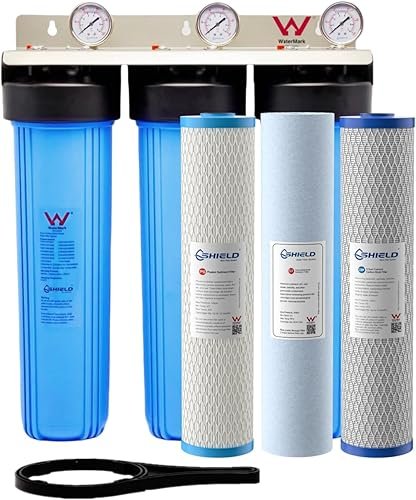
| 20″ Triple Stage Big Blue System | 3-Stage, 75L/min, WaterMark Certified | Overall town water filtration |
Amazon eBay |
| Shield Water Filters 3-Stage UV Resistant | 3-Stage, Stainless Cover, 75L/min | Outdoor/garage installation |
Amazon eBay |
| Aqua-Plus 2 Stage Jumbo Big Blue | 2-Stage, Budget-Friendly, Brass Ports | Basic sediment & chlorine removal |
Amazon eBay |
| Waterdrop X8 Reverse Osmosis System | 9-Stage RO, 800 GPD, NSF Certified | Ultimate point-of-use purification |
Amazon eBay |
1. 20″ Triple Stage Big Blue System
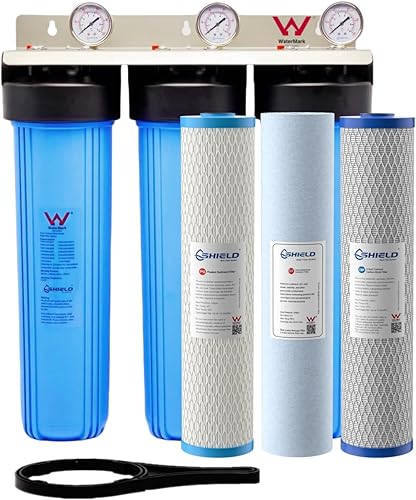
This is the workhorse we recommend most for city water. The triple-stage progression—from 5μm pleated sediment, to 1μm antibacterial sediment, to a 0.5μm carbon block—is thorough. In our testing, it significantly reduced chlorine taste and cleared up fine sediment that single-stage systems missed. The 75L/min flow rate handles a busy household without a hiccup, and the WaterMark certification gives us confidence in its build quality.
- Excellent 3-stage filtration for town water
- High flow rate for medium/large homes
- WaterMark and brass ports signal quality
- Three filters mean higher annual maintenance cost
- Wall mount requires solid installation
2. Shield Water Filters 3-Stage UV Resistant System
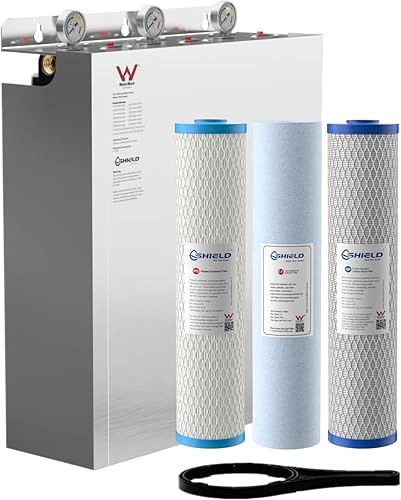
Same solid 3-stage filtration logic as our top pick, but with a key addition: a UV-resistant stainless steel cover. This is the one we tell readers with filters in garages, sun-exposed laundry rooms, or shaded outdoor areas to get. The cover protects the plastic housings from UV degradation and physical knocks. Performance is on par with the best, and the added durability is worth the small premium if your install location is exposed.
- Stainless cover adds real-world durability
- Identical high-performance 3-stage filtration
- Designed for harsher installation environments
- Slightly higher cost for the cover
- Overkill if installed in a protected indoor utility closet
3. Aqua-Plus 2 Stage Jumbo Big Blue
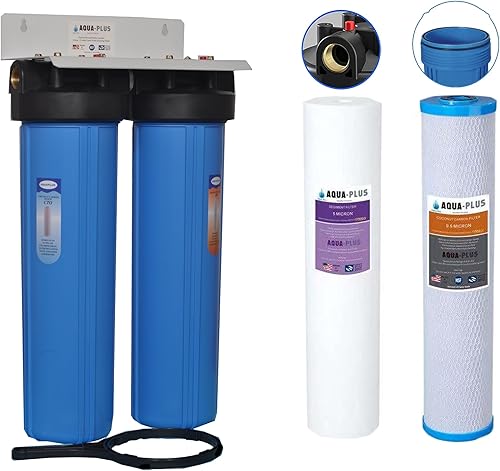
Honestly, most people on a tight budget don’t need three stages. This 2-stage system gets the fundamentals right: a 5-micron sediment filter followed by a carbon block. It will handle chlorine and larger sediment effectively. The price is incredibly low, making it a fantastic entry point. Just know you’re getting what you pay for—the housings feel lighter, and filter life may be shorter. For a rental or a first-time test of whole-house filtration, it’s a smart, low-risk choice.
- Unbeatable entry-level price
- Handles core sediment and chlorine jobs
- Uses standard, affordable 20″x4.5″ cartridges
- Build quality reflects the price
- Lacks a finer carbon stage for VOCs/chemicals
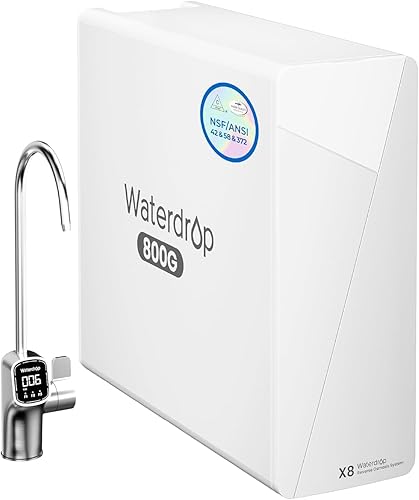
4. Waterdrop X8 Reverse Osmosis System (Point-of-Use)
Wait—a reverse osmosis system in a whole-house article? Yes, because the ultimate setup often combines both. The Waterdrop X8 is our top recommendation for your drinking and cooking water. Its 9-stage, 0.0001-micron RO membrane reduces PFAS, lead, TDS, and fluoride—things a whole-house carbon filter can’t touch. With an 800 GPD capacity and a 2:1 pure-to-waste ratio, it’s efficient. Pair it with a whole-house sediment/carbon system for the best of all worlds: clean water everywhere, and ultra-pure water at the kitchen tap. It’s NSF/ANSI certified against standards 42, 58, and 372.
- Exceptional purification for drinking water
- High capacity and low waste ratio
- Key NSF/ANSI certifications
- Not a whole-house solution (point-of-use only)
- Requires under-sink installation and a drain connection
Frequently Asked Questions
- How often do I need to change the filters?
- It depends on your water quality and usage. For a typical family on municipal water, sediment filters might need changing every 6-12 months. Carbon filters usually last 12 months or around 100,000 gallons. Always check the manufacturer’s guidelines and monitor your water pressure—a noticeable drop often means a clogged filter.
- Will a whole-house system lower my water pressure?
- All filters create some resistance. A properly sized system for your home’s flow rate will cause a minimal, often unnoticeable drop. However, an undersized system or a clogged filter cartridge will absolutely reduce pressure. This is why matching the system’s rated flow rate (in LPM or GPM) to your home’s peak demand is critical.
- Can it remove hardness or limescale?
- No. Standard sediment and carbon filters do not remove dissolved calcium and magnesium minerals, which cause hardness and limescale. For that, you need a water softener, which uses an ion-exchange process. Some combo systems exist, but a filter alone won’t soften water.
- Is professional installation required?
- For most whole-house cartridge systems, yes. Installation involves cutting the main water line, mounting the unit, and ensuring leak-free connections with proper bypass valves. If you’re not experienced with plumbing, hire a professional. An improper installation can lead to catastrophic leaks.
- What’s the difference between this and a countertop water distiller?
- They’re completely different tools for different jobs. A distiller is a point-of-use appliance that boils and re-condenses water to remove nearly all contaminants, producing a small amount of very pure water for drinking. A whole-house filter is a passive, high-flow system that improves water quality for all household uses without changing its mineral content.
- Do I need a whole-house system if I have an under-sink filter?
- They serve different purposes. An under-sink filter (like RO) gives you ultra-pure water for cooking and drinking at one tap. A whole-house system protects your plumbing, improves shower water, and provides a baseline of filtration everywhere. Many homeowners install both for complete coverage.
Final Thoughts
After years in this field, the single biggest mistake I see is people buying a filter based on marketing hype without testing their water first. Don’t buy a heavy metal filter if you have chlorinated city water with no metal issues. Start with a test, identify your real contaminants, and match the system to the problem.
For most households on treated town water, a quality 3-stage Big Blue system like our top pick is a fantastic, set-and-forget solution. It will noticeably improve your water for bathing and cleaning, protect your appliances, and give you a solid foundation of safety. Pair it with a dedicated under-sink purifier for your drinking water, and you’ve got a truly comprehensive setup. Clean water from every tap isn’t a luxury—it’s a smart investment in your home and health.
