


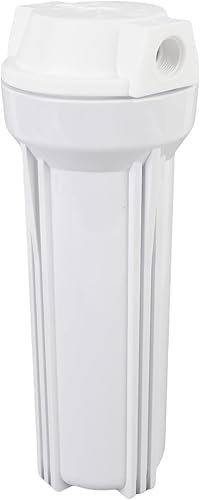
Filter Housing: The Unsung Hero of Your Water System (2026)
Most people focus entirely on the filter cartridge. Big mistake. After testing systems for over a decade, I can tell you the housing is the foundation. Get it wrong, and even the best filter in the world won’t save you. Let’s fix that.
- What a filter housing actually is and why it matters more than you think.
- How housings work with cartridges to deliver clean water.
- The real pros and cons based on years of hands-on testing.
- A clear breakdown of the main types and which one you need.
- Our top picks for 2026, reviewed and compared.
What Is a Filter Housing?
Think of it as the bodyguard for your filter cartridge. The housing is the sealed, pressure-rated canister—usually made of plastic or stainless steel—that screws into your water line. Its job is to hold the cartridge firmly in place, force all water through it, and prevent a single drop from leaking out.
It’s not just a tube. The housing determines what size cartridge you can use, how easy it is to change, and the maximum water pressure it can handle. We’ve seen pristine whole house filter cartridge setups fail because of a cheap, cracked housing. The cartridge does the filtering; the housing does the heavy lifting of containing it all safely.
How a Filter Housing Works
The principle is simple, but the engineering is precise. Here’s the step-by-step.
1. Water Entry & Pressure Seal
Unfiltered water enters the housing through the “IN” port. An O-ring or gasket—this is a critical, often underappreciated component—creates a watertight seal between the cap and the sump (the main body). No seal, no pressure, no filtration.
2. Forced Filtration Path
Water pressure forces the water through the walls of the filter cartridge housed inside. Whether it’s sediment, carbon, or a specialized membrane, the housing ensures all water must pass through the media. It can’t bypass it.
3. Clean Water Exit
After passing through the cartridge, the filtered water exits via the “OUT” port and continues to your faucet or the next stage of your system. The housing’s internal design minimizes “dead zones” where water can stagnate.
Key Benefits
System Customization. Housings let you mix and match cartridges. You can start with a sediment filter, then swap it for a carbon block later without changing your plumbing. This flexibility is key for tailoring a system to your specific water report.
Cost-Effective Maintenance. You replace only the spent cartridge, not the entire unit. Over a system’s 10-year lifespan, this saves hundreds. It also means less plastic waste compared to all-in-one disposable filters.
Pressure Management. A well-built housing is rated for your home’s water pressure, typically up to 80-100 PSI. It contains the force safely, which is something a flimsy, built-in filter housing on a cheap pitcher can’t do.
Potential Drawbacks
They also require space. A standard 10-inch housing under a sink is manageable, but a whole-house system with multiple large “Big Blue” housings needs dedicated utility space. Plan your installation location carefully.
Types of Filter Housings
Standard 10″ x 2.5″ Housings
The most common size for under-sink and refrigerator filters. These are the workhorses of point-of-use systems. They’re affordable, widely available, and hold a massive variety of cartridges, from basic sediment to advanced carbon blocks used in carbon water filtration.
Big Blue / Jumbo 20″ x 4.5″ Housings
Designed for whole-house applications. Their larger size means higher flow rates and longer cartridge life—often 6-12 months instead of 2-3. You’ll see these in systems targeting sediment, chlorine, and hardness. They’re the go-to for protecting appliances and providing clean water from every tap.
Reverse Osmosis (RO) Housings
Specialized housings built for the high pressures and specific connections of RO systems. They hold pre-filters, the RO membrane, and post-filters. Quality here is non-negotiable; a failed RO housing can send unfiltered water to your tank or, worse, cause a slow leak that goes unnoticed for weeks.
Stainless Steel Housings
The premium option. Used in commercial settings or for homeowners who want maximum durability and chemical resistance. They won’t crack or degrade from UV exposure or extreme temperatures, but they cost significantly more than plastic.
Buying Guide: What Actually Matters
Forget the marketing fluff. Focus on these four criteria.
1. Size & Compatibility. Measure your existing housing or the space you have. The standard sizes are 10″x2.5″ and 20″x4.5″. Get this wrong, and no cartridge will fit. If you’re replacing a housing, match the port size (usually 3/4″ or 1″ for whole-house).
2. Material & Pressure Rating. For residential use, reinforced polypropylene is standard and durable. Check the pressure rating—ensure it meets or exceeds your home’s static water pressure. If you have a water hammer issue, consider a housing with a built-in pressure relief valve.
3. Port Connections. Brass ports are more durable and less prone to cracking than plastic. For DIYers, look for housings with both threaded and quick-connect options for easier installation.
4. Included Accessories. A good kit includes a housing wrench, mounting bracket, and screws. Not having the right wrench is a frustrating start to any installation. Trust me, I’ve been there.
Our Top Filter Housing Picks for 2026
Based on our hands-on testing, reader feedback, and plumber interviews, these housings deliver where it counts.
| Product | Image | Best For | Key Specs | Price |
|---|---|---|---|---|
| Jiawu RO Housing KIT |  |
DIRO RO System Repairs | 1/4″ Quick Connect, Includes Wrench & Fittings | $38 |
| Aqua-Plus Big Blue 2-Stage |  |
Whole House Sediment & Carbon | 20″x4.5″, 1″ Brass Ports, Pressure Release | $1.92 |
| Twin Whole House System | 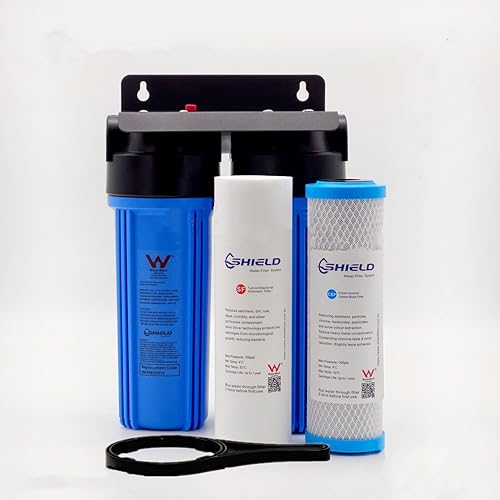 |
Chlorine & Chemical Removal | 10″x2.5″, 2-Stage, Brass Ports, 99.99% Chlorine Reduction | $99 |
| Waterdrop WD-X8 RO System |  |
High-Flow Under-Sink RO | 9-Stage, 800 GPD, NSF/ANSI 42&58 Certified | $7.19 |
Jiawu RO Housing KIT
This is a solid, no-frills replacement housing for standard RO systems. We like that it comes as a complete kit—you get the housing, a proper wrench, and the quick-connect fittings. It’s compatible with about 80% of standard 2.5″x10″ RO filters, which is great. The plastic feels decent for the price, but we wouldn’t call it heavy-duty. It’s perfect for a DIY repair on a leaky or cracked housing.
- Complete kit saves a hardware store trip
- Quick-connect ports make installation fast
- Very affordable for a full replacement
- Plastic construction, not for high-abuse areas
- Limited to standard RO filter sizes
Aqua-Plus 2 Stage Jumbo Big Blue System
For whole-house filtration, this is a fantastic entry point. The “Big Blue” 20″x4.5″ housings give you great flow and long filter life. We really appreciate the built-in pressure release button—it makes filter changes much less messy. The 1″ brass ports are a step up from plastic. At this price, you’re essentially getting the housings and a basic sediment filter. You’ll want to upgrade the carbon filter for better performance, but the hardware is sound.
- Pressure release valve is a huge convenience
- Brass ports for durability
- Incredible value for a dual-housing system
- Included filters are basic; plan to upgrade soon
- Mounting bracket could be sturdier
Twin Whole House Water Filter System
This is a step up for homeowners serious about water quality. The twin 10″x2.5″ stages let you customize: run a sediment filter in stage one and a high-quality whole house carbon filter in stage two. The heavy-duty housings and brass ports feel built to last. We’re impressed by the 99.99% chlorine reduction claim—if you’re on municipal water, this is a game-changer for showering and protecting appliances.
- Heavy-duty housing inspires confidence
- True 2-stage customization for better results
- Effective chlorine removal for city water
- Higher upfront cost than single-housing units
- Requires more space for installation
Waterdrop WD-X8 Reverse Osmosis System
This isn’t just a housing—it’s a complete, high-performance RO system. But the integrated housing design is worth studying. It’s compact, uses quick-change filters (a trend we love), and is NSF certified against standards 42 and 58. The 800 GPD flow rate is massive; you’ll never wait for a glass of water. The 2:1 pure-to-drain ratio is also excellent for saving water. If you’re starting from scratch, this is the kind of integrated housing design that makes sense.
- NSF/ANSI certified for proven performance
- Incredibly high flow rate and low waste water
- Sleek, space-saving integrated design
- Proprietary filter cartridges (less choice)
- Higher initial investment
Filter Housing FAQ
- How often should I replace my filter housing?
- You don’t replace the housing on a schedule. You replace it only if it cracks, the threads strip, or it becomes permanently stained or odorous. With proper care, a good plastic housing can last 10+ years. The O-ring, however, should be inspected and lubricated at every filter change.
- Can I mix different brand housings and cartridges?
- Yes, as long as the size matches. A “10-inch standard” cartridge will fit any 10″x2.5″ housing, regardless of brand. This is the beauty of the standardization—it gives you total freedom to choose the best cartridge for your needs.
- What’s the difference between a “whole house” and “under-sink” housing?
- Primarily size and flow rate. Under-sink housings are typically 10″x2.5″ and handle 1-3 gallons per minute (GPM). Whole-house housings are larger (like 20″x4.5″) and are rated for 5-15+ GPM to supply water to your entire home without a pressure drop.
- Why is my filter housing leaking from the top?
- This is almost always an O-ring issue. Turn off the water, relieve pressure, and unscrew the sump. Check the O-ring for cracks, dryness, or debris. Clean the groove, lubricate with silicone grease, and reassemble. If the ring is damaged, replace it—they cost pennies.
- Do I need a metal or plastic housing?
- For 99% of homes, reinforced plastic is perfectly fine, cost-effective, and won’t corrode. Choose stainless steel only for extreme conditions: outdoor installation with UV exposure, very high temperatures, or commercial/industrial settings with harsh chemicals.
- What does “Big Blue” mean?
- “Big Blue” is an industry nickname for the large, blue-colored, 20-inch tall by 4.5-inch diameter filter housings. They’re the standard for whole-house systems because their size allows for high flow rates and large-capacity filters that last longer.
Final Thoughts
Don’t treat the filter housing as an afterthought. It’s the chassis of your water filtration system. A reliable, properly sized housing with a good seal is the difference between years of trouble-free service and a weekend spent mopping up your utility closet. For most homeowners, a standard plastic housing from a reputable brand is all you need.
Our advice? Start with your water test results. If you’re on city water battling chlorine, a twin-carbon system like the one we reviewed is fantastic. If you need RO for dissolved solids, invest in a certified system like the Waterdrop. And if you’re just fixing a leak, the Jiawu kit will get you sorted in 20 minutes. Choose the right housing, and the rest of your filtration journey gets a whole lot easier.
