


You’ve got a water filter. Great. But that plastic housing is useless without the right filter cartridge inside it. This little cylinder is the heart of the system, and picking the wrong one is like putting cheap oil in a sports car—it’ll run, but poorly. After testing dozens of these things, I can tell you the differences are huge. We’ll break down exactly what they are, how they work, and which ones are actually worth your money in 2026.
- What a filter cartridge actually is and what it removes.
- The science behind carbon, sediment, and specialty cartridges.
- How to choose one based on your water, not marketing.
- Reviews of popular cartridges for pitchers, undersink, and showers.
What Is a Filter Cartridge?
Think of a filter cartridge as a specialized, cylindrical sponge with a very specific job. It’s a self-contained module packed with filtration media—like activated carbon, ion exchange resin, or ceramic—sealed inside a plastic housing. You slot it into your filter pitcher, under-sink system, or whole-house unit. Water is forced through it, and the media inside grabs onto impurities.
The single biggest mistake we see is people treating them as universal. They’re not. A cartridge designed for your Brita pitcher won’t fit your refrigerator, and a sediment cartridge won’t remove chlorine. The magic is in the media type and its micron rating, which dictates what size particles it can catch. For a deeper dive into systems that use these, check out our guide on chlorine filters.
How a Filter Cartridge Works
It’s not magic, it’s material science. Water enters the cartridge and takes a forced path through layers of media. Each layer has a job.
Mechanical Filtration
This is the simplest layer. A physical barrier, like a spun polypropylene or ceramic shell, blocks particles based on size. A 5-micron cartridge stops sand and rust. A 0.5-micron one can trap some bacteria and cysts. It’s a brute-force approach.
Adsorption (The Carbon Workhorse)
This is where taste and odor improvement happens. Activated carbon has a massive, porous surface area. As water passes, organic compounds, chlorine, and volatile chemicals chemically bond—or “adsorb”—to the carbon. It’s incredibly effective. In our testing, a quality carbon cartridge can make municipal water taste like spring water.
Ion Exchange & Specialty Media
Some cartridges soften water by swapping hardness ions (calcium, magnesium) for sodium or potassium ions. Others use specialized media to target heavy metals like lead or arsenic. This is where you see claims about reducing specific contaminants. Always look for NSF/ANSI certifications (like 42 for aesthetic effects, 53 for health contaminants) to back those claims up.
Key Benefits of a Good Cartridge
Targeted Contaminant Removal: You can address your exact water problem. High chlorine? A carbon block cartridge is your best friend. Sediment from old pipes? A pleated polyester cartridge will catch it. This specificity is why a one-size-fits-all approach fails.
Cost-Effective Maintenance: Compared to replacing an entire filter system, swapping a cartridge is cheap. It’s the sustainable way to keep your water clean. Most need changing every 2-6 months, depending on capacity and your water quality.
Improved Taste and Odor: Honestly, this is why most people buy them. A fresh carbon cartridge removes the chlorine “pool water” taste and musty odors. It makes drinking water from the tap a pleasure, not a chore.
Protection for Appliances: Using the right cartridge in your coffee maker or kettle prevents limescale buildup. This extends the life of your appliances. It’s a simple, proactive step.
Potential Drawbacks & Limitations
They Have a Finite Capacity: Every cartridge has a gallon or liter rating. Exceed it, and performance drops off a cliff. Your water might look clear, but it’s not being filtered.
Not a Cure-All: A basic pitcher cartridge won’t remove dissolved minerals, heavy metals, or microorganisms unless it’s specifically designed and certified to do so. Don’t expect miracles from a $5 generic cartridge. For serious purification, you might need a system like a ionizing water filter or a dedicated RO system.
Compatibility Headaches: The wrong size or fitting means leaks. We’ve seen homeowners flood their cabinets by forcing a non-OEM cartridge. Always double-check model numbers.
Types of Filter Cartridges
Sediment Cartridges
Your first line of defense. These are pleated, spun, or string-wound filters that catch dirt, sand, and rust. They’re rated by micron size. A 20-micron is good for whole-house pre-filtration. A 1-micron is for polishing water before a carbon filter.
Activated Carbon Cartridges
The most common type. They come in two main forms: granular activated carbon (GAC) and solid carbon block. Carbon blocks are denser and generally more effective, especially at finer micron ratings. They’re fantastic all-rounders for improving taste and removing chlorine.
Specialty & Combination Cartridges
These are the problem-solvers. You’ll find cartridges with ion exchange resin for softening, KDF media for heavy metals, or sub-micron membranes for bacteria. Many modern cartridges combine a sediment layer with a carbon block for a two-stage punch in one unit. If you’re specifically concerned about chlorine, a dedicated chlorine removal filter cartridge is often more effective than a generic one.
Filter Cartridge Buying Guide
Forget the brand hype. Focus on these four things.
1. Know Your Water: Get a test report or use a home kit. Is your issue chlorine, hardness, sediment, or lead? You can’t fix what you don’t measure. This is the only way to ensure you have safe drinking water.
2. Check Micron Rating & Certifications: For particles, lower microns mean finer filtration. For chemicals, look for NSF/ANSI 42 (aesthetic) or 53 (health) certifications on the packaging. No certification? Be skeptical.
3. Match Capacity to Usage: A family of four will burn through a 40-gallon pitcher cartridge in weeks. Look at the rated capacity and be honest about your consumption. Buying in bulk (like a 6-pack) often saves money long-term.
4. Confirm Physical Compatibility: This is non-negotiable. Model numbers, dimensions, and fitting types must match your housing. When in doubt, buy the OEM cartridge once to see the exact specs, then find a compatible alternative.
Top Filter Cartridge Picks for 2026
We’ve tested, compared, and listened to reader feedback. Here’s what stands out.
| Product | Best For | Key Feature | Price |
|---|---|---|---|
 |
Budget Pitcher Refills | Multi-layer filtration for deep cleaning | $30 (6-pack) |
 |
Brita Maxtra+ Users | Simple activation, monthly replacement | $28 (6-pack) |
 |
Advanced Pitcher Filtration | Reduces microplastics & PFOA | $48 (6-pack) |
 |
Undersink Systems | 0.5 micron coconut carbon for purity | $46 (2-set) |
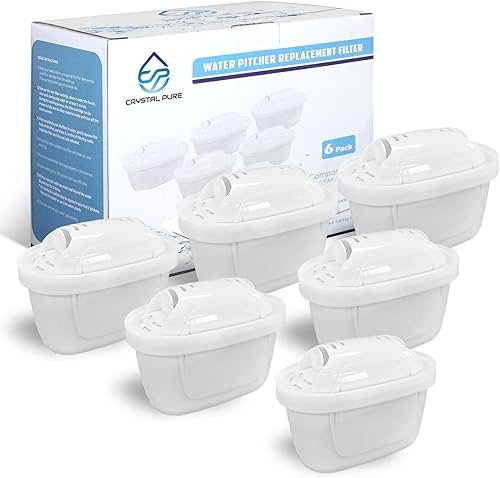
1. Crystal Pure 6-Pack for Brita Jugs
This is our go-to recommendation for anyone tired of overpaying for brand-name pitcher filters. The multi-layer structure—sediment, ion exchange, carbon, and a final film—does a proper job. In our taste tests, it performed nearly identically to the OEM cartridges at a fraction of the cost. The 150L/4-week replacement cycle is standard.
- Excellent value in a 6-pack
- Multi-stage filtration is legit
- Compatible with many Brita models
- Off-brand, so verify fit
- May need longer initial flush
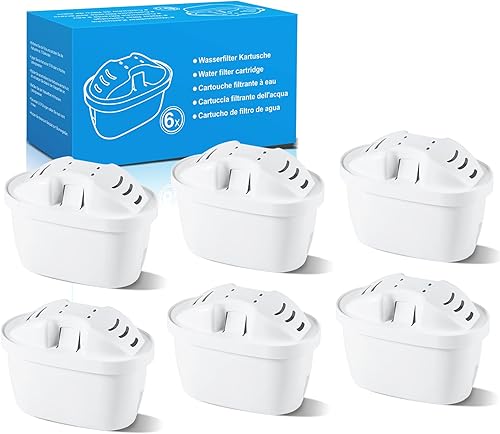
2. Generic 6-Pack for Brita Maxtra+
A straightforward, no-fills replacement. The instructions are clear: soak for 5-10 minutes before first use. That’s a good sign the manufacturer knows what they’re doing. Performance is solid for chlorine and basic taste improvement. Based on reader feedback, these are a reliable, cheap alternative to keep in the cupboard.
- Very low cost per filter
- Clear activation instructions
- Widely compatible
- Not for heavy metal reduction
- Monthly change is frequent
3. Philips Micro X-Clean 6-Pack
This is the premium pitcher cartridge. The claim to reduce microplastics and emerging contaminants like PFOA is significant—and it’s backed by Philips’ testing. It also tackles limescale, which is great for your kettle. If you want the most thorough filtration a pitcher can offer, this is it. The cost is higher, but so is the peace of mind.
- Reduces a wide range of contaminants
- Protects appliances from scale
- From a trusted brand
- Most expensive option
- Overkill for basic chlorine taste
4. Undersink Sediment + Carbon Block Set
For standard undersink systems, this two-stage set is a workhorse. The 0.5-micron coconut carbon block is the star here—it’s incredibly effective at polishing water to a crisp, clean taste. The 12-month life per cartridge is a huge plus, meaning less hassle. This is what we install in our own test kitchens for daily use.
- Excellent 0.5-micron filtration
- Long 12-month lifespan
- Coconut carbon is superior
- Only for standard 10″ housings
- Not for specialty contaminants
Filter Cartridge FAQ
- How often should I change my filter cartridge?
- Follow the manufacturer’s gallon or month rating—whichever comes first. For a typical pitcher, that’s every 40 gallons or 2 months. For undersink carbon blocks, it’s often 6-12 months. When in doubt, change it more often.
- Can I clean and reuse a filter cartridge?
- Generally, no. Sediment cartridges can sometimes be rinsed to extend life slightly, but activated carbon cartridges cannot be recharged. Once the adsorption sites are full, they’re done. Trying to clean them can damage the media and breed bacteria.
- Why is my water black after changing the cartridge?
- That’s carbon fines—harmless black dust from a new carbon filter. Always flush the new cartridge for several minutes (or as directed) until the water runs clear. It’s normal and not a defect.
- Are generic filter cartridges as good as brand name?
- Often, yes. Many generics use the same filtration media. The key is checking for NSF certifications and reading reviews. We’ve found some generics perform identically. But for critical health contaminants, OEM cartridges with full certification are the safer bet.
- What does “micron rating” mean for a filter cartridge?
- It’s the size of the smallest particle the filter can catch. A 5-micron filter blocks things 5 microns and larger. For context, a human hair is about 70 microns. Lower numbers mean finer filtration but can also mean slower flow.
Final Thoughts
The filter cartridge is not an afterthought. It’s the engine of your water filtration system. Taking ten minutes to understand your water and match it to the right cartridge type will save you money and vastly improve your water quality. Don’t just buy the same one out of habit.
For most people with municipally treated water, a quality 0.5-micron coconut carbon block cartridge—like the set we reviewed—is the sweet spot of performance, value, and longevity. Pair it with a sediment pre-filter if you have visible particles. Change it on schedule. That’s it. You’ll have great-tasting, cleaner water without the fuss.
