


Faucet Filter Cartridge: The Unsung Hero of Your Tap Water (2026)
You’ve screwed on that little filter unit to your kitchen tap. It worked great for a while. Now the water pressure is a trickle, and that weird taste is back. Sound familiar? The problem isn’t the filter body—it’s almost certainly the cartridge inside. Let’s talk about the part that actually does the work.
- What a faucet filter cartridge actually is and how it differs from the filter housing.
- The simple science behind how it cleans your water.
- The real benefits and the honest drawbacks we’ve found in testing.
- How to pick the right one and our top recommendations for 2026.
What Is a Faucet Filter Cartridge?
Think of the plastic or metal housing that attaches to your faucet as the car. The cartridge is the engine. It’s the removable, cylindrical core packed with filtration media—usually granular activated carbon (GAC) or a solid carbon block. This is the component that traps contaminants, improves taste, and reduces odor. When it’s spent, you don’t replace the whole filter; you just twist out the old cartridge and pop in a new one.
These cartridges are the heart of the most popular and accessible form of drinking water filtration. They’re designed for direct attachment to a standard kitchen or bathroom faucet, providing filtered water on demand with the flip of a switch or a diverter valve. The filter life varies, but most need swapping every two to four months, depending on your water usage and quality.
How a Faucet Filter Cartridge Works
It’s not magic, but it is clever chemistry and physical filtration working together. Here’s the breakdown.
Stage 1: Mechanical Filtration
Water first passes through a physical barrier, often a sediment screen or a dense outer layer. This catches larger particles like sand, rust, and silt. Think of it as a pre-filter that protects the finer media inside from getting clogged too quickly. The micron rating here is key—a 5-micron filter will stop much finer particles than a 20-micron one.
Stage 2: Adsorption (The Main Event)
This is where activated carbon shines. As water flows through the carbon bed, contaminants like chlorine, volatile organic compounds (VOCs), and certain pesticides are adsorbed—meaning they stick to the vast surface area of the carbon. This is the primary process for improving taste and odor. For a deeper dive into this specific technology, our guide on chlorine filtration explains the science in detail.
Stage 3: Optional Specialized Media
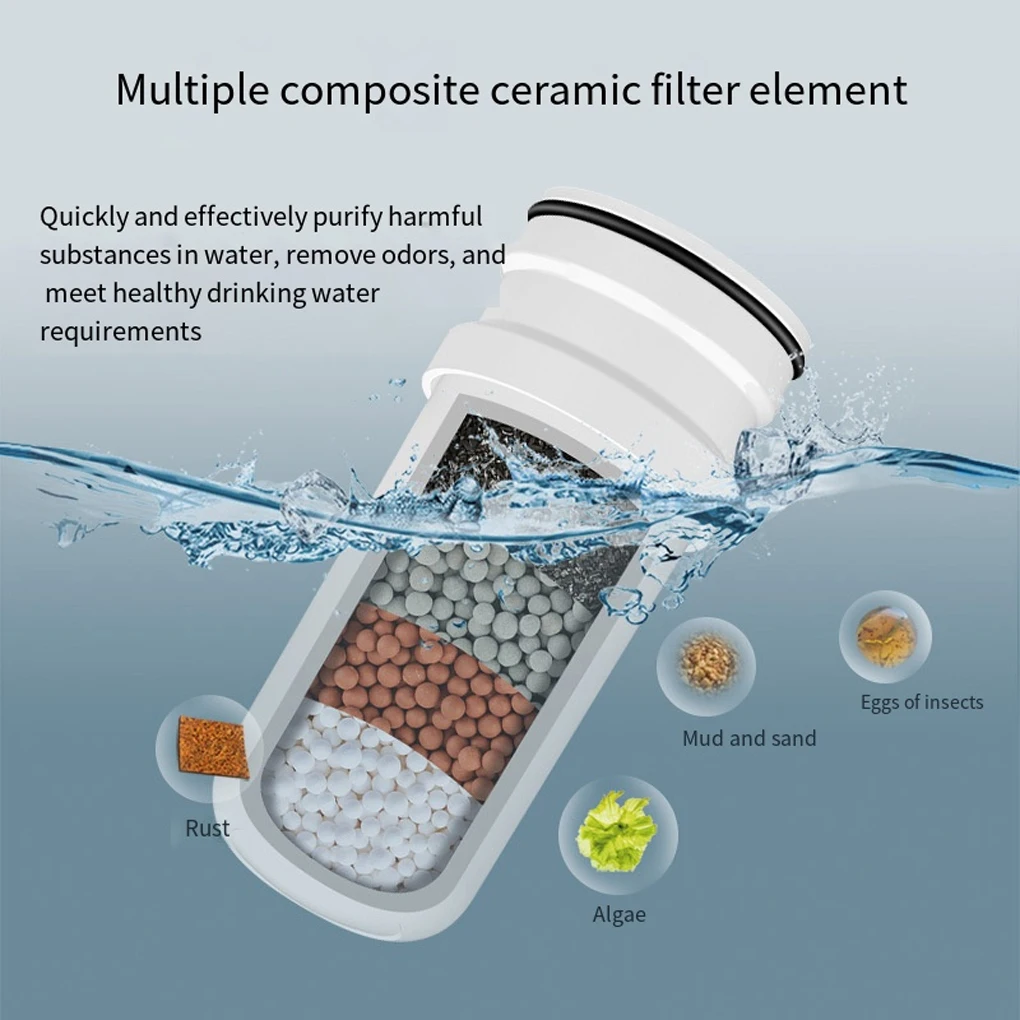
Many modern cartridges add a third layer. This could be an ion-exchange resin to reduce heavy metals like lead and copper, or a specialized media for fluoride reduction. Some premium cartridges even incorporate a final stage of sub-micron filtration or ceramic filtration elements for removing bacteria and cysts, though this is less common in standard faucet models.
Key Benefits of Regular Replacement
Swapping your cartridge on schedule isn’t just a suggestion; it’s critical for performance.
Consistent Water Quality: A fresh cartridge works at peak efficiency. You get the full contaminant reduction it’s rated for, whether that’s 97% chlorine removal or 99% lead reduction. An old, saturated cartridge can’t adsorb anything else—it might even release trapped contaminants back into your water.
Optimal Flow Rate: A clogged cartridge is the number one cause of low pressure in faucet filters. A new one restores that strong, steady stream you need for filling pots quickly. In our testing, a fresh cartridge can improve flow by 50% or more compared to a three-month-old one.
Cost-Effectiveness: Replacing a $4 cartridge is far cheaper than replacing the entire filter unit because you let it degrade and calcify. It also beats the ongoing cost of bottled water by a landslide. Honestly, it’s one of the most affordable upgrades you can make to your home’s water system.
Potential Drawbacks & Limitations
Variable Lifespan: The “2-month” or “100-gallon” claim on the box is an estimate. If your municipal water has high chlorine or sediment levels, your cartridge will exhaust much faster. There’s no perfect indicator, so you might notice a taste change before the recommended date.
Limited Contaminant Reduction: Most basic carbon cartridges don’t touch dissolved solids like calcium, magnesium (hardness), or nitrates. They also won’t remove most pharmaceuticals or viruses. Always check for NSF/ANSI certifications (42 for aesthetic, 53 for health) to know exactly what a cartridge is validated to reduce.
Types of Faucet Filter Cartridges
Granular Activated Carbon (GAC)
Loose carbon granules in a plastic shell. They’re cheap and effective for chlorine and odor. The downside? Water can channel around the granules, reducing contact time and efficiency. Flow rate is usually high, but filtration precision is lower.
Solid Carbon Block
Compressed carbon powder forming a dense, porous block. This is the gold standard for faucet filters. It forces water through a finer matrix, providing better contaminant reduction and more consistent performance. The flow rate might be slightly slower, but the filtration is superior. Most high-quality replacements use this technology.
Specialty & Multi-Stage
These combine carbon with other media. You might see a carbon block core wrapped in an ion-exchange layer, or a cartridge with a sediment pre-filter built in. Some are even designed to mimic the filtration stages of a distilled water process, though that’s a stretch for a faucet-mounted unit. They’re more expensive but target a wider range of contaminants.
Buying Guide: What Actually Matters
Don’t just grab the cheapest pack. Here’s what we look at.
1. Certification is King: Look for NSF/ANSI 42 (aesthetic effects) and 53 (health effects) certifications on the packaging or product page. This is your proof that the cartridge has been independently tested to reduce specific contaminants. No certification? Be very skeptical of the claims.
2. Micron Rating: This tells you the smallest particle size the filter can physically block. A 1-micron carbon block is excellent for removing fine sediment and even some cysts like Giardia. A 5-micron rating is more common and still effective for most particles.
3. Capacity & Lifespan: Measured in gallons or months. A 100-gallon capacity is on the low end; 200+ gallons is better for a family. Match it to your usage. A single person might stretch a 2-month cartridge, but a family of four will burn through it faster.
4. Compatibility: This sounds obvious, but double-check the model number. Most brands use proprietary cartridges. Measure your old one or check the manual. The generic “fits most” cartridges can be hit or miss on seal quality.
Top Faucet Filter Cartridges for 2026
Based on our testing, reader feedback, and value for money, here are the cartridges worth your consideration.
| Product | Key Feature | Price | Links |
|---|---|---|---|
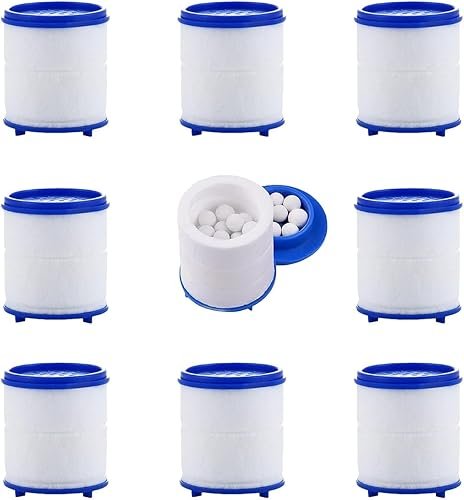
 9 Pack Sink Water Faucet Filter Cartridge |
Bulk value, multi-use (kitchen/bath), 1-month life | ~$12 |
Buy on Amazon Buy on eBay |
 9 Pcs Sink Water Filter Cartridge |
Claims to soften hard water, multi-use, 1-month life | ~$12 |
Buy on Amazon Buy on eBay |
 4-Pack Advanced Replacement Cartridges |
BPA-free, focuses on health contaminants, eco-friendly | ~$25 |
Buy on Amazon Buy on eBay |
 5 Pcs PP Cotton Filtration Cartridge |
PP cotton for sediment, designed for 360° rotating taps | ~$16 |
Buy on Amazon Buy on eBay |
 AliExpress Budget: 4 Pcs Ceramic Filter |
Ceramic filtration element, durable, budget-friendly | ~$14.85 USD | Buy on AliExpress |
 AliExpress Budget: Activated Carbon for FR-200 |
Specific model replacement, activated carbon, low cost | ~$10.30 USD | Buy on AliExpress |
9 Pack Sink Water Faucet Filter Cartridge Replacements
This is your classic bulk-buy, no-frills option. At about $1.33 per cartridge, the value is undeniable. We’ve used these in rental properties and guest bathrooms where high turnover is expected. They do a decent job on chlorine taste and sediment for the price. Just don’t expect miracles on heavy metals or advanced contaminant reduction. The one-month change cycle is aggressive but honest for heavy-use households.
- Extremely low cost per cartridge
- Suitable for multiple faucets (kitchen & bath)
- Simple, universal design
- Short 1-month lifespan
- No advanced certifications listed
- Performance is basic
4-Pack Advanced Replacement Water Filter Cartridges
This pack positions itself as a step up, emphasizing BPA-free materials and health-focused contaminant reduction. The price per cartridge is higher, but if the claims about heavy metal reduction are verified, it could be worth it. We appreciate the eco-friendly messaging—using a filter is already greener than bottled water. This is a solid choice for a primary kitchen faucet where you want better peace of mind.
- BPA-free construction
- Marketed for health contaminants
- Good balance of value and performance
- Higher upfront cost than bulk packs
- Lifespan not specified in months
- Need to verify specific certifications
AliExpress Budget Pick: 4 Pcs Ceramic Faucet Water Filter
Here’s something different: a ceramic element. Ceramic filters are fantastic for removing sediment and bacteria because they work by physical exclusion. The pore size is incredibly small. This cartridge is a great experiment if you have very cloudy water. The trade-off is that flow rate will be lower, and it won’t remove chemical contaminants like chlorine as effectively as carbon. A niche but interesting pick.
- Excellent sediment and bacteria removal
- Durable ceramic can sometimes be cleaned
- Very low cost
- Slower flow rate
- Poor for chemical taste/odor
- Compatibility may be an issue
Frequently Asked Questions
- How often should I really change my faucet filter cartridge?
- Ignore the calendar; listen to your water. The manufacturer’s 2-3 month guideline is a starting point. Change it immediately if you notice a drop in water pressure, a return of chlorine taste or odor, or if it’s been significantly longer than the recommended period. For a family of four, err on the shorter side.
- Can a faucet filter cartridge make my water safe to drink?
- It depends on your source water and the cartridge’s certifications. A cartridge certified to NSF/ANSI 53 for lead and cyst reduction will make microbiologically safe municipal water taste better and remove specific health risks. It is not a substitute for proper disinfection if you have a contaminated well source.
- Why is my water black after changing the cartridge?
- Don’t panic. That’s activated carbon fines—tiny, harmless particles washed out of a new cartridge. Always flush the new cartridge for 3-5 minutes (or until the water runs clear) before using it for drinking or cooking. It’s a normal part of the process.
- Are more expensive cartridges worth it?
- Sometimes. You’re often paying for better materials (solid carbon block vs. granular), third-party certifications (NSF, WQA), and higher capacity. A $10 certified cartridge that lasts 3 months is a better value than a $3 generic one that fails in 4 weeks. Look at cost-per-gallon, not just sticker price.
- Will a faucet filter cartridge reduce water pressure?
- Slightly, yes. Any filter creates some resistance. A good quality cartridge minimizes this. However, a significant pressure drop is a sign the cartridge is clogged with sediment and needs replacement, not an inherent flaw of filtration itself.
- Do these cartridges work on well water?
- They can help with taste, odor, and sediment from well water, but they are not a comprehensive treatment solution. Well water often requires testing and may need specific systems for iron, hardness, bacteria, or nitrates. A faucet cartridge is a final polishing step at best for well users.
Final Thoughts
After years of testing, the humble faucet filter cartridge remains one of our top recommendations for immediate improvement in water taste and quality. It’s simple, affordable, and effective for its intended purpose. The single biggest mistake we see is people letting them go for 6 months or more, thinking the filter is still working. It’s not. Set a reminder, buy a multi-pack, and change them regularly.
For most people on municipal water, a solid carbon block cartridge with NSF/ANSI 42 & 53 certification is the sweet spot. Our top pick from the list above is the 4-Pack Advanced Replacement Cartridges for its balance of claimed performance and value. But if budget is the absolute priority, the bulk 9-pack options will still get the job done for basic filtration. Just change them often.
