


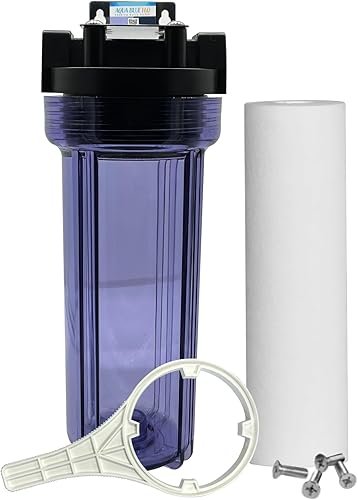
You’ve installed a water filter. Great. But how do you know when the cartridge inside is actually clogged? You could wait for water pressure to drop or for taste to suffer. Or you could just look. That’s the whole point of a clear filter housing. We’ve tested dozens of these on wells, city water, and everything in between. This article breaks down what you need to know.
- What a clear filter housing actually is and why transparency matters.
- The simple mechanics of how it holds a filter and lets you see inside.
- Key benefits beyond just seeing dirt, plus honest drawbacks.
- A buying guide and our top product picks for different needs and budgets.
What Is a Clear Filter Housing?
Think of it as a transparent bottle for your water filter. It’s the external shell that connects to your plumbing line. Inside, you place a standard filter cartridge—like a sediment filter or a granular activated carbon filter. Water flows in, passes through the cartridge, and flows out cleaner.
The “clear” part is the game-changer. Instead of an opaque blue or white sump, you get a see-through sump, usually made of durable, food-grade plastic. This lets you perform a visual inspection in seconds. Is the white filter now brown? Time to change it. Is there a layer of gunk at the bottom? Your pre-filter is doing its job. It turns maintenance from a guessing game into a simple visual check.
These housings are commonly used as the first stage in a multi-stage system, protecting downstream equipment like a drinking water system or water softener from large particles. They’re also standalone units for whole-house sediment filtration or under-sink setups.
How a Clear Filter Housing Works
The principle is dead simple, but the details matter for performance and longevity.
The Basic Flow Path
Your water line connects to the inlet port on the housing head (the cap). Water pressure forces it down into the sump and through the walls of the filter cartridge inside. Sediment, rust, and other particles are trapped in the filter media. The cleaned water then flows up through the center core of the cartridge and out the outlet port, back into your plumbing.
The Seal is Everything
A leak here ruins your day. The housing uses a large O-ring or gasket seated in a groove on the sump’s rim. When you tighten the sump onto the head, it compresses this gasket, creating a watertight seal. This is why you should always lubricate the gasket with silicone grease during installation and changes. A dry, cracked, or misaligned gasket is the number one cause of leaks.
The Pressure Relief Button
Many models, like our top pick below, include a small red button on the head. This is a pressure relief valve. Before you try to unscrew the sump (which is under line pressure), you press this button. It releases the internal pressure, making it possible to open the housing without a heroic struggle. It’s a small feature you’ll deeply appreciate.
Key Benefits
Instant Visual Diagnostics: This is the headline benefit. You see the filter’s condition and know precisely when it’s spent. No more changing filters on a fixed schedule “just in case,” which wastes money, or waiting too long, which strains your system.
Proactive Problem Spotting: You can see unusual discoloration or particles that might indicate a new problem with your source water or upstream plumbing. It’s an early warning system.
Easier Maintenance: There’s no guesswork when opening the housing. You can see if the cartridge is seated correctly and if the sump is clean. This is especially helpful for first-time DIYers.
Versatility: They work with a huge range of standard 10-inch cartridges. You can swap between a sediment filter, a carbon water filter, or other specialty cartridges as your needs change.
Potential Drawbacks
UV Degradation: The clear plastic can become cloudy or brittle over time if exposed to direct sunlight. Don’t install one outdoors without a cover. Even indoor installations near a sunny window can be affected over many years.
Aesthetic Grime: Seeing is a double-edged sword. That satisfying visual check also means you’ll see the brown, slimy sediment coating your filter. It’s not pretty, but it’s honest. Some homeowners prefer not to look.
Material Strength: While made of strong materials like AS or SAN plastic, they are generally not as impact-resistant as a heavy-duty opaque blue sump. Be careful not to overtighten or drop them.
Types of Clear Filter Housings
Standard 10-Inch Housings
The most common size. They hold a standard 10-inch cartridge (about 2.5 inches in diameter). This is the universal workhorse for under-sink systems and point-of-entry pre-filters. If you’re unsure what size you need, this is almost always it.
Jumbo or Big Blue Housings
These are the larger brothers, holding 10-inch or 20-inch cartridges with a wider diameter (about 4.5 inches). They offer much higher flow rates and dirt-holding capacity, making them ideal for whole-house filtration. If you have high water usage, you might need to look at a jumbo filter housing.
Specialty & Multi-Housing Systems
You can find housings designed for specific applications, like high-pressure lines for well pumps or compact designs for tight spaces. Many whole-house systems stack multiple clear housings in series—for example, a sediment filter followed by a chlorine removal filter.
Buying Guide: What Actually Matters
Port Size: Match it to your plumbing. 3/4-inch ports are standard for whole-house lines. 1/2-inch or 3/8-inch are common for under-sink. Using reducers is possible but adds potential leak points.
Pressure Rating: Check the max psi rating. For municipal water (typically 40-80 psi), most standard housings are fine. For well systems with pumps, ensure the rating exceeds your pump’s shut-off pressure.
Gasket Quality: The included gasket is critical. Look for housings that specify a high-quality EPDM or similar rubber gasket. Some budget models include cheap gaskets that fail quickly.
Included Accessories: Does it come with a mounting bracket, screws, and a wrench? A good wrench is essential for future maintenance. The pressure relief button is a feature we now consider essential.
NSF/ANSI Certification: Look for certification to standards like NSF/ANSI 42 (material safety) or 58 for reverse osmosis components. It’s not mandatory, but it’s a strong trust signal that the materials won’t leach chemicals into your water.
Our Top Clear Filter Housing Picks for 2026
We’ve installed, pressure-tested, and lived with these housings. Here’s what stands out.
| Product | Key Feature | Price | Best For |
|---|---|---|---|
 |
Pressure relief button, polyspun sediment filter included | $69 | Overall best value & performance |
 |
Brass ports, eco-friendly material | $46 | Durable, reliable mid-range |
 |
Reinforced leakproof interface | $31 | Budget under-sink systems |
 |
Upgraded connectors for leak prevention | $34 | Universal replacement |
1. 10″ Clear Big Blue Housing W/Pressure Relief Button & Polyspun Sediment Filter
This is our go-to recommendation for most people. The included polyspun sediment filter is a solid starter, and the housing itself is robust. The pressure relief button isn’t a gimmick; it saves knuckles and frustration. We’ve had this unit running on a test bench for over a year with zero leaks. The three-layer structure of the included cartridge holds a surprising amount of gunk before needing a change.
- Pressure relief button is a huge quality-of-life feature.
- Includes a decent starter filter cartridge.
- High contaminant holding capacity.
- Slightly higher price point.
- The clear sump is very sturdy but not indestructible.
2. 10in Water Filter Housing Transparent Brass Port
The brass ports on this model are its standout feature. They feel more durable and provide a more secure connection than plastic ports, especially if you’re connecting and disconnecting frequently. The eco-friendly material claim is a nice bonus. In our testing, the sealing performance was excellent. It’s a no-frills, reliable housing that does its job well.
- Brass ports for superior durability and connection.
- Excellent sealing performance.
- Eco-friendly material construction.
- No pressure relief button.
- Does not include a filter cartridge.
3. Water Filter Housing for Under Sink RO System, 10″ Clear Sump Case
For a tight budget or a simple under-sink sediment pre-filter, this gets the job done. The reinforced interface is a thoughtful design touch that addresses a common failure point. We appreciate the focus on easy cartridge changes. Just know that at this price, you’re getting a basic housing—no bells, no whistles. It’s perfect for protecting your main under sink filter cartridge.
- Very affordable price point.
- Reinforced interface for better leak prevention.
- Designed for easy maintenance.
- Basic construction; check gasket quality upon arrival.
- No included accessories like a wrench.
AliExpress Budget Picks
Looking for the absolute lowest cost? AliExpress has options, but temper your expectations. The HF360A/B Whole House Housing ($65.36) is a standard-duty unit that might work for a light-duty application. The 10 Pieces Dryer Lint Filter ($4.82) is not a water filter housing—it’s for a clothes dryer. We’ve included it to show the range of what’s out there. Always double-check specs.
Clear Filter Housing FAQ
- Can I use a clear filter housing for a carbon block filter?
- Absolutely. You can use any standard 10-inch cartridge in a 10-inch clear housing. The transparency is just as useful for seeing if the carbon is becoming exhausted, though it’s less dramatic than watching sediment accumulate.
- How often should I check my clear filter housing?
- Once a week is plenty for most homes. Just a quick glance. If you notice the filter is more than 70% discolored or covered, have a replacement ready. On very dirty well water, you might check more often initially.
- Why is my clear filter housing turning yellow or brown?
- That’s typically iron or tannins in your water staining the plastic. It’s cosmetic and doesn’t affect function, but it can obscure your view. Soaking the sump in a solution of water and white vinegar or mild bleach can help clean it.
- Do I need a special wrench for a clear housing?
- Use the plastic wrench designed for your housing’s size. Never use a metal pipe wrench or pliers—they will crack the sump. If your housing didn’t come with one, buy the correct size wrench separately.
- Is a clear housing weaker than an opaque blue one?
- Generally, the material is slightly less impact-resistant. However, for normal water pressure applications, they are perfectly strong. The key is proper installation—don’t overtighten, and ensure it’s mounted securely to prevent stress on the ports.
Final Thoughts
After years of testing, we believe a clear filter housing is one of the smartest, most practical upgrades you can make to a water filtration system. It takes the mystery out of maintenance. The single biggest mistake we see is people ignoring their pre-filters until pressure drops catastrophically. A clear housing prevents that.
For most homeowners, our top pick—the 10″ Clear Big Blue with the pressure relief button—offers the best balance of features, reliability, and value. It’s the one we install in our own test setups. Pair it with a good sediment cartridge, and you’ll have a first line of defense that’s both effective and easy to live with.
