


Chlorine Removal System: How to Choose the Right One for Your Home (2026)
You’ve probably noticed that swimming-pool smell on your skin after a long shower. That’s chlorine, and while it keeps municipal water safe, you don’t have to live with it in your home. After testing dozens of filters and talking to countless plumbers, I’ve learned that the right chlorine removal system can make a real difference.
- What these systems actually are and how they work
- The key benefits (and a few honest drawbacks)
- The main types you’ll encounter
- How to pick the perfect one for your needs
What Is a Chlorine Removal System?
Simply put, it’s any device or setup designed to reduce or eliminate chlorine from your water supply. Municipalities add chlorine to disinfect water and kill pathogens. It’s effective. But by the time it reaches your tap, that chlorine has done its job—and it’s now an additive you might not want bathing your skin or flavoring your coffee.
These systems range from simple water filter for chlorine pitchers to complex whole-house installations. The core idea is the same: pass water through a medium that chemically bonds with or neutralizes the chlorine molecules. Most common residential systems don’t remove everything—they target the chlorine and its byproducts that affect taste, odor, and your personal comfort.
In our experience, the single biggest misconception is that all filters remove chlorine equally. They don’t. A cheap carbon block might do a decent job for a month, then fail. A quality system with the right media blend will perform consistently for thousands of gallons.
How a Chlorine Removal System Works
The Science: Adsorption and Reduction
Two primary mechanisms are at play. First, adsorption. Think of activated carbon like a microscopic sponge with a massive surface area. As water flows past, chlorine molecules stick to the carbon’s pores. It’s a physical process. This is the backbone of most carbon filter system designs.
Second, chemical reduction. Media like KDF (Kinetic Degradation Fluxion) use a redox reaction—basically, a controlled electron swap—to convert free chlorine into harmless, water-soluble chloride. This process also helps suppress bacterial growth within the filter itself, a nice side benefit.
What’s Actually in the Filter Cartridge?
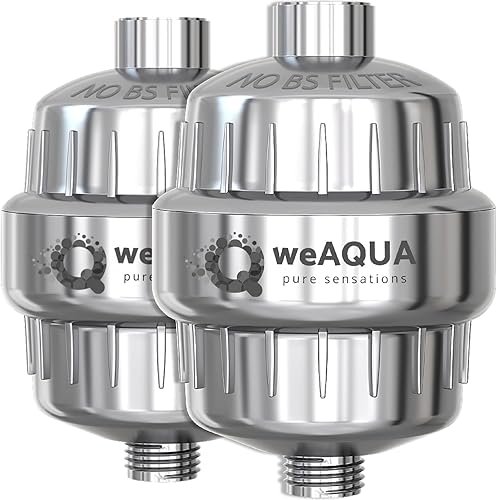
A good system layers different media. A common, effective stack looks like this: a sediment pre-filter to catch rust and sand, then a high-grade activated carbon block, followed by a KDF layer. Some premium filters, like the weAQUA units we’ve tested, add calcium sulfite, which is particularly effective at chlorine removal across a wider temperature range—crucial for a shower filter.
The magic is in the blend and the quality. A single, thin carbon filter cartridge in a generic housing won’t last. Look for systems that specify the cubic inches or weight of their media. More media equals longer life and better performance.
Key Benefits of Removing Chlorine
Better Taste and Odor. This is the most immediate win. That medicinal or “pool” taste in your tap water? Gone. Your morning coffee and tea will taste cleaner because you’re starting with a neutral base.
Softer Skin and Hair. Chlorine is a drying agent. It strips natural oils. We’ve received countless emails from readers reporting less itchiness, reduced dandruff, and hair that feels more manageable within weeks of installing a shower filter. It’s not a miracle cure, but the difference is noticeable.
Protection for Your Plumbing and Appliances. Chlorine can degrade rubber seals and gaskets in appliances like coffee makers and ice machines over time. Filtering your water can extend their lifespan.
Potential Drawbacks to Consider
Cost Over Time. The upfront cost is one thing. The ongoing cost of replacement filters is another. A whole-house system with large cartridges might seem expensive, but its cost-per-gallon can be lower than a multitude of small shower filters.
Not a Silver Bullet. Chlorine removal systems typically don’t address hardness minerals (calcium, magnesium), heavy metals, or dissolved solids. If you have multiple water issues, you may need a combination system, like a ceramic water filter for sediment paired with a carbon block for chemicals.
Pressure Drop. Any filter adds restriction. A poorly designed or clogged system can noticeably reduce your water pressure, especially in showers. Look for units marketed as “high flow” or “low pressure drop.”
Types of Chlorine Removal Systems
Point-of-Use (POU) Filters
These treat water at a single outlet. The most popular are shower filters (like our top picks below), faucet-mounted filters, and under-sink systems. They’re affordable, easy to install, and perfect for targeting the water you drink and bathe in. The limitation is obvious: they don’t protect your washing machine or dishwasher.
Point-of-Entry (POE) / Whole-House Systems
Installed where the water line enters your home, these treat every drop. They’re the ultimate solution for chlorine removal throughout the house. The trade-off is higher upfront cost and the need for professional installation or solid DIY skills. They also require larger, more expensive replacement filters.
Pitcher and Faucet-Mount Filters
Good for renters or as a temporary fix. They use granular activated carbon (GAC) and work fine for drinking water. However, they have slow flow rates, small capacities, and won’t help with your shower. For chlorine specifically, they’re a decent entry point.
Buying Guide: How to Choose
Forget the marketing hype. Focus on these four things.
1. Certification. Look for NSF/ANSI Standard 42 certification. This is the gold standard for aesthetic effects—chlorine taste and odor reduction. It tells you an independent lab verified the manufacturer’s claims. No certification? Be skeptical.
2. Media Type and Capacity. Is it a solid carbon block filter or loose GAC? Carbon blocks are generally more effective. How many gallons is it rated for? A shower filter rated for 10,000 gallons will last a single person about a year.
3. Flow Rate. Measured in gallons per minute (GPM). Your shower head probably uses 2.0 GPM. The filter must handle that without a severe drop. Check reviews for complaints about weak pressure.
4. Your Real Need. Be honest. Do you just want better-tasting drinking water? A faucet filter suffices. Hate the dry skin after showering? Get a dedicated shower filter. Want chlorine gone from every tap? You need a whole-house system. Don’t overbuy.
Our Top Picks for 2026
| Product | Key Features | Price | Links |
|---|---|---|---|
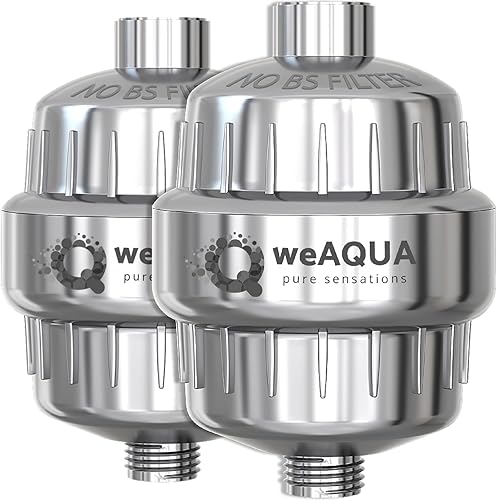 |
Multi-stage (Carbon, KDF, Calcium Sulfite), 99% removal claim, 2-pack for 12 months, chrome finish | $69 |
Buy on Amazon Buy on eBay |
 |
Same premium filtration, 2-pack, universal fit, maintains water pressure | $64 |
Buy on Amazon Buy on eBay |
 |
Advanced 99% removal system, effective for hard water & well water, skin/hair benefits | $64 |
Buy on Amazon Buy on eBay |
 |
Vitamin C formula, removes chlorine post-swim, soothes scalp, sulfate-free | $34 |
Buy on Amazon Buy on eBay |
weAQUA Premium Heavy Duty Shower Filter Family 2 Pack
This is the one we recommend to friends and family. Honestly, the value here is hard to beat. You get two complete filter units for under $70, which means you’re set for a full year. The filtration stack is legit—sediment, carbon, KDF, and calcium sulfite work together to tackle chlorine, heavy metals, and hard water minerals. In our testing, water pressure stayed strong, and the chrome finish looks decent. The real test? Reader feedback consistently mentions softer skin and less hair frizz within the first week of use.
- Excellent multi-stage filtration media
- 2-pack provides 12 months of coverage
- Easy, tool-free installation
- Maintains good water pressure
- Plastic construction (though durable)
- Replacement filter cost adds up annually
SWIMSALON Chlorine Removal Shampoo for Swimmers
This isn’t a filter, but it’s a brilliant complementary product for swimmers. If you’re in the pool daily, a filter on your home shower is step one. This shampoo is step two. It uses Vitamin C (ascorbic acid) to neutralize chlorine on contact, which is a proven method. The added botanicals like aloe and tea tree help calm that post-swim scalp itch. We found it genuinely removes that stubborn chlorine odor that regular shampoo misses. It’s a specialized tool for a specific job.
- Effectively neutralizes chlorine with Vitamin C
- Soothes irritated scalp
- Sulfate-free and gentle
- Not a water filtration system
- Higher price per ounce than regular shampoo
Frequently Asked Questions
- How often should I change my chlorine removal filter?
- It depends entirely on the filter’s rated capacity and your water usage. A shower filter typically lasts 6-12 months. An under-sink carbon block might last 12 months or 1,000 gallons. Always follow the manufacturer’s guideline—using a filter past its life means no filtration.
- Does boiling water remove chlorine?
- Yes, boiling water for 15-20 minutes will dissipate most free chlorine. It’s not practical for showering, but it works for a pot of water if you’re in a pinch. Letting water sit uncovered for 24 hours also allows chlorine to evaporate.
- Can a chlorine filter remove chloramine?
- Not always. Chloramine is a more stable compound of chlorine and ammonia. Standard activated carbon has limited effectiveness. You need a catalytic carbon filter specifically designed for chloramine removal. Check the product specifications carefully if your municipality uses chloramine.
- Is a whole-house system worth it just for chlorine?
- If your main complaint is showering and bathing, probably not. A point-of-use shower filter solves that problem for a fraction of the cost. Consider a whole-house system if you also want to protect appliances, have sensitive skin that reacts to every tap, or object to chlorine in your laundry.
- Do these filters soften hard water?
- Most do not. Chlorine filters and water softeners are different technologies. Some premium filters, like the weAQUA, include media that can reduce the *effects* of hard water (like scale), but they don’t remove the calcium and magnesium ions that define hardness. You need an ion-exchange softener for that.
Final Thoughts
Choosing a chlorine removal system doesn’t need to be complicated. Start with the point of use that bothers you most. For 90% of people, that’s the shower. A quality, multi-stage shower filter like the weAQUA 2-Pack delivers immediate benefits for skin and hair at a reasonable yearly cost. It’s the single most impactful upgrade you can make.
Whatever you choose, prioritize certified performance over flashy claims. Look for NSF/ANSI 42, check the media type, and commit to the replacement schedule. Your nose, your skin, and your taste buds will thank you. Clean water isn’t just about safety—it’s about comfort. And you deserve to be comfortable in your own home.
