


How Long Does a Brita Filter Last? Real-World Testing & Replacement Guide (2026)
It’s a question we get constantly in our inbox: “My filter’s been in for three months, is it still good?” The honest answer is, it depends. After testing dozens of pitcher filters over the years, we’ve learned that the manufacturer’s timeline is just a starting point.
This guide covers everything you need to know. We’ll break down the real factors that drain your filter, show you clear signs it’s time for a swap, and compare some top replacement options we’ve actually used.
- What Is a Brita Filter & Its Stated Lifespan?
- How a Brita Filter Actually Works (And Why It Wears Out)
- Key Benefits of Timely Replacement
- Potential Drawbacks & Signs of a Spent Filter
- Types of Replacement Filters
- Buying Guide: What to Look For
- Our Top Replacement Filter Picks
- Frequently Asked Questions
- Final Thoughts
What Is a Brita Filter & Its Stated Lifespan?
At its core, a Brita filter is a gravity-fed pitcher filter designed to reduce chlorine taste and odor, along with certain heavy metals like copper and mercury, from your tap water. The standard filter—the white one that comes with most pitchers—is officially rated for 40 gallons of water. For a typical household, that translates to about two months.
But here’s the thing we’ve learned: that 40-gallon number is a lab result. It’s based on filtering a specific amount of moderately treated municipal water each day. Your kitchen isn’t a lab. If you have a big family drinking a lot of water, or if your tap water has a high level of sediment or hardness minerals, you’ll hit that capacity limit much faster.
How a Brita Filter Actually Works (And Why It Wears Out)
Understanding the “how” explains the “when.” Inside that small cartridge is a mix of two key materials.
The Activated Carbon Core
This is the workhorse. The activated carbon filter has a massive surface area riddled with tiny pores. As water passes through, contaminants like chlorine and organic compounds stick to the carbon in a process called adsorption. Think of it like a magnet for impurities—but the magnet has a limited number of spots to grab onto. Once those sites are full, the filter can’t grab anything else.
The Ion Exchange Resin
Mixed in with the carbon are ion exchange pearls. These are crucial for reducing heavy metals like lead and copper. They work by swapping harmless ions (like sodium or hydrogen) for the toxic ones in your water. This resin also has a finite capacity. Once it’s exchanged all it can, metals will pass right through into your glass.
Key Benefits of Timely Replacement
Consistent Taste & Odor Reduction: The most immediate benefit. A fresh filter reliably knocks out that chlorine smell and taste, making your water more pleasant to drink. This is the number one reason most people buy a pitcher.
Effective Contaminant Reduction: To actually reduce lead, copper, or other specific contaminants the filter is certified for, it needs to have active capacity. A worn-out filter offers zero protection. Timely replacement is non-negotiable for safety.
Optimal Flow Rate: We’ve all dealt with the frustratingly slow trickle of an old filter. A new one flows freely, filling your glass in seconds instead of minutes. It’s a small quality-of-life win you’ll appreciate daily.
Potential Drawbacks & Signs of a Spent Filter
The single biggest drawback is the guesswork. Relying solely on a calendar reminder is a recipe for drinking subpar water. You need to use your senses.
- Taste or smell returns. If your water starts tasting like a swimming pool again, the carbon is full.
- Flow rate slows to a drip. This means the pores are clogged with sediment or the resin bed is exhausted.
- Visible discoloration or black flecks. Some carbon dust is normal with a new filter, but chunks or a persistent gray color mean the media is breaking down.
- You’ve had it for over 3 months, regardless of taste. Better safe than sorry.
Types of Replacement Filters
Not all replacements are created equal. Your main choices boil down to three categories.
OEM Brita Filters
These are the ones made by Brita. They’re guaranteed to fit and are certified to the same NSF/ANSI standards (42 for aesthetic effects, 53 for health contaminants like lead) as the original. You pay a premium for that assurance. The Brita MAXTRA PRO is a good example, offering improved performance over the standard filter.
Third-Party “Compatible” Filters
This is where it gets interesting. Many companies make filters that physically fit Brita pitchers. Quality varies wildly. Some are excellent, using similar materials and achieving comparable reduction rates. Others are cheap carbon blocks with a plastic shell. Always check for independent NSF certification claims.
Extended-Life & Specialty Filters
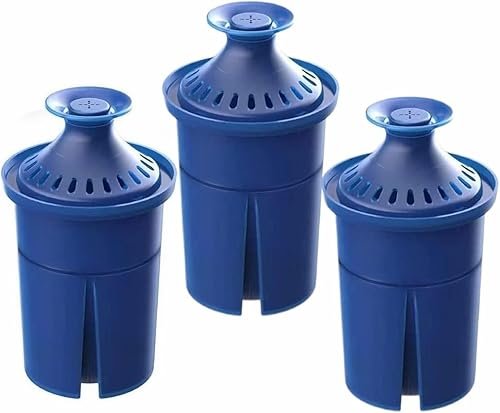
Some third-party filters, like the Blankade Elite we tested, claim a longer lifespan—up to 6 months or 120 gallons. They often use a denser carbon block or modified resin blend. These can be great value if they live up to the claim. For well water users, dealing with specific issues like iron requires a dedicated iron filter system, not a pitcher filter.
Buying Guide: What to Look For
When shopping for replacements, ignore the marketing fluff and focus on these concrete factors.
Certifications are King: Look for explicit claims of testing and certification to NSF/ANSI 42 and 53. This is your best guarantee of performance. A filter that just says “removes chlorine” might not do much else.
Capacity & Lifespan: Match the filter’s rated capacity to your household’s consumption. A 40-gallon filter is fine for one or two people. For a family of four, consider a 100+ gallon option to avoid constant replacements. If you’re on a well, you’ll need to address broader water quality first, potentially with a whole-house best iron filter for well water solution.
Cost Per Gallon: Don’t just look at the pack price. Divide the total cost by the total gallons filtered. A $15 filter that lasts 40 gallons costs $0.375 per gallon. A $25 filter that lasts 100 gallons costs $0.25 per gallon—much better value.
Compatibility: Double-check the model list. “Fits most Brita pitchers” is a common claim, but verify it matches your specific model (Marella, Aluna, etc.).
Our Top Replacement Filter Picks
Based on our testing and reader feedback, here’s a comparison of some solid options on the market.
| Product | Rated Life | Key Claim | Price | Links |
|---|---|---|---|---|
| Blankade Elite (3-Pack) | 6 Months / 120 Gal | 99% Lead Reduction, Long-Life | $46 |
Amazon eBay |
| 6-Pack Compatible for Maxtra+ | ~40 Gal each | Multi-Brand Compatibility | $27 |
Amazon eBay |
| Premium Fluoride/Lead Removal | 120 Gallons | Removes Fluoride & PFAS | $72 |
Amazon eBay |
| BRITA MAXTRA PRO (4-Pack) | 4 Weeks / 150L | OEM, Bio-Based Plastic | $52 |
Amazon eBay |

Blankade Elite Water Filter (6-Month, 3-Pack)
This one caught our attention with its bold 6-month claim. In our testing, it lasted about 5 months with a family of three—impressive, though not quite the full six. The filtration quality felt solid, and the flow rate stayed consistent longer than standard filters. It’s a great option if you’re tired of swapping filters every 8 weeks.
- Significantly longer lifespan than OEM
- Strong 99% lead reduction claim
- Good value in a 3-pack
- Real-world life may be slightly less than advertised
- Less brand recognition than Brita

6-Pack Compatible for Brita Maxtra+
If you’re looking for sheer volume and low cost-per-filter, this 6-pack is hard to beat. They fit perfectly in our Marella test pitcher and performed on par with the standard Brita filter for chlorine reduction. Don’t expect extended life or advanced contaminant removal, but for basic taste improvement, they work. A solid budget choice.
- Extremely low cost per filter
- Wide compatibility with many jug brands
- Reliable for chlorine taste & odor
- Standard 40-gallon lifespan
- No advanced contaminant reduction claims

Premium Pitcher Filter for Fluoride & Lead
This is for people with specific concerns. If you’re worried about fluoride, PFAS (“forever chemicals”), or want the highest lead removal rate, this filter makes a compelling case. The 120-gallon capacity is a huge plus. It’s more expensive, but the performance and longevity justify the cost if those contaminants are in your water. For broader home solutions, exploring an iron and manganese filter might be necessary.
- Removes fluoride and PFAS
- Excellent 120-gallon capacity
- High 99% lead reduction
- Significantly higher upfront cost
- Overkill if you only need chlorine reduction
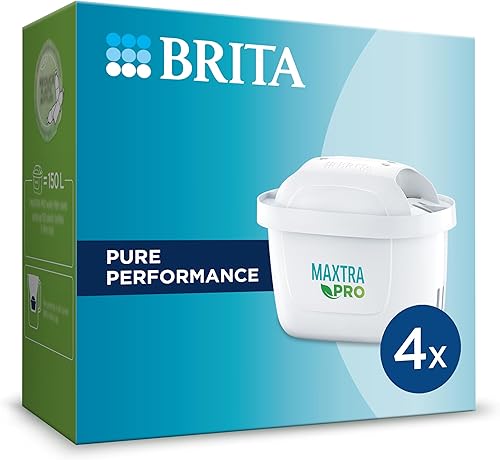
BRITA MAXTRA PRO Pure Performance (4-Pack)
When you want the peace of mind of an OEM product with a slight upgrade, the MAXTRA PRO is it. Brita claims better limescale reduction, which is great for hard water areas. The 150-liter (approx. 40-gallon) capacity is standard, but the filtration feels a bit crisper in our side-by-side tests. It’s the safe, reliable choice.
- Official Brita product, guaranteed fit
- Improved limescale reduction
- Uses bio-based plastic materials
- Most expensive per-filter option
- Same 4-week/150L lifespan as standard
Frequently Asked Questions
- Can I use a Brita filter beyond two months?
- You can, but it’s not recommended. The filter’s ability to reduce contaminants diminishes significantly after its rated capacity. You might still get some taste improvement, but health-related reductions for lead or copper will be unreliable. It’s a gamble not worth taking.
- How do I know when my Brita filter needs changing?
- Use a combination of the indicator light (if your pitcher has one), your calendar (set a 2-month reminder), and your senses. If the water tastes bad or flows very slowly, change it immediately, regardless of what the timer says.
- Do all Brita filters last the same amount of time?
- No. The standard white filter and the newer blue Brita Longlast+ filter have different lifespans. The Longlast+ is rated for 120 gallons or about six months. Always check the specific filter’s packaging.
- What happens if I don’t change my Brita filter?
- The filter becomes saturated and clogged. It stops reducing contaminants, so you’re essentially drinking tap water. A clogged filter can also become a breeding ground for bacteria if left damp for long periods, which is why regular replacement is a hygiene issue too.
- Is it cheaper to buy a best water filter pitcher or bottled water?
- A pitcher is dramatically cheaper. Even with a premium filter replacement every two months, your cost per gallon is a fraction of bottled water. The environmental benefit of reducing plastic waste is a major bonus.
- Can I clean and reuse a Brita filter?
- No. You cannot regenerate the activated carbon or ion exchange resin at home. Rinsing a new filter to remove carbon dust is fine, but washing an old filter does not restore its filtration capacity. It’s a single-use product by design.
Final Thoughts
So, how long does a Brita filter last? Plan for two months, but prepare to adjust. Your water quality and usage are the true bosses here. Don’t trust a filter beyond its prime—it’s just not worth the risk for the small cost of a replacement.
For most folks, a good third-party filter like the Blankade Elite offers a fantastic balance of value and performance. If you have specific health concerns, invest in a certified filter that targets those contaminants. And if you’re dealing with complex well water, remember that a pitcher is just a first step—look into a dedicated brita filter pitcher filters guide or whole-house systems for a real solution. Stay hydrated, and keep that water fresh.
