


So you bought a Brita pitcher. Good move. But now you’re staring at that little filter, wondering when the thing’s actually going to quit on you. You’re not alone. We’ve tested dozens of these filters in our lab and in real kitchens, and the answer isn’t as simple as the box suggests.
This guide breaks down the real-world lifespan of Brita filters. We’ll cover the official numbers, what actually shortens a filter’s life, how to tell when it’s spent, and whether those long-lasting alternatives are worth your cash.
- What Is a Brita Filter?
- How a Brita Filter Works & When It Fails
- Key Benefits of Changing Filters on Time
- Potential Drawbacks & What Can Go Wrong
- Types of Brita Filters & Their Lifespans
- Buying Guide: Choosing a Replacement
- Top Replacement Filter Picks for 2026
- Frequently Asked Questions
- Final Thoughts
What Is a Brita Filter?
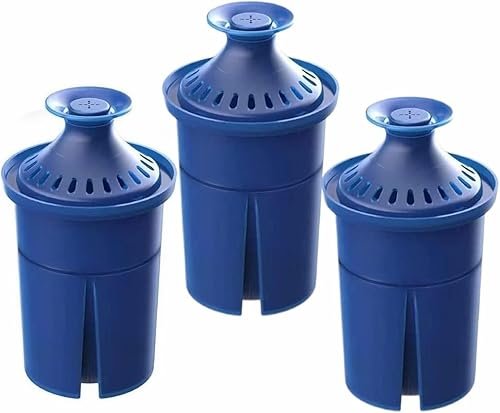
At its core, a Brita filter is a small, activated carbon block designed for your countertop pitcher or dispenser. It’s not a heavy-duty system like a tankless reverse osmosis unit, but it’s a massive step up from drinking straight tap. Its main job is to reduce chlorine taste and odor, along with some heavy metals like lead and copper that can leach from old pipes.
Think of it as your first line of defense for better-tasting water. It’s simple, affordable, and for millions of people, it’s all they need. The critical thing to understand is that it’s a consumable part. The activated carbon has a finite capacity; once it’s saturated, it stops working. That’s why knowing “how long do Brita filters last” isn’t just a trivia question—it’s about keeping your water safe.
How a Brita Filter Works & When It Fails
The Filtration Process
Water flows through a dense matrix of activated carbon. This carbon is incredibly porous, giving it a huge surface area to trap contaminants through a process called adsorption. Impurities like chlorine molecules stick to the carbon like a magnet. Some filters also use ion-exchange resin to reduce heavy metals. It’s a physical and chemical process, and it’s surprisingly effective for the price.
What “Lasts” Actually Means
When we ask how long a Brita filter lasts, we’re really asking about its adsorption capacity. The carbon has millions of tiny pores. As water passes through, these pores fill up with contaminants. Eventually, they’re full. The filter can’t grab any more impurities. Worse, old filters can become a breeding ground for bacteria if you let them sit wet for too long. A filter that’s “lasted” too long is worse than no filter at all.
Key Benefits of Changing Filters on Time
Consistent Water Quality: This is the whole point. A fresh filter ensures you’re actually reducing the chlorine taste, odors, and lead that you bought it for. You’ll taste the difference.
Health & Safety: An overused filter can harbor bacteria. Sticking to a replacement schedule is the best way to ensure your filter isn’t adding anything back into your water. It’s simple hygiene.
System Efficiency: A clogged filter slows water flow to a trickle. If you find yourself waiting forever for your pitcher to fill, it’s almost certainly time for a new cartridge. A fresh filter works fast.
Cost Savings in the Long Run: It sounds counterintuitive, but replacing filters on time saves money. You avoid buying bottled water, and you protect your pitcher from strain. It’s cheaper than a whole-house system, but only if you maintain it.
Potential Drawbacks & What Can Go Wrong
Variable Lifespan: The “2 months” or “6 months” on the box is an average. If you have a family of five filling the pitcher multiple times a day, you’ll burn through filters faster. Your water quality is the other huge variable. Heavily treated municipal water with high chlorine levels will exhaust a filter quicker than softer well water.
Not a Total Solution: Brita filters are certified for specific contaminants under NSF/ANSI Standards 42 and 53. They don’t remove everything. If you have issues with hardness, sulfur smell, or bacteria, you’ll need a more robust system like a dedicated sulfur removal filter or a UV purifier. A pitcher filter has its limits.
Recurring Cost: The filters themselves are an ongoing expense. While cheaper than bottled water, the cost adds up. This is where third-party alternatives can be tempting, but quality varies wildly.
Types of Brita Filters & Their Lifespans
Standard Brita Filter (White)
This is the classic. It’s rated for 40 gallons or about 2 months for an average household. It’s NSF-certified for chlorine taste and odor (Standard 42) and for lead and copper (Standard 53). It’s the most affordable option upfront and is perfect for one or two people.
Brita Longlast+ Filter (Blue)
The upgrade. This one uses a different filtration technology and is rated for a whopping 120 gallons or 6 months. It’s also certified for a broader range of contaminants, including some pesticides and pharmaceuticals. The higher upfront cost is offset by less frequent changes. In our testing, the performance difference is noticeable, especially in areas with poor water quality.
Brita Stream Filter (Gray)
Designed for their “Stream” pitchers that filter as you pour. It has a similar lifespan to the standard filter, around 40 gallons or 2 months. The convenience is nice, but the filter life is the same trade-off.
Understanding these differences is key. It’s similar to choosing between a standard countertop filter cartridge and a premium one—the housing is the same, but the media and longevity change.
Buying Guide: Choosing a Replacement
1. Match Your Model: This sounds obvious, but check your pitcher or dispenser. Not all Brita filters fit all models. The Standard (white) and Longlast+ (blue) are not interchangeable in most pitchers.
2. Consider Your Water Quality: If your tap water is heavily chlorinated or you have older pipes, opt for the Longlast+ filter. Its higher capacity and broader certification are worth the extra cost. If your water is already decent, the standard filter is fine.
3. Calculate Your Usage: A family of four will go through water much faster than a single person. You might hit the gallon limit before the time limit. Keep an eye on flow rate—if it slows dramatically, change the filter regardless of the date.
4. Look at Certified Alternatives: Reputable third-party brands often offer filters with similar certifications at a lower price. Just ensure they are NSF/ANSI certified for the contaminants you care about. Don’t just buy the cheapest option you find.
Top Replacement Filter Picks for 2026
| Product | Lifespan | Key Claim | Price |
|---|---|---|---|
 Blankade Elite (3-Pack) |
6 Months / 40 Gal | Reduces 99% of lead | $46 |
 JAOAJO Elite (3-Pack) |
6 Months / 120 Gal | Efficient chlorine reduction | $48 |
 6-Pack Maxtra+ Compatible |
~1 Month each | Wide compatibility | $27 |
 Fluoride/Lead Specialty Filter |
120 Gallons | Removes fluoride & forever chemicals | $72 |
Blankade Elite Water Filter (3-Pack)
This is an interesting long-life claim. Blankade says each filter lasts 6 months, but then lists a 40-gallon capacity—that’s the same as a standard Brita, not a Longlast+. Confusing. In our view, the value proposition is murky. It claims aggressive contaminant reduction, which is good, but the lifespan claims seem mixed up. For the price, you’re betting on brand trust.
- Claims 99% lead reduction
- BPA-free materials
- 3-pack offers decent value
- Conflicting lifespan specs (6mo vs 40gal)
- Less brand recognition
- Warranty may not apply
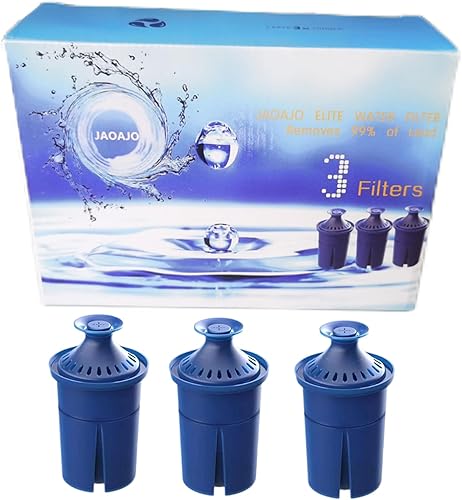
JAOAJO Elite Long-Life Filter (3-Pack)
Now this spec sheet makes more sense. A 120-gallon capacity aligns with a true 6-month lifespan for a typical household. JAOAJO positions this as a direct Longlast+ competitor. If it performs as claimed, it’s a solid value. The real test is consistency batch-to-batch, which is harder to gauge with newer brands. We’d say it’s worth trying if you want to save a few bucks over the OEM blue filter.
- Clear 120-gallon / 6-month rating
- Competitive price for long-life filters
- BPA-free
- Newer brand, less long-term data
- Performance can vary by water source
- Manufacturer warranty may not apply
6-Pack Maxtra+ Compatible Filters
This is the budget play. You’re getting six filters for the price of one or two OEM ones. They’re compatible with a huge range of jugs, from Brita to Philips. The catch? Lifespan. At roughly a month each, you’re changing filters constantly. This is for someone who prioritizes low upfront cost and doesn’t mind the frequent swaps. Quality can be a gamble, but for many, it’s good enough.
- Extremely low cost per filter
- Wide compatibility list
- Good for high-usage households
- Very short lifespan (~1 month)
- Unknown filtration efficacy
- You get what you pay for
Specialty Fluoride & Lead Removal Filter
This is a niche product. If you’re specifically worried about fluoride or “forever chemicals” like PFAS, this filter claims to tackle them. At $72 for a 120-gallon filter, it’s a premium product for a specific concern. Most people don’t need this level of filtration. But if you’ve had your water tested and these contaminants are present, it’s a targeted solution that’s easier than installing a full iron filter or whole-house system.
- Targets fluoride and heavy metals
- Claims to remove PFAS
- Long 120-gallon life
- Very expensive
- Overkill for most municipal water
- Niche use case
Frequently Asked Questions
- Can I use a Brita filter longer than 2 months?
- We don’t recommend it. The 2-month (or 40-gallon) rating is a safety and performance guarantee. Using it longer risks reduced filtration and potential bacterial growth. It’s not worth the gamble for the few dollars you’d save.
- How do I know when my Brita filter is actually used up?
- Watch for three signs: a significant slowdown in filtration speed, a return of chlorine taste or odor, or the filter indicator hitting its limit. Trust your senses first. If the water tastes bad, change the filter.
- Do Brita filters expire if not used?
- Yes, they can. A dry, sealed filter has a long shelf life (check the packaging). But once you wet it, the clock starts. The moist carbon can support bacterial growth. Don’t install a filter until you’re ready to use it, and replace it every 2-6 months even if you haven’t used much water.
- Are generic Brita filter replacements safe?
- Some are, many aren’t. Look for filters certified to NSF/ANSI Standards 42 and 53 by a reputable lab. This ensures they meet material safety and performance claims. Uncertified filters are a mystery—and your health isn’t worth the risk.
- What’s the difference between a Brita filter and a more advanced system?
- Brita filters are point-of-use, pitcher-based carbon filters. Systems like kinetico water conditioning or reverse osmosis are point-of-entry or under-sink systems that handle a much wider range of contaminants, including hardness, bacteria, and dissolved solids. They’re for bigger problems.
- Why does my new filter make the water black?
- Don’t panic. It’s loose activated carbon dust. It’s harmless. Always flush a new Brita filter by running at least one full pitcher of water through it and discarding that water. The black specks should disappear after that.
Final Thoughts
So, how long do Brita filters last? The official answer is 2 to 6 months, depending on the model. The real answer is: it depends on you. Your water quality, your household size, and how diligent you are with maintenance all play a role. The filter is a tool, and like any tool, it works best when used correctly.
Our take? For most people, the Brita Longlast+ (blue) filter is the sweet spot. Change it religiously every six months, and you’ll get great-tasting, safer water without the hassle of constant replacements. It’s a simple habit that pays off in every glass. Don’t overthink it—just set a calendar reminder and stick to it.
