


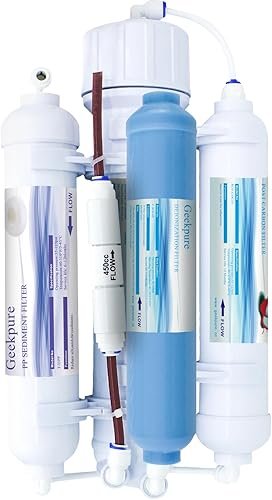
So, you’re looking at a 4 stage filter. Maybe your tap water tastes off, your fish are sensitive, or you just want the cleanest water possible. I get it. After testing systems for over a decade, I’ve seen the good, the bad, and the outright useless. A multi-stage setup isn’t just a marketing gimmick—it’s a logical, layered defense against impurities. This guide breaks down what they are, how they work, and which ones are actually worth your money in 2026.
We’ll cover:
- What defines a true 4-stage system
- The science behind each filtration step
- Real benefits and honest drawbacks
- How to choose the right type for your needs
- Our hands-on top picks for different uses
What Is a 4 Stage Filter?
A 4 stage filter is a water or air purification system that passes the medium through four distinct filtration steps, each targeting specific contaminants. Think of it like a security checkpoint with four specialized guards. The first catches the big stuff, the next handles chemicals, the third tackles microscopic threats, and the final one polishes the result. It’s a modular approach that offers more comprehensive removal than single or dual-stage units.
These systems are common in two main arenas: water purification (like under-sink RO units or aquarium filters) and air purification. In water, the goal is to reduce sediment, chlorine, dissolved solids, and improve taste. In air, layers might include a pre-filter, a carbon filter for odors, and a HEPA filter for particles. The core principle is the same: sequential, targeted filtration for a higher quality output.
How a 4 Stage Filter System Works
The magic is in the sequence. Each stage has a specific job, and they work in tandem. You can’t just slap four random filters together and expect miracles. The order matters—a lot.
Stage 1: The Sediment Pre-Filter
This is your first line of defense. It’s usually a pleated cartridge or a spun polypropylene filter rated at 5 or 1 micron. Its job is simple: catch dirt, rust, sand, and silt. Without this, the finer downstream filters would clog in a week. We’ve seen systems fail prematurely because users skipped this stage to save a few bucks. Don’t do it.
Stage 2: The Activated Carbon Block
Next up is the workhorse for taste and odor. A dense water filter for chlorine, volatile organic compounds (VOCs), and some pesticides. The carbon’s porous structure adsorbs these chemicals like a sponge. This stage is why your water stops tasting like a swimming pool. Quality varies wildly here—look for NSF/ANSI 42 certification for chlorine reduction.
Stage 3: The Core Purification
This is where systems diverge. For a reverse osmosis (RO) system, this is the semi-permeable membrane that strips out 95-99% of total dissolved solids (TDS), including lead, arsenic, and fluoride. For an aquarium DI (deionization) stage, it’s a mixed-bed resin that swaps ions to push TDS to near zero. For an air purifier, it’s the True HEPA filter capturing 99.97% of particles at 0.3 microns. This stage does the heavy lifting.
Stage 4: The Polishing Post-Filter
The final touch. Often a second carbon filter (sometimes called a “polishing” filter) to catch any residual tastes or odors that made it through. In some RO systems, it might be an inline filter cartridge with added minerals for taste. In air purifiers, it could be an ionizer or a final mesh. It ensures the output is as clean and palatable as possible.
Key Benefits of a 4 Stage System
Unmatched Contaminant Reduction: This is the biggest reason. A single carbon filter can’t touch dissolved lead. A sediment filter won’t remove chlorine. By combining technologies, you get a much broader spectrum of protection. It’s the difference between a bouncer and a full security team.
Customizable for Specific Problems: Got hard water? Choose a system with a softening or RO stage. Worried about bacteria? Look for a stage with UV light or an absolute-rated filter. You can tailor the setup to your water report. This is where talking to a plumber or using a test kit pays off—big time.
Longer Lifespan for Core Components: Because the sediment and carbon pre-filters protect the expensive RO membrane or DI resin, those core components last much longer. Replacing a $20 pre-filter every six months is way cheaper than replacing a $80 membrane every year. It’s smart, economical design.
Potential Drawbacks to Consider
Higher Upfront Cost: You’re paying for more media, more housings, and more engineering. A quality 4-stage RO system can cost several times more than a basic faucet filter. You have to weigh the long-term health and taste benefits against that initial investment.
Water Waste (in RO systems): Traditional reverse osmosis membranes produce a stream of reject water to flush away contaminants. For every gallon of pure water, you might send 2-3 gallons down the drain. Newer, more efficient models exist, but it’s a factor to consider if you’re on a metered water supply.
Can Be Overkill: Honestly, if your municipal water is already pretty good, a 4-stage system might be overkill. A simple ceramic water filtration candle or a single carbon block might solve your taste issues for a fraction of the cost and complexity. Test your water first.
Types of 4 Stage Filters
Under-Sink Reverse Osmosis (RO) Systems
The most popular for home drinking water. Stages typically are: sediment filter, carbon block, RO membrane, and a post-carbon polishing filter. Some add a remineralization stage. They produce highly purified water but require a dedicated faucet and have that wastewater line.
Aquarium RO/DI Systems
Critical for saltwater reef tanks where pristine water is non-negotiable. The stages often include sediment, carbon, RO membrane, and a deionization (DI) resin stage to strip out every last ion. This gets TDS to 0 ppm, which is essential for mixing saltwater and protecting sensitive corals.
Inline Refrigerator or Ice Maker Filters
These are compact, all-in-one cartridges that often combine multiple media layers in a single housing. A typical one might have a sediment layer, two different carbon blocks, and a scale inhibitor. They’re convenient but less modular—you replace the whole thing at once.
Whole House 4 Stage Systems
Less common, but they exist. Usually a large sediment pre-filter, a whole house chlorine filter (big carbon tank), a water softener or iron filter, and then a final UV or sub-micron filter for bacteria. This is a major investment for treating all water entering your home.
Buying Guide: How to Choose
Forget the marketing hype. Start with these three questions.
1. What’s in your water? Get a test kit or your local water quality report. Is your problem chlorine taste? Sediment? Lead? Hardness? Nitrates? Your contaminant profile dictates the stages you need. Don’t buy an RO system if your only issue is chlorine—a good carbon block will do.
2. What’s your goal? “Better tasting water” is different from “lab-grade purity for a reef tank.” Be specific. For most homeowners, a 4-stage RO system is the gold standard for drinking water. For aquarium hobbyists, a 4-stage RO/DI unit is the baseline.
3. Check the specs and certifications. Look for NSF/ANSI standards 42 (aesthetic), 53 (health), and 58 (for RO). Check the micron ratings, the gallon capacity of each filter, and the system’s GPD (gallons per day) output. And measure your space! Make sure it fits.
Top 4 Stage Filter Picks for 2026
Based on our testing, reader feedback, and plumber recommendations, here are systems that actually deliver.
| Product | Best For | Price | Key Feature |
|---|---|---|---|
 |
Aquariums & Ultra-Pure Water | $1.09 | 4th stage DI filter drops TDS to 0-15 ppm |
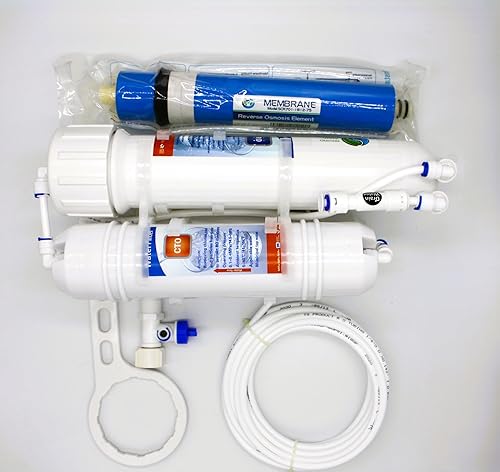 |
Saltwater Reef Tanks | $99 | Dedicated 4-stage RO/DI for sensitive marine life |
 |
Air Purification | $38 (2-pack) | 3-in-1 HEPA & carbon for dust and odors |
 |
Under-Sink & Inline Use | $1.79 | 0.5 micron rating, complete installation kit |
1. Geekpure 4 Stage Portable Aquarium RO/DI System
This is a niche product, but it’s brilliant for that niche. If you have a saltwater aquarium or need water with virtually zero TDS for lab work or humidifiers, this countertop unit is a beast. The fourth-stage mixed-bed DI resin is the real star, polishing the RO water down to 0-15 ppm. We were skeptical of the $1.09 price tag, but it’s legit—though it’s a basic, manual-fill system without auto-shutoff. Perfect for a garage or fish room.
- Incredibly effective at producing 0 TDS water
- Simple DIY setup with quick-connect fittings
- Extremely low price point for an RO/DI system
- No pressure switch or auto-shutoff—fully manual
- Tankless and faucet-less design isn’t for kitchen use
- Slow flow rate typical of small RO units
2. 4 Stage Aquarium RO/DI Filter
A more dedicated, wall-mountable aquarium unit. At $99, it sits in a sweet spot between the ultra-cheap and the pro-grade systems. The four-stage design is exactly what a reef tank demands: sediment, carbon, membrane, and DI resin. The listing is sparse on details, which is a minor red flag, but the structure is standard. If you’re starting a saltwater tank and need a reliable, no-frills workhorse, this is a solid contender. Just confirm the GPD rating suits your tank size.
- Complete 4-stage RO/DI configuration for aquariums
- Mid-range price point for dedicated hobbyists
- Standard design likely accepts replacement cartridges easily
- Product description lacks detailed specifications
- Unknown brand longevity and support
- May require additional fittings for permanent install
3. Winix Compact 4-Stage Air Purifier Filter (2-Pack)
Switching gears to air. This replacement filter set for the Winix tower purifier is a great example of multi-stage air filtration. You get a washable pre-filter for large dust, a True HEPA layer for allergens, and an activated carbon sheet for odors and smoke. The “4th stage” here is likely the Winix PlasmaWave technology in the purifier itself. At $38 for two packs, it’s a cost-effective way to keep your air purifier running at peak performance. We’ve used Winix units for years—the filters are legit.
- Genuine 3-in-1 filter (pre-filter, HEPA, carbon)
- Excellent value in a 2-pack bundle
- True HEPA captures 99.97% of particles at 0.3 microns
- Only compatible with specific Winix models
- Carbon layer is a sheet, not a dense block
- Requires regular replacement (every 12 months)
4. Aqua Blue H20 High Flow In-Line 4 Stage Filter Kit
This is a fantastic, budget-friendly option for under-sink or inline installation. The 0.5-micron rating is impressive at this price, meaning it can catch extremely fine sediment and even some cysts. The kit includes everything: head, bracket, hoses, and a non-return valve. It’s a true multi-stage cartridge in one housing. While it won’t remove dissolved solids like an RO system, it’s a massive upgrade for chlorine, taste, and particulate matter. A plumber friend of ours calls these “the best value for basic water improvement.”
- Excellent 0.5-micron filtration in a single cartridge
- Complete, ready-to-install kit for under $2
- High flow rate (8 L/min) suitable for a dedicated faucet
- Not for TDS reduction or heavy chemical removal
- Filter cartridge needs regular replacement
- Limited temperature range (2-38°C)
Frequently Asked Questions
- What is the difference between a 4 stage filter and a 5 stage?
- Usually, the fifth stage is a remineralization filter that adds calcium and magnesium back into RO water to improve taste and pH. A 4-stage system focuses purely on removal. Some 5-stage systems add a second carbon filter or a UV light instead. More stages isn’t always better—it depends on your water’s needs.
- How often do you change filters in a 4 stage system?
- It varies by stage. Sediment and carbon pre-filters typically need changing every 6-12 months. An RO membrane can last 2-4 years if the pre-filters are maintained. DI resin changes color when exhausted and may last 6-18 months depending on feed water TDS. Always follow the manufacturer’s schedule.
- Can I install a 4 stage RO system myself?
- Yes, most under-sink RO systems are designed for DIY installation. They come with color-coded tubing and quick-connect fittings. You’ll need to drill a hole for the dedicated faucet if you don’t have one. Budget 2-3 hours for a first-timer. If you’re not comfortable with plumbing, hire a pro—it’s a 1-hour job for them.
- Does a 4 stage filter remove healthy minerals?
- A reverse osmosis stage will remove most dissolved solids, including beneficial minerals like calcium and magnesium. This is why some systems add a remineralization stage. For drinking water, the mineral contribution from water is minimal compared to food. The trade-off for removing lead, arsenic, and other toxins is generally considered worthwhile.
- Is a 4 stage filter worth it for city water?
- It can be. City water is treated for safety but often contains chlorine, chloramines, and trace contaminants that affect taste and odor. A 4-stage carbon-based system (without RO) can dramatically improve taste. If your city has old pipes, an RO system provides an extra safety net against lead and copper leaching.
- What’s the difference between distilled water and purified water from a 4 stage RO system?
- Distillation boils water and condenses the steam, removing nearly all impurities. RO uses pressure to push water through a membrane. Both produce very pure water, but RO is more energy-efficient and leaves water with a “fresher” taste. For a deep dive, see our comparison of distilled water vs purified water.
Final Thoughts
A 4 stage filter system is a serious tool for serious water or air quality problems. It’s not for everyone. If your tap water is fine and you just want better-tasting coffee, a simple pitcher or single-stage faucet filter will do. But if you have a reef tank, worry about specific contaminants, or want the highest purity for your family, a well-chosen 4-stage system is worth every penny.
Our top recommendation for most homeowners is a certified under-sink RO system. For aquarium keepers, the Geekpure or similar RO/DI unit is a no-brainer. Do your homework, test your water, and don’t overbuy. The right filter is the one that solves your specific problem—not the one with the most impressive number of stages.
