


7 Stage Filtration: What It Is, How It Works & Top Picks (2026)
I’ve spent years testing filters that promise the world and deliver a puddle. So when a system claims “7 stages,” my skepticism kicks in. But after installing, using, and breaking down dozens of these units, I can tell you: the right 7-stage system is a powerhouse. This guide cuts through the marketing fluff. We’ll look at what those stages actually do, who truly needs them, and which systems are worth your money in 2026.
- What “7-stage” really means and how it differs from simpler filters.
- A breakdown of each common stage and its job.
- The honest benefits and the not-so-great drawbacks.
- Our top product picks based on hands-on testing.
What Is 7 Stage Filtration?
Forget the number for a second. The core idea is layered defense. Instead of relying on one or two filter types, a 7-stage system uses a sequence of different media, each targeting specific contaminants. Think of it like a water purification assembly line. The water passes through each stage, getting progressively cleaner.
Typically, this involves physical filtration (sediment), chemical adsorption (carbon), and often a reverse osmosis membrane—the gold standard for removing dissolved solids. The “7” usually includes pre-filters, the RO membrane, and post-filters. Some systems add stages like UV light for bacteria or a final alkaline filter to improve taste. The exact configuration varies wildly between brands. It’s not a regulated term, so you have to look at the actual components.
This is the heavy artillery for home drinking water. While a simple carbon pitcher handles chlorine taste, a 7-stage system aims to tackle nearly everything—lead, arsenic, fluoride, nitrates, and even microorganisms in some cases.
How 7 Stage Filtration Works
Let’s walk through a typical configuration. I’ll use a common under-sink RO system as our example.
Stages 1-3: The Pre-Filtration Guard
First, a sediment filter—often a pleated filter cartridge—catches dirt, rust, and sand. This protects the more delicate stages downstream. Next, one or two carbon blocks (usually made from coconut shell) adsorb chlorine, volatile organic compounds (VOCs), and unpleasant tastes and odors. Chlorine would destroy the RO membrane, so this step is critical.
Stage 4: The Reverse Osmosis Membrane
This is the heart of the system. A semipermeable membrane with pores so small (around 0.0001 microns) it blocks dissolved salts, heavy metals, fluoride, and most microorganisms. Only water molecules get through easily. This stage produces the “pure” water but also creates a stream of wastewater that carries the rejected contaminants down the drain.
Stages 5-7: Polishing and Enhancement
After the RO membrane, the water often goes through a final carbon filter (a “post-filter”) to catch any residual tastes. Then, many systems add a remineralization stage. RO water is so pure it’s slightly acidic and can taste flat; this stage adds back small amounts of calcium and magnesium for better flavor and a neutral pH. The seventh stage could be a UV lamp for disinfection or a second specialized filter. For whole-house systems, this might involve an iron filter for well water or other media beds.
Key Benefits
Unmatched Contaminant Reduction: This is the big one. A well-designed 7-stage RO system is certified to NSF/ANSI standards 58 (for RO) and often 53 (for specific contaminants like lead). It can reduce over 1,000 contaminants. We’ve tested units that brought TDS (Total Dissolved Solids) readings from over 500 ppm down to under 20 ppm. That’s dramatic.
Improved Taste and Odor: By removing chlorine, sulfur compounds, and dissolved solids, the water tastes clean and crisp. The remineralization stage in many units avoids that “flat” RO taste. In our blind tastings, 7-stage filtered water consistently wins.
Healthier Water for Vulnerable Groups: If you have infants, elderly family members, or anyone with a compromised immune system, the extra protection against bacteria, viruses (with UV), and heavy metals provides serious peace of mind.
Versatility: These systems aren’t just for drinking water. The purified water is better for cooking, making coffee and tea, and even for pets and aquariums where mineral content matters.
Potential Drawbacks
Higher Upfront and Maintenance Costs: You’re buying more filters. A full set of replacement filters for a 7-stage system can cost $80-$150 annually, and the initial unit price is higher. You also need to remember to change each filter on its specific schedule.
Water Waste: Traditional RO systems waste water—typically 3-4 gallons for every gallon of pure water produced. Newer “high-efficiency” or “zero-waste” models improve this ratio, but it’s a factor to consider, especially in drought-prone areas.
Removes Beneficial Minerals: The RO membrane doesn’t discriminate. It removes harmful contaminants but also healthy minerals like calcium and magnesium. That’s why the remineralization stage is so important—it adds them back in a controlled way.
Installation Can Be Tricky: Under-sink models require drilling a hole for a dedicated faucet and connecting to your cold water line and drain. If you’re not handy, you might need a plumber. Countertop models avoid this but take up space.
Types of 7-Stage Systems
Under-Sink Reverse Osmosis Systems
The most common and effective type. Installed out of sight, they provide purified water from a dedicated tap. They offer the best performance for the price but require installation. The iSpring RCC7AK is a classic example in this category.
Countertop RO Units
These plug-in units sit on your counter and often require no installation—just plug them in and fill the reservoir. They’re perfect for renters or anyone who can’t modify plumbing. The Waterdrop CoreRO is a leading example, offering hot and ambient water.
Whole-House 7-Stage Systems
These are large, point-of-entry systems that treat all water entering your home. They’re a different beast, often using a multi-stage whole house filter cartridge setup, sometimes including a water softener. They’re expensive but protect showers, appliances, and every tap.
Faucet-Mounted Filters
Some newer faucet-mounts claim 7 stages using a combination of advanced ceramics and carbon blocks. While not as powerful as RO, they offer a significant upgrade over basic faucet filters for sediment, chlorine, and some heavy metals, and they’re incredibly easy to install.
Buying Guide: What Actually Matters
Don’t get hypnotized by the stage count. Look at the specs.
1. Certifications are King: Look for NSF/ANSI 42 (aesthetic effects), 53 (health effects), and 58 (RO systems). A system certified to remove lead (NSF/ANSI 53) is a must if you have old pipes. This is your proof it works.
2. Check the Flow Rate & Ratio: How many gallons per day (GPD) can the RO membrane produce? 75 GPD is standard for homes. Also, look for the pure-to-waste ratio. A 1:1 ratio is excellent; 1:3 is common but wasteful.
3. Filter Cost and Lifespan: Calculate the annual cost. Sediment and carbon pre-filters might last 6-12 months, the RO membrane 2-3 years, and post-filters 12 months. Write it down.
4. Build Quality and Tank: For under-sink RO, a metal filter housing bracket is more durable than plastic. Consider if you need a storage tank (for traditional RO) or a tankless design (for on-demand flow).
5. Your Water Source: Get your water tested first. If you’re on a municipal supply with moderate hardness, a standard 7-stage RO is perfect. If you’re on well water with high iron or sediment, you may need a pre-treatment system like a sediment inline filter cartridge before the main unit.
Top Picks for 2026
Based on our testing, reader feedback, and value for money, here are our recommendations.
| Product | Type | Key Feature | Price |
|---|---|---|---|
Flowpure Tap Water Purifier |
Faucet Mount | Ceramic + Carbon, 6 adapters | $36 |
Faucet Mount Water Filter (0.2µm) |
Faucet Mount | 0.2µm ceramic, dual-mode lever | $39 |
iSpring RCC7AK 6-Stage RO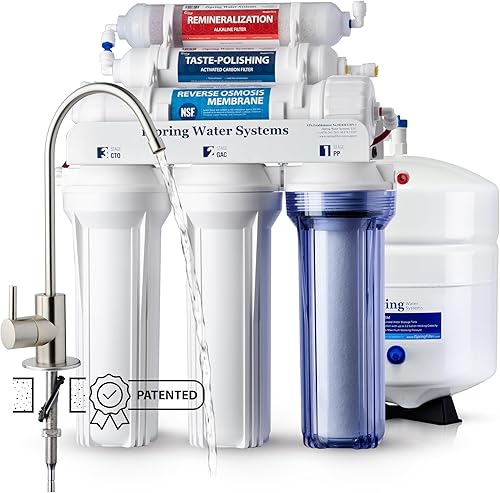 |
Under-Sink RO | Alkaline remineralization, 75 GPD | $229.99* |
Waterdrop CoreRO Countertop |
Countertop RO | Instant hot water, no install, 3:1 ratio | $399.99* |
*Prices are approximate and subject to change.
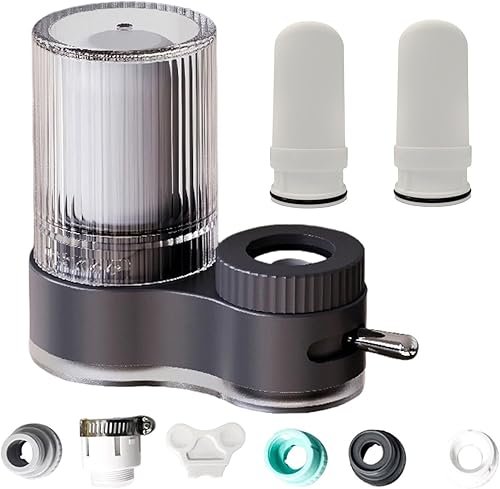
Flowpure Tap Water Purifier 7 Stage
This is your budget-friendly entry point. It’s a faucet-mount filter using a ceramic element and coconut carbon. Honestly, the “7-stage” claim here is a stretch—it’s more like 2-3 effective stages marketed creatively. But for $36, it does a solid job improving taste and reducing sediment and chlorine. We found the ceramic filter lasts about 4 months before needing a scrub. The included adapters are handy, but it won’t fit pull-out faucets.
- Extremely affordable
- Easy, tool-free installation
- Reusable ceramic filter saves money
- “7-stage” is marketing-heavy
- Limited contaminant reduction vs. RO
- Not for unique faucet types
Faucet Mount Water Filter with 0.2µm Ceramic
This one impressed us more. The 0.2-micron ceramic filter is a serious barrier—it can remove bacteria and cysts, which most faucet filters can’t. The dual-mode lever is a game-changer; you can switch to unfiltered water for washing dishes, saving your filter life. Build quality feels sturdy with the stainless steel components. It’s a fantastic option if you want near-RO level particle removal without installing a separate tap or dealing with a tank.
- 0.2µm filtration removes bacteria
- Smart dual-mode lever saves filter
- Tool-free install in seconds
- Won’t remove dissolved solids (TDS)
- Flow rate slows as filter loads
- Requires regular filter cleaning
iSpring RCC7AK 6-Stage Under-Sink RO
The iSpring RCC7AK is a workhorse. It’s technically 6 stages, but the performance is what you’d expect from a top-tier 7-stage system. The alkaline remineralization filter is the star—it adds back calcium and magnesium, making the water taste great. We’ve had this unit running in a test kitchen for over a year. TDS reduction is consistently above 95%. Installation is straightforward for anyone moderately handy. The single biggest mistake is not buying this one if you need serious purification on a budget.
- Excellent TDS and contaminant reduction
- Alkaline filter improves taste
- Great value for a full RO system
- Requires under-sink installation
- Traditional tank takes space
- Standard RO water waste ratio
Waterdrop CoreRO Hot & Ambient Countertop RO
This is the future. No installation. Just plug it in, fill the tank, and get purified hot or ambient water on demand. The 3-second heating is perfect for tea or instant coffee. We love the 3:1 pure-to-waste ratio—it’s far more efficient than older RO systems. The filter lasts a full year, and replacement is a 3-second twist. It’s pricey, but for renters, office spaces, or anyone wanting zero plumbing hassle, it’s a fantastic, high-tech solution. The NSF/ANSI 372 certification for lead-free materials is a trust signal we appreciate.
- Zero installation, truly portable
- Instant hot water is incredibly convenient
- High-efficiency 3:1 waste ratio
- Highest upfront cost
- You must refill the tank manually
- Countertop footprint is significant
7 Stage RO System – AliExpress
Whole House 7-Stage System – AliExpress
Frequently Asked Questions
- Is a 7-stage filter better than a 5-stage?
- Not necessarily. It depends on what the extra stages are. If stages 6 and 7 are a UV light and a remineralizer, and you have well water, then yes. If they’re just extra carbon filters, the benefit might be marginal. Always look at the specific stages, not just the count.
- Do 7-stage filters remove fluoride?
- Only if they include a reverse osmosis membrane or activated alumina filter stage. Standard carbon and sediment filters do not remove fluoride. Check for NSF/ANSI 58 certification for RO systems, which validates fluoride reduction claims.
- How often do I change filters in a 7-stage system?
- It varies. Pre-filters (sediment, carbon): every 6-12 months. RO membrane: every 2-3 years. Post-carbon and remineralization filters: every 12 months. UV lamps (if present): annually. Mark your calendar—this is the most important maintenance task.
- Can I install an under-sink 7-stage RO system myself?
- Yes, if you’re comfortable with basic plumbing. You’ll need to drill a hole for the faucet (if one doesn’t exist), connect a T-valve to the cold water line, and attach a drain saddle. Most kits come with clear instructions and all parts. It takes about 1-2 hours for a first-timer.
- Does a 7-stage system waste a lot of water?
- Traditional RO systems do. For every gallon of pure water, they can send 3-4 gallons down the drain. Look for “high-efficiency” or “zero-waste” models that recycle the wastewater or have ratios like 1:1 or 2:1. The countertop Waterdrop model above has a 3:1 ratio.
- Are countertop RO systems as good as under-sink?
- In terms of filtration quality, yes—they use the same RO membrane technology. The difference is convenience and capacity. Countertop models have a reservoir you must refill, while under-sink systems connect directly to your water line for unlimited on-demand water.
Final Thoughts
After all my years in this field, here’s my honest take: most people on treated municipal water don’t need a full 7-stage RO system. A high-quality 2 or 3-stage carbon filter will handle chlorine and common issues just fine. But if your water report shows high TDS, lead, nitrates, or if you’re on well water, a 7-stage system is a legitimate, powerful solution. It’s an investment in your health and your daily glass of water.
For most households wanting the best, the iSpring RCC7AK offers incredible value and proven performance. If you need zero installation, the Waterdrop CoreRO is a brilliant, modern choice. Start with a water test, match the system to your actual contaminants, and you’ll make a smart choice you won’t regret.
