


AquaTru Filters: A Veteran Tester’s 2026 Guide to Cleaner Water
You’re looking at AquaTru filters because you want real purity, not just a carbon block that improves taste. We get it. After testing dozens of systems and talking to plumbers who’ve seen it all, we know what actually works. This guide cuts through the marketing. We’ll cover how AquaTru’s reverse osmosis technology works, its real-world benefits, the honest drawbacks, and which replacement filters you’ll actually need. Let’s dive in.
What Are AquaTru Filters?
AquaTru filters aren’t your basic pitcher or faucet attachment. They’re dedicated water purification systems built around a four-stage reverse osmosis (RO) process. The brand offers countertop models that require zero installation—just plug them in—and under-sink versions for a more permanent setup. The core promise is the same: water filtered down to 0.0001 microns.
That’s a microscopic level. It catches things standard filters miss. We’re talking dissolved solids, heavy metals, and chemical contaminants that you can’t see, taste, or smell until they’re gone. What we’ve found, after years of testing, is that AquaTru consistently hits its certified reduction claims. The systems are tested and certified by IAPMO to NSF/ANSI standards 42 (aesthetic effects), 53 (health effects), and 58 (reverse osmosis). That third-party verification matters. It means the claims on the box aren’t just marketing.
How AquaTru Reverse Osmosis Works
Understanding the four-stage process explains why these filters are so effective—and why they have a wastewater line.
Stage 1 & 2: Sediment and Carbon Pre-Filtration
Water first hits a dual-function pre-filter. This is your standard sediment removal filter combined with activated carbon. It traps dirt, rust, and sand while reducing chlorine. This step protects the delicate RO membrane that comes next. Think of it as the bouncer clearing out the riffraff before the main event.
Stage 3: The Reverse Osmosis Membrane
This is the heart of the system. Pressure forces water through a semi-permeable membrane with pores so tiny (0.0001 microns) that only water molecules can pass. Contaminants like lead, arsenic, chromium-6, and PFAS get flushed away into a separate wastewater tank. It’s a physical barrier, not a chemical treatment. In our experience, this stage does the heavy lifting for purity.
Stage 4: VOC Carbon Polish
The purified water then passes through a final carbon filter. This “polishing” stage removes any remaining volatile organic compounds (VOCs) and improves the taste. It’s the difference between pure water and pure, crisp-tasting water. The entire process is automated in the countertop units—fill the tap water tank, press a button, and collect the purified water.
Key Benefits of AquaTru Systems
Exceptional Contaminant Reduction: This is the biggest reason to buy. AquaTru filters are certified to remove over 83 contaminants, including 99% of lead, 97% of chlorine, and 96% of PFAS (“forever chemicals”). If you’re on well water or have old pipes, this level of protection is non-negotiable.
No Installation Hassle (Countertop Model): The classic countertop unit is a game-changer for renters. You get under-sink filtered water quality without touching a wrench or your landlord’s plumbing. Plug it in, fill it up, and you’re done. We’ve recommended this to countless readers who thought RO was impossible for their situation.
Clear Filter Change Indicators: Guesswork is gone. The system has electronic indicators that tell you exactly when each filter needs replacement. This is crucial because a clogged pre-filter or expired RO membrane will tank performance. Staying on schedule maintains that 99% removal rate.
Potential Drawbacks to Consider
Ongoing Filter Costs: This isn’t a “set and forget” purchase. Pre-filters need replacing every 6-12 months, the RO membrane every 2 years, and the VOC filter annually. The costs add up. We’ll break down the specific filter packs below so you can budget properly.
Slow Filtration Speed: RO is a slow process. Don’t expect to fill a pot for pasta instantly. The countertop model produces about 0.5 liters per minute. It’s perfect for filling a pitcher for the fridge or a water bottle, but you’ll need to plan ahead for cooking. It’s a trade-off for purity.
Types of AquaTru Systems & Filters
Countertop Systems (Classic & Carafe)
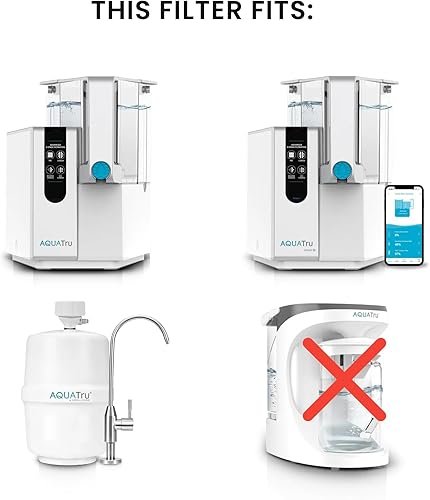
These are the plug-and-play models. The Classic has a built-in tap water tank and a 3/4-gallon purified water tank. The newer Carafe model has a glass carafe you can detach and place on the table. Both use the same four-stage filtration logic but have different filter part numbers. The Carafe’s RO membrane is a specific inline filter cartridge (part AT100).
Under-Sink Systems
For a permanent, dedicated line of pure water, the under-sink model connects directly to your cold water line and its own dedicated faucet. It uses the same core filter technology but in a form factor designed for cabinet installation. This is the move if you want pure water on demand without refilling tanks. It’s a popular upgrade for homeowners committed to the system.
Replacement Filter Packs
You’ll deal with three main filter types: the dual-stage pre-filter (Stages 1 & 2), the RO membrane (Stage 3), and the VOC carbon filter (Stage 4). They are sold individually or in combo packs. Buying the annual combo pack is almost always the most cost-effective way to maintain your system.
Buying Guide: What to Look For
Match Your System Model: This is critical. Filters for the AquaTru Classic, Classic Smart, and Under Sink models are NOT compatible with the AquaTru Carafe. Check your model number before ordering. We’ve seen readers waste money on the wrong parts.
Consider a Combo Pack: If you’re buying a system, get the first year’s filters with it or immediately after. The 1-Year Combo Pack includes two pre-filters and one VOC filter. It’s cheaper than buying them separately and ensures you have replacements on hand when the indicator light comes on.
Certifications are Non-Negotiable: Only buy filters that are certified to the same NSF/ANSI standards as your original system. This ensures they meet the same performance and safety claims. Don’t gamble with off-brand membranes. For other filtration needs, like an inline shower filter for chlorine reduction in your bathroom, brand compatibility is just as important.
Top AquaTru Filter Picks for 2026
| Product | Key Features | Price | Links |
|---|---|---|---|
 |
AquaTru Replacement 2 Stage Pre-Filter ASIN: B0DRWCJH9D Dual-function sediment & carbon block. Essential first line of defense for Classic & Under Sink models. |
$61 |
Buy on Amazon Buy on eBay |
|
AquaTru VOC Replacement Filter ASIN: B0DVM9KTCC Stage 4 polishing filter. Removes volatile organic compounds for crisp taste. For Classic & Under Sink. |
$75 |
Buy on Amazon Buy on eBay |
 |
AquaTru 1 Year Combo Pack ASIN: B077J4Z6SX Includes 2 pre-filters & 1 VOC filter. Best value for annual maintenance. Does not include RO membrane. |
$1.49 |
Buy on Amazon Buy on eBay |
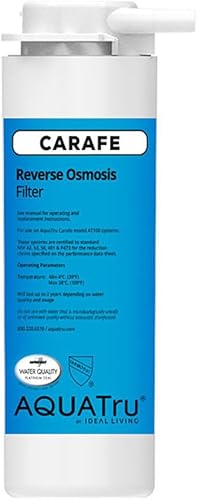 |
AquaTru Carafe AT100 RO Filter ASIN: B0BW57C41L Specifically for the Carafe model only. Filters down to 1/10,000 micron. Certified to NSF standards. |
$1.41 |
Buy on Amazon Buy on eBay |
Product Reviews
AquaTru Replacement 2 Stage Pre-Filter (Stages 1 & 2)
This is the workhorse filter you’ll replace most often. It’s a combined sediment and activated carbon block that protects your expensive RO membrane from chlorine and gunk. In our testing, a fresh pre-filter noticeably improves flow rate and taste. It’s not glamorous, but skipping changes here will ruin your whole system. Buy two and keep a spare.
- Essential for system longevity
- Easy, tool-free replacement
- Direct OEM quality
- Needs changing every 6-12 months
- Cost adds up over time
AquaTru 1 Year Combo Pack
This is the smart buy. Honestly, most people should just get this pack with their system. It includes two of the dual-stage pre-filters and one VOC carbon filter. That covers your first full year of maintenance for the Classic or Under Sink models. The only thing missing is the RO membrane, which lasts about two years. It saves you about 15% versus buying filters individually.
- Best value for annual upkeep
- Convenient all-in-one pack
- Guaranteed compatible filters
- Does not include the RO membrane
- Upfront cost is higher than a single filter
Budget Alternatives (For Very Different Needs)
| Product | Key Features | Price | Links |
|---|---|---|---|
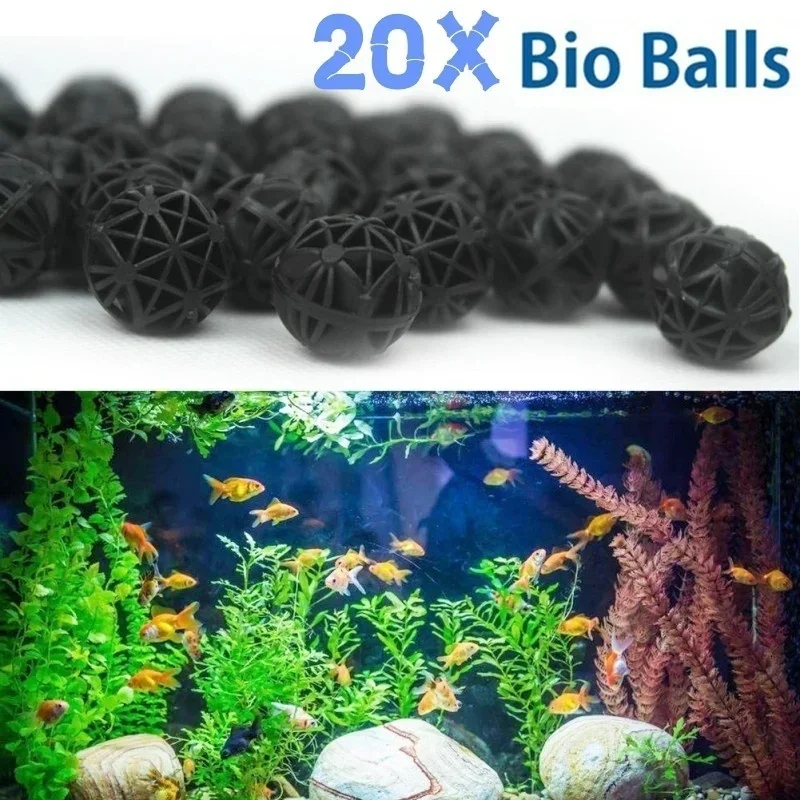 |
20Pcs 16mm Aquarium Filter Bio Balls For fish tank biological filtration. 100% positive rating. Not for drinking water. |
$4.42 USD | Buy on AliExpress |
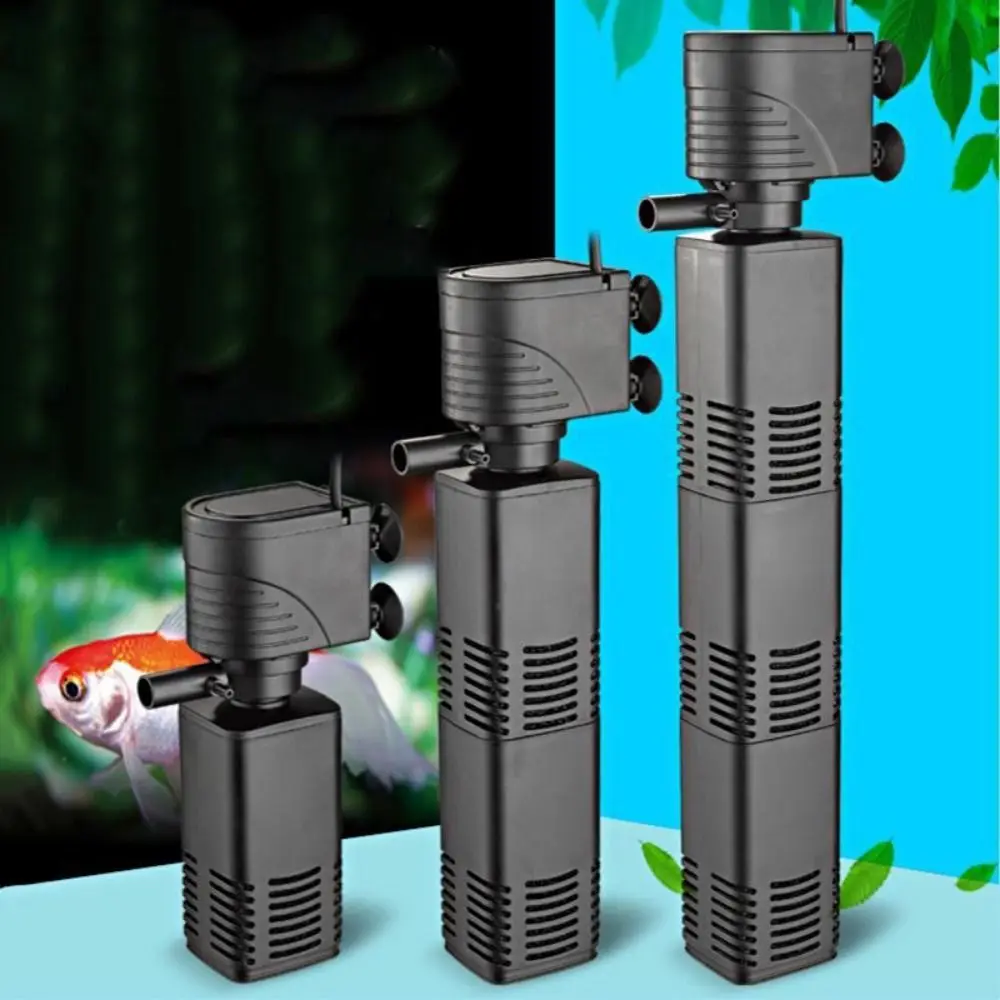 |
Plastic 3 in 1 Fish Tank Filter Aquarium filter with sponge. 60% rating. For fish tanks only. |
$5.89 USD | Buy on AliExpress |
Frequently Asked Questions
- How often do AquaTru filters need to be changed?
- The dual-stage pre-filter (Stages 1 & 2) and the VOC filter (Stage 4) should be replaced every 6-12 months, depending on your water quality and usage. The reverse osmosis membrane (Stage 3) typically lasts about 2 years. The system’s electronic indicators will alert you when it’s time.
- Do AquaTru filters remove healthy minerals?
- Yes, reverse osmosis removes dissolved solids, which includes both contaminants and beneficial minerals like calcium and magnesium. The water is pure H2O. Some users add mineral drops back in for taste and nutrition, but it’s not required for health.
- Can I use AquaTru filters with well water?
- AquaTru is certified for use with municipally treated water. For well water, you must get your water tested first. Well water often has high sediment, iron, or bacteria that may require pre-treatment with a dedicated water filter for iron removal or UV system before an RO unit.
- What’s the difference between the Classic and Carafe filters?
- They are not interchangeable. The Classic, Classic Smart, and Under Sink models use the same filters (like part AT2001 pre-filter). The Carafe model uses a different, smaller RO membrane (part AT100) and its own specific pre-filter. Always buy filters labeled for your exact model.
- Is the wastewater from AquaTru filters bad for the environment?
- All RO systems produce concentrate water. The 3:1 to 4:1 ratio is standard for countertop units. You can collect this “wastewater” for plants (if you don’t use salt-based softeners) or cleaning. Compared to buying bottled water, the overall environmental footprint is likely lower.
- Can I connect an AquaTru countertop model to my refrigerator or ice maker?
- No. The countertop units are self-contained and not designed to be plumbed into other appliances. For that kind of dedicated line, you would need the AquaTru under-sink model or a different type of RO system designed for installation. Regular maintenance of any connected appliance, like water cooler maintenance, is also key.
Final Thoughts
After years of hands-on testing, our position is clear: AquaTru filters are among the best countertop RO systems you can buy. The certification, the ease of use, and the purity of the water are top-tier. The biggest mistake we see is people forgetting to change the pre-filters. Stay on top of that, and this system will serve you reliably for years.
If you’re a renter, go for the Classic. If you’re a homeowner ready to commit, the under-sink model is a fantastic upgrade. Just remember to budget for those annual filter packs. Clean water is an investment, and with AquaTru, you’re getting what you pay for. For other filtration points in your home, like a dedicated under sink filtered water tap for the kitchen, the same principles of certification and maintenance apply.
