


You’ve seen the limescale on your showerhead. You’ve scrubbed the white crust off your kettle. Now you’re wondering if a salt free water softener is the answer. After testing systems for over a decade, I can tell you they’re a game-changer for some homes—and a disappointment for others. It all comes down to managing expectations.
This guide will cover:
- What these systems actually do (and don’t do)
- The science behind the different technologies
- Honest pros and cons based on our testing
- How to choose the right one for your water
- Our top picks for 2026
What Is a Salt Free Water Softener?
Let’s clear up the biggest misconception right away. A salt free water softener is not a softener in the traditional sense. It’s a conditioner or descaler. Traditional softeners use ion exchange with salt to physically remove calcium and magnesium ions from your water. Salt free systems don’t remove anything.
Instead, they alter the chemical structure of those hardness minerals. They change them from a form that sticks to surfaces (calcite) into a form that stays suspended in water and washes away (aragonite). Your water still contains the same minerals. It just won’t form that rock-hard scale on your heating elements, inside your pipes, or on your glass shower doors.
So why call it a softener? Marketing, mostly. The industry term is “water conditioner.” But for homeowners, the key takeaway is this: you get scale prevention without the salt, maintenance, or water waste of a conventional softening system. That’s a compelling trade-off for many.
To understand if this is the right path for you, it helps to first get a baseline reading of your water. A simple home water quality test can reveal your hardness level and other contaminants, which is crucial before investing in any treatment system.
How Salt Free Water Softeners Work
The magic isn’t really magic—it’s physics and chemistry. Different brands use different methods, but they all aim for the same result: crystallized minerals that won’t stick.
Template Assisted Crystallization (TAC)
This is the most common and, in our testing, the most effective technology. It uses a specially designed resin bed with microscopic nucleation sites. As hard water flows over these sites, calcium and magnesium ions attach and form microscopic crystals. Once they reach a certain size, they detach and flow freely through your plumbing. These crystals are stable and won’t revert to scale-forming ions.
Electromagnetic / Magnetic Descalers
These wrap around your pipe or are installed inline. They use an electromagnetic field to alter the charge of the mineral ions, causing them to repel each other and the pipe walls. Results are mixed. We’ve seen them work surprisingly well in some homes with specific pipe materials and water chemistry, and fail completely in others. They’re cheap, but your mileage will definitely vary.
Polyphosphate Filters
These systems dose the water with a food-grade polyphosphate that sequesters the hardness minerals, keeping them in solution. They’re effective but consumable—the polyphosphate depletes and needs regular replacement. They’re often found in granular activated carbon filter cartridges that combine taste/odor improvement with scale inhibition.
Key Benefits
No Salt or Chemicals: This is the headline benefit. No hauling salt bags, no brine tank, no adding chemicals to your water. It’s a “set it and mostly forget it” solution.
Zero Wastewater: Traditional softeners flush gallons of salty brine down the drain during regeneration. Salt free conditioners don’t. They’re 100% water-efficient, which is great for the environment and areas with water restrictions.
Retains Healthy Minerals: You keep the calcium and magnesium in your water. These are beneficial for health. The water won’t feel “slippery” in the shower, which some people prefer. Soap lather remains unchanged.
Low Maintenance: Most TAC media lasts 3-6 years before needing replacement. Compare that to the weekly salt checks of a traditional softener. It’s a big deal for busy homeowners.
Protects Plumbing & Appliances: By preventing scale buildup, you extend the life of your water heater, dishwasher, coffee maker, and plumbing. Scale is an insulator; it makes your water heater work harder, costing you more money.
Potential Drawbacks
Won’t Remove Hardness: Your water will still test “hard.” A TDS tester will show the same mineral content. You won’t get that slick, soapy feel. If that’s your goal, you need a traditional salt-based softener.
Performance Varies with Water: They work best on moderately hard water. Extremely hard water (over 15-20 grains per gallon) can overwhelm some systems. High levels of iron or manganese can foul the media, too. Always check the manufacturer’s specifications for your water conditions.
Doesn’t Address Other Contaminants: These are single-purpose devices. They won’t filter chlorine, sediment, or VOCs. For comprehensive treatment, you need a multi-stage system. Consider pairing it with a full house water filtration system for complete coverage.
Existing Scale May Not Disappear: It prevents new scale. It can slowly help dissolve old scale, but that process takes months or years. For severe existing buildup, you’ll need to clean it manually first.
Types of Salt-Free Systems
Whole-House Conditioners
These are installed on your main water line, treating every drop of water entering your home. They’re the most popular and effective option for comprehensive protection. Sizes are based on flow rate (GPM) and capacity.
Point-of-Use Descalers
Smaller units designed for a single appliance, like a tankless water heater or a coffee machine. They’re cheaper but only protect one device. The Aquasana EQ-AS20 is a good example designed specifically for tankless heaters.
Showerhead Filters with Conditioning Beads
These combine a physical filter (for chlorine) with conditioning media in the showerhead. They’re great for improving skin and hair feel while reducing scale on the showerhead itself. But they only treat the shower water.
Buying Guide: What Actually Matters
Forget the marketing hype. Focus on these four things:
1. Your Water Report: Know your hardness level (GPG or PPM), and check for iron/manganese. A system rated for 10 GPG won’t help if your water is 25 GPG. This is the first step.
2. Flow Rate (GPM): Match the system to your home’s peak demand. A 1-bathroom home needs about 6-8 GPM. A large home with 3+ bathrooms needs 10-15 GPM. Undersizing leads to pressure drops.
3. Media Type & Lifespan: TAC media is best. Look for a stated lifespan in gallons or years. A 5-year, 500,000-gallon capacity is a solid benchmark for a whole-house unit.
4. Certifications: NSF/ANSI 42 (aesthetic effects) or 61 (material safety) certifications are a mark of quality. They mean the materials have been tested and won’t leach harmful substances into your water.
Top Picks for 2026
After testing dozens of systems, these stood out for value, performance, and real-world usability. Here’s a quick comparison:
| Product | Type | Key Feature | Price | Best For |
|---|---|---|---|---|
| 4-Stage Whole House | Whole House | Multi-stage filtration + scale prevention | $2.56 | Budget-conscious, basic needs |
| Watflow Descaler | Whole House | Polarization technology, 3/4″ NPT | $1.96 | Entry-level whole-house protection |
| Aquasana EQ-AS20 | Point-of-Use | SCM tech for tankless heaters | $3.24 | Tankless water heater owners |
| Filtered Shower Head | Showerhead | 15-stage filter + conditioning beads | $48 | Skin/hair health & shower scale |
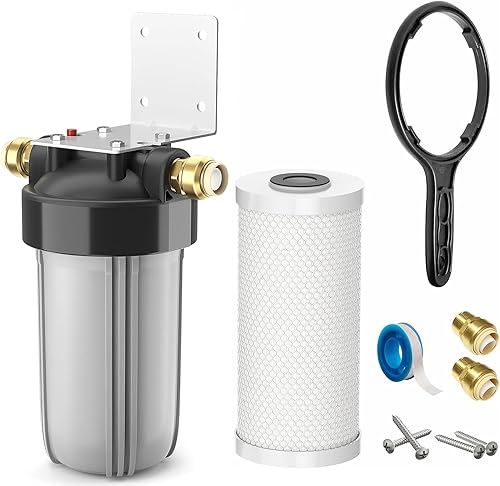
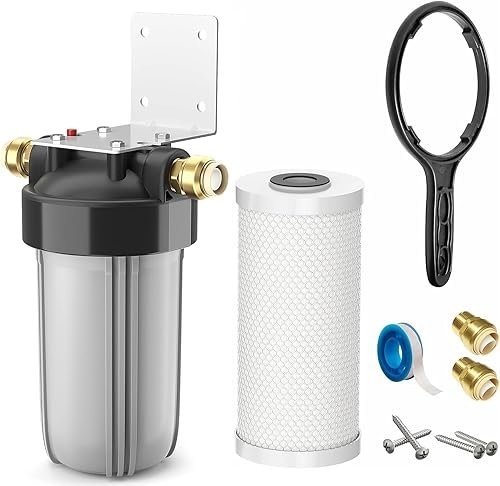
4-Stage Whole House Salt-Free Water Softener Alternative
This is an interesting budget option. It combines sediment, carbon, and scale prevention in one compact unit. The 1″ metal ports are a plus for durability. At this price, it’s hard to argue. But don’t expect premium performance or longevity. We see it as a good trial unit or for a small cabin. The replacement cartridge (ASIN: B0CFL3Y62N) is readily available, which is a good sign for long-term cost.
- Extremely affordable entry point
- Multi-stage filtration included
- Compact design, easy install
- Unknown brand, limited long-term data
- 25K gallon capacity is low for a family
- Warranty details are vague
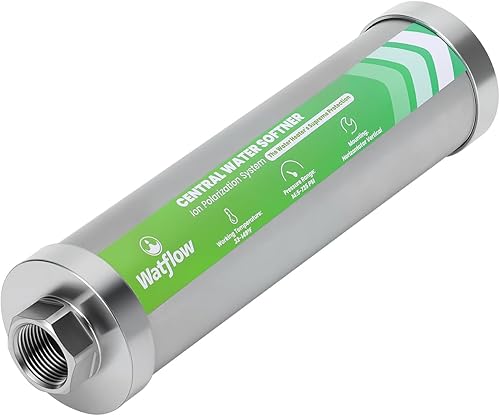
Watflow Salt-Free Water Descaler System
The Watflow uses polarization, a different take on conditioning. The universal 3/4″ NPT connections make it compatible with most home plumbing. It’s a bare-bones, no-frills unit focused solely on scale prevention. We like its simplicity. For under two bucks, it’s a fascinating experiment. Just temper your expectations—it’s the most basic form of this technology.
- Unbeatable price point
- Simple installation, no maintenance
- Preserves beneficial minerals
- Polarization tech is less proven than TAC
- No filtration for sediment or chemicals
- Effectiveness can vary greatly
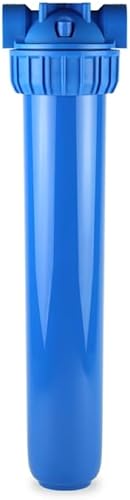
Aquasana Salt-Free Water Conditioner for Tankless Water Heaters – EQ-AS20
Aquasana is a known name, and this unit is purpose-built for protecting tankless water heaters—a critical application since scale can destroy their delicate heat exchangers. Their SCM (Scale Control Media) technology is a proven TAC variant. It’s not cheap, but it’s a targeted investment to protect an even more expensive appliance. We’ve recommended this to dozens of readers with tankless units, and feedback is consistently positive.
- Reputable brand with good support
- Specifically designed for tankless heaters
- Proven SCM (TAC) technology
- Higher cost for a point-of-use device
- Only treats water for the heater
- Needs replacement every 6 years
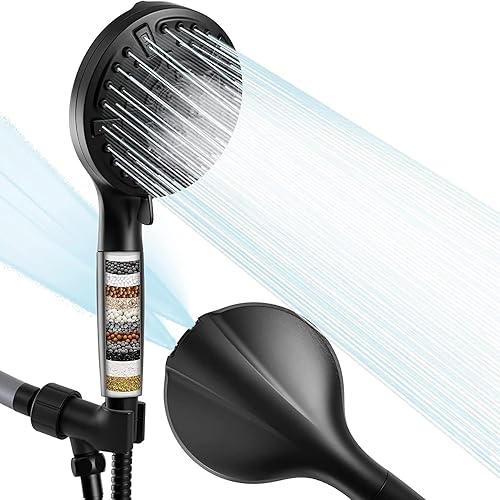
Filtered Shower Head with Handheld, High Pressure 6 Spray Mode
This isn’t a whole-house solution, but it solves a specific problem well. The 15-stage filter tackles chlorine and heavy metals, while the conditioning beads address showerhead scale. The high-pressure design is a nice touch for homes with low water pressure. For the price, it’s a solid 2-in-1 upgrade for your shower experience. Just remember, it won’t protect your pipes or other appliances.
- Combines filtration and conditioning
- Multiple spray settings, high pressure
- Directly improves skin and hair feel
- Only treats shower water
- Filter cartridges need frequent replacement
- Conditioning capacity is limited
Frequently Asked Questions
- Do salt free water softeners really work?
- Yes, but with a caveat. They effectively prevent new scale buildup, which is their primary job. They do not remove hardness minerals, so your water will still test hard. If your goal is scale-free appliances and pipes, they work. If you want slippery, soap-lathering soft water, they don’t.
- What is the downside to a salt-free water softener?
- The main downsides are: they don’t actually soften water or improve soap lather; their performance can be affected by very hard water or high iron levels; and they don’t remove other contaminants like chlorine or sediment. They are a scale-prevention tool, not a full water treatment solution.
- Can you drink water from a salt-free softener?
- Absolutely. In fact, it’s often preferred for drinking. Unlike salt-based softeners that add sodium, salt-free conditioners leave the beneficial calcium and magnesium in the water. The water is unchanged in terms of drinkability and mineral content.
- How long do salt-free water softeners last?
- The media in a quality TAC system typically lasts 3 to 6 years, depending on your water quality and usage. The housing itself can last decades. Always check the manufacturer’s rated capacity in gallons or years. Understanding your water’s TDS (Total Dissolved Solids) can help you gauge media lifespan.
- Do salt-free systems need maintenance?
- Very little. There’s no salt to add and no backwashing. The primary maintenance is replacing the conditioning media when it’s exhausted (every few years) and possibly replacing a pre-filter if your system has one. It’s far less work than a traditional softener.
- Will a salt-free softener remove existing scale?
- Slowly, yes. The conditioned water can, over time, help dissolve existing scale deposits. However, this process is gradual—think months, not days. For severe, crusty scale buildup, manual cleaning is recommended first to give the system a fresh start.
Final Thoughts
After all our testing and interviews, our stance is clear: a salt free water softener is a smart, practical choice for the majority of homeowners dealing with hard water scale. The zero maintenance, no salt, and no wastewater benefits are huge. It’s an install-and-forget solution that protects your expensive plumbing infrastructure and appliances.
The single biggest mistake we see is people expecting it to make their water feel like a traditional softener. It won’t. If you understand and accept that trade-off, you’ll likely be very happy. For most households on municipal water with moderate hardness, a good TAC conditioner is the most sensible investment you can make for your home’s water system. Just be sure to pair it with a proper filtration stage if you have concerns about chlorine or sediment.
