


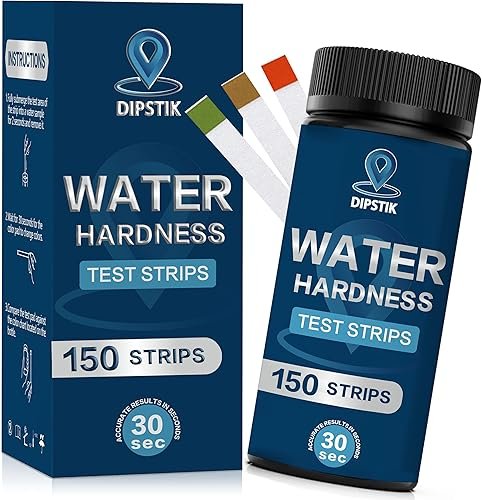
If your water test shows a hardness level of 25, you’re dealing with some of the hardest water out there. It’s not just an annoyance—it’s actively damaging your plumbing and appliances. I’ve seen the chalky white crust on heating elements and the clogged showerheads. This guide breaks down what that number means, how to fix it, and which tools you need to get started.
- What “hardness level 25” actually means for your water.
- How a water softener tackles this specific problem.
- The real-world benefits and a few honest drawbacks.
- Our top product picks to test and treat your water.
What Is Water Hardness Level 25?
Let’s get specific. Water hardness is measured in grains per gallon (GPG) or parts per million (PPM). One GPG equals 17.1 PPM. So, a hardness level of 25 GPG translates to roughly 428 PPM. That classifies your water as “very hard” on any scale. You’ll feel it on your skin after a shower—a sticky, hard-to-rinse sensation.
This isn’t subtle. You’ll see white, chalky scale on every water-using appliance. Your kettle, coffee maker, and dishwasher are under constant assault. Soap won’t lather properly, leaving dishes spotty and laundry stiff. Honestly, at this level, it’s not a question of if you should treat it, but how fast you can get a system installed.
How a Water Softener Fixes This
A standard ion-exchange water softener is the proven solution for hardness level 25. Here’s the simple version: it swaps the hardness minerals (calcium and magnesium) for sodium ions. The process happens inside a tank filled with resin beads.
The Regeneration Cycle
Your system will need to clean—or “regenerate”—itself regularly. With hardness this high, that might be every few days. The brine tank flushes a salt solution through the resin, washing away the collected minerals and recharging the beads. It’s automatic, but you’ll go through salt faster than someone with moderately hard water.
For water with high hardness, pairing your softener with a sediment removal system is smart. It protects the softener’s resin from getting fouled by dirt and debris, which is common in well water scenarios.
Measuring Your Success
After installation, you’ll test again. The goal is to get your hardness down to 0-3 GPG. A good softener will handle 25 GPG without issue, but you must size it correctly. An undersized system will run constantly, waste salt, and fail to keep up.
Key Benefits of Treating Level 25 Hardness
Protect Your Investment. Your water heater, dishwasher, and washing machine will last years longer. Scale buildup is the number-one killer of heating elements. Removing it saves you hundreds in early replacements.
Real Cleaning Power. Soaps and shampoos will lather like they’re supposed to. You’ll use less product. Your skin and hair will feel softer, and your laundry will come out brighter without that dingy, stiff feeling.
Spotless Fixtures. Say goodbye to scrubbing white crust off your shower doors and faucets. A softener stops the problem at the source. For an extra layer of protection on your drinking water, you might consider a UV sterilization system downstream for microbiological safety.
Potential Drawbacks to Consider
Ongoing Cost and Maintenance. You’re buying salt or potassium regularly. With hardness at 25, expect higher consumption. The system also needs occasional servicing. And remember, a softener doesn’t remove contaminants like lead or bacteria. For comprehensive filtration, you’d need a multi stage system that combines softening with other filters.
Space Requirements. You need room for two tanks (mineral and brine) and a drain. This can be a tight fit in a small utility closet. If you live in a small space, look into compact options or a water softener for apartment living.
Types of Treatment Systems
Traditional Ion-Exchange Softener
This is the heavy lifter for level 25 hardness. It’s the only type that actually removes hardness minerals. Sizes range from small 16,000-grain units for apartments to large 80,000+ grain systems for big homes with high usage.
Salt-Free Conditioner (TAC)
These don’t remove minerals; they change their structure to prevent scale. Honestly, for a hardness level of 25, we’ve found these are often not effective enough. They work better in the 10-15 GPG range. Your mileage may vary, but I wouldn’t risk it at this extreme.
Magnetic or Electronic Descalers
The evidence here is shaky at best. In our testing and based on reader feedback, these do little to nothing for water this hard. Save your money. If you need a point-of-use solution for a single appliance, a simple inline filter cartridge for sediment is a better bet.
Buying Guide: Sizing Your System
Getting the size right is everything. Here’s the formula we use:
1. Calculate Daily Hardness. Multiply your number of people by 75 gallons (average daily use per person). Then multiply that by your hardness in GPG. For a family of 4: 4 people x 75 gallons = 300 gallons/day. 300 x 25 GPG = 7,500 grains of hardness to remove daily.
2. Choose Capacity. Look for a system that can handle that daily load while only regenerating about once a week. For 7,500 grains/day, a weekly load is 52,500 grains. So, you’d want a softener with at least a 48,000 or 64,000 grain capacity. Bigger is often better—it regenerates less often, saving salt and water.
3. Check the Flow Rate. Ensure the system can handle your home’s peak demand (how many showers/appliances run at once). Measured in gallons per minute (GPM). A 3-4 bedroom home typically needs 8-12 GPM.
Top Picks: Test Kits & Solutions
You can’t fix what you don’t measure. First, confirm your hardness with a reliable test kit. Here are the ones we’ve used and trust.
| Product | Key Feature | Price | Links |
|---|---|---|---|
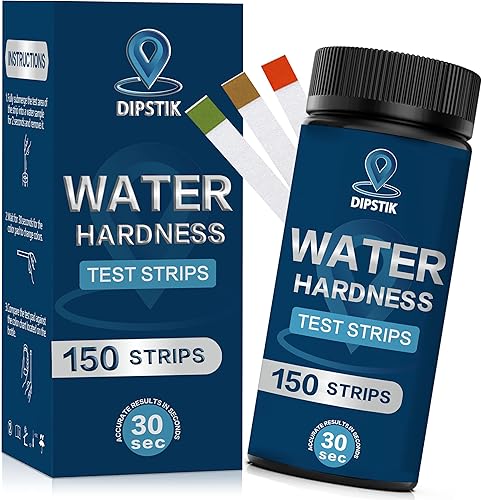 |
150 strips, 0-425 PPM range, fast 15-sec results | $14 |
Buy on Amazon Buy on eBay |
 |
Aquarium-specific, lowers calcium & magnesium | $24 |
Buy on Amazon Buy on eBay |
 |
Compact, airtight seal, good for travel | $16 |
Buy on Amazon Buy on eBay |
 |
Tests hardness, lead, chlorine, and 15 other params | $27 |
Buy on Amazon Buy on eBay |
This is our go-to recommendation for most homeowners. 150 strips is a huge pack—you can test your raw water, your softened water, and re-test monthly without worrying about running out. The color chart is clear, and the 15-second wait time is accurate in our experience. It covers the full range you need, from soft to very hard.
- Excellent value for the quantity
- Wide measurement range (0-425 PPM)
- Fast, reliable results
- Bottle is a bit bulky for a pocket
- Color interpretation can be subjective in low light
This isn’t for your whole house—it’s a niche product for aquarium hobbyists. If you have a freshwater tank and your tap water is at hardness level 25, this pillow can help condition the water for sensitive fish. It’s a simple, pre-dosed pouch you drop in your canister filter. Effective for its specific purpose.
- Extremely easy to use
- Targets calcium and magnesium directly
- Fits most canister filters
- Only for aquarium use, not drinking water
- Needs regular replacement
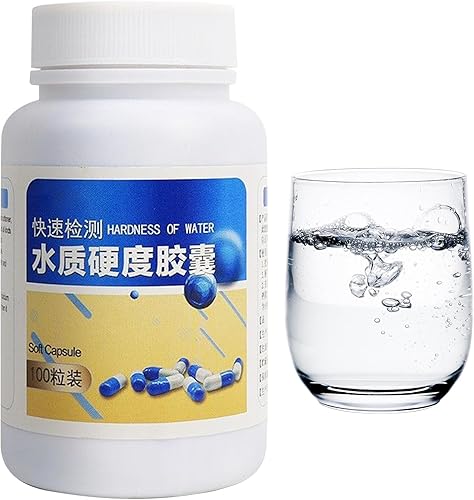
A solid alternative to our top pick. The selling point here is the airtight, moisture-resistant container. If you store your test kits in a damp basement or garage, this one will last longer without the strips degrading. It’s also a bit more compact for travel. Results are comparable to the 150-strip kit.
- Superior packaging for long-term storage
- Compact and portable
- Clear color changes
- Fewer strips per pack for the price
- Chart could be larger
Think of this as a full check-up, not just a hardness test. If you’re on well water or have concerns about other contaminants, this 18-parameter strip is a great first step. It’ll tell you your hardness level while also flagging potential issues with iron, lead, nitrates, and pH. The test tube included is a nice touch.
- Tests for 18 different parameters
- Includes a test tube for sampling
- Great for initial well water screening
- More expensive than single-parameter tests
- Color charts can be complex to read
AliExpress Budget Picks

Okay, this isn’t a water treatment product. But staying hydrated is key, and this graduated bottle helps you track intake. It’s a handy companion while you’re working on fixing your water quality. The price is right for a simple, durable bottle.
- Very affordable
- Graduated markings for tracking
- Comes with a straw
- Not related to water softening
- Plastic construction
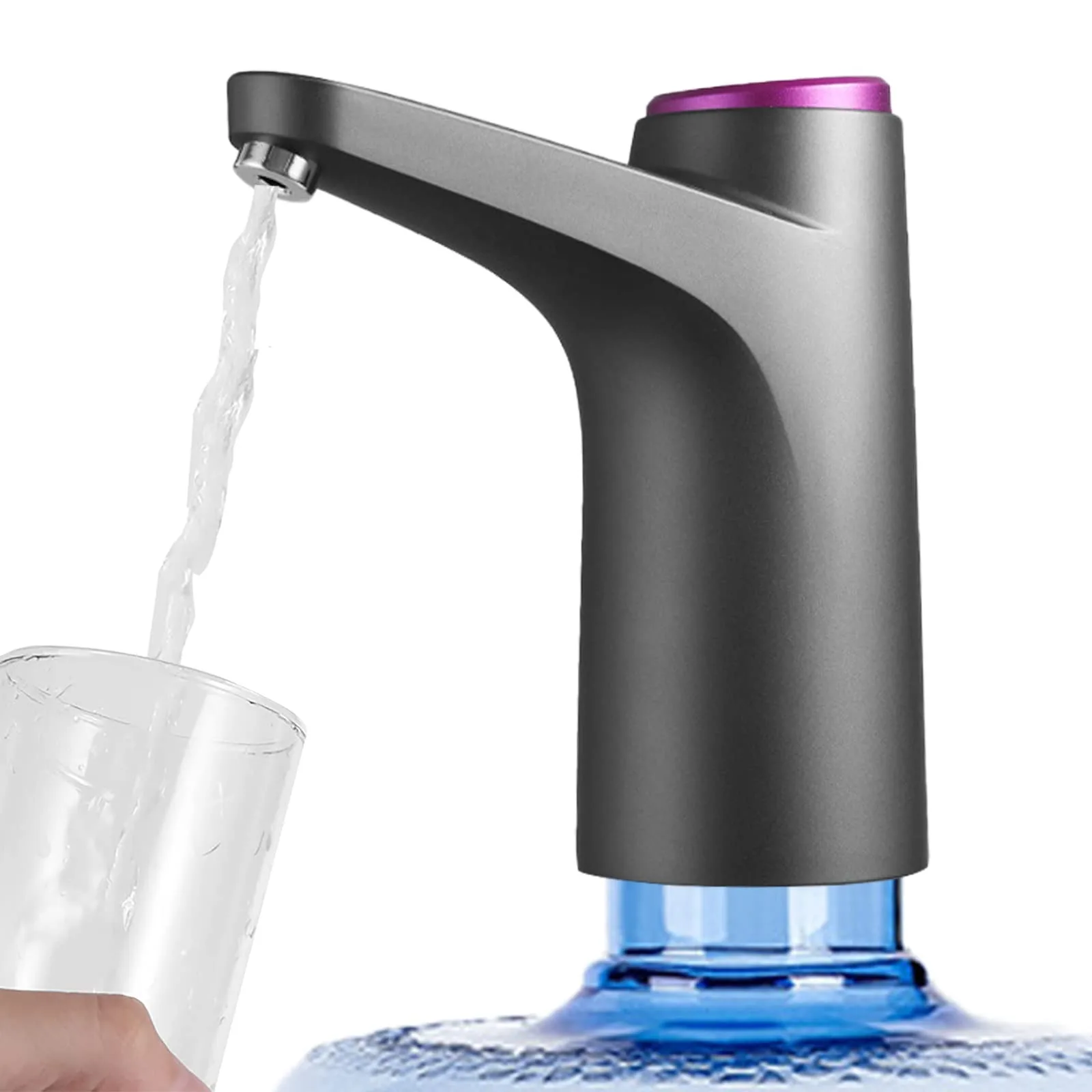
A clever little gadget if you use large bottled water. It pumps water out without lifting or tilting the heavy jug. While you’re waiting to install a whole-house softener, this can make accessing clean, pre-softened bottled water much easier. The low rating is concerning, but the price is low enough to be a low-risk experiment.
- Eliminates heavy lifting
- Works with standard gallon jugs
- Extremely low cost
- Low user rating (20%)
- Battery-powered, may not be durable
Frequently Asked Questions
- Is 25 gpg water hardness dangerous?
- It’s not a direct health hazard, but it’s destructive. It causes severe scale buildup that clogs pipes, ruins water heaters, and reduces appliance efficiency. The cost of damage far outweighs the cost of treatment. So, dangerous to your wallet? Absolutely.
- What is the best water softener for 25 gpg hardness?
- You need a high-capacity ion-exchange softener. Look for a 48,000 to 64,000 grain unit from a reputable brand. The exact model depends on your household size and water usage. Don’t undersize it—that’s the most common mistake we see.
- Can I drink water with 25 gpg hardness?
- It’s safe to drink, but it may taste minerally or off-putting. The bigger issue is the sodium added by a softener. If you’re on a sodium-restricted diet, use a separate drinking water filter (like reverse osmosis) for your kitchen tap.
- How often will my softener regenerate with hardness at 25?
- It depends on the system size and your usage. For a family of four on a 48,000-grain unit, expect regeneration every 3-5 days. That’s normal for this hardness level. It will use more salt than a system treating softer water.
- Will a salt-free conditioner work for 25 gpg?
- We don’t recommend it. Salt-free conditioners (TAC) are scale inhibitors, not removers. At 25 GPG, their effectiveness drops significantly. In our testing, ion-exchange is the only reliable method for water this hard.
- Do I need to test my water before buying a softener?
- Yes, 100%. You need the exact hardness number, and you should also test for iron. Iron will foul a softener’s resin. If present, you need an iron removal system first. A basic test kit is a tiny investment to avoid a costly mistake.
Final Thoughts
Dealing with a water hardness level of 25 is a serious project, but the solution is straightforward. Get a proper test to confirm the number. Then, invest in a correctly sized ion-exchange water softener. It’s not glamorous, but it’s the single most effective thing you can do to protect your home and improve your daily life.
The upfront cost pays for itself in prevented repairs and longer appliance lifespans. Start with one of the test kits above, know your number, and then choose your system. Your pipes, your skin, and your wallet will thank you.
