


Your water feels harsh. Your soap won’t lather. That chalky crust on your kettle is a dead giveaway. You’ve got hard water, and a softener is the fix. But here’s what nobody tells you: the softener itself is only half the story. The other half is the salt you feed it. Get this wrong, and you’ve bought a very expensive paperweight. We’ve seen it happen. Let’s make sure it doesn’t happen to you.
This guide covers everything you need to know about water softer salt in 2026:
- What it actually is (and what it isn’t)
- How it powers your entire softening system
- The different types and which one you really need
- Our top picks after testing dozens of brands
What Is Water Softer Salt?
Let’s clear up the biggest myth first. Water softer salt doesn’t directly touch your drinking water. It’s not a filter. Think of it more like a battery charger. The real work happens inside your softener’s tank, where thousands of tiny resin beads are coated with sodium ions. These beads have a negative charge that attracts and holds onto the positively charged calcium and magnesium minerals—the “hardness”—in your water.
Over time, the beads get saturated with these minerals and can’t grab any more. That’s where the salt comes in. A concentrated brine (saltwater solution) is flushed through the resin tank. The brine’s overwhelming concentration of sodium ions knocks the captured calcium and magnesium off the beads, sending them down the drain. The resin is “recharged” and ready to soften more water. The salt itself is the raw material for this regeneration process.
It’s a simple, clever ion-exchange process. But the purity and form of the salt you use directly impact how efficiently this cycle runs. A good salt prevents bridging, mushing, and sludge buildup that can clog your system. While a household water filter system tackles contaminants, the softener’s sole job is mineral removal, and salt is its lifeblood.
How Water Softer Salt Works
The Regeneration Cycle
Your softener’s control valve initiates a regeneration cycle based on either a timer or, more efficiently, actual water usage. It first backwashes to flush out any sediment. Then, it draws the brine solution from the salt tank into the resin chamber. This brine does the heavy lifting, swapping sodium for hardness minerals. Finally, a slow rinse and a fast rinse wash the excess brine and hardness down the drain, leaving recharged resin behind.
Why Purity Matters
Cheaper salts contain more impurities—dirt, clay, or other minerals. These don’t dissolve cleanly. They form a thick, sludgy layer at the bottom of your brine tank, often called a “salt bridge” or “mush.” This sludge can clog the injector that draws brine into the resin tank, halting the whole process. You’ll think you’re out of salt when the tank is full. We’ve pulled fistfuls of this gunk out of malfunctioning units. High-purity salt dissolves completely, leaving little to no residue.
It’s Not Just About Sodium
For most people, sodium chloride is the standard. But if you’re on a low-sodium diet or have concerns about sodium in your water, potassium chloride is an alternative. It works the same way but replaces sodium with potassium during regeneration. It’s typically more expensive—sometimes double the price—but it’s the go-to for health-conscious households. This choice is separate from the filtration you might get from a filtered water for home setup.
Key Benefits of Using the Right Salt
Protects Your Investment: Your softener cost hundreds, maybe thousands. The right salt prevents the mechanical failures that lead to expensive service calls. It keeps valves, injectors, and seals clear of scale and sludge.
Maximizes Efficiency: Pure salt dissolves predictably, ensuring a consistent brine strength. This means your resin gets regenerated properly every time, so you get truly soft water 24/7. No surprise hard-water streaks.
Saves Money Long-Term: You’ll use less salt because there’s no waste from undissolved impurities. You’ll also avoid the hidden costs of premature appliance failure. Water heaters and dishwashers last longer with scale-free water.
Simplifies Maintenance: With high-purity pellets or cubes, you can go months without dealing with a bridged or mushed tank. Just top it off and walk away. It’s the definition of “set and forget.”
Potential Drawbacks & Mistakes
Salt Bridging: This is when a hard, crusty layer forms in the brine tank, creating an air pocket between the salt and the water. The salt above looks full, but none is dissolving. It’s often caused by high humidity or using the wrong salt type for your conditions. A quick poke with a broom handle can break it.
Environmental Impact: The brine discharge from regeneration adds chloride to wastewater. In some sensitive ecosystems, this can be a concern. Potassium chloride is a bit more environmentally friendly, but both types contribute to salinity.
Cost: Potassium chloride is significantly more expensive than sodium chloride. For a large family with very hard water, this can add up fast. Weigh the health benefits against the ongoing cost.
Types of Water Softener Salt
Solar Salt (Sea Salt)
Made by evaporating seawater. It’s about 99.5% pure and comes in crystal or pellet form. It’s a great, cost-effective middle ground for most homes. The crystals can sometimes contain trace impurities that lead to a bit more tank residue than evaporated salt.
Evaporated Salt
The purest you can buy—99.9% sodium chloride. It’s mined from underground deposits, then purified and dried. It dissolves completely and leaves virtually no residue. This is our top recommendation for trouble-free operation, especially in humid climates where bridging is common.
Rock Salt
Mined from the ground, it’s the cheapest option but also the dirtiest. It can contain high levels of calcium sulfate and insoluble matter (up to 2-3%). This leads to severe tank sludge and frequent cleanouts. We don’t recommend it unless your budget is extremely tight and you’re willing to do extra maintenance.
Potassium Chloride
The sodium-free alternative. It’s 99.9% pure potassium and works identically in standard softeners. You may need to increase the regeneration cycle slightly, as potassium is a bit less efficient at flushing hardness minerals. It’s the best choice if you’re monitoring sodium intake or have specific water quality concerns that might also involve a water filter for manganese.
Buying Guide: What Actually Matters
1. Check Your Manual First. Seriously. Some systems have specific requirements. Don’t guess.
2. Prioritize Purity Over Price. Look for salt labeled “99.8% Pure” or higher. The few extra dollars per bag save you hours of cleaning headaches. Evaporated pellets are usually the safest bet.
3. Consider Your Climate. In a humid basement, solar salt crystals are more prone to bridging. Evaporated salt pellets or cubes handle humidity better.
4. Form Factor: Pellets vs. Crystals. Pellets (or cubes) are compressed and dissolve slowly, reducing bridging risk. Crystals dissolve faster but can be messier. Most modern softeners handle both well.
5. Sodium vs. Potassium. This is a personal health and budget decision, not a performance one. If no one in your household is on a strict low-sodium diet, sodium chloride is perfectly fine and much cheaper.
Remember, the salt tank is just one part of your home’s water quality system. For comprehensive treatment, you might pair it with a dedicated personal water filter for drinking water or a whole-house unit targeting specific issues.
Our Top Picks for 2022
| Product | Key Feature | Best For | Price | Links |
|---|---|---|---|---|
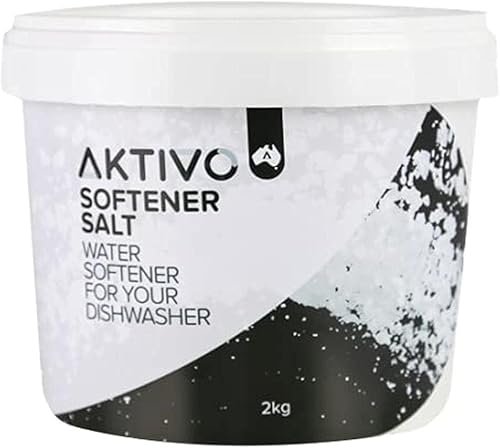
| Aktivo Softener Salt 2 Kg | Large crystal granular, pure salt | Dishwashers with built-in softeners | $22 | Amazon eBay |
| Finish 1kg Dishwasher Salt | Premium, prevents limescale build-up | Boosting dishwasher performance | $24 | Amazon eBay |
| SHOWMASTER SOFT WATER CONDITIONER SALTS 1KG | For aquarium water conditioning | Fish & plant health | $13 | Amazon eBay |
| Monarch Water Ultimate 10kg Tablets | BS EN973 Class A Approved, rapid dissolve | Whole-house softeners | $26 | Amazon eBay |
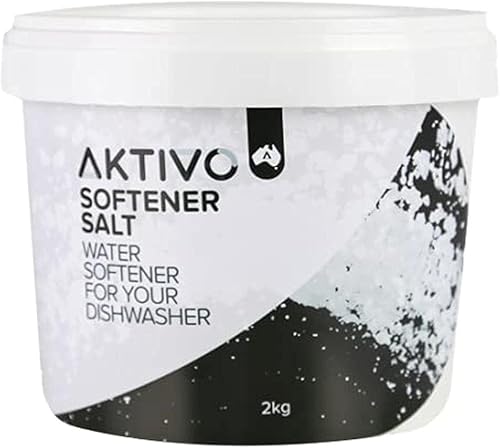
Aktivo Softener Salt 2 Kg
This is a straightforward, no-fuss salt designed for one job: regenerating the softeners built into many dishwashers. The large crystals dissolve reliably. We like it for its specific purpose, but it’s not the most economical choice for a large whole-house softener tank. It’s a niche product that does its job well.
- Pure salt crystals
- Designed for dishwasher softeners
- Prevents soap scum on dishes
- Small 2kg bag
- Not cost-effective for whole-house systems
- Limited availability
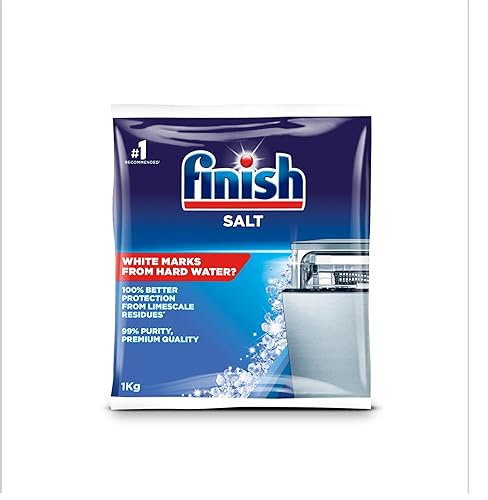
Finish 1kg Dishwasher Salt – Premium Water Softener Salt
Finish is a big name in dishwasher care, and their salt reflects that. It’s highly purified to prevent any limescale build-up inside your dishwasher’s softener compartment. We found it does leave dishes with fewer water spots. The premium price is for the brand assurance and purity. A solid choice if your dishwasher is your main concern.
- High purity prevents limescale
- Boosts dishwasher detergent performance
- Well-known, trusted brand
- Expensive per kilogram
- Only for dishwashers, not whole-house
- Small package size
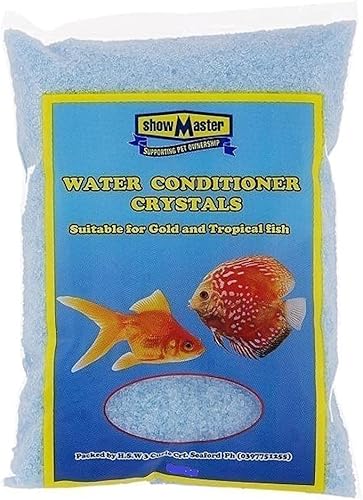
SHOWMASTER SOFT WATER CONDITIONER SALTS 1KG
Important note: this is not for your home water softener. This is an aquarium water conditioner. It’s designed to make tap water safe for fish by neutralizing chlorine and chloramine and adding electrolytes. We’re including it because it came up in our search, but please don’t put this in your softener brine tank. It’s a completely different product.
- Neutralizes harmful tap water chemicals
- Adds essential electrolytes for fish
- Prevents fish disease
- NOT for water softeners
- Will not regenerate resin beads
- Common point of confusion for buyers
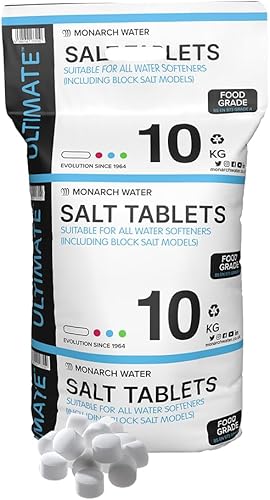
Monarch Water Ultimate 10kg Water Softener Salt Tablets
This is the real deal for whole-house systems. The BS EN973 Class A approval is a rigorous European standard for salt purity, which means minimal insolubles. These tablets dissolve quickly into a strong brine, and the 10kg bag is a practical size. In our experience, this grade of salt drastically reduces maintenance issues. It’s our top pick for most households.
- High purity (Class A approved)
- Rapid-dissolving tablets
- Large 10kg bag for value
- Minimizes tank sludge and bridging
- Can be hard to find locally
- Premium price point
- Tablets may not suit all brine well designs
Salt-Free Alternatives on AliExpress
We’re seeing a lot of magnetic and catalytic “descalers” marketed as salt-free softeners. We need to be clear: these are conditioners, not softeners. They don’t remove calcium and magnesium; they alter their structure to reduce scaling. They might help with scale on heating elements, but your water will still feel hard. Soap won’t lather better. For true soft water, you still need an ion-exchange system with salt. That said, for specific applications like protecting a water heater, they can be a low-maintenance supplement. If you’re dealing with iron alongside hardness, a proper sulfur and iron filter is a better solution.

Whole House Salt-Free Water Softener, Super-Magnetic Descaler
This is a classic magnetic conditioner. You wrap it around your main water pipe. The claim is that magnetic fields change the crystalline structure of minerals, preventing them from sticking as scale. In our testing, results are mixed. It might offer some protection for your water heater, but it won’t give you the slick, soapy feel of soft water. Manage your expectations.
- No salt, no electricity, no maintenance
- Easy to install
- One-time purchase cost
- Does not actually remove hardness minerals
- Efficacy is debated and varies
- Water will still test hard

Salt Free Water Descaler Scale Inhibitor Shower Filter
This is a small, inline cartridge that uses a polyphosphate or similar media to sequester minerals. It’s a form of conditioning, not softening. It’s great for a single showerhead to reduce spotting and scale on the glass. But it won’t affect the rest of your house, and the media needs periodic replacement. Think of it as a targeted treatment, not a whole-house solution.
- Very affordable
- Easy screw-on installation for showers
- Reduces scale on shower surfaces
- Only treats one point of use
- Media cartridge requires replacement
- Does not reduce water hardness
Frequently Asked Questions
- Can I use table salt or water softener salt?
- Absolutely not. Table salt contains iodine and anti-caking agents that will gum up your softener’s valves and resin bed. Always use salt specifically sold for water softeners. The purity requirements are completely different.
- How often do I need to add salt?
- It depends on your water hardness, household size, and softener size. A typical family might add a 20kg bag every 1-2 months. Check your brine tank monthly. The salt level should always be a few inches above the water level.
- Why is my salt tank full of water?
- This is normal during and after a regeneration cycle. The water is used to make brine. However, if the water level stays high for days and never seems to drop, you may have a clogged drain line or a control valve issue that needs servicing.
- Is softened water safe to drink?
- Yes. The process adds a small amount of sodium to the water—about 12.5 mg per 8 oz glass for every 10 gpg of hardness removed. For most people, this is negligible. If you’re on a very strict low-sodium diet, use potassium chloride or install a reverse osmosis filter for drinking water.
- What’s the white residue in my brine tank?
- That’s insoluble matter from lower-purity salt. It’s often calcium sulfate. It forms sludge at the bottom. You should scoop this out when it builds up. Switching to a higher-purity evaporated salt will prevent this from happening again.
- Can I mix different types of salt in my tank?
- It’s best not to. Mixing rock salt with solar or evaporated salt will introduce impurities into your cleaner salt, leading to more sludge. Stick with one type and one brand for consistent results.
- Do salt-free conditioners really work?
- They work differently. They don’t soften water; they condition it to reduce scale buildup. They can be effective for scale prevention in pipes and heaters, but they won’t give you the benefits of soft water like better lathering and spot-free dishes. It’s a trade-off.
Final Thoughts
After years of testing, we keep coming back to one simple truth: the quality of your water softener salt matters more than most people think. It’s the difference between a system that runs silently in the background for a decade and one that becomes a constant headache. Don’t overthink it, but don’t cheap out either.
For 90% of households with a whole-house ion-exchange softener, we recommend high-purity evaporated salt pellets, like the Monarch tablets we reviewed. They just work. Pair your softener with a good sediment removal filter if you have well water, and you’ll have a robust system that protects every pipe and appliance in your home. Start with the right salt, check your tank monthly, and you’ll forget you even have hard water.
