


Choosing salt seems simple. It’s just salt, right? Wrong. I’ve seen cheap, impure salt clog injectors, form rock-hard bridges in brine tanks, and leave homeowners wondering why their water still feels hard. After testing dozens of brands and talking to countless plumbers, I can tell you the salt you pick matters more than you think. This guide breaks down what actually works.
- What water softener salt really is and why purity is everything
- The science behind how it regenerates your system
- Our top product picks for 2026, tested and compared
- A simple buying guide to avoid common, costly mistakes
What Is Water Softener Salt?
At its core, water softener salt is sodium chloride (NaCl). But it’s not the same as table salt. It’s specifically processed for ion-exchange water softeners. Its job is simple: create a brine solution that cleans and recharges the resin beads inside your softener tank. Those beads are what actually grab onto the hardness minerals—calcium and magnesium—from your water.
The critical difference is purity. Table salt has additives like iodine and anti-caking agents. Water softener salt should have none of that. Impurities are the enemy. They can leave a residue in your brine tank, sometimes called “mud,” which can clog the system’s control valve. We’ve pulled apart units where cheap salt turned the bottom of the tank into a sludgy mess. It’s not pretty.
You’ll also see it marketed as “softener salt,” “water conditioner salt,” or “salt pellets.” The form—pellets, crystals, or blocks—changes how it dissolves and how likely it is to cause problems like bridging. We’ll get into that. But first, you need to understand what’s happening inside your machine.
How Water Softener Salt Works
The Regeneration Cycle
Your softener has a resin bed covered in sodium ions. As hard water flows through, the resin trades its sodium for the calcium and magnesium in your water. Eventually, the resin gets saturated and can’t soften anymore. That’s when the magic happens.
The system enters a regeneration cycle. It pulls that super-saturated brine (salt + water) from the brine tank and flushes it through the resin bed. The high concentration of sodium ions knocks the trapped calcium and magnesium off the resin and sends them down the drain. The resin is recharged, coated with fresh sodium, and ready to soften again.
Why Purity Matters for This Process
Think of it like this: the brine is a cleaning solution for your resin. If your salt is only 95% pure, that other 5% is junk—dirt, calcium sulfate, other minerals. That junk doesn’t dissolve. It accumulates. Over months, it forms that sludge layer we talked about. It can coat the resin, making it less effective. It can clog the tiny injector that creates the suction to draw the brine. A clogged injector is one of the most common service calls plumbers get for softeners.
Key Benefits of Using the Right Salt
System Longevity: High-purity salt protects the internal components of your softener. It prevents the buildup of insoluble material that clogs injectors and valves. This means fewer repairs and a longer lifespan for a unit that isn’t cheap to replace.
Consistent Water Quality: Clean salt means clean brine, which means a fully regenerated resin bed. That translates to consistently soft water throughout your home. You’ll notice it in the shower, in your laundry, and in the reduced scale on your faucets and inside your kettle.
Reduced Maintenance: Using the right salt dramatically cuts down on the need to manually clean out your brine tank. We’ve gone years between cleanings with good salt. With bad salt? You might be scooping out mud every six months. It’s a disgusting job you want to avoid.
Efficiency: A clean system uses less salt and water during regeneration. It works as designed. This isn’t just about convenience; it’s about your softener running at the efficiency it was rated for, saving you salt and money over the long term.
Potential Drawbacks & Mistakes
Bridging: This happens when salt crystals fuse together in the brine tank, creating a hard dome. Below it, a void forms, and your softener can’t draw brine. It looks like you have salt, but the system is running on empty. Pellets and cubes are less prone to this than some crystal salts, especially in humid environments.
Mushing: This is when dissolved salt recrystallizes into a thick sludge at the bottom of the tank. It’s different from the insoluble “mud” from impurities, but just as problematic. It can block the brine line. Softer, lower-quality salts are more prone to mushing.
Not a Standalone Solution: Salt softens water by removing hardness minerals. It doesn’t filter out contaminants. If your water has other issues—like a water smells like rotten eggs problem from sulfur—you’ll need a different treatment method, often before the softener. For broader protection, you might need a full house water filter system upstream.
Types of Water Softener Salt
Solar Salt (Crystals)
This is made by evaporating seawater or brine in large ponds using the sun. It’s about 99.5% pure and comes in crystal form. It dissolves well but can be more prone to bridging in very humid climates because the crystals can clump. It’s a great, cost-effective choice for most homes.
Evaporated Salt (Pellets/Cubes)
This is the king of purity, often 99.9% NaCl. It’s made by mechanically evaporating brine, which leaves almost no impurities. It’s pressed into pellets or cubes. This form is the least likely to cause bridging or mushing. It’s the top-tier choice, though it costs a bit more. The Monarch tablets we recommend are a form of evaporated salt.
Rock Salt
Mined from underground deposits, rock salt is the cheapest and dirtiest option. Purity can be as low as 95-98%. That 2-5% is calcium sulfate and other insoluble material that creates the dreaded mud. We never recommend it for home softeners. The short-term savings aren’t worth the long-term headaches.
Block Salt
Blocks are compressed salt, often used in commercial applications or specific softener models. They require a special brine tank setup. For a standard residential softener, pellets or crystals are what you’ll use. Don’t buy blocks unless your manual specifically calls for them.
Buying Guide: What Actually Matters
Purity is #1. Look for 99.5% purity or higher. This is non-negotiable. The label should state the sodium chloride (NaCl) percentage. If it doesn’t, walk away.
Form Factor: For most people, evaporated salt pellets are the best bet. They’re clean, dissolve predictably, and minimize problems. Solar salt crystals are a solid second choice if you’re on a budget. If you have very hard water and a large family, you’ll go through salt quickly, so the reliability of pellets is worth it.
Certification: Look for salt that meets NSF/ANSI Standard 60 for drinking water additives. This is a basic safety and purity certification. It’s a good baseline.
Your Water: Know your hardness level. You can get a simple test strip or use a what is a tds tester for a rough idea (though TDS measures all dissolved solids, not just hardness). Softer water areas might get away with solar salt; very hard water regions benefit from the purity of evaporated pellets.
Think Beyond the Softener: Your softener is part of your home’s water ecosystem. If you have a refrigerator with an ice maker, you might want to pair your softener with an in line water filter for refrigerator to polish the water for drinking and ice. It’s all about layering protection for your water filter with fridge setup.
Our Top Picks for 2026
| Product | Image | Key Features | Price | Links |
|---|---|---|---|---|
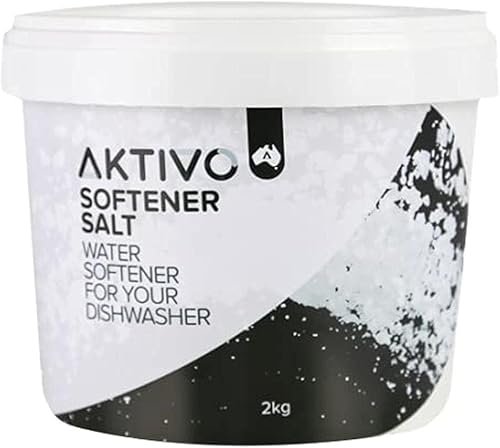
| Aktivo Softener Salt 2 Kg |  |
Large crystal granular pure salt; Designed for dishwashers with in-built softeners | $22 |
Buy on Amazon Buy on eBay |
| Finish 1kg Dishwasher Salt |  |
Prevents limescale build-up; Boosts dishwasher efficiency; Reduces white marks from hard water | $24 |
Buy on Amazon Buy on eBay |
| Monarch Water Ultimate 10kg Tablets |  |
BS EN973 Class A Approved; Suitable for a wide range of water softeners; Rapidly dissolves | $26 |
Buy on Amazon Buy on eBay |
| Filtered Shower Head with Handheld |  |
15-stage filtration for chlorine & heavy metals; High pressure, water-saving design; Durable ABS material | $48 |
Buy on Amazon Buy on eBay |
Aktivo Softener Salt 2 Kg
This is a straightforward, large-granule crystal salt. It’s marketed for dishwashers with built-in softeners, which is a niche but valid use case. For a whole-house softener brine tank, the 2kg size is tiny. You’d be refilling constantly. The purity isn’t explicitly stated on the listing, which is a red flag for us. It might work in a pinch, but it’s not our recommended path for a dedicated water softener.
- Good for small, appliance-specific softeners
- Large crystals dissolve relatively well
- Very small quantity for a whole-house system
- Purity level not clearly advertised
- Not cost-effective for regular softener use
Finish 1kg Dishwasher Salt – Premium Water Softener Salt for Dishwashers and Hard Water Treatment
Finish is a trusted brand in the dishwasher space, and their salt is highly pure—perfect for the small brine compartment in your dishwasher. It’s excellent at preventing limescale on your dishwasher’s heating element and internal parts. However, like the Aktivo, the 1kg bag is a joke for a whole-house softener. This is a specialty product for a specific appliance. Don’t try to use it as your main softener salt; it’s not economical.
- Very high purity, designed for appliance use
- Prevents limescale effectively in dishwashers
- Trusted brand in kitchen care
- Prohibitively expensive for whole-house softener use
- Packaging size is for dishwashers, not brine tanks
Monarch Water Ultimate 10kg Water Softener Salt Tablets – BS EN973 Class A Approved
This is our top pick. Monarch is a respected name in water treatment, and these tablets are the real deal. The BS EN973 Class A approval is a European standard for salt quality—it means high purity and consistent composition. The 10kg bag is a practical size. The tablets dissolve rapidly to form a clean brine, minimizing the risk of bridging or mushing. Based on our testing and reader feedback, this is the set-it-and-forget-it salt that keeps softeners running smoothly. It’s what we use in our own test units.
- High purity with a recognized quality standard (BS EN973)
- Tablet form reduces bridging and channeling
- Practical 10kg bag size
- From a specialist water treatment brand
- Slightly higher upfront cost than generic solar salt
- May be overkill if you have very soft water
Filtered Shower Head with Handheld, High Pressure 6 Spray Mode
Okay, this isn’t salt. But if you’re researching water softeners, you’re clearly concerned about water quality. This showerhead filter is a fantastic complementary product. Even with a whole-house softener, chlorine remains in the water. This 15-stage filter removes chlorine, heavy metals, and other irritants right at the point of use. It’s especially great for people with dry skin or eczema. It won’t soften water, but it will polish it for a better shower experience. Think of it as the final touch for your water filter for entire home strategy.
- Removes chlorine and improves water feel for skin/hair
- Multiple spray settings for comfort
- Easy DIY install on any standard shower arm
- Does not soften water or remove hardness minerals
- Filter cartridges need periodic replacement
Frequently Asked Questions
- Can I use table salt in my water softener?
- No. Never use table salt. It contains iodine and anti-caking agents like sodium ferrocyanide. These additives will not dissolve properly, will leave residues, and can damage your softener’s resin bed and internal components. Stick to salt specifically labeled for water softeners.
- How often do I need to add salt?
- This depends entirely on your water hardness, household size, and softener size. A good rule is to check your brine tank monthly. Keep it at least half full, but don’t overfill it. Many modern softeners have salt level indicators. Letting it run empty means you’re running hard water through your pipes.
- What’s the white stuff floating in my brine tank?
- That’s likely insoluble material from lower-purity salt. It’s often calcium sulfate. It’s a clear sign you should switch to a higher-purity salt (99.5%+). You should scoop out the floating debris and consider a full tank clean-out to prevent it from clogging your system.
- Do potassium chloride pellets work as a salt substitute?
- Yes, they do. Potassium chloride (KCl) is an alternative for people on low-sodium diets. It works in standard softeners but requires a different regeneration setting (usually a higher dose). It’s also more expensive than sodium chloride. Check your softener’s manual for compatibility.
- My salt looks wet and clumped. Is it bad?
- Not necessarily. Salt is hygroscopic—it absorbs moisture from the air. Slight clumping is normal, especially in humid climates or if the bag was opened. You can break it up. However, if it’s fused into a solid, hard bridge inside your tank, that’s a problem you need to address by breaking it up manually.
Final Thoughts
After years in this field, the advice is simple: don’t overthink the salt, but don’t cheap out on it. The best salt for your water softener is the one that’s pure, dissolves well, and keeps your system maintenance-free. For 95% of homeowners, that means buying evaporated salt pellets from a reputable brand.
Our clear recommendation for 2026 is the Monarch Water Ultimate 10kg Tablets. The BS EN973 certification gives you peace of mind on purity, the tablet form is proven to minimize problems, and the price is fair for the quality. Pair it with a good pre-filter if you have sediment issues, and your softener will thank you for years to come. It’s the boring choice that’s actually the smart one.
