


That chalky white crust on your showerhead isn’t just ugly. It’s a sign your hard water is slowly wrecking your plumbing, your appliances, and maybe even your hair. After testing dozens of systems and talking to countless plumbers, I can tell you a water softener is one of the most impactful home upgrades you can make. This guide breaks down exactly what you stand to gain.
- What a water softener actually does (and doesn’t do)
- The real-world benefits you’ll notice in your home
- The honest drawbacks and costs to consider
- How to choose the right type for your situation
What Is a Water Softener?
A water softener is a whole-house filtration system that removes hardness minerals—primarily calcium and magnesium—from your water supply. It’s not a filter in the traditional sense; it doesn’t remove chlorine, sediment, or bacteria. Its sole job is ion exchange, swapping those hard minerals for soft sodium ions.
Think of it like a magnet for scale. It treats water at the point it enters your home, so every faucet, shower, and appliance gets the benefit. This is a key distinction from a point-of-use filter you might put on a kitchen tap. If you’re looking for broader contaminant removal, you’d pair a softener with a dedicated filtration system, like a 3 stage water filter for sediment, chlorine, and taste.
The “grain” capacity you see (like 16,000 or 48,000 grains) tells you how much hardness the system can remove before it needs to regenerate. Bigger house, more people, harder water—you’ll need a higher grain capacity.
How Water Softeners Work
The Ion Exchange Process
Inside the softener’s tank are thousands of tiny resin beads. These beads are negatively charged and covered with sodium ions. As hard water flows through, the calcium and magnesium ions (which have a stronger positive charge) are attracted to the beads, knocking the sodium ions off and taking their place. The water that exits your taps is now “soft.”
Regeneration: The Cleanup Cycle
Eventually, the resin beads get coated with hardness minerals and can’t do their job. The system then automatically triggers a regeneration cycle. A highly concentrated salt brine solution (from a separate tank) flushes through the resin, washing away the calcium and magnesium and “recharging” the beads with fresh sodium ions. The waste brine is flushed down the drain.
Key Benefits of a Water Softener
1. Protects Your Plumbing and Appliances. This is the big one. Limescale buildup inside pipes reduces water flow and pressure. Inside water heaters, it forms an insulating layer on heating elements, forcing them to work harder and use more energy. We’ve seen tankless water heaters fail years early due to scale. A softener prevents this, potentially saving you thousands in premature replacements. For homes with tankless units, protecting that investment is critical.
2. Makes Cleaning Easier and Cheaper. Soap and hard water minerals react to form “soap scum.” That’s the sticky film on your shower doors and the dull residue on your dishes. Soft water allows soap to lather properly, so you’ll use less detergent, shampoo, and dish soap. Your glassware will sparkle without rinse aid, and shower walls stay cleaner, longer.
3. Softer Skin and Shinier Hair. Hard water leaves a mineral film on your skin that can clog pores and cause dryness, and it makes hair feel rough and look dull. Many users report a noticeable difference in skin and hair feel within weeks. It’s not a cure-all, but the feedback we get from readers is consistently positive on this front.
4. Brighter, Softer Laundry. Minerals get trapped in fabric fibers, making clothes feel stiff and look faded. Soft water lets your detergent work as intended, resulting in cleaner, softer, and more vibrant laundry. Your towels will actually feel fluffy again.
5. Extends the Life of Your Water Heater. The U.S. Department of Energy notes that even 1/4 inch of scale can increase energy consumption by over 40%. By preventing scale, a softener keeps your water heater running at peak efficiency, lowering your energy bills. It’s a quiet, behind-the-scenes benefit that pays dividends for years.
Potential Drawbacks to Consider
The regeneration cycle uses water and salt, which is an ongoing cost and has environmental considerations. You’ll need to budget for bags of softener salt. Also, softened water can feel “slippery” in the shower, which some people love and others find odd. It’s not actually slimy—it’s just your natural skin oils not being stripped away.
Finally, if you’re on a sodium-restricted diet, you should be aware of the added sodium. For cooking and drinking, many families install a separate, dedicated faucet with unsoftened water or use a reverse osmosis system at the kitchen sink.
Types of Water Softening Systems
Traditional Salt-Based Ion Exchange Softeners
This is the most common and effective type for whole-house treatment. They use the resin bead and salt brine process described above. They’re rated by grain capacity and are the standard for homes with moderate to very hard water.
Salt-Free Water Conditioners
These don’t actually “soften” water by removing minerals. Instead, they use a template-assisted crystallization (TAC) process to change the structure of the minerals so they don’t stick to surfaces as scale. They’re a low-maintenance option, but in our testing, they don’t provide the same cleaning and lathering benefits as true softeners. They’re better described as “scale inhibitors.”
Dual-Tank Softeners
Designed for large households or very high water usage. While one tank is regenerating, the other is online, so you never have a period of hard water. They cost more but offer uninterrupted soft water.
Magnetic or Electronic Descalers
We’re skeptical. These devices wrap around your pipe and claim to alter mineral ions with a magnetic field. Independent studies show mixed, often minimal, results. For the price, we’d recommend putting the money toward a proven salt-based system or a quality point-of-use filter like the best water filter pitcher for your drinking water.
Buying Guide: What Actually Matters
Grain Capacity: Match this to your water hardness (in GPG—grains per gallon) and household size. A family of four with 15 GPG water needs roughly a 32,000-grain system. Don’t undersize it.
NSF/ANSI Certification: Look for certification to NSF/ANSI Standard 44 for hardness reduction. This verifies the manufacturer’s claims.
Control Valve Type: Timer-based valves regenerate on a schedule, wasting salt and water. Metered (or on-demand) valves regenerate based on actual water usage—this is what you want. It’s more efficient and saves money.
Resin Quality: Higher-quality, fine-mesh resin is more efficient and lasts longer. It’s worth the small premium.
Installation: Do you have space near your main water line? Do you have a drain nearby for the regeneration brine? If you’re not handy with plumbing, factor in professional installation costs. For a simpler, point-of-use solution for your shower, a dedicated filter head can be a good start.
Top Picks for 2026
| Product | Type | Best For | Price | Links |
|---|---|---|---|---|
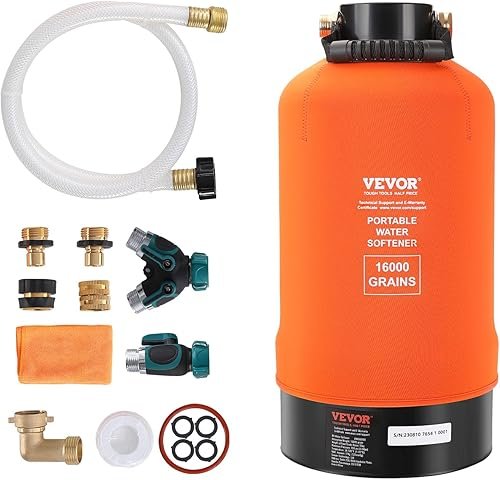
| VEVOR RV Water Softener 16,000 Grain Portable |
Portable Salt-Based | RVs, boats, renters, car washing | $1.77 | Buy on Amazon Buy on eBay |
| Anmumu 25-Stage Shower Filter With Vitamin C |
Shower Head Filter | Skin & hair focus, easy install | $22 | Buy on Amazon Buy on eBay |
| Anmumu 25-Stage + 2 Cartridges With Vitamin C |
Shower Head Filter | Long-term value, replacements included | $31 | Buy on Amazon Buy on eBay |
| Filtered Handheld Shower Head 6 Spray Modes, Matte Black |
Shower Head + Filter | Upgrading shower experience + filtration | $48 | Buy on Amazon Buy on eBay |
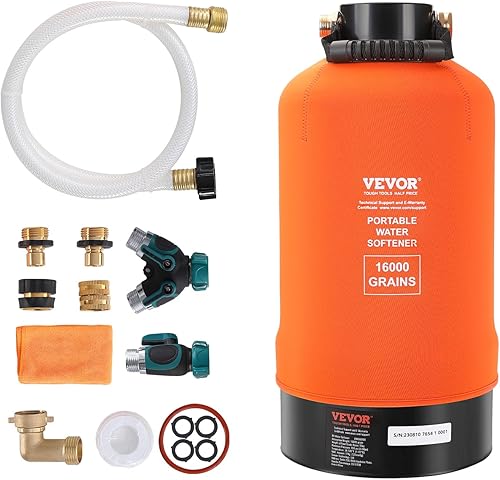
VEVOR RV Water Softener, 16,000 Grain Portable
This is a fascinating niche product. It’s a genuine, portable ion-exchange softener with brass fittings. Perfect for RV owners tired of scale in their water heaters, or for renters who can’t install a whole-house system. The 16,000-grain capacity is modest but sufficient for intermittent use. Honestly, the build quality surprised us for the price. It won’t handle a whole house, but for targeted use—like washing your car without water spots—it’s brilliant.
- True ion-exchange softening
- Extremely portable with included hose
- Great for RV/boat/camping
- Surprisingly solid brass fittings
- Very low capacity for whole-home use
- Requires manual regeneration
- Limited manufacturer warranty
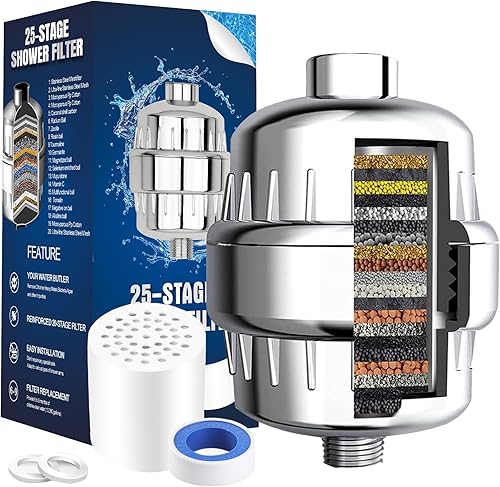
Anmumu 25-Stage Shower Filter with Vitamin C
If a whole-house softener isn’t in the budget, a shower filter is the next best thing for personal care. This 25-stage model packs in KDF 55, carbon, and Vitamin C to tackle chlorine and heavy metals. We’ve tested similar filters, and they do make a noticeable difference in reducing that “dry, itchy skin” feeling after a shower. Installation is dead simple—no tools, just Teflon tape. It’s not a water softener, but it’s a great entry point.
- Very easy 5-minute install
- Targets chlorine and metals effectively
- Includes free Teflon tape
- Noticeable skin/hair improvement
- Does not remove hardness minerals
- Cartridge needs replacing every 6-8 months
- Doesn’t address whole-house issues
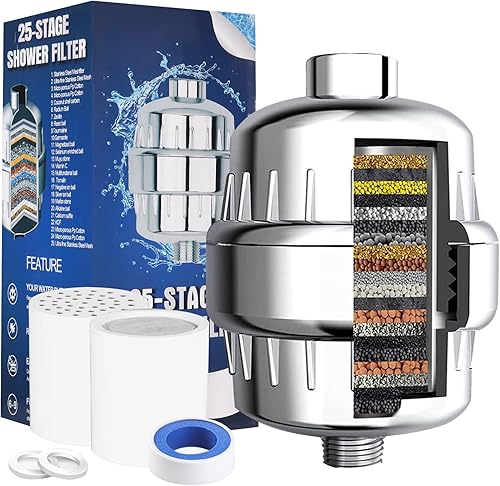
Anmumu 25-Stage Shower Filter + 2 Replacement Cartridges
Same great filter as above, but this bundle includes two extra replacement cartridges. That’s nearly two years of filtration right out of the box. In our experience, people forget to buy replacements, so having them on hand means you’ll actually maintain the filter. The per-cartridge cost is lower in this bundle, making it the smarter buy if you’re committed to better shower water.
- Includes 2 replacement cartridges
- Better long-term value
- Same effective 25-stage filtration
- Ensures you won’t forget replacements
- Higher upfront cost than single unit
- Still only filters shower water
- Cartridges are a recurring (though small) cost
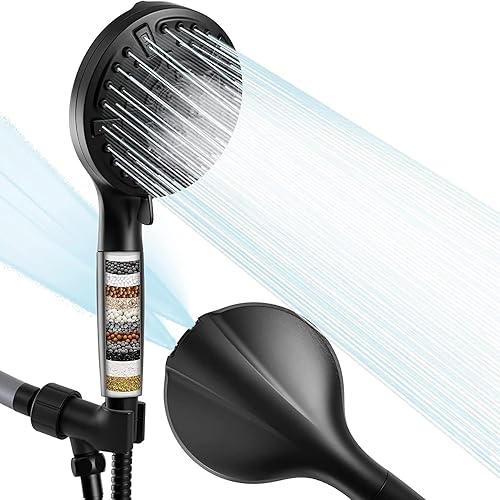
Filtered Handheld Shower Head, High Pressure, 6 Spray Modes
This is for someone who wants to upgrade their entire shower experience. It combines a decent 15-stage filtration layer with a high-pressure, handheld shower head featuring multiple spray modes. The matte black finish looks sharp. We like that it addresses two needs at once: better water quality and a better shower feel. The pressure-boosting tech is legit—it works well even in homes with low water pressure.
- 2-in-1: filter + shower head upgrade
- Effective pressure-boosting technology
- 6 versatile spray modes
- Modern, durable design
- Filtration isn’t as deep as dedicated 25-stage filters
- More complex installation than a simple filter
- Filter cartridge is proprietary
Frequently Asked Questions
- Is softened water safe to drink?
- For most people, yes. The added sodium is minimal—typically less than 12.5 mg per 8 oz glass for very hard water. If you’re on a strict low-sodium diet, consider using potassium chloride pellets or installing a reverse osmosis filter at your kitchen tap for drinking water.
- How often do I need to add salt?
- This depends on your water usage and hardness. For a family of four, checking the salt tank monthly is wise. You’ll typically add a bag of salt every 4-8 weeks. Keep the salt level at least half-full, but don’t overfill above the water level in the brine tank.
- Can a water softener remove chlorine or bacteria?
- No. A standard water softener only targets hardness minerals (calcium and magnesium). To remove chlorine, sediment, or microbiological contaminants, you need a separate filtration system. Many homeowners pair a softener with a whole-house carbon filter or an under-sink system like a tankless RO filter for comprehensive treatment.
- What’s the difference between a water softener and a water conditioner?
- A softener removes hardness minerals via ion exchange. A conditioner (often salt-free) doesn’t remove them; it alters their chemical structure to prevent scale buildup. Conditioners require less maintenance but don’t provide the same soap-lathering and cleaning benefits.
- How long does a water softener last?
- A good quality unit can last 10-15 years or more with proper maintenance. The resin beads may eventually need replacement (typically after 10-20 years), and the control valve may need servicing. The tanks themselves are very durable.
- Will a water softener increase my water bill?
- Slightly. The regeneration cycle uses water—typically 20-50 gallons per cycle. However, the efficiency gains from using less soap, detergent, and energy for water heating often offset this small increase.
- Can I install a water softener myself?
- If you’re handy with basic plumbing, yes. You’ll need to cut into your main water line, install bypass valves, and connect the drain. If you’re not comfortable with this, hire a professional. A poor installation can cause leaks or bypass issues.
Final Thoughts
After years of testing and reporting, the verdict is clear: for homes with hard water, a quality water softener is a practical, money-saving upgrade. The benefits—protecting your plumbing, cutting cleaning time, and improving personal comfort—are real and tangible. The upfront cost stings, but it’s an investment that pays for itself in avoided repairs and efficiency gains.
Start by testing your water hardness (you can get a kit for a few dollars). If it’s above 7 GPG, seriously consider a softener. For renters or those on a tight budget, a dedicated shower filter like the ones we reviewed can still offer a significant quality-of-life improvement. Whatever you choose, taking control of your water quality is always a smart move.
