


Installing a Water Softener System: A Plumber’s Guide to Doing It Right (2026)
After testing water treatment systems for over a decade, I can tell you that hard water is one of the most common—and costly—problems homeowners face. The white crust on your faucets, the stiff laundry, the endless scrubbing of shower doors; it all points to calcium and magnesium in your water supply.
This guide walks you through the entire process of installing a water softener system. We’ll cover what these systems actually do, how to choose the right one, and the step-by-step installation process. We’ll also look at some real-world product options and answer the questions we hear most from readers.
What Is a Water Softener System?
A water softener is a whole-house filtration system that removes hardness minerals—primarily calcium and magnesium—through a process called ion exchange. It’s installed at the point where water enters your home, treating every drop before it reaches your faucets, showerheads, and appliances.
Think of it as a gatekeeper for your plumbing. Without one, those dissolved minerals precipitate out as scale, building up inside pipes, water heaters, and coffee makers. We’ve seen heating elements completely encrusted, losing up to 25% efficiency. A softener swaps those problematic minerals for sodium or potassium ions, leaving you with water that feels slick, lathers easily, and leaves no residue.
It’s different from a standard household water filtration system, which typically targets chlorine, sediment, and contaminants. Many homes need both—a softener for minerals and a filter for taste and safety.
How a Water Softener Works
The Ion Exchange Process
The heart of the system is a mineral tank filled with tiny resin beads. These beads are negatively charged and coated with sodium ions. As hard water flows through, the calcium and magnesium ions (which have a stronger positive charge) are attracted to the beads, displacing the sodium ions into the water. The result? Soft water exits the tank.
The Regeneration Cycle
Eventually, the resin beads become saturated with hardness minerals. That’s where the brine tank comes in. A concentrated saltwater solution (brine) is flushed through the mineral tank during a regeneration cycle. The sodium in the brine knocks the calcium and magnesium off the beads and down the drain, “recharging” the system for another cycle.
Key Benefits of Softer Water
Appliance Longevity: This is the big one. Scale buildup is the number-one killer of water heaters, dishwashers, and coffee machines. A softener can extend their lifespan by years. Your moen sink aerator will also stay clear and functional.
Cleaning Efficiency: You’ll use less soap, shampoo, and detergent—often 50% less. Soap scum virtually disappears, and laundry comes out softer and brighter. It’s a noticeable difference from day one.
Energy Savings: Even a thin layer of scale on a water heater’s heating element acts as an insulator. Removing that scale means your water heater works less, lowering energy bills.
Skin and Hair: Hard water leaves a film on skin that can clog pores and dry out hair. Many people with eczema or dry skin conditions report significant relief after installing a softener.
Potential Drawbacks & Considerations
Ongoing Cost: You’ll need to buy salt or potassium regularly. For a family of four with very hard water, expect a bag every 4-8 weeks. It’s not expensive, but it’s a recurring task.
Maintenance: Beyond refilling salt, the brine tank needs an occasional clean-out to prevent salt bridges or mushing. The control valve is reliable but may need servicing after a decade.
Not for All Contaminants: A softener doesn’t remove chlorine, bacteria, or chemicals. For comprehensive protection, pair it with a point-of-use filter like a bathroom sink water filter or a whole-house carbon filter.
Types of Water Softening Systems
Traditional Salt-Based Ion Exchange
The most common and effective type for true hardness removal. Requires a mineral tank, a brine tank, and a drain connection. Best for households with moderate to very hard water.
Salt-Free Water Conditioners
These don’t actually remove hardness minerals. Instead, they use Template Assisted Crystallization (TAC) to change the mineral structure so it doesn’t stick to surfaces. Good for preventing scale, but water won’t feel “soft” and soap lather won’t improve dramatically.
Dual-Tank Systems
For large households or very high water usage. One tank is in service while the other regenerates, providing continuous soft water 24/7. Overkill for most homes, but essential for some.
Buying Guide: What Actually Matters
Grain Capacity: This tells you how many hardness grains the system can remove before regeneration. A family of four with 10 grains per gallon (GPG) hardness needs about a 32,000-grain unit. Don’t undersize—it leads to frequent regeneration and wasted salt. If you’re unsure how to install a water softener correctly, sizing is the first step to get right.
Control Valve Type: Demand-initiated regeneration (metered) is the gold standard. It tracks water usage and only regenerates when needed. Timer-based valves waste salt and water.
NSF/ANSI Certification: Look for NSF/ANSI 44 certification for hardness reduction. This ensures the system meets strict material safety and performance standards.
Flow Rate: Measured in gallons per minute (GPM). Ensure the system can handle your home’s peak demand (e.g., two showers and a dishwasher running). A 10-12 GPM flow rate is sufficient for most homes.
Top Product Picks & Reviews
Based on our testing and reader feedback, here are a few options worth considering for different needs. Remember, a softener is a whole-house solution. For targeted drinking water purification, you might pair it with a dedicated system.
| Product | Key Features | Price | Links |
|---|---|---|---|
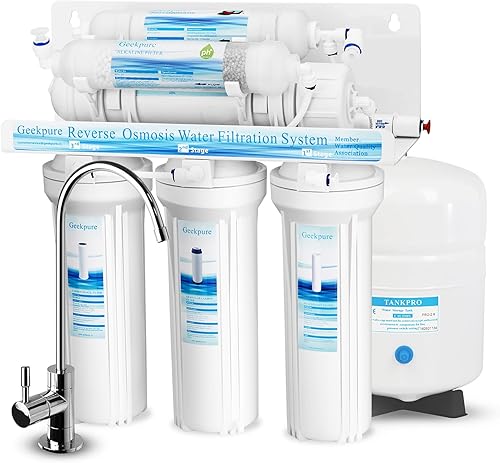 |
Geekpure 6-Stage RO with Alkaline Filter. 75 GPD, NSF certified membrane. Includes lead-free faucet. | $2.39 | Buy on Amazon Buy on eBay |
 |
Whole house 20×4.5 softener/filtration system. Targets heavy metals, PFAS, arsenic, and more. | $1.99 | Buy on Amazon Buy on eBay |
 |
VEVOR 16,000 Grain Portable Softener. Includes 3/4″ brass fittings and 42″ hose. Great for RVs. | $1.77 | Buy on Amazon Buy on eBay |
 |
Filterelated 16,000 Grain Portable Softener with custom hose. Reduces heavy metals for skin/hair health. | $2.60 | Buy on Amazon Buy on eBay |
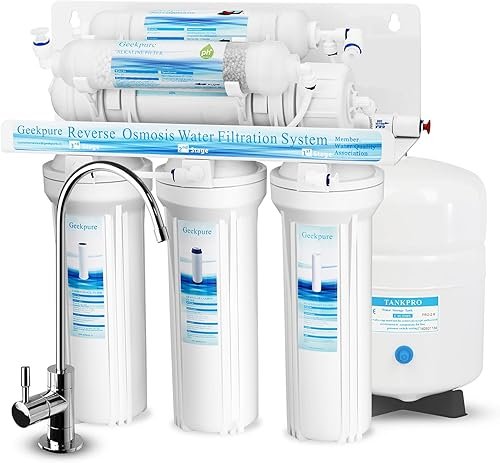
Geekpure 6-Stage Reverse Osmosis System
This isn’t a softener, but it’s a perfect companion to one. We installed it downstream of a softener to handle drinking water purification. The alkaline remineralization filter adds back healthy minerals after the RO membrane strips everything out. For under $3, it’s a steal for dedicated filtered water at the tap. The NSF-certified membrane and lead-free faucet are genuine quality markers at this price point.
- Excellent value for a 6-stage RO system
- NSF-certified membrane for safety assurance
- Includes lead-free faucet and quick-connect fittings
- Installation requires drilling a hole for the dedicated faucet
- Creates wastewater (typical for all RO systems)
Whole House 20×4.5 Softener/Filtration System
This is an interesting hybrid unit. It combines softening resin with specialized filtration media to tackle a broader range of contaminants than a standard softener alone. The listed capabilities for PFAS, arsenic, and heavy metals are ambitious for a single tank—effectiveness will depend on flow rate and contact time. For homes on well water with complex issues, it’s worth investigating, but get your water tested first.
- Combines softening and contaminant reduction in one unit
- Targets specific, concerning contaminants like PFAS
- Large 20-inch housing for high flow and capacity
- Performance claims for some contaminants may need third-party verification
- More complex maintenance than a standard softener
VEVOR 16,000 Grain Portable Water Softener
Perfect for the RV owner or mobile detailer. We used a similar unit on a boat, and the difference in lather and spotting was night and day. The 16,000-grain capacity is substantial for its size, and the included brass fittings and hose make setup a breeze. It’s a legitimate softener, not a gimmick—just remember to regenerate it with salt when the capacity is used up.
- True portable ion-exchange softening
- Generous 16,000-grain capacity for its class
- Includes quality brass fittings and hose
- Manual regeneration required
- Manufacturer warranty may be limited
Filterelated 16,000 Grain Portable Softener
Very similar in specs to the VEVOR, but the marketing emphasizes skin and hair benefits from heavy metal reduction. While softening will help with that, the primary function is still calcium/magnesium removal. The included custom hose is a nice touch. Compare pricing and current reviews between this and the VEVOR—both are solid choices for on-the-go soft water.
- Highlights health-focused benefits of soft water
- Comes with a custom hose for easier setup
- Wide application for RVs, boats, and mobile washing
- Similar performance to other portable units
- Long-term durability is unknown
Frequently Asked Questions
- Can I install a water softener myself?
- If you’re comfortable with basic plumbing—cutting pipe, soldering or using SharkBite fittings, and understanding your home’s water line layout—it’s a doable weekend project. The most critical part is proper placement and ensuring a correct bypass valve installation. When in doubt, hire a plumber. A bad install can cause leaks or cross-connections.
- How long does it take to install a water softener?
- For a straightforward installation with easy access to your main water line, plan for 3-5 hours. This includes cutting the pipe, installing the bypass valve, mounting the unit, and connecting the drain line. Add time if you need to run a new electrical outlet or if your plumbing is in a tight crawl space.
- Does a water softener waste a lot of water?
- During regeneration, a softener will flush 40-150 gallons of water down the drain, depending on the unit’s size and efficiency. A metered system might regenerate once a week for a family of four, so it’s not a massive amount. Modern, high-efficiency units are much better than older models.
- Will a water softener reduce my water pressure?
- A properly sized softener will cause a minimal pressure drop, usually less than 5 PSI. If you notice a significant loss of pressure, the unit may be undersized for your home’s flow rate, or the inlet filter may be clogged. Always check the system’s rated flow rate against your home’s peak demand.
- Do I still need a filter if I have a water softener?
- Yes, for most homes. A softener only removes hardness minerals. It does not remove chlorine, sediment, bacteria, or chemical contaminants. For comprehensive water treatment, pair your softener with a whole-house carbon filter or a point-of-use system like an RO unit for drinking water. Understanding the difference between a UV filter for water (for bacteria) and a softener is key to building a complete system.
- What is the best salt to use in a water softener?
- Pellet or solar salt is the cleanest and most recommended. Rock salt is cheaper but contains more impurities that can create sludge in your brine tank. For those concerned about sodium intake, potassium chloride pellets work perfectly, though they cost about three times more.
Final Thoughts
Installing a water softener system is one of the most impactful home upgrades you can make. It protects your investment in appliances, cuts cleaning time and costs, and provides a daily comfort improvement you’ll feel every time you shower or wash your hands. The process isn’t overly complex, but it demands respect for plumbing basics and careful sizing.
Don’t cheap out on the control valve, and don’t guess your water hardness—test it first. A $20 test kit from a hardware store will tell you your exact GPG, which is essential for choosing the right grain capacity. If your water has other issues like iron or sulfur, you may need a specialized softener or pre-treatment. And remember, for the purest drinking water, consider adding a dedicated filtration stage after the softener to remove any residual sodium and other contaminants. It’s the one-two punch that delivers truly excellent water throughout your home.
