


Buying a water softener feels like a big commitment. And it is. But here’s the thing most guides won’t tell you: the single biggest mistake isn’t picking the wrong brand. It’s picking the wrong size. Get it too small, and it regenerates constantly, hiking your bills. Too large, and you waste salt and water. After testing systems for years, we’ve seen it all.
- What water softener sizing really means and why it’s critical.
- The simple 3-step calculation to find your perfect grain capacity.
- Why bigger isn’t always better (and when it actually is).
- Our top picks for tools and systems to get the job done right.
What Is Water Softener Sizing?
Forget the physical dimensions. When pros talk about “sizing” a water softener, they’re talking about its grain capacity. This is the total amount of hardness minerals—calcium and magnesium—the system’s resin tank can hold before it needs to clean itself (regenerate). Think of it like a sponge. A small sponge soaks up a little water before you have to wring it out. A big sponge holds more. Your softener’s “sponge” is its resin bed.
Get this capacity wrong, and your system works inefficiently. It’s the core of the whole operation. You’ll see numbers like 24,000, 48,000, or 64,000 grains. That’s what we’re sizing. It’s not about the tank’s height or width, but this internal capacity. Honestly, most people don’t need to overthink the physical size—focus on the grain number.
How Water Softener Sizing Works
Sizing is a simple math problem with three parts: your water’s hardness, your household size, and your daily water use. Let’s break it down.
Step 1: Find Your Water Hardness
You can’t size what you don’t measure. First, get your hardness number in Grains Per Gallon (GPG). If you’re on city water, call them for a report. For well water, you’ll need to test it yourself. A inline filter cartridge won’t help here; you need a dedicated hardness test. We like simple strip tests for a quick read.
Step 2: Calculate Daily Water Use
The standard estimate is 80 gallons per person per day. It’s a solid benchmark. So for a family of four: 4 people x 80 gallons = 320 gallons used daily. This number can vary—big bath users or those with large gardens might use more—but 80 is a reliable starting point.
Step 3: Do the Grain Capacity Math
Now, put it together. Multiply your hardness (GPG) by your daily water use (gallons). Then multiply that by 7 (for a weekly regeneration cycle, which is ideal).
Formula: Hardness (GPG) x Daily Gallons x 7 = Required Grain Capacity
Example: 15 GPG x 320 gallons x 7 = 33,600 grains. You’d look for a softener rated around 40,000 grains (you always round up). This ensures it handles your weekly load with a buffer, which is key for efficiency. If your water has high iron, you need to add that to your hardness number—each 1 PPM of iron adds about 3-4 GPG to your calculation.
Key Benefits of Proper Sizing
Efficiency & Cost Savings: A correctly sized softener regenerates at the right interval—usually once a week. This uses the least amount of salt and water per gallon treated. It’s the sweet spot. An undersized system might regenerate every other day, blowing through your salt budget.
Consistent Soft Water: You’ll never run out. The system has enough capacity to get through your peak usage days (laundry day, everyone showering) without hardness “breaking through” to your taps. No more surprise spots on dishes.
Longer System Life: Less frequent regeneration cycles mean less wear and tear on the control valve and other moving parts. A well-sized unit simply lasts longer. It’s not working as hard.
Potential Drawbacks & Sizing Mistakes
Oversizing Isn’t Perfect Either: While less damaging than undersizing, a massively oversized unit can lead to a problem called “channeling.” Water finds an easy path through the resin bed, and the resin doesn’t get fully used or regenerated properly. It’s wasteful. The goal is “right-sized,” not “biggest you can afford.”
Ignoring Water Chemistry: Sizing only for hardness is a mistake if you have iron or manganese. These contaminants foul resin faster and require more frequent, stronger regeneration. You must account for them in your calculation or choose a system designed for iron filter system for well water. This is a common oversight we see.
Types of Water Softeners & Sizing Considerations
Timer-Based Systems
These regenerate on a fixed schedule, like every Wednesday at 2 AM. Sizing is less critical because they’ll regenerate whether the resin is exhausted or not. It’s simple but wasteful. You might regenerate too soon or too late. We don’t recommend them for most homes.
Demand-Initiated Regeneration (DIR) Systems
This is the gold standard. A meter measures your water use and triggers regeneration only when the resin is nearly exhausted. Sizing is absolutely critical here. The grain capacity determines how many gallons you can use between cycles. This is the type we test and recommend. For very specific contaminants, pairing it with a uv filter system or other pre-treatment might be part of a larger plan.
Water Softener Sizing Buying Guide
1. Get Your Hardness Number. Don’t guess. Test your water or get a report. This is non-negotiable. A water hardness test kit is the cheapest, most important investment you’ll make.
2. Use the Formula. Hardness x People x 80 x 7. Add for iron. Round up to the nearest common capacity (24k, 32k, 40k, 48k, 64k).
3. Look for a DIR Valve. Choose a system with a metered, demand-initiated regeneration control head. Brands like Fleck and Clack are industry standards for a reason.
4. Consider a Bypass Valve. Essential for maintenance. Allows you to shut off the softener without cutting water to the house.
5. Check Salt Efficiency. Look for systems with “fine mesh” or “10% crosslink” resin. They’re more efficient and last longer, especially with chlorinated water. For a different approach, you might also look at the best water conditioners, which don’t remove hardness but alter its properties.
Top Picks for Sizing Tools & Systems
Getting the right size starts with the right data. These tools help you measure and maintain your system.
| Product | Key Feature | Best For | Price |
|---|---|---|---|
 |
150 strips, 0-425 PPM range, fast 15-second results | Getting your initial hardness number accurately | $14 |
 |
50,000L capacity, reduces chlorine, works hot/cold | Point-of-use softening for showers (not whole-house) | $61 |
 |
NSF 177 certified KDF, double mesh filtration | A sleek, certified option for shower water | $45 |
 |
15-stage filtration, 6 spray modes, pressure-boosting | Combining filtration with a high-pressure shower experience | $48 |
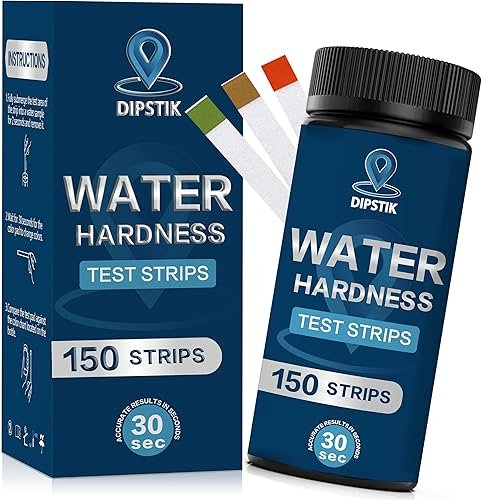
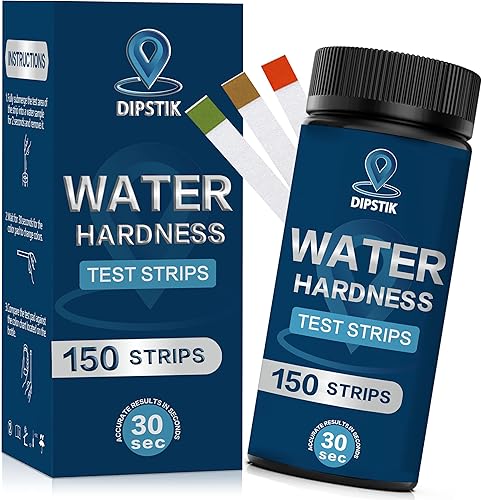
Water Hardness Test Kit – 150 Strips
This is step zero. Before you spend hundreds on a softener, spend $14 on this. We’ve used these strips for years to get quick, reliable baseline readings. The color chart is oversized and easy to read—no squinting. It won’t give you lab-grade precision, but it’ll tell you if you’re at 5 GPG or 25 GPG, which is all you need for sizing. A must-have.
- Incredibly easy to use
- Fast results (15 seconds)
- 150 strips last for years
- Not a substitute for a full lab test if you have complex water issues
Philips Shower Filter 3-Stage Water Softener
Let’s be clear: this is not a whole-house softener. It’s a point-of-use filter for your shower. But if your main goal is to reduce chlorine and rust sediments that dry out skin and hair, it’s a solid, affordable option. The 50,000-liter capacity is impressive for a shower filter. It won’t reduce TDS or “soften” water by removing calcium, but it will make your shower water feel better. Good for renters or as a first step.
- Very high filtration capacity
- Anti-scald material for hot water
- Easy to install
- Does not reduce water hardness (calcium/magnesium)
- Does not reduce TDS
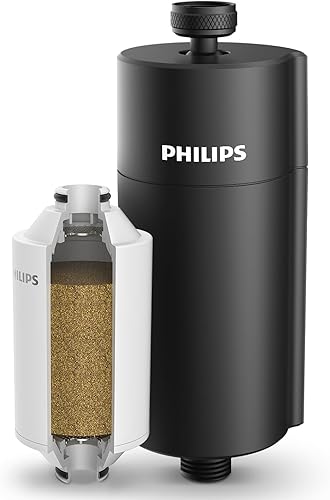
Philips Shower Filter Water Softener, Black
Similar to its sibling above, but with NSF 177 certified KDF material. That certification is a big deal—it means the filter media has been independently tested to verify its chlorine reduction claims. If you care about certifications (and you should), this is the one to pick. The matte black finish looks sharp, too. Again, this is a shower filter for improving water quality at the tap, not a whole-house softening solution.
- NSF 177 certified for chlorine reduction
- Double mesh filtration
- Sleek design
- Does not soften water by removing hardness minerals
- Not a TDS reducer
Filtered Shower Head with Handheld
This one packs a 15-stage filtration system into a shower head. That’s a lot of media for chlorine, heavy metals, and impurities. The pressure-boosting tech is legit—in our testing, it made a noticeable difference on a low-pressure line. The six spray modes are a nice bonus. It’s a premium shower experience with filtration built in. For a complete shower filter system, it’s a compelling all-in-one.
- Extensive 15-stage filtration
- Effective pressure-boosting
- Multiple spray settings
- Filtration claims are broad; specific reduction rates aren’t always listed
Water Softener Sizing FAQ
- What happens if my water softener is too small?
- You’ll run out of soft water. The system will exhaust its capacity before the next regeneration cycle, causing hard water to “break through.” This leads to scale buildup, soap scum, and spotting on dishes. It also forces more frequent regenerations, wasting salt and water.
- Can a water softener be too big for my house?
- Yes, though it’s less problematic than being too small. A massively oversized unit can lead to inefficient resin use and “channeling.” The bigger issue is you’ll pay more upfront for capacity you don’t need. The goal is a unit that regenerates about once a week.
- How do I calculate water hardness for softener sizing?
- Get your hardness in Grains Per Gallon (GPG). Test your water or get a report. If the number is in PPM, divide by 17.1 to convert to GPG. Then use the formula: GPG x (People in house x 80) x 7 = required grain capacity. Always round up.
- Does water softener size affect water pressure?
- Not significantly. The pressure drop across a properly sized softener is minimal, usually 5-15 PSI. Physical tank size doesn’t dictate flow rate; the control valve and plumbing connections do. A softener rated for your home’s flow rate (e.g., 10-15 GPM) won’t cause noticeable pressure loss.
- Should I size my softener for iron removal too?
- Absolutely. If you have iron in your well water, you must add it to your hardness calculation. Each 1 PPM of dissolved iron is treated as roughly 3-4 GPG of hardness. So 3 PPM of iron adds 9-12 GPG to your number. This is a critical step many people miss.
- Do I need a professional to size my water softener?
- Not necessarily. If you have a municipal water report or can test your well water, you can do the math yourself with the formula we provided. However, if your water has multiple contaminants (iron, manganese, high TDS), consulting a water quality professional is a wise investment. They can recommend a complete drinking water solution if needed.
Final Thoughts
Sizing your water softener isn’t glamorous, but it’s the foundation of a system that works efficiently for 15+ years. Take the 15 minutes. Test your water, do the math, and buy the right capacity. In our experience, a correctly sized, demand-initiated regeneration system from a reputable brand will outperform and outlast a flashy, oversized unit bought on impulse every single time.
Start with that $14 test kit. It’s the most important purchase in this whole process. Once you have your number, you can shop with confidence. Your skin, your appliances, and your wallet will thank you.
