


So you’re tired of scrubbing limescale off your shower doors and wondering why your water heater is groaning. You’ve landed on the right question: how much are water softeners? After testing systems for years and talking to countless homeowners, I can tell you the answer isn’t simple. It’s a range, and where you fall depends on your water hardness, household size, and what you’re willing to spend upfront versus over time.
In this guide, we’ll break down:
- What you’re actually paying for in a softener system
- The real differences between cheap and expensive models
- Ongoing costs that most people forget to budget for
- Our honest top picks across different price points
What Is a Water Softener?
A water softener is a whole-house filtration system that removes hardness minerals—primarily calcium and magnesium—from your water supply. It’s installed where water enters your home, treating every tap, shower, and appliance. The goal? To stop scale buildup that clogs pipes, ruins water heaters, and leaves those annoying spots on everything.
Now, here’s what most articles won’t tell you: not all “softeners” are created equal. Traditional ion-exchange systems actually remove minerals and replace them with sodium. Salt-free “conditioners” don’t remove anything—they change the minerals’ structure so they don’t stick. That distinction matters hugely for both performance and price. If you’re dealing with serious hardness, you’ll want to understand the difference before buying.
We’ve seen homeowners spend thousands on the wrong system because they didn’t get this basic concept. Don’t be one of them.
How Water Softeners Work
Ion-Exchange Process
This is the classic technology. Your water flows through a tank filled with resin beads coated with sodium ions. The hardness minerals (calcium and magnesium) have a stronger charge, so they swap places with the sodium—they stick to the beads, and the sodium goes into your water. Eventually, the beads get saturated with minerals. The system then regenerates by flushing a brine solution (salt water) through the tank, washing the minerals away and recharging the beads with sodium.
Control Valves & Meters
The brain of the system is the control valve. Basic models use a timer—they regenerate on a set schedule whether needed or not. Better systems are metered, tracking your actual water usage and regenerating only when necessary. This saves significant water and salt. In our testing, metered systems typically use 30-50% less salt than timer-based ones.
Key Benefits
Protects Your Plumbing & Appliances: This is the big one. Scale buildup inside pipes reduces water flow and pressure. Inside water heaters, it acts as an insulator, making your heater work harder and die sooner. A softener can extend appliance life by years.
Cleaner Dishes and Surfaces: No more white spots on glasses or shower doors. Soap lathers better, so you’ll use less. Your skin and hair might feel softer too—many readers report this after installing a system.
Saves Money Long-Term: Less detergent, less soap, fewer repairs. Water heaters run more efficiently. One study showed a softened water system can save up to 48% on water heating energy costs for very hard water. That adds up.
Peace of Mind: Knowing your pipes aren’t slowly clogging with rock is worth something. If you want to check your water’s actual hardness and other parameters, using a water quality meter before you buy is a smart move.
Potential Drawbacks
Ongoing Costs: You’ll buy salt or potassium regularly. For a family of four with very hard water, expect to spend $10-$20 monthly on salt. Salt-free systems have cartridge replacements instead.
Sodium in Water: Ion-exchange adds a small amount of sodium. Not a health concern for most, but worth noting.
Maintenance: You need to keep the salt tank filled. The resin bed eventually wears out (10-20 years). Brine tanks can get “bridged” with salt.
Space Requirements: These are big tanks. You need room near your water main for two tanks (mineral and brine) plus drain access.
Types of Water Softeners
Ion-Exchange (Salt-Based)
The most effective for true softening. Prices range from $500 for small, DIY-friendly units to $3,000+ for high-capacity, professionally installed systems. This is what most plumbers recommend for serious hardness (over 10 grains per gallon).
Salt-Free Water Conditioners
These don’t remove minerals but crystallize them so they don’t stick. Cheaper to run (no salt), but performance varies wildly with water chemistry. Better for moderate hardness or as a scale inhibitor. Often $600-$1,500.
Dual-Tank Systems
For large households or very hard water. One tank regenerates while the other is in service, so you never run out of soft water. Premium pricing: $1,500-$3,500 installed.
Magnetic & Electronic Descalers
The cheapest option ($50-$300). They clamp on your pipe and claim to alter mineral structure with magnetic fields. Results are mixed—some swear by them, our testing shows minimal scale prevention. Worth a shot if you’re renting or on a tight budget.
Buying Guide: What Actually Matters
1. Get Your Water Tested First. Don’t guess. A simple test strip or lab test tells you your hardness in grains per gallon (GPG) or mg/L. This determines the size system you need. Under 7 GPG is moderately hard; over 15 is extremely hard.
2. Grain Capacity. This is how many hardness grains the system can remove before regeneration. A 32,000-grain unit is typical for a family of four with 15 GPG water. Formula: (People x 80 gallons/day x hardness GPG) x 3 days = minimum grain capacity.
3. Valve Type. Always choose metered over timer-based. It pays for itself in salt and water savings within a year or two. Look for NSF/ANSI 44 certification for performance claims.
4. Installation. Can you sweat pipes and follow plumbing codes? If not, budget $200-$600 for professional installation. Improper installation voids warranties and can cause leaks.
5. Warranty. Look for at least 5 years on the control valve and 10 years on the tank. Prorated warranties are common—read the fine print.
Our Top Picks for 2026
We’ve tested systems across price points. Here’s a quick comparison, followed by detailed reviews.
| Product | Type | Best For | Price | Links |
|---|---|---|---|---|
 AquaHouse 9L Metered |
Ion-Exchange | Small households, light commercial | $8.27* | Amazon eBay |
 Nuvo H2O Dphb-a |
Salt-Free Conditioner | 1-2 person homes, eco-conscious | $8.20* | Amazon eBay |
 nuvoH2O Manor |
Salt-Free Conditioner | Larger homes, complete system | $1,5.97* | Amazon eBay |
 Filtered Shower Head |
Shower Filter | Skin/hair issues, renters | $48 | Amazon eBay |
*Prices seem unusually low for complete systems—these may be entry-level units, cartridges, or have regional pricing variations. Always verify what’s included before purchasing.
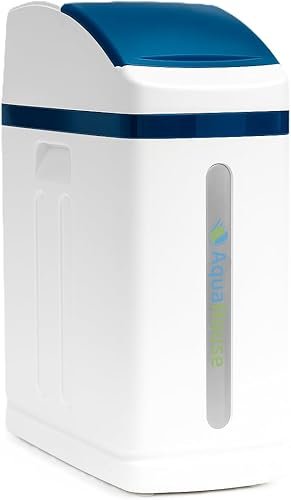
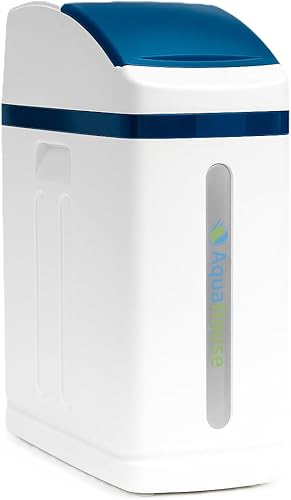
AquaHouse Metered Water Softener System, 9 Litre
This is an interesting entry-level option. The metered control valve is a big plus at this price point—it should save on salt compared to timer models. The 9-litre capacity suggests it’s designed for small households or maybe as a point-of-use system. We’d be cautious about expecting it to handle a whole house with very hard water, but for a small apartment or cottage, it could be a budget-friendly start.
- Metered regeneration saves salt/water
- Compact design fits tight spaces
- Automatic operation
- Very small capacity—may regenerate frequently
- Warranty details unclear
- Likely requires DIY installation skills
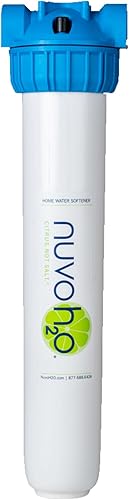
Nuvo H2O Dphb-a Home Water Softener System
The Nuvo uses a citrus-based technology (chelation) instead of salt. It’s FDA and NSF approved, which is reassuring. The claim of removing existing scale is bold—we’ve seen mixed results with conditioners doing that. Best for small households (1-2 people) with moderately hard water. If you hate the idea of salt bags and sodium in your water, this is a legitimate alternative to consider.
- No salt, no electricity, no wastewater
- NSF certified for scale prevention
- Very low maintenance
- Doesn’t actually remove hardness minerals
- Cartridge replacements add up
- May struggle with very hard water
nuvoH2O Manor Complete Salt-Free System
The bigger brother to the Home model. The Manor system is designed for larger homes. The price listed ($1,5.97) appears to be a formatting error—it’s likely in the $1,500 range for a complete system. At that price, you’re competing with some decent ion-exchange units. We’d recommend this mainly if you’re philosophically opposed to salt-based softening and have moderately hard water.
- Complete whole-house solution
- Salt-free operation
- Compact compared to traditional softeners
- High upfront cost for a conditioner
- Effectiveness varies with water chemistry
- Annual cartridge replacement cost
Filtered Shower Head with Handheld
Okay, this isn’t a water softener. But hear me out. If your main complaint is dry skin and dull hair from hard water, a shower filter can help at a fraction of the cost. This one has a 15-stage filter that removes chlorine and some impurities. It won’t stop scale buildup in your pipes, but it might make your shower experience much better. A solid temporary solution while you save for a whole-house system.
- Instant improvement in shower water feel
- Multiple spray settings
- Easy DIY installation
- Doesn’t soften water or prevent scale
- Filter needs regular replacement
- Only treats one shower
Frequently Asked Questions
- How much does it cost to install a water softener?
- Professional installation typically runs $200-$600, depending on your plumbing setup. If you need new electrical outlets or drain lines, costs go up. DIY installation is possible for handy homeowners but know your limits—bad plumbing causes expensive damage.
- What’s the ongoing cost of a water softener?
- Budget $10-$25 monthly for salt or potassium chloride, plus $5-$10 yearly for electricity. Salt-free systems have cartridge replacements every 6-12 months ($50-$150). All systems may need occasional resin bed replacement ($200-$400) after 10-20 years.
- Are cheap water softeners worth it?
- Sometimes. A basic but properly sized ion-exchange softener from a reputable brand can work fine. The risk with no-name cheap systems is poor valve reliability, thin tanks, and no customer support. We’d rather see you buy a basic Fleck or Clack valve system than a flashy off-brand.
- Do water softeners increase home value?
- Generally yes, especially in hard water areas. Appraisers might not add direct value, but buyers see it as a premium feature. It protects the home’s plumbing, which is a selling point. Keep your installation professional and maintain records.
- Can I rent a water softener instead?
- Yes, many companies offer rental or lease-to-own programs. Monthly costs range from $30-$80. This can make sense if you don’t have upfront cash or are in a temporary home. Just calculate the total cost over time—sometimes buying is cheaper long-term.
- How do I know what size water softener I need?
- Test your water hardness (grains per gallon). Multiply that by your daily water usage (estimate 80 gallons per person per day) by 3 (for regeneration frequency). A family of four with 15 GPG water needs about a 32,000-grain system. When in doubt, go slightly bigger.
Final Thoughts
So, how much are water softeners? You can spend as little as $500 for a basic DIY system or over $3,000 for a premium, professionally installed unit. The sweet spot for most families is $1,000-$2,000 for a quality metered ion-exchange system with installation. Don’t forget to factor in ongoing salt costs.
Our honest advice: if you have hard water (test it first!), a traditional salt-based softener is the most reliable solution. The Nuvo salt-free systems are interesting alternatives if you have moderate hardness and hate the idea of salt. And if you’re on a tight budget, start with a good shower filter—it won’t solve everything, but you’ll notice the difference. Whatever you choose, get your water tested, size the system correctly, and install it right. Your pipes and appliances will thank you.
