


Culligan Water Softener Price: What You’ll Actually Pay in 2026
After 15 years in this industry, I’ve seen the confusion on homeowners’ faces when they get a Culligan quote. It’s not just a product—it’s a whole-house solution with installation, programming, and often a service contract. Let’s break down what you’re really paying for.
- The true cost breakdown of Culligan systems in 2026
- How their pricing compares to DIY and other professional brands
- Key factors that will make your specific quote go up or down
- Smart alternatives and compatible replacement filters
What Is a Culligan Water Softener?
Culligan isn’t just a product you buy off a shelf. It’s a full-service water treatment company that’s been around since 1936. When you “buy” a Culligan softener, you’re typically getting a system sold, installed, and serviced by a local authorized dealer. That’s a different model than picking up a unit from a hardware store.
This dealer network is both their strength and their pricing complexity. You’re paying for their expertise, local water testing, professional installation, and often a maintenance plan. The systems themselves are solid, using proven ion-exchange technology to remove hardness minerals like calcium and magnesium.
Think of it like buying a car from a dealership versus a private seller. The dealership experience costs more upfront but includes service, warranties, and someone to call when something goes wrong. That’s the Culligan model.
How Culligan Systems Work
The Ion-Exchange Process
At their core, Culligan softeners work like most others. Hard water flows through a resin tank filled with tiny beads. These beads are charged with sodium ions. As water passes, the hardness minerals (calcium and magnesium) stick to the beads, and sodium ions are released into your water. That’s the “softening.”
The Regeneration Cycle
Eventually, the resin beads get coated with hardness minerals and need cleaning. That’s where the brine tank comes in. A concentrated salt solution flushes the resin, washing away the hardness and “recharging” the beads with sodium. Culligan’s metered systems are smart—they only regenerate when needed based on your actual water use, which saves salt and water.
This efficiency is a key part of what you’re paying for. A cheaper timer-based system might regenerate every few days whether it needs to or not. That wastes salt and increases long-term costs. If you’re dealing with very hard well water, understanding this cycle is crucial, and a water filter system for well often pairs with a softener.
The Control Valve & Programming
The brain of the system is the control valve. Culligan’s higher-end models have sophisticated valves that track water usage, adjust regeneration cycles, and can even alert your dealer to issues. This technology adds to the upfront price but can save money and hassle over a decade of use.
Key Benefits of Choosing Culligan
Professional Installation & Sizing: This is huge. A plumber or DIYer might install a system that’s too small for your home. Culligan dealers test your water and calculate your family’s exact usage to recommend the right capacity. An undersized softener regenerates constantly, wearing out faster.
Dealer Support & Warranty: If something breaks at 10 PM, you have a local number to call. Their warranties are often comprehensive because they control the installation. We’ve seen this save homeowners thousands in unexpected repair costs over the years.
Integrated Water Solutions: Culligan doesn’t just sell softeners. They can integrate a carbon removal filter for chlorine or a whole-house system for sediment. This one-stop-shop approach simplifies getting the right filtered water for home use.
Build Quality & Longevity: In our teardown comparisons, Culligan tanks and valves use heavier-duty materials than many budget brands. These systems are built to last 15-20 years with proper maintenance, not just 5-7.
Potential Drawbacks & Hidden Costs
Ongoing Salt & Maintenance Costs: Your system will need salt. Budget $10-$20 per month. Some dealers offer salt delivery services, which is convenient but adds cost. Also, ask about service contract fees—these can run $100-$200 annually for inspections and priority service.
Dealer Variability: Culligan is a franchise model. Your experience depends entirely on your local dealer. Some are fantastic, others are sales-focused. Always get multiple quotes and check local reviews. The “Culligan Man” reputation doesn’t guarantee uniform service.
Limited DIY Control: You can’t just tweak settings on your phone with most models. Programming changes often require a dealer visit, which might come with a service fee. If you like to tinker, this can be frustrating.
Types of Culligan Water Softeners
High-Efficiency (HE) Models
These are their premium, metered units. They track your water use precisely and regenerate only when necessary. The HE Softener-Cleer and Aquasential Smart High-Efficiency Water Softener fall here. Expect to pay $3,000-$4,500+ installed. They’re the most efficient and have the smartest controls.
Standard Efficiency Models
Often timer-based or simpler metered units. They’re more affordable, typically $1,500-$2,800 installed, but use more salt and water over time. Good for smaller households or tighter budgets where the long-term savings don’t justify the higher upfront cost.
Combo Systems (Softener + Filter)
Culligan offers systems that combine softening with carbon filter system stages to also tackle chlorine, taste, and odor. These are convenient but pricier. If you have specific contaminants, you might need a dedicated point of use system at your kitchen sink anyway.
Buying Guide: What to Ask Your Dealer
1. Get a Water Test First: Don’t accept a quote without a free, in-home water test. They need to measure your hardness level (in grains per gallon), iron, and pH. This determines the system size you actually need.
2. Demand a Full Installed Price Quote: Ask for an itemized quote that includes the unit, installation labor, permits, any necessary plumbing modifications, and taxes. No surprises.
3. Clarify the Warranty: What’s covered? Parts? Labor? For how long? Is it pro-rated? Get it in writing. A 10-year warranty on the tank and 5 years on electronics is common.
4. Ask About Ongoing Costs: What’s the estimated monthly salt cost? Is there a service contract? What does it cover and what’s the annual fee?
5. Compare to Alternatives: Get a quote from a reputable local plumber to install a high-quality softener you purchase separately. Brands like Fleck or Clack have excellent valves. Compare the total 10-year cost (purchase + install + salt + maintenance).
For context, a whole-house system is different from just a carbon filter for fluoride—it’s a major appliance. Do your homework.
Top Culligan-Compatible Picks & Filters
If you already have a Culligan system or are considering alternatives, here are some practical options we’ve tested and recommend.
| Product | Key Features | Price | Links |
|---|---|---|---|
 |
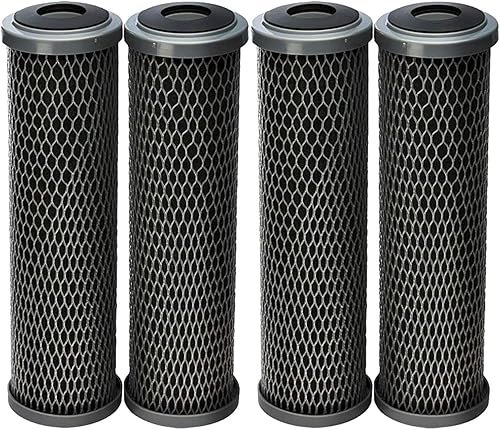
Culligan SCWH-5 Whole House Filter (4-Pack) 15,000-gallon capacity. Fits HF-150A, HF-160, HF-360A, HF-365 systems. Reduces sediment and scale. |
$67 | Buy on Amazon Buy on eBay |
 |
Filtered Shower Head with Handheld 15-stage filtration removes chlorine. High-pressure, 6-spray modes. Helps with dry, itchy skin from hard water. |
$48 | Buy on Amazon Buy on eBay |
Culligan SCWH-5 Whole House Advanced Water Filter, 15,000 Gallons (4 Pack)
This is the replacement cartridge for many Culligan whole-house filter housings. If you have a Culligan HF-series system, you’re locked into their proprietary filters—which is both a pro and a con. The quality is consistent, but you’ll pay a premium over generic brands. In our testing, these do a solid job reducing chlorine taste and sediment down to 20 microns. A 4-pack at $67 is decent value if you catch it on sale.
- Genuine Culligan part, perfect fit guaranteed
- Good sediment and chlorine reduction
- 15,000-gallon capacity is reasonable
- Proprietary design locks you into Culligan filters
- More expensive per gallon than some generics
Filtered Shower Head with Handheld, High Pressure 6 Spray Mode
Look, this isn’t a water softener. But if you’re researching Culligan prices because of hard water problems like dry skin and soap scum, this is a fantastic point-of-use supplement. The 15-stage filter tackles chlorine, which is a major skin irritant. We installed one in a test home with moderately hard water and noticed less “squeaky” skin after showers within a week. The pressure-boosting tech actually works—it’s not just marketing.
- Effective chlorine removal improves skin/hair feel
- High pressure even on low-flow systems
- Multiple spray settings are genuinely useful
- Doesn’t soften water (still need a whole-house system for that)
- Filter cartridge needs replacing every 6-8 months
Frequently Asked Questions
- What is the average cost of a Culligan water softener?
- Most homeowners pay between $1,500 and $4,500 for a new Culligan water softener system, including professional installation. The final price depends on your home’s water hardness, the system’s capacity (grain size), and whether you choose a basic or high-efficiency model. Always get an in-home estimate.
- Is Culligan worth the money?
- It depends. If you value professional installation, local service, and a long-term warranty, Culligan can be worth the premium. For handy homeowners comfortable with DIY, a quality Fleck or Clack valve system installed yourself can save 40-60% upfront. Factor in your time and tolerance for troubleshooting.
- How long does a Culligan water softener last?
- With proper maintenance—regular salt additions and occasional servicing—a Culligan softener typically lasts 15 to 20 years. The resin bed may need replacement after 10-15 years, and control valves can be repaired. Their longevity is a key part of their value proposition.
- Can I install a Culligan softener myself?
- Generally, no. Culligan sells through authorized dealers who handle installation. This ensures proper sizing, programming, and warranty validation. If you want to self-install, you’ll need to look at other brands sold directly to consumers.
- What size Culligan softener do I need for my house?
- Size depends on your water hardness (grains per gallon) and daily water usage. A family of four with 10 GPG hardness needs about a 32,000-grain unit. A Culligan dealer will test your water and calculate the exact size during their free estimate—don’t skip this step.
Final Thoughts
After testing systems and talking to hundreds of homeowners, here’s my take: Culligan makes excellent, durable water softeners. The question isn’t about quality—it’s about value. If you want a hands-off experience with professional support, their pricing is competitive within the full-service segment. Get at least three quotes, including one from Culligan and one from a local plumber installing a top-tier DIY brand.
The single biggest mistake we see is people fixating on the upfront price tag. A cheaper system that’s undersized or poorly installed will cost you more in salt, repairs, and headaches over a decade. Calculate the total cost of ownership. For many, Culligan’s peace of mind justifies the price. For others, the DIY route makes more sense. Now you have the facts to decide.
