


So you’re looking at a water quality tester. Maybe your water tastes weird. Maybe you just installed a new filter and want proof it’s working. Or perhaps you’re just curious. I get it. After testing water gear for over a decade, I can tell you this: knowing what’s in your water is the first step to fixing it.
This guide covers everything you need to know. We’ll look at what these testers actually do, the different types available, and how to pick the right one. We’ll also review some of the most popular models on the market right now.
What Is a Water Quality Tester?
A water quality tester is a tool that gives you a snapshot of what’s dissolved or present in your water. Think of it like a health check-up for your tap. Instead of guessing why your coffee tastes bitter or your shower leaves a film, you get a number. That number tells you if your water is “soft,” “hard,” “acidic,” or full of dissolved solids.
These devices range from simple dip-and-read strips to sophisticated digital meters. At their core, they measure specific parameters. The most common are TDS (Total Dissolved Solids), pH (acidity/alkalinity), and chlorine levels. More advanced units can test for heavy metals, nitrates, or even oxidation-reduction potential (ORP).
They’re not lab-certified instruments. But for a homeowner, a hobbyist with an aquarium, or someone checking their water filter housing for leaks, they’re incredibly useful. They answer the basic question: “What am I actually drinking?”
How a Water Quality Tester Works
Digital Meters: The Electrical Approach
Most digital testers, especially TDS meters, work by measuring electrical conductivity. Pure water doesn’t conduct electricity well. But add dissolved ions—like calcium, magnesium, or sodium—and it becomes conductive. The meter sends a tiny current between two probes and measures how easily it flows. More dissolved stuff means higher conductivity, which it converts to a ppm (parts per million) reading.
pH meters use a special glass electrode that senses hydrogen ion activity. It’s a bit more technical, but the result is a precise number on the 0-14 pH scale. ORP meters measure the water’s ability to oxidize or reduce contaminants, a useful gauge for disinfection strength.
Test Strips: The Chemical Reaction
Strips are simpler. They have small pads treated with reagents that change color when they contact specific substances. You dip the strip, wait 30 seconds (or whatever the instructions say), and compare the color change to a chart. It’s not as precise as a digital meter, but it’s fast, cheap, and can test for a wider range of contaminants at once, like lead or nitrate.
Key Benefits of Using a Tester
Verify Your Filter Works. This is the big one. You spend good money on an activated carbon filter or an RO system. A tester proves it’s doing its job by showing a drop in TDS or chlorine post-filtration. No more guessing.
Identify Problems Early. A sudden spike in your TDS reading could mean your RO membrane is failing. High chlorine might mean your municipal water treatment has changed. Catching these shifts early saves you money and hassle.
Inform Your Health Choices. If you’re on a well, testing for nitrates or pH is just smart. High nitrates are dangerous for infants, and corrosive, low-pH water can leach metals from your pipes. A tester gives you the data to act, maybe by installing a dedicated manganese removal system or a whole-house neutralizer.
Save Money Long-Term. Instead of blindly replacing filter cartridges on a schedule, you can test and replace them based on actual performance. It also helps you avoid buying expensive bottled water if your tap water is perfectly fine.
Potential Drawbacks to Consider
Accuracy Varies Wildly. A $15 meter will get you in the ballpark. A $300 lab-grade meter will be spot-on. For most home use, the cheap ones are fine for trends, but don’t bet your health on a single reading from a bargain device.
They Test a Single Point. Your water quality can change throughout the day. A test gives you a snapshot, not a movie. For a complete picture, especially with well water, test at different times.
Calibration is a Chore. It’s easy to forget. If you don’t calibrate, your readings drift. It’s a small but real maintenance task that many people neglect.
Types of Water Quality Testers
TDS Meters
The most common and affordable type. They give you a single number for total dissolved solids. Perfect for checking RO system performance (should read near 0 ppm) or seeing if your tap water is high in minerals. The 4-in-1 models that also measure EC (electrical conductivity) and temperature are great value.
Multi-Parameter Digital Meters
These are the Swiss Army knives. They combine several sensors—usually pH, TDS, EC, and sometimes ORP or salinity—into one pen-like device. Ideal for aquarium owners, hydroponic gardeners, or anyone who needs more than just a TDS number. They cost more but offer a much fuller picture.
Test Strips
Strips are the quickest way to screen for a broad range of contaminants. A single strip can often test for hardness, chlorine, iron, nitrate, and pH all at once. They’re not super precise, but they’re excellent for initial screening. If a strip shows high lead, you then know to get a more accurate lab test.
Laboratory-Grade Equipment
For the seriously dedicated. These are benchtop units you might find in a water treatment professional’s van. They offer high accuracy and can test for more obscure parameters. For the average homeowner, this is overkill—and the price reflects it.
Buying Guide: What Actually Matters
Don’t just buy the first thing you see. Ask yourself these questions.
What do you need to test? If you just want to check your RO filter, a basic TDS meter is perfect. If you have a saltwater aquarium, you need salinity and pH. If you’re on well water, a strip that tests for bacteria and nitrates is wise. Match the tool to the job.
How often will you test? For monthly checks, a cheap meter or strips are fine. For daily monitoring (like in a hydroponics setup), invest in a more durable, reliable meter with easy calibration.
What’s your budget? You can get a functional TDS meter for under $20. A good multi-parameter tester will run you $40-$80. Strips are a few cents per test. Don’t overspend on features you won’t use.
Look for key features: Auto-off function (saves battery), hold function (locks the reading), backlit screen (for under-sink checks), and easy calibration. These small things make a big difference in daily use. If you’re setting up a comprehensive point of entry equipment system, having a reliable tester on hand is non-negotiable.
Our Top Picks for 2026
| Product | Type | Key Specs | Best For | Price |
|---|---|---|---|---|
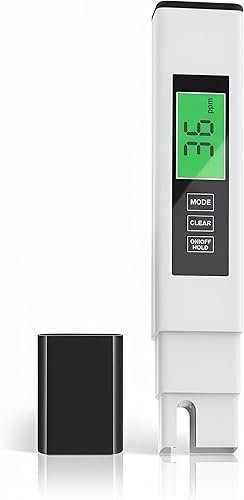
 4 in 1 TDS Meter |
Digital (TDS/EC/Temp) | 0-9999 ppm, °C/°F | RO filter checks, basic tap water testing | $19 |
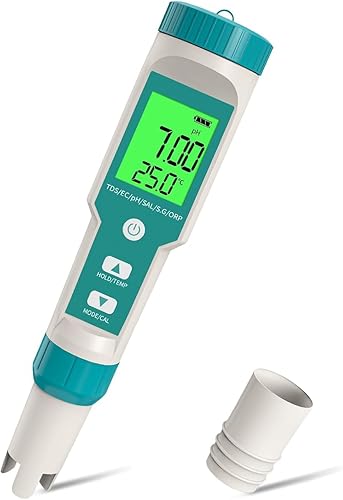 7-in-1 Digital Tester |
Digital Multi-Parameter | pH/TDS/EC/ORP/S.G/Salt/Temp | Aquariums, pools, serious hobbyists | $39 |
 8-in-1 B-Qtech Tester |
Digital Multi-Parameter | pH/TDS/EC/ORP/S.G/H2/Salt/Temp | Hydroponics, labs, comprehensive testing | $48 |
 18-in-1 Test Strips (125ct) |
Chemical Test Strips | Lead, Hardness, Chlorine, Nitrate, etc. | Initial screening, well water, home kits | $27 |
1. 4 in 1 TDS Meter Digital Water Tester
This is the workhorse. It does three things well: measures TDS, electrical conductivity, and temperature. In our testing, it’s been consistent and the auto-ranging from 0-9999 ppm covers everything from pure RO water to hard tap water. It’s the one we recommend to readers who just want to know if their filter is working. Honestly, for 90% of homeowners, this is all you need.
- Excellent value for the price
- Simple, one-button operation
- Includes temperature reading (useful for accurate TDS)
- Only measures TDS/EC, not specific contaminants
- Basic plastic build
2. Digital Water Quality Tester 7 in 1
This steps it up. The addition of pH and ORP makes it a fantastic tool for aquarium keepers and pool owners. We like the backlit screen—it makes reading under a dark sink much easier. The salinity modes are a nice touch for saltwater tanks. It feels more substantial than the basic TDS pen. The factory reset reminder is important; do it before first use.
- Tests 7 critical parameters
- Backlit display is very handy
- Multiple salinity modes add versatility
- Requires more frequent calibration
- Menu navigation takes a minute to learn
3. B-Qtech Digital Water Quality Tester 8 in 1
This is for the data-obsessed. Adding Hydrogen (H2) measurement to the mix targets a niche but growing interest in hydrogen-rich water. It’s well-built and the screen is clear. In our experience, the extra parameter is only worth it if you specifically care about hydrogen water. Otherwise, the 7-in-1 model offers better value. But if you want the most complete portable picture, this is it.
- Most comprehensive portable testing (8 parameters)
- Solid construction
- Good for laboratory or serious hobby use
- H2 measurement is niche and adds cost
- Overkill for simple tap water checks
4. 18-in-1 Water Quality Test Strips
These are your first line of defense. Dip one in, and in two minutes you have a rough idea about heavy metals, hardness, chlorine, and more. The color comparison isn’t lab-accurate, but it’s surprisingly good for spotting problems. We keep a bottle in our toolkit for quick checks on well water or when a homeowner reports a sudden taste change. The 125-count makes the per-test cost incredibly low.
- Tests for a huge range of contaminants (18!)
- Very easy to use, no calibration
- Extremely affordable per test
- Results are qualitative (color match), not precise numbers
- Can be affected by user technique (dip time, read time)
Frequently Asked Questions
- How accurate are cheap water quality testers?
- For measuring trends and relative changes—like seeing your TDS drop from 300 ppm to 15 ppm after an RO filter—they are perfectly accurate enough. They are not lab instruments, so don’t rely on them for exact, legally defensible numbers. They tell you if things are “good,” “bad,” or “changing.”
- Do I need to calibrate my TDS meter?
- Yes, absolutely. All digital meters drift over time. Calibrate it every 2-3 months with a calibration solution (usually 342 ppm NaCl). It’s a simple 2-minute process that ensures your readings remain trustworthy. Skipping this is the single biggest mistake we see users make.
- What’s the difference between TDS and hardness?
- TDS measures all dissolved inorganic solids—calcium, magnesium, sodium, potassium, etc. Hardness measures only the calcium and magnesium ions. A TDS meter won’t give you a hardness number. For that, you need a hardness test strip or a titration kit.
- Can a water quality tester detect bacteria?
- No. Standard consumer testers cannot detect biological contaminants like E. coli or Giardia. For bacteria, you need a specific bacteria test kit (which involves incubating a sample) or a professional lab test. If you suspect bacterial contamination, stop drinking the water and get a lab test immediately.
- How often should I test my water?
- For municipal water, testing once or twice a year is fine unless you notice a change. For well water, the EPA recommends testing annually for total coliforms, nitrates, total dissolved solids, and pH. If you have a treatment system, test before and after the system every few months to monitor performance.
Final Thoughts
After all these years, my advice is simple: start with a good TDS meter. The 4-in-1 TDS Meter is our top recommendation for most people. It’s cheap, reliable, and answers the most common question: “Is my filter working?” Pair it with a bottle of 18-in-1 test strips for occasional screening, and you’ve got a solid home water testing toolkit for under $50.
If your needs are more specific—like managing a reef tank or a hydroponic garden—then investing in the 7-in-1 or 8-in-1 multi-parameter meter makes sense. The data they provide is worth the extra cost for those applications. Whatever you choose, just test. Knowledge is the first step to better water. And if you’re still shopping for filters, our deep dive on Aquasana reviews is a great place to continue your research.
