


You’ve probably wondered what’s really in your water. That slight metallic taste, the white scale on your kettle, or a news story about local contaminants—it makes you think. After testing water from dozens of homes and interviewing plumbers for years, we can tell you this: guessing gets you nowhere. You need data.
This guide covers everything you need to know about water quality testing in 2026. We’ll look at:
- What a water test actually measures
- The different ways to test, from strips to lab kits
- How to pick the right method for your situation
- Our hands-on reviews of popular test kits
What Is Water Quality Testing?
Water quality testing is the analysis of a water sample to determine the presence and concentration of specific physical, chemical, and biological contaminants. It’s not a single thing. It’s a process that can range from a 30-second dip with a test strip to a multi-week laboratory analysis costing hundreds of dollars.
The goal is simple: get a clear picture of what’s in your water so you can make informed decisions. Is it safe to drink? Do you need a filter? If you have a filter, is it still doing its job? Testing answers these questions. Honestly, most people skip this step and just buy a filter off the shelf—a big mistake we see all the time.
For homeowners on municipal water, testing verifies that the treated water reaching your tap hasn’t picked up contaminants in old pipes. For well owners, it’s non-negotiable; you’re responsible for your own water safety. A boil notice from your city is a clear signal to test your water afterward, too.
How Water Quality Testing Works
The basic principle is straightforward: introduce a reactive element to your water and measure the change. That change is then compared to a standard, giving you a number or a “detected/not detected” result. The method varies wildly depending on what you’re testing for.
The Science in Simple Terms
Most home test kits use chemical reagents that change color in the presence of a target substance. A strip dipped in water with high nitrate levels will turn a specific shade of pink. You compare that shade to a chart. It’s a simple chemical reaction. Digital meters work differently—they measure electrical conductivity (for TDS/salinity) or use ion-selective electrodes (for pH, fluoride).
From Your Tap to a Result
For a strip test, the process is: collect a fresh sample, dip for the exact time specified, wait for the reaction, and compare. Timing is critical. Waiting 60 seconds instead of 30 can throw off your chlorine reading. For lab tests, you’ll follow a strict chain-of-custody protocol: fill sterile bottles, preserve the sample if needed (often with a provided chemical), and ship it overnight to the lab. The lab uses advanced equipment like mass spectrometers for parts-per-billion accuracy.
Key Benefits of Testing Your Water
Peace of Mind. This is the big one. Knowing your water is free from lead, bacteria, or harmful chemicals lets you drink, cook, and bathe without worry. It’s a simple step that removes a major “what if.”
Targeted Filtration. Why buy a whole-house system if your only issue is hard water? A test tells you exactly what to filter for. If chlorine is your main complaint, a whole house chlorine filter at the point of entry might be your best bet, saving you from buying multiple point-of-use filters.
Filter Performance Verification. You installed an expensive reverse osmosis system. Great. But is it still removing 95% of TDS six months later? Annual testing is the only way to know when to change membranes and cartridges. It protects your investment.
Early Problem Detection. A sudden spike in iron could signal well corrosion. Rising nitrates might mean agricultural runoff is seeping into your groundwater. Testing catches these trends before they become serious health or plumbing issues.
Potential Drawbacks & Limitations
Not All Tests Are Created Equal. The biggest drawback is the accuracy gap between a $20 strip kit and a $200 lab test. Strips are great for screening and trends, but they can’t detect many trace contaminants and have a wider margin of error. They can give false confidence.
A Single Test is a Snapshot. Water quality changes. Seasonal agricultural runoff, changes in municipal treatment, or your well’s water table can all cause fluctuations. One good test doesn’t guarantee the water will be the same next month.
Interpretation Can Be Tricky. A strip shows “0.5 mg/L” for lead. Is that safe? You need to know the regulatory standard (it’s 0.015 mg/L in many places). Without context, the numbers are just numbers. Always compare results to official guidelines.
Types of Water Quality Tests
Test Strips (Colorimetric)
The most common and affordable method. You dip a treated paper strip into water and compare the color change to a chart. They’re fast (30-120 seconds) and test for multiple parameters at once—hardness, pH, chlorine, nitrate, and sometimes heavy metals. Perfect for regular monitoring and initial screening.
Digital Meters
These handheld devices give you a numerical readout on a screen. They excel at measuring Total Dissolved Solids (TDS), electrical conductivity (EC), and pH. More precise than strips for those specific parameters. You’ll need to calibrate them regularly with buffer solutions for accurate readings.
Laboratory Test Kits
You collect samples and mail them to a certified lab. This is the gold standard for comprehensive analysis, especially for well water. They can test for bacteria (e.coli, coliform), lead, arsenic, pesticides, and volatile organic compounds with high precision. It’s the method we recommend for a full baseline test, particularly if you rely on a private well and are considering a point of entry system for whole-house protection.
Professional Testing Services
A certified technician comes to your home, collects samples with professional equipment, and often provides on-site analysis for some parameters. This is the most thorough (and expensive) option, ideal if you have a complex water issue or need results for legal or real estate purposes.
Buying Guide: How to Choose
Don’t just grab the first kit you see. Match the test to your goal.
For a Quick Health Check: A multi-parameter strip kit covering the basics (pH, hardness, chlorine, lead, nitrate) is your best starting point. Look for kits with clear color charts and at least 50 strips so you can test multiple times.
For Specific Concerns: If you’re worried about one thing—like lead from old pipes or high salt from a water softener—get a dedicated test for that contaminant or a digital meter (TDS for salinity).
For Well Water or Serious Investigation: Invest in a certified lab test. Look for packages that test for your local common contaminants. In agricultural areas, that means nitrates and pesticides. Near industrial zones, test for VOCs and heavy metals. This data is crucial for choosing the right system, whether it’s ceramic filtration for bacteria or a full RO system.
Check Certifications: While home kits aren’t certified like whole-house filters, look for ones that reference standard methods (like EPA or ISO) for their testing procedures. It’s a sign of better quality control.
Top Water Quality Test Kits (2026)
We’ve used more test strips than we can count. Here’s a straightforward comparison of popular kits available right now, followed by our detailed takes.
| Product | Key Specs | Best For | Price |
|---|---|---|---|
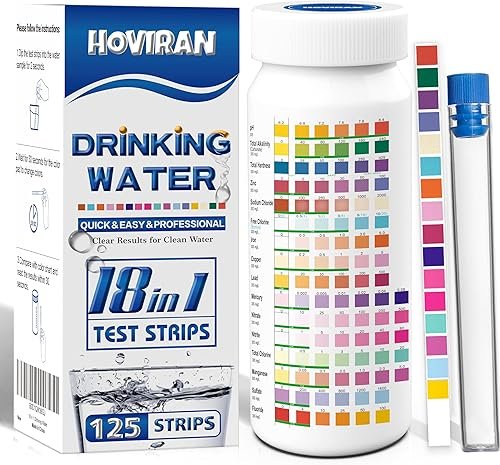
| 18-in-1 Test Strips (125ct) | 18 parameters, 125 strips, 3-step process | Comprehensive home screening | ~$27 |
| 18-in-1 Drinking Water Kit | 18 parameters, 125 strips, 30-sec results | Fast, multi-parameter checks | ~$20 |
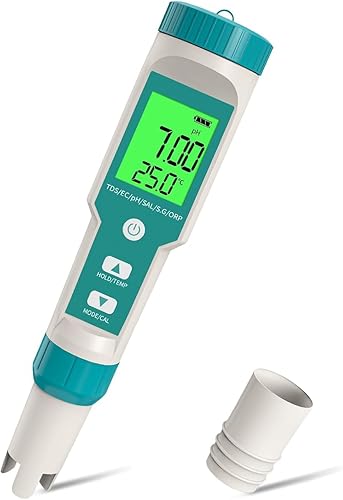
| 7-in-1 Digital Tester | pH/TDS/EC/ORP/S.G./Salt/Temp, digital display | Precise readings for pools, aquariums, labs | ~$39 |
| 16-in-1 High Sensitivity Strips | 16 parameters, includes eBook guide | Beginners & school projects | ~$26 |

1. 18-in-1 Water Quality Test Strips (125ct)
This is the workhorse kit we often recommend for a first-time, all-around test. It covers a huge range—from common stuff like pH and hardness to metals like lead and copper. In our testing, the color charts are clear, and the results have been consistent batch-to-batch. The 125-count makes it affordable to test your taps, shower, and even your garden hose over time.
- Excellent parameter range for the price
- Large quantity allows for re-testing
- Simple, clear instructions
- Color comparison can be subjective
- Not a substitute for lab certification

2. All-New 18 in 1 Drinking Water Test Kit
A very close competitor to the first kit, often at a lower price point. The claim to fame here is speed—results in 30 seconds for most tests. We found this to be mostly true, though waiting the full time for heavy metals is still wise. It’s a solid, budget-friendly choice if you want a quick snapshot of your water’s major characteristics.
- Very fast results
- Competitive pricing
- Covers all essential parameters
- The color chart is a bit smaller and harder to read
- Strips can bleed color if oversaturated
3. Digital Water Quality Tester 7 in 1
This is a different beast. No strips, just a digital probe. It’s fantastic for precise, repeatable measurements of TDS (total dissolved solids) and conductivity—key for checking RO system performance or aquarium health. The salinity modes are a bonus for saltwater tank owners. However, it won’t detect specific contaminants like lead or bacteria. Think of it as a high-tech supplement to strip tests, not a replacement.
- Highly accurate for TDS, EC, pH
- Rechargeable and backlit screen
- Great for ongoing filter monitoring
- Doesn’t test for heavy metals or bacteria
- Requires regular calibration
- Higher upfront cost

4. 16 in 1 Water Testing Kits (SJWAVE)
A good, reliable kit that’s been around for a while. The inclusion of an eBook is a nice touch for beginners who want to understand their results. It performs on par with the 18-in-1 kits for the parameters it does cover. We see this one often used in school science projects because the instructions are exceptionally clear. A trustworthy choice for families.
- Clear, beginner-friendly instructions
- Helpful educational eBook included
- Reliable and consistent results
- Fewer parameters than some competitors
- Can be slightly more expensive per strip
Water Quality Testing FAQ
- How often should I test my home’s water?
- For city water, test annually or if you notice a change in taste, odor, or color. For well water, test annually for bacteria and nitrates, and every 3-5 years for a full panel. Always test after flooding, nearby construction, or a boil notice.
- What are the most important things to test for?
- Start with the basics: bacteria (for wells), lead, nitrate, pH, and total dissolved solids (TDS). If you’re on city water, check chlorine levels. If you have hard water stains, test for hardness (calcium/magnesium). These cover the most common health and nuisance issues.
- Are home water test strips accurate?
- They’re accurate enough for screening and identifying major problems or trends. Think of them as a reliable “check engine” light. For definitive, legally-binding results or to detect trace contaminants, you need a certified lab test. Strips are a great first step.
- What’s the difference between TDS and “hardness”?
- TDS measures all dissolved inorganic matter—salts, minerals, metals. Hardness is a subset of TDS, specifically calcium and magnesium ions. High TDS can mean many things; high hardness specifically causes scale. A best under sink RO system will reduce both, while a water softener only addresses hardness.
- Can I test my water filter’s performance?
- Yes, and you should! Test your water before and after the filter. For an RO system, use a TDS meter. The reduction should be over 90%. For a carbon filter, test chlorine before and after. If the filter isn’t reducing the target contaminant, it’s time for a replacement.
- Do I need different tests for my pool or aquarium?
- Yes. While pH and sometimes hardness overlap, pools require careful monitoring of free chlorine, total chlorine, and cyanuric acid. Aquariums, especially saltwater, need precise salinity, calcium, and alkalinity tests. The digital 7-in-1 meter reviewed above is a good tool for these applications.
Final Thoughts
Water quality testing isn’t glamorous, but it’s foundational. You wouldn’t drive your car for years without ever checking the oil. Don’t do it with the water you drink and cook with every day. Based on our years of experience, starting with a comprehensive strip test kit like the 18-in-1 options above is the most cost-effective way to take control of your water quality.
Use that data. If you find chlorine is high, a simple carbon filter will do. If hardness is the issue, look into softeners. If lead or bacteria show up, you need a serious solution like a best under sink RO system or a UV purifier. And if you travel, knowing your home baseline makes it easier to choose a reliable travel water filter for the road. Test, know, and then act. Your health is worth the 30 minutes it takes.
