


Water Purification Equipment: A Practical Guide for Every Need (2026)
After testing dozens of systems and talking to countless plumbers, I can tell you one thing: the “best” water filter doesn’t exist. The right choice depends entirely on what’s in your water and how you live. This guide breaks down the real-world options, from pocket-sized tablets to under-sink powerhouses.
- Understanding the core technologies behind purification
- Weighing the honest pros and cons of each type
- A clear comparison of top products for 2026
- Answers to the most common questions we get
What Is Water Purification Equipment?
Simply put, it’s any tool or system designed to remove unwanted contaminants from your water. That could mean bacteria from a stream, chlorine taste from city mains, or heavy metals from old pipes. The goal is always the same: make your water safer and better to drink.
We’ve seen everything from simple cloth filters to massive municipal plants. For you at home, it usually means a point-of-use device like a pitcher, faucet filter, or under-sink unit. The key is that “purification” is a broad term. Some equipment just improves taste (like a basic carbon filter), while others, like a proper lead removal system, target specific, dangerous toxins.
Don’t get sold by fancy marketing. The first step is always a water test. You can’t fix a problem you haven’t identified.
How Water Purification Works
Different technologies tackle different problems. Think of it like a toolbox—you wouldn’t use a hammer to turn a screw. Here’s a quick look at the main mechanics.
Mechanical Filtration
This is the simplest concept. Water is forced through a physical barrier with tiny holes. It catches sediment, rust, and some cysts. The size is measured in microns. A 5-micron filter catches bigger stuff; a 0.5-micron one is much finer. It’s your first line of defense.
Adsorption (Carbon Filters)
Activated carbon is a superstar. It has a massive surface area that traps chemicals like chlorine, volatile organic compounds (VOCs), and bad tastes through a process called adsorption. It’s why your fridge filter tastes good. But it has limits—it won’t remove heavy metals or dissolved solids. For chloramine, a specific chloramine filter is often needed, as standard carbon struggles with it.
Reverse Osmosis (RO)
RO is the heavy hitter. It uses pressure to push water through a super-fine semi-permeable membrane (0.0001 microns!). This blocks nearly everything: dissolved salts, lead, fluoride, PFAS, and bacteria. The downside? It creates wastewater and removes beneficial minerals, which some systems add back in.
Chemical Disinfection
This uses chemicals like chlorine or iodine to kill pathogens. It’s the principle behind municipal treatment and portable tablets. It’s effective but can leave a residual taste. UV light is another disinfectant, scrambling the DNA of microbes without chemicals, but it doesn’t remove any physical contaminants.
Key Benefits
Health Protection: The obvious one. Good equipment removes dangerous contaminants—lead, bacteria, parasites, and industrial chemicals. Peace of mind is priceless.
Better Taste and Odor: No more chlorine smell or metallic tang. This isn’t just about luxury; if your water tastes better, you’ll drink more of it. That’s a win for hydration.
Cost Savings: A solid under-sink system pays for itself compared to endless bottled water. We did the math for a family of four: break-even often hits in under a year.
Environmental Impact: Ditching single-use plastic bottles is a tangible benefit. Your filter cartridge waste is a fraction of the plastic mountain.
Appliance Protection: Hard water and sediment wreck coffee makers, kettles, and ice machines. Filtering your water extends their life. For whole-house issues, a iron water filter can save your pipes and fixtures from nasty orange stains.
Potential Drawbacks
It’s Not Always Simple: The biggest mistake we see? Buying a filter without testing your water first. A carbon filter won’t fix high TDS, and an RO system is overkill if you just have a little chlorine taste.
Ongoing Costs: Filters need replacing. That’s a recurring expense and a maintenance task you can’t forget. A clogged filter is worse than no filter—it can breed bacteria.
Water Waste (RO Systems): Traditional reverse osmosis systems can waste 3-4 gallons for every gallon of pure water they make. Newer models are much more efficient, but it’s still a factor.
Mineral Removal: RO systems strip out the bad stuff, but also the good—like calcium and magnesium. Many people remineralize their water for taste and health. Alternatively, a water distiller also produces very pure water but is slow and energy-intensive.
Space Requirements: Under-sink systems need room for the tank and filters. Whole-house units need professional installation and space near your main water line.
Types of Water Purification Systems
Portable & Emergency: Chemical Tablets
These are your go-bag essentials. Chlorine-based tablets like Ef-Chlor are lightweight, have a long shelf life, and are dead simple to use. They’re not for daily home use but are perfect for camping, travel, or disaster preparedness. They kill pathogens but won’t improve taste or remove chemicals.
Point-of-Use (POU) Filters
These treat water at a single tap. Pitchers, faucet mounts, and under-sink systems fall here. They’re popular because they’re affordable and target the water you drink and cook with. An under-sink RO system is the most thorough POU option available.
Point-of-Entry (POE) Systems
Also called whole-house filters, these treat all the water entering your home. They’re installed on the main water line. If you have widespread issues like sediment, hardness, or sulfur smell, a point of entry water filter is the right move. It protects your showers, appliances, and plumbing.
Buying Guide: What Actually Matters
1. Test Your Water: Non-negotiable. Get a lab test or a quality home kit. Know your enemy before you buy a weapon.
2. Check Certifications: Look for NSF/ANSI standards. NSF/ANSI 42 covers aesthetic effects (taste, odor). NSF/ANSI 58 is for RO systems and health claims. NSF/ANSI 53 certifies reduction of specific contaminants like lead or cysts. Don’t trust vague “tested to” claims.
3. Calculate Cost Per Gallon: Don’t just look at the sticker price. Divide the system cost + 1 year of filters by the gallons it will treat. This reveals the true value.
4. Consider Flow Rate: For under-sink or whole-house systems, check the gallons per minute (GPM). A low flow rate means a weak trickle from your faucet. RO systems list gallons per day (GPD)—800 GPD is excellent for a busy household.
5. Maintenance Reality: Be honest with yourself. Will you change filters every 6 months? If not, choose a system with longer-life cartridges or set calendar reminders.
Our Top Picks for 2026
| Product | Best For | Key Feature | Price |
|---|---|---|---|
 |
Travel & Daily Camping | 1 tablet treats 1-2L, compact | $14 |
 |
Bulk Tanks & Disaster Prep | 1 tablet treats 250-500L | $15 |
 |
Rainwater & Rural Homes | Treats 4-5L per tablet | $13 |
 |
Comprehensive Home Filtration | 9-stage, 800 GPD, NSF Certified | $7.19 |
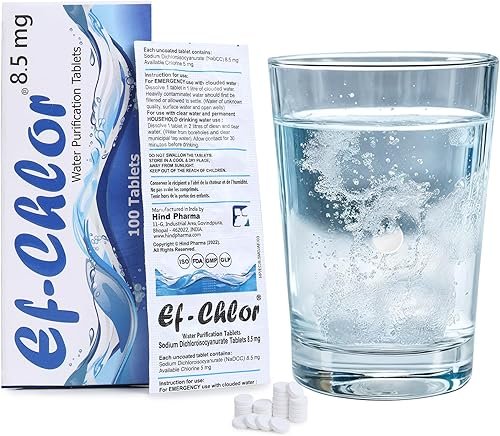
Ef-Chlor Water Purification Tablets 8.5mg – 100 Tablets
These are the tablets I actually pack in my own camping kit. They’re based on NaDCC, a stable chlorine source that’s more effective than plain chlorine bleach. Each tablet treats 1-2 litres, making them perfect for daily use on a hiking trip. They don’t leave an overpowering chemical taste if you follow the instructions—wait the full 30 minutes.
- Ultra-lightweight and compact
- Proven NaDCC formula
- 100 tablets is a great value
- Not for chemical contaminant removal
- Requires wait time
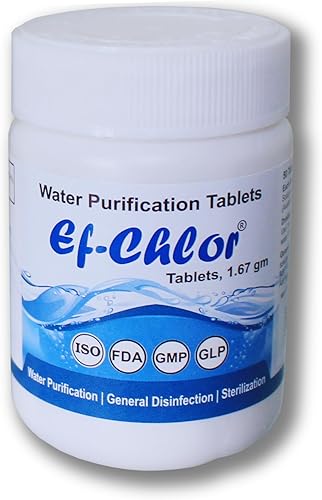
Ef-Chlor 1.67gm Water Purification Tablets – Pack of 50
This is the heavy-duty version. One tablet treats a staggering 250-500 litres. If you have a large rainwater tank, farm storage, or are part of a community disaster relief effort, this is what you need. It’s the same reliable NaDCC formula, just in a concentration that can handle bulk water safely and cheaply.
- Incredible treatment capacity per tablet
- Ideal for large-scale preparedness
- Simple drop-and-wait method
- Overkill for personal water bottles
- Must store tablets properly
Ef-Chlor 33 mg Water Purification Tablets – Pack of 100
Sitting right in the middle of the range, these 33mg tablets treat 4-5 litres each. They’re a fantastic choice for caravans, rural homes using tank water, or extended bushwalking trips. We like the balance they strike—not too strong for a single day’s drinking water, but potent enough to handle a decent-sized container.
- Good mid-range capacity
- Perfect for caravan and tank water
- Trusted disinfection
- Still a chemical treatment (taste)
- Doesn’t filter sediment
Waterdrop Reverse Osmosis Water Filter System, WD-X8
This is the system we recommend for most homeowners who want the purest water possible from their tap. The 9-stage filtration is serious, and the NSF/ANSI 42, 58, and 372 certifications back up its claims. The 800 GPD flow rate means you won’t be waiting ages to fill a pot. The 2:1 drain ratio is among the best we’ve seen, cutting water waste dramatically.
- Exceptional contaminant reduction (PFAS, lead, TDS)
- High flow rate, low drain ratio
- Third-party certified
- Requires under-sink space and installation
- Higher upfront cost
Frequently Asked Questions
- What is the most effective water purification method for home use?
- For broad-spectrum contaminant removal, reverse osmosis (RO) is the most effective point-of-use technology. It removes dissolved solids, heavy metals, and microplastics. However, the “best” method depends on your specific water report. A simple carbon filter might be perfectly effective for chlorine and VOCs.
- How often should I replace my water filter?
- Follow the manufacturer’s schedule exactly—it’s based on capacity, not just time. A typical under-sink carbon filter lasts 6-12 months; an RO membrane can last 2-3 years. Ignoring replacement can lead to bacterial growth and a return of contaminants.
- Do water purification systems remove beneficial minerals?
- Yes, reverse osmosis and distillation systems remove most dissolved minerals, including calcium and magnesium. Many modern RO systems include a remineralization stage to add them back for taste. For most people, minerals from food are a more significant source than water.
- Are water purification tablets safe for daily use?
- Chlorine-based tablets like Ef-Chlor are approved for emergency and intermittent use. They are not intended as a primary, long-term drinking water solution for a home. The taste and potential byproducts make them unsuitable for continuous daily consumption when better options exist.
- Can a whole-house filter make my well water safe?
- It depends on the contaminants. A point of entry water filter can address sediment, iron, and sulfur. However, bacteria and nitrates often require specific treatment stages like UV light or specialized media. Always test well water annually and design the system accordingly.
Final Thoughts
After years in this field, my advice is simple: start with data, not a shopping cart. Get your water tested. Then, match the technology to the problem. For travel and emergency kits, chlorine tablets are a smart, cheap insurance policy. For your home, invest in a certified system that targets your specific contaminants.
The Waterdrop X8 represents the best of modern under-sink RO systems—powerful, efficient, and certified. It’s our top recommendation for anyone looking for comprehensive purification. But remember, the best equipment is the one you’ll maintain. Pick a system you understand and can keep up with, and you’ll have clean water for years to come.
