


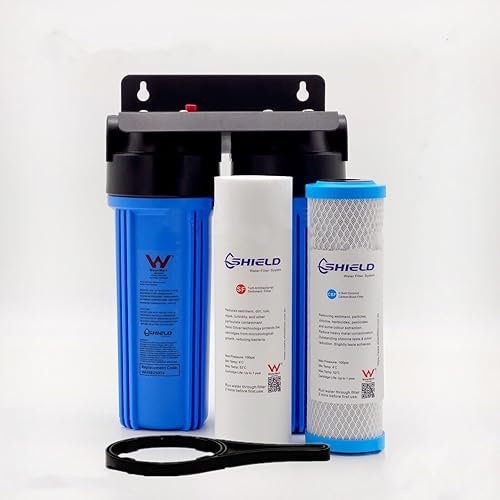
Forget the pitcher filter. If you’re tired of limescale on your shower door, dry skin after bathing, or that faint chlorine taste in your morning coffee, you need to think bigger. We’re talking about treating every drop that comes into your house. After testing systems for over a decade, I can tell you that whole house water purification is one of the most impactful home upgrades you can make.
- What a whole house system actually is (and isn’t)
- How the multi-stage filtration process works
- The real benefits and the honest drawbacks
- Our top system picks for 2026, from budget to best
- What Is Whole House Water Purification?
- How Whole House Water Purification Works
- Key Benefits of a Whole House System
- Potential Drawbacks to Consider
- Types of Whole House Filtration Systems
- Buying Guide: What Actually Matters
- Our Top Whole House System Picks for 2026
- Frequently Asked Questions
- Final Thoughts
What Is Whole House Water Purification?
Simply put, it’s a filtration system installed on your main water line, usually right after the meter. Every faucet, showerhead, toilet, and appliance gets filtered water. No more point-of-use filters scattered around the house.
The goal isn’t to produce lab-grade pure water. It’s about improving your baseline water quality for general use. Think of it as a first, powerful line of defense. It tackles the big, common problems: chlorine (which dries out skin and hair), sediment (which clogs fixtures), and volatile organic compounds.
What it typically doesn’t do is remove dissolved minerals like calcium or heavy metals. For that, you’d need a dedicated iron filtration setup or a reverse osmosis system for your drinking tap. It’s about scale and convenience.
How Whole House Water Purification Works
It’s not magic, but good engineering. Water enters the system and passes through a series of cartridges or tanks, each with a specific job.
Stage 1: Sediment Pre-Filter
This is your bouncer. A pleated or spun polypropylene cartridge, usually rated at 5 or 20 microns, catches dirt, rust, sand, and other particulates. We’ve seen these cartridges turn brown in a month on well water. It protects the more expensive filters downstream.
Stage 2: Activated Carbon Filter
The workhorse. This is typically a solid carbon block or granular activated carbon (GAC) filter. It uses adsorption—where contaminants stick to the vast surface area of the carbon—to remove chlorine, pesticides, herbicides, and many industrial chemicals. This is what makes your water taste and smell better.
Stage 3 (Optional): Specialized Media
Some systems add a third stage. This could be a finer carbon filter, a KDF filter for heavy metals, or a scale inhibitor cartridge for homes with hard water. If your primary concern is bacteria or viruses, you’d pair this with a uv filter for water as a final disinfection stage.
Key Benefits of a Whole House System
Every Tap is Covered. This is the biggest win. You’re not just drinking cleaner water; you’re showering in it, cooking with it, and washing your clothes in it. The reduction in chlorine exposure during a shower is something you’ll feel in your skin and hair within weeks.
Appliance Protection. Sediment is brutal on washing machines, dishwashers, and especially tankless water heaters. A good pre-filter can extend the life of these expensive appliances significantly. We’ve heard from plumbers that it’s the number one thing homeowners can do.
Cost-Effective Over Time. While the upfront cost is higher than a pitcher or an culligan under sink water filter, the per-gallon cost is minuscule. You’re also eliminating the need for multiple shower filters and faucet attachments.
Potential Drawbacks to Consider
Installation Space & Cost. You need a accessible section of your main water line, often in a garage or basement. Installation by a pro can run a few hundred dollars. And remember, you’re committing to replacing those cartridges, usually every 6-12 months.
Flow Rate Can Suffer. Cheap systems with small housings and restrictive filters can noticeably drop your water pressure, especially if two showers are running. This is why we always recommend oversized housings (like the 20″ x 4.5″ “Big Blue” size).
Types of Whole House Filtration Systems
Standard Cartridge-Based Systems
The most common and affordable. They use replaceable filter cartridges in a sump housing. You can customize the stages (sediment, carbon, etc.) and they’re great for municipal water. The downside is regular cartridge changes.
Backwashing Tank Systems
These use a large tank filled with filtration media (like catalytic carbon or KDF). A control valve automatically backwashes the bed to flush out trapped contaminants. Higher upfront cost, but media lasts 5-10 years. Better for high sediment or specific contaminant removal.
Water Softener + Filter Combos
If you have hard water, a combo unit that softens (via ion exchange) and filters is efficient. But it’s a more complex system. Honestly, most people on city water with moderate hardness are better served by a standalone filter and a separate softener if needed.
Buying Guide: What Actually Matters
Don’t get sold on fancy marketing. Focus on these specs.
Flow Rate (GPM or L/min): Match this to your home’s peak demand. A 3-bedroom home usually needs at least 10-15 GPM. Undersizing kills water pressure.
Filter Size & Micron Rating: Bigger housings (20″ tall) hold more filter media, last longer, and have better flow. For sediment, 5-micron is a good balance. For carbon, look for a 0.5 to 5-micron rating for good contaminant reduction.
Certifications: Look for NSF/ANSI Standard 42 (aesthetic effects like chlorine) and Standard 53 (health effects like lead, cysts). A WaterMark certification is a strong indicator of build quality and compliance.
Port Size & Housing Material: 1-inch ports are standard for good flow. Brass ports are more durable than plastic. Heavy-duty polypropylene housings with a pressure relief button are a must for safe filter changes.
Our Top Whole House System Picks for 2026
| Product | Key Feature | Price | Link |
|---|---|---|---|
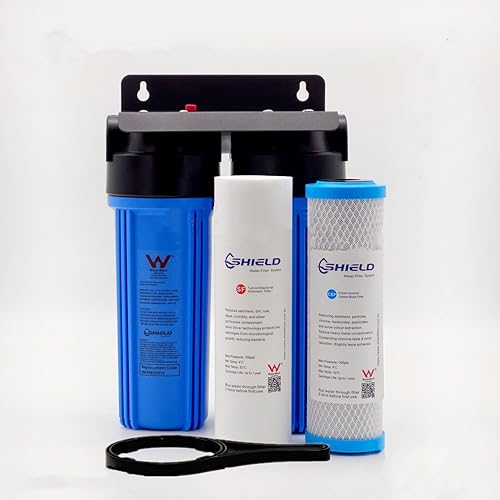 |
2-stage, removes 99.99% chlorine, brass ports | $99 | Buy on AmazonBuy on eBay |
 |
20″ Big Blue housings, pressure release valve | $1.92 | Buy on AmazonBuy on eBay |
 |
3-stage, 75L/min flow, WaterMark certified | $6.75 | Buy on AmazonBuy on eBay |
 |
3-stage with 2 extra filter sets included | $3.14 | Buy on AmazonBuy on eBay |
 |
3-stage with KDF for heavy metals | $238.90 | Buy on AliExpress |
 |
Ultra-budget pre-filter for sediment | $19.26 | Buy on AliExpress |
Best Overall: 20” x 4.5” Triple Stage Big Blue
This is the system we recommend to most readers. The three-stage process is thorough, and the 75L/min flow rate means you won’t feel a pressure drop. The WaterMark certification gives us confidence in the housing and port quality. It’s a set-and-forget solution for municipal water that covers sediment, chlorine, and odors effectively.
- Excellent flow rate for medium-large homes
- WaterMark certified for safety and quality
- Three effective filtration stages
- Higher upfront cost than twin-stage systems
- Replacement filter cost for three cartridges
Best Budget: Twin Whole House Water Filter System
For under a hundred bucks, this twin system is a steal. It handles the two most important jobs: sediment and chlorine. The brass ports are a nice touch at this price. We’ve installed similar units in rental properties and they work flawlessly. Just know you’re getting basic filtration—it’s perfect if your municipal water is already decent and you want a quality boost.
- Extremely affordable entry point
- Brass ports for durability
- Claims 99.99% chlorine removal
- Only two filtration stages
- Smaller 10″ housings may limit flow in large homes
AliExpress Budget Pick: 3-Stage with KDF Media
This is a step up if you’re concerned about heavy metals alongside chlorine and sediment. The KDF stage is designed to reduce lead, mercury, and other dissolved metals. It’s a more involved system. The price is higher, but it’s still competitive for a three-stage system with specialized media. Be prepared for a longer shipping time.
- Includes KDF media for heavy metal reduction
- Three full stages of filtration
- Significantly higher price than basic models
- Shipping and warranty may be less straightforward
Frequently Asked Questions
- Will a whole house filter soften my water?
- No. Standard sediment and carbon filters do not remove dissolved calcium and magnesium, which cause hard water. You need a water softener that uses ion exchange for that. Some combo units exist, but they are distinct technologies.
- How often do I change the filters?
- It depends on your water quality and usage. Sediment filters typically need changing every 6-12 months, or when you see a pressure drop. Carbon filters last about 12 months. If you have high sediment, check them more often.
- Can I install it myself?
- If you’re handy with plumbing and have an accessible main line, yes. You’ll need to cut the pipe, install the housing bracket, and connect it. Most homeowners hire a plumber. It’s a 2-3 hour job. Always shut off the main water first!
- Is it better than a countertop reverse osmosis water purifier?
- They do different jobs. A whole house system improves all your water for general use. A countertop RO system gives you highly purified drinking water at one tap. Many homes have both: a whole house filter for showers and appliances, and an RO system for drinking and cooking.
- What if I have well water?
- You can use a whole house system, but you’ll likely need a more robust setup. Start with a sediment filter, then add specific filters for your contaminants—like an iron filter system for well water for rust stains, or a UV light for bacteria. Get your water tested first.
- Do I still need a water distillation unit?
- Only if you need absolutely pure water for medical devices, humidifiers, or lead-acid batteries. Distillation removes everything, including minerals. It’s overkill and energy-intensive for daily drinking water when a good carbon filter or RO system will suffice.
Final Thoughts
After years of testing, I’m a firm believer in whole house filtration. It’s not glamorous, but it works. The single biggest improvement you’ll notice is in the shower. Your skin and hair will thank you. Your appliances will last longer. It’s a practical, behind-the-scenes upgrade that pays for itself in comfort and appliance longevity.
For most homes on municipal water, our top pick is the 20” x 4.5” Triple Stage Big Blue system. It hits the sweet spot of performance, flow rate, and certified quality. Don’t overcomplicate it. Start with a solid sediment and carbon filter, and you’ll be ahead of 90% of homeowners.
