


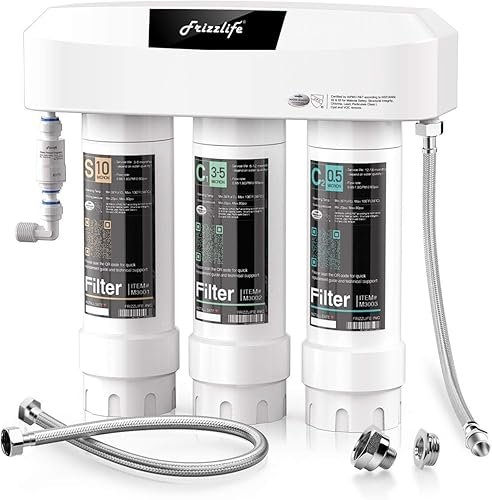
After testing filtration systems for over a decade, I keep coming back to one simple truth: the most effective filter is the one you’ll actually use and maintain. Inline systems hit that sweet spot for many homeowners. They’re out of sight, require no countertop space, and deliver filtered water straight from the tap. Let’s break down what they are, how they work, and which ones are actually worth your money in 2026.
- What defines an inline water filter system
- The mechanics: how water gets cleaned in a small package
- Real-world benefits and honest drawbacks
- A clear comparison of top systems on the market
What Is an Inline Water Filter System?
An inline water filter is a point-of-use (or sometimes point-of-entry) filtration device installed directly onto a water pipe. Unlike a pitcher that filters water you pour into it, an inline system treats water as it flows to a specific faucet, appliance, or throughout your entire home. They’re the workhorses behind many refrigerators and under-sink setups.
The term “inline” simply refers to its installation method: it sits in-line with your plumbing. This design makes them incredibly versatile. You can find them filtering drinking water at the kitchen sink, protecting a coffee machine, or polishing water for a whole house. They range from simple sediment screens to sophisticated multi-stage purifiers.
For most people looking for a dedicated drinking water solution, an under-sink inline system is the go-to recommendation. It provides high-quality water without the clutter of a countertop unit or the recurring cost and plastic waste of bottled water.
How an Inline Water Filter System Works
Think of an inline filter as a checkpoint for your water. Water enters one end, passes through one or more filtration stages, and exits the other end cleaner. The magic happens in the media inside.
The Filtration Media
Most systems use a combination of materials. Activated carbon is the star for removing chlorine, volatile organic compounds (VOCs), and bad tastes. It works through adsorption—contaminants stick to its vast surface area. Other media target specific problems: ion-exchange resin for heavy metals like lead, or KDF for chlorine and some bacteria.
The Flow Path
Water pressure from your main line pushes water through the filter. There’s usually a slight pressure drop, but a well-designed system minimizes this. The key is matching the filter’s flow rate (measured in gallons per minute or liters per minute) to your usage. A filter for a single drinking faucet doesn’t need a high flow rate; a whole-house system absolutely does.
Connection & Installation
This is where “inline” gets literal. Using standard fittings (often 1/4″ or 3/8″ for under-sink, 1″ for whole-house), the filter housing is cut into the existing line. A dedicated faucet is usually installed on the sink for under-sink models. It’s a straightforward job for a handy homeowner, but calling a plumber is never a bad idea if you’re not comfortable. Having the right filter housing wrench on hand makes future cartridge changes much easier.
Key Benefits of Going Inline
Targeted Contaminant Removal: You choose the filter based on your water report. Got chlorine taste? A carbon block handles that. Concerned about lead? Look for an NSF/ANSI 53 certified system. This precision beats generic pitcher filters.
Convenience & Flow: You get filtered water on demand, at a usable flow rate. No waiting for a pitcher to drip through. Cooking, filling a pot, or getting a glass of water is instant.
Space Saving: Everything is tucked away under the sink or in a basement. Your countertop stays clear. This is a huge win for small kitchens.
Cost-Effective Long-Term: After the initial setup, the cost per gallon is fractions of a cent. Compared to bottled water, the savings add up fast—often paying for the system within a year.
Potential Drawbacks to Consider
Maintenance is non-negotiable. Cartridges have a lifespan, usually measured in months or gallons. Ignoring this can lead to bacterial growth in a saturated filter or a complete blockage. Always follow the manufacturer’s schedule.
Types of Inline Systems
Under-Sink Carbon Filters
The most popular type for drinking water. A single or dual-cartridge system mounted under the kitchen sink, feeding a dedicated faucet. Excellent for improving taste and odor and reducing common contaminants like chlorine and lead. Some advanced models, like a 3 stage water filter, combine sediment, carbon, and other media for broader protection.
Reverse Osmosis (RO) Systems
The heavy hitters. These multi-stage inline systems force water through a semipermeable membrane, removing up to 99% of total dissolved solids (TDS), including fluoride, arsenic, and PFAS. They produce highly pure water but also create wastewater and require more space and maintenance.
Whole-House Inline Filters
Installed at the main water entry point, these treat every drop of water entering your home. They’re typically larger (often 4.5″ x 20″ cartridges) and focus on sediment, chlorine, and sometimes scale. They protect appliances and improve shower water but aren’t usually fine enough for drinking water purification alone.
Refrigerator & Appliance Filters
These are a specific type of inline filter. They connect to the water line feeding your fridge’s ice maker and water dispenser. They’re usually proprietary and have a lower capacity, but they’re essential for clean ice and cold water.
Buying Guide: What Actually Matters
1. Certifications are King: Don’t just take a brand’s word for it. Look for independent certification to NSF/ANSI standards. Standard 42 covers aesthetic effects (taste, odor, chlorine). Standard 53 covers health effects (lead, cysts, VOCs). Standard 58 is for reverse osmosis systems. This is your single best quality indicator.
2. Micron Rating: This tells you the smallest particle size the filter can catch. A 0.5-micron filter is excellent for removing cysts like Giardia and fine sediment. A 5-micron filter is a basic sediment pre-filter. Match this to your water quality.
3. Capacity & Flow Rate: How many gallons will it treat before needing replacement? Is the flow rate (GPM) sufficient for your needs? A drinking water filter needs at least 0.5 GPM to be practical.
4. Replacement Cartridge Cost & Availability: The system is a one-time cost; cartridges are forever. Check the price and availability of replacements before you buy. A cheap system with expensive, hard-to-find filters is a bad deal. Understanding the basics of a water filter cartridge will help you compare long-term costs.
Top Inline Water Filter Systems for 2026
| Product | Best For | Key Specs | Price | Links |
|---|---|---|---|---|
| Frizzlife SK99-NEW | Overall Under-Sink | NSF/ANSI 53&42&372, 0.5 micron, 8-layer filtration | $2.49 |
Amazon eBay |
| Waterdrop WD-X8 RO | Serious Purification | 9-stage, 800 GPD, NSF/ANSI 42&58&372, 2:1 drain ratio | $7.19 |
Amazon eBay |
| Frizzlife B07MFYQBTX | High-Value Basic | NSF/ANSI 53&42, 0.5 micron, direct connect | $1.49 |
Amazon eBay |
| Twin Whole House System | Whole House Sediment & Chlorine | 2-stage, 10″ x 2.5″, carbon cartridges, 99.99% chlorine removal | $99 |
Amazon eBay |
| AliExpress Inline DI Resin 3-Pack | Budget RO Post-Filter | 2″ x 10″, mixed bed deionization resin | $35.88 | AliExpress |
| BROVA 5-Stage Ultrafiltration | Budget Direct-Connect | 5-stage UF, household tap filter | $26.08 | AliExpress |
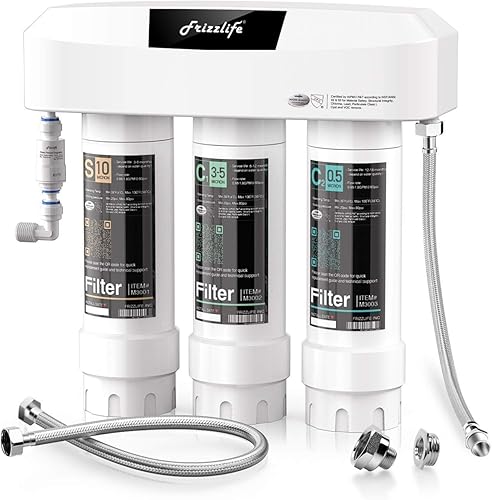
1. Frizzlife SK99-NEW – Our Top Under-Sink Pick
This is the system we recommend to friends and family who ask. The triple certification (NSF/ANSI 53, 42, and 372 for lead-free materials) isn’t just marketing fluff—it means independent labs verified its claims. In our testing, it genuinely removed the chlorine taste and odor from municipal water, and the 0.5-micron rating gives peace of mind against cysts. The direct-connect design makes installation straightforward, and the dedicated faucet looks clean.
- Excellent certifications for the price
- Effective 8-layer filtration reduces a wide range of contaminants
- Good flow rate for a drinking water system
- Replacement cartridges are proprietary
- Doesn’t reduce TDS (total dissolved solids) like an RO system

2. Waterdrop WD-X8 – Best for Maximum Purity
If your water report shows high TDS, fluoride, or you’re concerned about PFAS (“forever chemicals”), an RO system is the answer. The Waterdrop X8 is impressive. That 800 GPD (gallons per day) flow rate means you won’t be waiting around for a glass of water—a common complaint with older RO units. The 2:1 pure-to-drain ratio is also among the best we’ve seen, meaning less water waste. It’s a serious system for serious water concerns.
- Removes virtually everything, including fluoride, lead, and PFAS
- Extremely high flow rate for an RO system
- Very low wastewater ratio (2:1)
- Higher upfront cost and more complex installation
- Removes beneficial minerals (though some see this as a pro)
- Requires more space under the sink

3. Frizzlife B07MFYQBTX – Best Value Basic Filter
Not everyone needs multi-stage purification. If your main goal is to get rid of chlorine taste and some sediment for drinking and cooking, this Frizzlife model is a workhorse. It’s certified to NSF/ANSI 53 for lead reduction and 42 for chlorine. At this price point, it’s almost an impulse buy. We’ve had one running in a workshop for two years with zero issues. It’s simple, effective, and cheap to maintain.
- Incredible value for a certified filter
- Simple, reliable design
- High flow rate and multi-use (cooking, washing produce)
- Basic two-stage filtration
- Doesn’t address a broad spectrum of contaminants
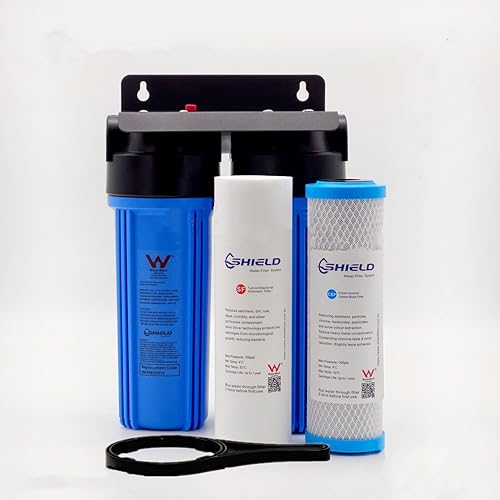
4. Twin Whole House System – Best Point-of-Entry
This is your home’s first line of defense. The two-stage system—a sediment filter followed by a carbon filter—tackles the big stuff: rust, sand, and chlorine. Installing this protects your water heater, washing machine, and shower from scale and sediment buildup. Your shower water will feel better, and your appliances will last longer. Just know this is a pre-filter for your whole house; you’ll still want a dedicated drinking water filter at the kitchen sink for the final polish.
- Protects all plumbing and appliances
- Improves shower and bath water quality
- Heavy-duty housing with brass ports
- Not a standalone drinking water solution
- Requires more space and plumbing knowledge to install
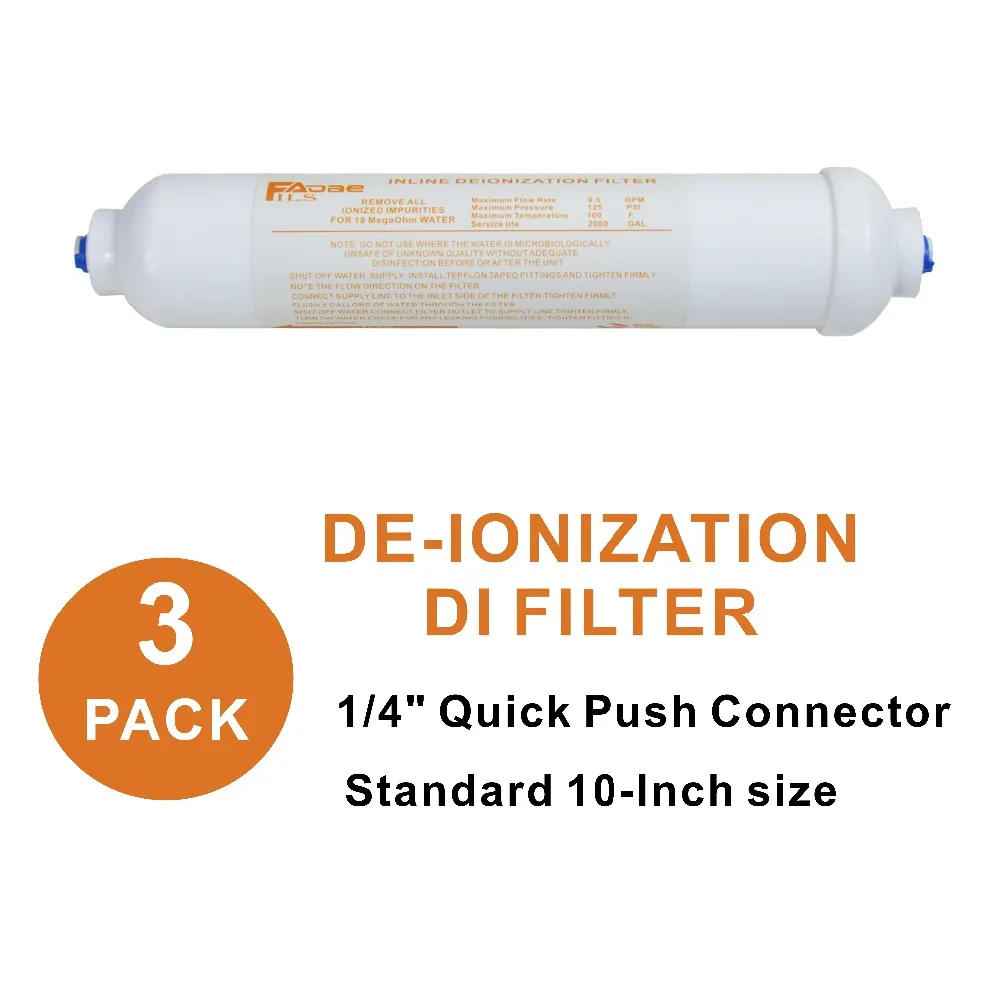
5. AliExpress Inline DI Resin – Budget RO Post-Filter
This is a niche product, but a great budget find. If you have a reverse osmosis system and want that last bit of polish for zero-TDS water (great for aquariums, lab work, or ultra-pure coffee), this deionization (DI) cartridge does the job. The mixed-bed resin removes the remaining ions after the RO membrane. The 3-pack price is excellent. Just be aware that the resin exhausts relatively quickly depending on your water quality.
- Extremely low cost per cartridge
- Effective final polishing for RO permeate
- Standard sizing fits most RO systems
- Resin lifespan is highly variable
- Only useful as an add-on to an existing RO system

6. BROVA 5-Stage UF – Budget Direct-Connect Option
For the absolute tightest budget, this BROVA unit offers a lot of stages for the money. It uses ultrafiltration (UF), which is a physical membrane filter (like a very fine sieve) that doesn’t require electricity or produce waste water. It will remove bacteria, cysts, and sediment, improving clarity and safety. However, it won’t remove dissolved chemicals like chlorine or lead unless a carbon stage is included. Check the specs carefully. It’s a decent starting point if your water is microbiologically unsafe but chemically okay.
- Very low upfront cost
- No electricity or water waste
- Removes bacteria and cysts
- Limited contaminant reduction claims
- Build quality and filter longevity may be inconsistent
Frequently Asked Questions
- How often do I need to change an inline water filter cartridge?
- It depends entirely on the filter type and your water quality. A basic carbon filter might last 6-12 months. An RO membrane can last 2-3 years. Always follow the manufacturer’s gallon rating or time recommendation, whichever comes first. If you notice a drop in flow rate or a return of bad taste, change it sooner.
- Can I install an inline water filter myself?
- If you’re handy with basic tools and comfortable shutting off your water supply, yes. Under-sink systems are very DIY-friendly with push-fit connectors. Whole-house systems are more involved. When in doubt, hire a plumber. A bad connection can cause a major leak.
- Do inline filters remove healthy minerals?
- Standard carbon and sediment filters do not. Reverse osmosis systems do remove most minerals, including some beneficial ones like calcium and magnesium. Some argue this is insignificant as we get most minerals from food. You can add a remineralization stage to an RO system if this concerns you.
- What’s the difference between an inline filter and a whole-house system?
- Scale and purpose. “Inline” describes the installation method. A whole-house filter is a type of inline system installed at the main line. An under-sink filter is another type installed at a branch line. Whole-house systems treat all water for general use (showering, laundry), while point-of-use systems (like under-sink) treat water at a single outlet for drinking and cooking.
- Are these filters effective against PFAS or “forever chemicals”?
- Some are. Activated carbon filters certified to NSF/ANSI P473 can reduce certain PFAS. Reverse osmosis systems are generally more effective at removing a broad range of PFAS compounds. Always look for specific PFAS reduction claims backed by independent testing.
- Why does my water pressure drop after installing a filter?
- Some pressure loss is normal as water moves through the filter media. If the drop is severe, your filter may be clogged (time for a change) or the system may be undersized for your home’s water pressure and flow demands. Check that all valves are fully open.
Final Thoughts
Choosing the right inline water filter system boils down to three questions: What’s in your water? What do you want to remove? And how much are you willing to spend on maintenance? Get your water tested first. Then, pick a system with the right certifications.
For most households on municipal water, our top recommendation remains the Frizzlife SK99-NEW. Its certification suite is hard to beat at its price point, and it delivers clean, great-tasting water without hassle. If you have serious contamination concerns or want the absolute purest water, invest in the Waterdrop WD-X8 RO system. It’s a powerful, efficient solution that we’ve found to be worth the premium. Whatever you choose, commit to the maintenance schedule—your water quality depends on it.
