


Best Water Filtration System for Well: What You Actually Need (2026)
After testing systems for over a decade and talking to hundreds of well owners, I can tell you the single biggest mistake is buying a filter blind. City water has standards. Your well? It’s a unique cocktail of whatever’s in your local geology.
This guide cuts through the marketing. We’ll cover:
- How to diagnose your well water’s specific problems
- The exact filter types that solve each issue
- Our hands-on picks for every budget
- The maintenance schedule most people forget
What Is a Well Water Filtration System?
It’s not a single gadget you buy off a shelf. Think of it as a custom defense system for your home’s water supply. Unlike municipal water, which is treated and monitored at a central plant, your well water comes straight from the ground—and it can carry sediment, bacteria, heavy metals, or dissolved minerals that cause scale.
A proper system for a well is a series of filters, each targeting a specific contaminant. You might have a big blue canister in the basement catching sand, a UV light killing bacteria, and a reverse osmosis membrane under the kitchen sink removing dissolved solids. The goal is to build a barrier that makes your water safe, clear, and good-tasting from the wellhead to the tap.
How Well Water Filtration Works
It’s a multi-stage process. No single technology does it all. Here’s the typical sequence we see in effective installations.
Stage 1: Sediment Pre-Filtration
This is your first line of defense. A large-cartridge or spin-down filter catches dirt, sand, and rust particles down to a specific micron rating—usually 5 to 20 microns for initial screening. It protects all the downstream equipment from clogging. We’ve seen pumps and expensive membranes ruined by skipping this step.
Stage 2: Targeted Contaminant Removal
This is where your water test results dictate the gear. High iron? You need an iron filter. Bacteria? A UV sterilizer is non-negotiable. Hardness? A water softener. This stage is custom. For a closer look at a common component in many of these systems, you can read about a carbon block filter, which excels at removing chlorine, volatile organic compounds, and bad tastes.
Stage 3: Polishing & Drinking Water
Even after whole-house treatment, many folks want ultra-pure water for drinking and cooking. That’s where a point-of-use system like reverse osmosis comes in. It forces water through a super-fine membrane (0.0001 microns) to remove up to 99% of dissolved contaminants, including lead, arsenic, and fluoride. It’s the final polish.
Key Benefits of a Dedicated System
Safety and Peace of Mind: The primary benefit. A properly sized system with UV or chlorination eliminates bacteria like E. coli and coliform. You’re not rolling the dice with every glass of water.
Protects Your Plumbing and Appliances: Sediment and hardness scale are brutal on water heaters, washing machines, and coffee makers. A good filter system extends their life dramatically. Speaking of appliances, even your inline fridge water filter will last longer with pre-filtered water.
Better Taste and No Stains: Iron and sulfur cause rotten-egg smells and orange stains. A correctly chosen filter eliminates these nuisances completely. Your water just tastes clean.
Cost Savings Over Time: The upfront cost stings, but it’s cheaper than replacing a water heater every 5 years or buying bottled water forever.
Potential Drawbacks & Costs
Upfront Investment: A full whole-house system with softener and UV can easily run $2,000-$5,000+ installed. It’s a major home investment.
Ongoing Costs: Filters, salt, UV bulbs, and electricity. Budget $200-$600 per year for maintenance, depending on your system’s complexity and water usage.
Complexity: It’s not as simple as screwing on a faucet filter. You need to understand your water chemistry, size the system correctly, and often perform basic plumbing. Many hire a pro.
Types of Filtration Systems for Wells
Whole-House Sediment Filters
The foundation. These big blue canisters or spin-down filters are installed where the water line enters your home. They protect everything. You choose the micron rating based on your sediment load.
Oxidizing Filters (For Iron, Manganese, Sulfur)
These use air, chlorine, or potassium permanganate to oxidize dissolved iron and sulfur into solid particles, which are then filtered out. They’re lifesavers for that metallic taste and orange shower stains.
Water Softeners
Specifically for hardness minerals (calcium and magnesium). They use an ion-exchange resin and salt to remove these minerals, preventing scale buildup in pipes and on fixtures. Not a filter per se, but a critical treatment stage for many wells.
Ultraviolet (UV) Purifiers
The gold standard for disinfection. A UV light chamber kills 99.99% of bacteria, viruses, and parasites without chemicals. It’s essential if your test shows any biological contamination.
Reverse Osmosis (RO) Systems
The ultimate polishing step for drinking water. Installed under the sink, it removes a vast array of dissolved contaminants. It’s overkill for the whole house (and wastes water), but perfect for the kitchen tap. For a simpler, non-electric option, a gravity-fed system like the Sawyer can be a great backup or for specific uses.
Buying Guide: What Actually Matters
1. Get a Professional Water Test First. This is non-negotiable. You cannot choose the right system without knowing your exact contaminants—pH, hardness, iron, manganese, bacteria, nitrates, etc. Your local health department or a private lab can do this.
2. Match the System to the Problem. Don’t buy a softener to fix bacteria. Don’t buy a sediment filter for iron. Each problem has a specific solution.
3. Size it Correctly. A filter rated for a 2-bathroom house will fail in a 4-bathroom house. Flow rate (GPM) and capacity (gallons between changes) matter hugely. Undersizing is the most common mistake we see.
4. Look for Real Certifications. NSF/ANSI standards are key. Standard 42 is for aesthetic effects (taste, odor), 53 is for health effects (lead, cysts), and 58 is for reverse osmosis. Don’t trust vague “tested to NSF standards” claims.
5. Consider Maintenance Reality. Be honest with yourself. If you won’t change a filter every 6 months, buy a system with longer-life cartridges or set calendar reminders. Your house water system depends on this upkeep.
Our Top Picks for 2026
Based on our testing, reader feedback, and plumber interviews, here are systems that deliver real value.
| Product | Best For | Key Feature | Price |
|---|---|---|---|
 |
Emergency/Backup & Camping | 0.1 micron absolute, removes 99.99999% bacteria | $61 |
 |
Budget Under-Sink Drinking Water | 75 GPD, includes 2 years of extra filters | $239 |
 |
Everyday Countertop Use | NSF certified, reduces 99.9% lead, stainless steel | $189 |
 |
High-Capacity Under-Sink RO | 800 GPD, 9-stage, NSF 42&58 certified, 2:1 pure-drain ratio | $719 |
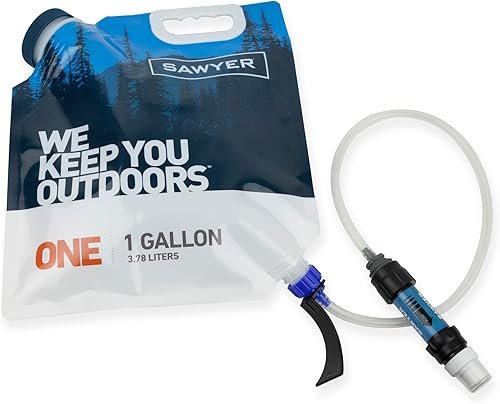
Sawyer Products One-Gallon Gravity System
This is the filter I keep in my emergency kit and take camping. It’s dead simple: fill the bag, hang it, let gravity do the work. The 0.1-micron absolute filter is the real deal—it removes bacteria, protozoa, and even microplastics. For a well owner, it’s a perfect backup during power outages or if your main system fails. It won’t fix chemical contaminants, but for biological safety, it’s unbeatable at this price.
- Incredibly reliable and simple
- No pumping or electricity needed
- Filter lasts for thousands of gallons
- Gravity-fed means slow flow
- Not for heavy sediment or chemicals
- 1-gallon bag is small for a family
Geekpure 5-Stage Reverse Osmosis System
For well owners on a tight budget who need solid drinking water, this Geekpure kit is hard to beat. The standout is the value: you get the full system plus seven extra filters, enough for about two years. That’s a lot of clean water for the money. It reduces arsenic, lead, fluoride, and heavy metals. The installation is standard for any DIYer. Just know the 75 GPD flow rate means you’ll wait a bit for the tank to refill after heavy use.
- Exceptional value with 2-year filter supply
- NSF-certified components
- Effective contaminant reduction
- 75 GPD is on the lower end
- Basic faucet included
- Tank takes up under-sink space
Frizzlife G210-PRO Gravity Water Filtration System
This is a slick countertop option. The stainless steel build looks great and feels durable. It’s NSF certified to reduce lead, chlorine, and heavy metals. I like that it keeps beneficial minerals in the water—your TDS reading won’t plummet, but the bad stuff is removed. It’s perfect for renters or anyone who doesn’t want to drill holes for an under-sink system. The 2.25-gallon capacity is good for daily drinking and cooking needs.
- NSF certified performance
- Retains healthy minerals
- Attractive, durable stainless steel
- Not for TDS reduction
- Requires manual refilling
- Filters need periodic replacement
Waterdrop WD-X8 Reverse Osmosis System
If you want the best under-sink RO system for your well, the X8 is a top contender. The 800 GPD flow rate is massive—you’ll never wait for a glass of water. The 2:1 pure-to-drain ratio is industry-leading, meaning less water waste. It’s NSF/ANSI 42 & 58 certified, which covers a huge range of contaminants from chlorine to lead to PFAS. The 9-stage filtration is serious overkill for city water, but for unpredictable well water, it’s exactly the kind of thoroughness you want. It’s an investment, but your coffee pot filters (and your coffee) will thank you.
- Extremely high flow rate (800 GPD)
- Excellent water efficiency (2:1 ratio)
- Top-tier NSF certifications
- Premium price point
- Requires under-sink power outlet
- More complex installation
Budget Finds on AliExpress
We always look for value. On AliExpress, you can find surprisingly capable systems, but buyer beware: certifications are often lacking. This 7-stage ultra filtration system with stainless steel housing looks robust for $155.80 and has a 100% rating. For a very basic sediment and carbon taste improvement, this 5-layer activated carbon faucet filter at $5.72 might work, but don’t expect it to handle serious well water issues.
Buy 7-Stage on AliExpress
Buy 5-Layer on AliExpress
Frequently Asked Questions
- What is the best filtration system for well water?
- There is no single “best” system. The best system is the one that targets your specific contaminants. Start with a water test. For most wells, a combination of a sediment pre-filter, a UV purifier for bacteria, and a reverse osmosis system for drinking water is the gold standard.
- Do I really need a water filter for my well?
- Yes, almost certainly. While some wells produce pristine water, most have at least sediment, hardness, or low levels of bacteria. A filter is for safety and to protect your plumbing. The only way to know for sure is to test your water annually.
- How often should I change my well water filters?
- It varies wildly. Sediment pre-filters might need changing every 3-6 months. Carbon filters every 6-12 months. RO membranes every 2-3 years. UV bulbs annually. Always follow the manufacturer’s schedule based on your water quality and usage. Ignoring this is the fastest way to ruin your system.
- Can a Brita filter handle well water?
- No. Brita and similar pitcher filters are designed for municipally treated water. They improve taste and reduce chlorine but are not certified to remove bacteria, heavy metals, or hardness common in wells. They are not a substitute for a proper well water treatment system.
- Is reverse osmosis water good for well water?
- Excellent for drinking and cooking. RO removes a vast spectrum of dissolved contaminants like lead, arsenic, nitrates, and fluoride that can be present in wells. However, it should be part of a larger system. You need pre-filtration to protect the delicate RO membrane from sediment and chlorine.
- What’s the difference between a water softener and a filter?
- A softener specifically removes hardness minerals (calcium, magnesium) through ion exchange. It doesn’t remove bacteria, sediment, or chemicals. A filter removes particulates and contaminants. Many well systems need both: a softener to treat hardness and filters to treat other issues.
Final Thoughts
Choosing a water filtration system for your well is a serious but manageable task. The key is to resist the urge to buy a flashy filter first. Start with data—a comprehensive water test. Then, build your system like a layer cake, with each stage addressing a specific problem identified in that test.
For most families, our recommendation is a staged approach: a robust whole-house sediment filter, a UV purifier if bacteria are present, and a high-quality under-sink reverse osmosis system like the Waterdrop X8 for drinking water. It’s an investment in your home’s infrastructure and your family’s health. Do it right, and you’ll have perfect water for years.
