


.oi-article{font-family:system-ui,-apple-system,sans-serif;color:#1a1a1a;line-height:1.8;max-width:820px;margin:0 auto}
.oi-article h2{color:#0e4a6e;border-bottom:2px solid #0e4a6e;padding-bottom:8px;margin-top:35px;font-size:1.6em}
.oi-article h3{color:#1a6b8a;margin-top:25px;font-size:1.3em}
.oi-toc{background:#f0f7fb;border-left:4px solid #0e4a6e;padding:20px 25px;margin:25px 0;border-radius:6px}
.oi-toc ul{list-style:none;padding:0;margin:0}.oi-toc li{padding:5px 0}
.oi-toc a{color:#0e4a6e;text-decoration:none;font-weight:500}.oi-toc a:hover{text-decoration:underline}
.oi-tip{background:#e8f5e9;border-left:4px solid #2e7d32;padding:15px 20px;margin:20px 0;border-radius:6px}
.oi-warn{background:#fff3e0;border-left:4px solid #ef6c00;padding:15px 20px;margin:20px 0;border-radius:6px}
.oi-tldr{background:#e3f2fd;border-left:4px solid #1565c0;padding:15px 20px;margin:20px 0;border-radius:6px;font-size:1.05em}
.oi-cmp-table{width:100%;border-collapse:collapse;margin:25px 0;font-size:0.95em}
.oi-cmp-table th{background:#0e4a6e;color:#fff;padding:12px 10px;text-align:left}
.oi-cmp-table td{padding:10px;border-bottom:1px solid #e0e0e0;vertical-align:middle}
.oi-cmp-table tr:hover{background:#f5f5f5}
.oi-cmp-table img{max-width:80px;height:auto;border-radius:6px}
.oi-btn{display:inline-block;padding:8px 16px;border-radius:5px;color:#fff!important;text-decoration:none;font-size:0.85em;font-weight:600;margin:3px 4px 3px 0}
.oi-btn-amz{background:#f0960a}.oi-btn-amz:hover{background:#d4840a}
.oi-btn-ebay{background:#0654ba}.oi-btn-ebay:hover{background:#044a9e}
.oi-btn-ali{background:#e43225}.oi-btn-ali:hover{background:#c42a1f}
.oi-review{overflow:hidden;margin:25px 0;padding:20px;background:#fafafa;border-radius:8px;border:1px solid #e8e8e8}
.oi-review img{float:right;max-width:140px;margin:0 0 15px 20px;border-radius:8px}
.oi-pros-cons{display:flex;gap:20px;margin:10px 0}.oi-pros,.oi-cons{flex:1}
.oi-pros li{color:#2e7d32}.oi-cons li{color:#c62828}
.oi-faq dt{font-weight:700;color:#0e4a6e;margin-top:18px}.oi-faq dd{margin:5px 0 0 0}
.oi-disclosure{background:#f5f5f5;padding:15px 20px;margin-top:35px;border-radius:6px;font-size:0.9em;color:#555}
Household Water Pressure: The Complete Guide to Diagnosis & Fixes (2026)
That weak shower stream is maddening. So is the dishwasher that takes forever to fill. We’ve spent years testing filters and talking to plumbers, and one issue keeps coming up: household water pressure. Get it wrong, and even the best filter feels useless. This guide breaks down what’s normal, what’s not, and how to fix it.
- What household water pressure actually is and why it matters.
- How to test yours and diagnose common problems.
- The real benefits and drawbacks of adjusting your pressure.
- Different system types for boosting or regulating flow.
- Actionable buying criteria and our top product picks.
What Is Household Water Pressure?
Think of it as the force pushing water through your pipes. It’s measured in PSI (pounds per square inch). The sweet spot for most homes sits between 40 and 80 PSI. Below 40, your morning shower feels more like a sad drizzle. Above 80, you’re stressing your pipes, water heater, and every appliance connected to them.
We see this all the time. Someone installs a beautiful new carbon filter cartridge, only to complain the flow rate is terrible. The filter isn’t usually the bottleneck—their house pressure was already borderline low. The filter just exposed the problem. Your pressure is the foundation everything else builds on.
How Household Water Pressure Works
Your water comes from a municipal supply or a well. From there, a few key things determine what hits your faucet.
The Source & The Regulator
Municipal systems deliver water at a high pressure, often over 100 PSI. That’s too much for a house. So, there’s a pressure reducing valve (PRV) usually near your main water meter. It’s the unsung hero. This dial lets you set your home’s ideal pressure. If it fails, you’ll get wild pressure swings.
Elevation & Friction
Physics is a factor. Water pressure naturally drops about 0.43 PSI for every foot you go above the source. That’s why second-story showers often feel weaker. Long pipe runs and tight bends create friction loss, too. A poorly designed plumbing layout can kill pressure in a distant bathroom.
Flow Rate vs. Pressure
This trips people up. Pressure (PSI) is the force. Flow rate (GPM, gallons per minute) is the volume. You need both. A clogged inline shower filter might maintain pressure but severely restrict flow, giving you a weak, misty spray. They’re related but different.
Key Benefits of Optimal Pressure
Consistent Appliance Performance: Your dishwasher, washing machine, and water heater are designed for a specific pressure range. Hit that range, and they clean better, fill faster, and last longer. It’s that simple.
Effective Filtration: Every filter has a minimum operating pressure. A reverse osmosis system, for example, needs at least 40 PSI to push water through its membrane. Good pressure means your filter works as advertised.
Genuine Comfort: A strong, steady shower isn’t a luxury. It’s the baseline expectation for a functional home. Proper pressure makes daily tasks effortless.
Potential Drawbacks & Warning Signs
Watch out for high pressure. It’s the silent killer of plumbing systems. Constant pressure above 80 PSI wears out washers, damages solenoid valves in appliances, and can even cause pipe leaks over time. If you hear banging pipes (water hammer), that’s a classic symptom.
Strain on Filtration Systems: Excess pressure can rupture filter housings or cause seals to fail. Always check the max PSI rating on your shower water filter or whole-house unit. Don’t exceed it.
Masking Bigger Problems: A booster pump might fix low pressure symptoms, but it won’t fix corroded galvanized pipes that are restricting flow. Always diagnose the root cause first. Pumping more pressure into failing pipes is a recipe for a flood.
Types of Pressure Systems
Pressure Reducing Valves (PRVs)
Your first line of defense. Installed on the main line, it takes high municipal pressure and dials it down to a safe, consistent level. If your pressure is too high, a PRV is non-negotiable. They last about 7-12 years before needing replacement.
Booster Pumps
The fix for chronically low pressure. These electric pumps kick in when you open a tap, boosting pressure throughout the house. They’re essential for well systems or homes at the end of a municipal line. Modern ones are quiet and efficient.
Accumulator Tanks
These tanks store pressurized water, providing an instant buffer when demand spikes. They’re common with well pumps but can help any system. They reduce pump cycling and give you steadier pressure when two showers are running at once.
Buying Guide: What Actually Matters
Don’t just buy a gadget. Diagnose first.
Step 1: Test Your Pressure. Spend $12 on a gauge that screws onto a hose bib. Test at different times of day. Note the static pressure (no water running) and the dynamic pressure (when a tap is open). The drop tells you a lot.
Step 2: Identify the Cause. Is the PRV old? Are pipes galvanized and rusted shut? Is the problem only in one faucet (likely a clog)? Or house-wide?
Step 3: Match the Solution. High pressure? Replace or install a PRV. Low pressure everywhere? A booster pump. Low flow at one fixture? Clean the aerator or replace the supply line. For complex setups involving UV sterilization or multiple filters, consult a plumber.
Step 4: Consider Your Water Quality. Boosting pressure on hard, sediment-heavy water might just push more gunk through your system. Sometimes a whole-house sediment filter is needed before you pump up the volume.
Top Picks for 2026
Based on our testing and plumber interviews, here are tools and systems that actually help manage household pressure.
| Product | Type | Key Feature | Price | Links |
|---|---|---|---|---|
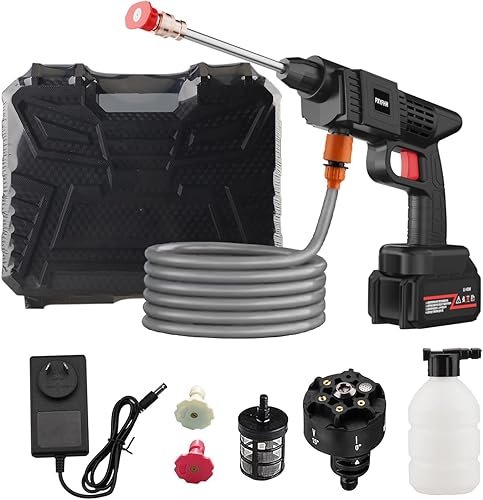
| Cordless Portable Pressure Washer | External Cleaning Tool | 60 Bar / 500W motor, 6-in-1 nozzle | $56 |
Amazon eBay |
| High Pressure Power Washer Wand | External Cleaning Tool | 2 spray tips, fits standard hoses | $18 |
Amazon eBay |
| Cordless Pressure Washer (6-in-1) | External Cleaning Tool | Battery-powered, portable, multi-nozzle | $64 |
Amazon eBay |
| MIMYTH Cordless Pressure Washer | External Cleaning Tool | 990 PSI, 40-min battery, full kit | $89 |
Amazon eBay |
| PYJ Smart Toilet (Pressure-Independent) | Fixture Solution | No water pressure limit, full auto | $422 | AliExpress |

1. Cordless Portable Pressure Washer
This is a handy tool for external cleaning jobs where you don’t have a tap nearby. The 60 Bar pressure is legit for blasting mud off a car or patio furniture. We like the cordless freedom. But understand: this is not a solution for your home’s internal water pressure. It’s a self-contained cleaning gadget. The battery life of 25 minutes is real-world accurate—have a second battery ready for bigger jobs.
- Truly portable, no hose needed
- Surprisingly powerful for its size
- 6-in-1 nozzle is versatile
- Battery life limits continuous use
- Not for fixing indoor plumbing pressure

2. High Pressure Power Washer Wand
For eighteen bucks, this is a no-brainer if you just need a more focused jet from your garden hose. The fan spray is good for rinsing, the jet stream for blasting dirt off steps. It won’t magically create pressure your hose doesn’t have, but it does concentrate the flow effectively. A simple, cheap upgrade for outdoor chores.
- Extremely affordable
- Two useful spray patterns
- Fits standard hoses easily
- Relies entirely on your existing hose pressure
- Metal construction feels lightweight
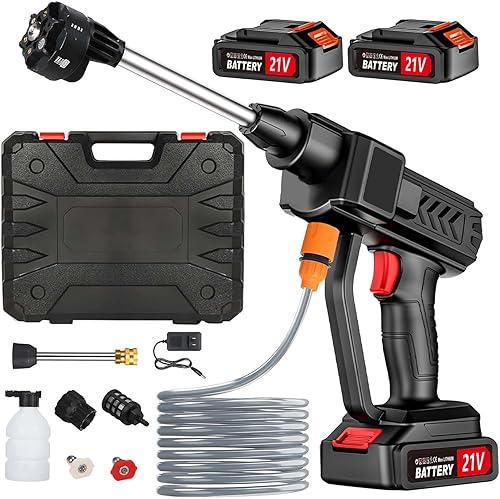
3. Cordless Pressure Washer (6-in-1 Nozzle)
Similar concept to the first pick, but the 6-in-1 nozzle here is the star. Being able to switch patterns without swapping tips is a real time-saver. We found it great for quickly cleaning window screens and outdoor equipment. The trade-off is you’re paying a bit more for that convenience. Solid mid-range cordless option.
- Excellent, quick-change nozzle system
- Good balance of power and portability
- Slightly higher price for similar core specs
- Battery and charger sold separately on some listings—check carefully
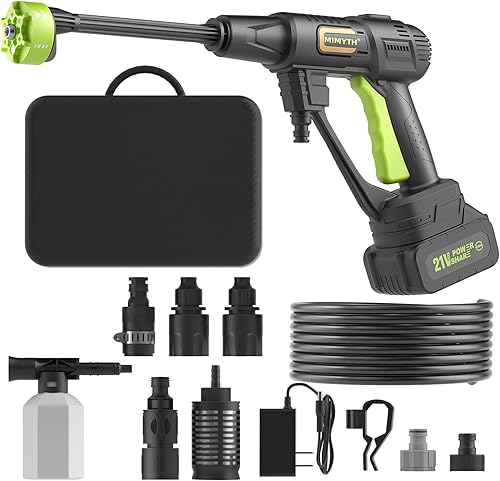
4. MIMYTH Cordless Pressure Washer (990 PSI)
This is the premium cordless pick. The 990 PSI is noticeably stronger, and the 40-minute battery life is a game-changer. The fact it comes with a foam pot, extra hose, and a storage case makes it a complete kit. If you’re serious about portable cleaning and want the closest thing to a corded washer’s power, this is it. Worth the extra cost.
- Highest PSI in the cordless category
- Exceptional 40-minute battery life
- Complete accessory kit included
- Heavier than basic models due to large battery
- Premium price point

5. PYJ Smart Toilet (Pressure-Independent)
This is a fascinating niche solution. If you have a bathroom with chronically low pressure that you can’t easily fix, a pressure-independent smart toilet bypasses the problem entirely. It’s a big investment, but it guarantees a powerful flush every time, regardless of your home’s plumbing woes. Installation is complex—factor in a plumber’s cost.
- Completely solves low-pressure toilet issues
- Full automation and modern features
- Very high upfront cost
- Requires professional installation
- Not a whole-house pressure solution
Frequently Asked Questions
- What is the normal household water pressure?
- The ideal range is 40-80 PSI. Most homes are comfortable around 50-60 PSI. Below 40 PSI is considered low, and above 80 PSI is high and potentially damaging to your plumbing system and appliances.
- How do I check my home’s water pressure?
- Buy a simple water pressure gauge (about $12). Screw it onto an outdoor hose bib or washing machine cold water tap. Turn the tap on fully. The gauge will show your static pressure in PSI. Test at different times of day.
- Why is my water pressure low only in the shower?
- This is usually a localized issue. The most common culprits are a clogged showerhead aerator, a kinked shower hose, or a partially closed shut-off valve. It could also be a failing shower water filter restricting flow.
- Can a water filter reduce my water pressure?
- Yes, all filters create some flow restriction. The degree depends on the filter type and its condition. A clogged sediment filter or an undersized whole-house unit can cause a significant pressure drop. Always match the filter’s flow rate (GPM) to your household’s peak demand.
- Is 100 PSI too high for a house?
- Absolutely. 100 PSI is too high and will cause premature wear on valves, seals, and appliances like your water heater and dishwasher. It also wastes water. You should install or adjust your pressure reducing valve (PRV) to bring it down to 60-70 PSI.
- Do I need a booster pump or a new pressure regulator?
- It depends on your problem. If your pressure is consistently low (80 PSI) or fluctuates wildly, you need to service or replace your pressure regulator. Test first.
Final Thoughts
Household water pressure isn’t glamorous, but it’s fundamental. It affects everything from your shower enjoyment to the lifespan of your expensive appliances and filtration systems. Don’t ignore the signs—weak flow, banging pipes, or inconsistent pressure. A $12 gauge and an hour of diagnosis can save you thousands in future repairs.
Our honest take? Start with the basics. Clean your aerators. Test your pressure. If it’s high, get a PRV adjusted or replaced. If it’s chronically low and widespread, invest in a quality booster pump. For most homes, that’s the entire game. Get the pressure right, and every other water system in your house will work better.
