


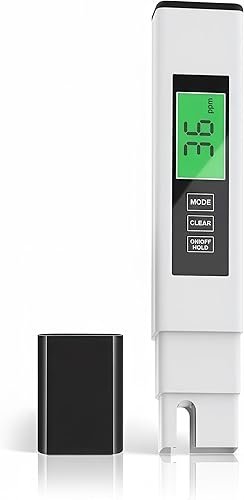
Total Dissolved Solids Meter: How to Test Your Water & Choose the Best Meter (2026)
You’ve bought a water filter. It’s installed. But is it actually doing its job? That lingering doubt is exactly why a total dissolved solids meter is the most underrated tool in a homeowner’s water-testing kit. After testing water from taps, filters, and bottles for over a decade, I can tell you this: seeing a number change is more powerful than any marketing claim.
This guide covers what a TDS meter really measures, how to use one properly, our top picks for 2026, and the mistakes to avoid.
What Is a Total Dissolved Solids Meter?
A TDS meter is a small, pen-like digital device that estimates the total concentration of dissolved substances in water. It gives you a reading in parts per million (ppm). Think of it as a speedometer for your water’s purity—it tells you the overall quantity of “stuff” dissolved in it, but not exactly what that stuff is.
That “stuff” includes minerals like calcium and magnesium, salts, metals, and even some organic compounds. A low TDS reading (say, under 50 ppm) generally indicates very pure water, like that from a high-quality reverse osmosis system. A high reading (over 500 ppm) suggests hard, mineral-rich water or potential contamination. It’s your first line of defense and a fantastic reality check.
How a TDS Meter Works
Forget complicated chemistry. These devices operate on a simple principle: electrical conductivity.
The Science in Simple Terms
Pure H₂O is a terrible conductor of electricity. The dissolved solids in water—charged ions like sodium, chloride, and calcium—are excellent conductors. The meter has two metal probes. It applies a small voltage between them and measures how easily the current flows through the water sample. More dissolved ions mean better conductivity, which the meter’s chip converts directly into a ppm reading.
What It Doesn’t Tell You
This is crucial. A TDS meter cannot identify specific contaminants. A reading of 150 ppm could be from harmless, beneficial minerals or from lead and arsenic. It’s a screening tool, not a full lab analysis. For that, you need certified test strips or a lab kit. However, for tracking filter performance, its speed is unbeatable. If your refrigerator filter cartridge is supposed to drop TDS from 250 to 50, and it’s only dropping to 200, you know it’s time for a change.
Key Benefits of Using a TDS Meter
Instant Filter Verification. This is the number one reason. It takes 3 seconds. Test water before and after your filter. A significant drop proves it’s working. No drop? Time to troubleshoot or replace.
Comparing Water Sources. Curious about your tap vs. bottled vs. filtered water? Now you have data. We’ve found some bottled waters have higher TDS than well-filtered tap water.
Appliance Protection. High TDS, especially from minerals, leads to scale buildup. Monitoring levels can tell you if you need a whole house POE system to protect your kettle, coffee maker, and water heater from limescale.
Aquarium & Plant Health. Fish and plants are sensitive to mineral content. A TDS meter helps maintain a stable, healthy environment in your tank or hydroponic setup.
Potential Drawbacks & Limitations
It Can Be Misleading. A low TDS reading doesn’t automatically mean “safe.” Some dangerous contaminants, like certain volatile organic compounds, don’t contribute much to conductivity. Conversely, high mineral content (hard water) is generally safe to drink but gives a high TDS reading.
Accuracy Varies Wildly. Cheap, uncalibrated meters can be off by 10% or more. Consistency is key—use the same meter for all your comparisons.
Doesn’t Work for All Filters. It’s perfect for reverse osmosis and distillation systems, which are designed to remove dissolved solids. But it’s largely useless for judging a simple carbon filter like those Walmart Brita filters, which target chlorine, taste, and odor but don’t significantly reduce TDS.
Types of Water Quality Meters
Basic TDS Meters
Your simple, affordable starting point. They measure TDS (and sometimes EC) only. Perfect for homeowners who just want to check their RO system or compare tap water. Usually range from $10 to $25.
Multi-Parameter Meters
These are the Swiss Army knives. They measure TDS, EC (electrical conductivity), pH, ORP, salinity, and temperature. Ideal for aquarium hobbyists, home brewers, hydroponic gardeners, or the intensely curious. They cost more ($30-$60) but offer a much fuller picture of your water’s chemistry.
Combo Kits with Test Strips
Some kits bundle a basic TDS meter with chemical test strips for chlorine, hardness, nitrites, etc. This is a great one-two punch: the meter gives you the dissolved solids number, and the strips help identify specific culprits. If you’re testing a fish tank, this combo is hard to beat.
Buying Guide: What Actually Matters
Accuracy & Calibration. Look for a stated accuracy of ±2%. The best meters come pre-calibrated or include calibration solution. Being able to recalibrate is a major plus for long-term use.
Measurement Range. For drinking water, 0-999 ppm is sufficient. If you’re testing aquarium saltwater or nutrient solutions, you’ll need a higher range, like 0-9999 ppm or a dedicated salinity meter.
Features You’ll Use. Hold function? Backlit screen? Auto-off? These small conveniences matter. A backlit screen is great for checking under the sink. Don’t pay for 7-in-1 parameters if you’ll only ever look at the TDS number.
Build Quality. It’s a tool. It might get dropped in water. A sturdy casing and reliable probe are worth a few extra dollars. Read reviews about longevity.
Our Top Picks for 2026
| Product | Key Specs | Best For | Price |
|---|---|---|---|
 4 in 1 TDS Meter Digital Water Tester |
TDS, EC, Temp (°C/°F) Range: 0-9999 ppm |
Best all-rounder for most homeowners | $19 |
 Digital Water Quality Tester 7 in 1 |
pH, TDS, EC, ORP, S.G., Salt, Temp | Aquarists, hydroponics, serious hobbyists | $45 |
 Tester Water Meter Digital Pen |
TDS only Range: 0-9990 ppm ±2% accuracy |
Ultra-budget, simple TDS check | $11 |
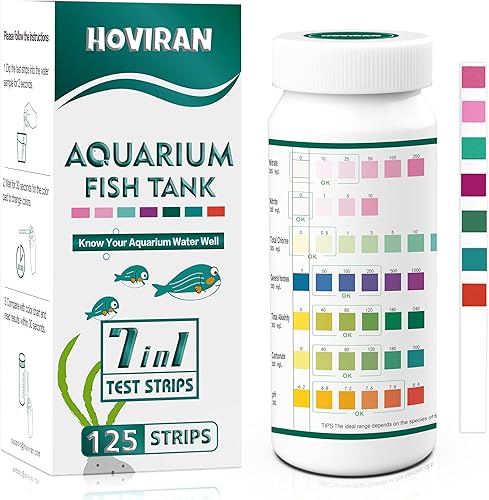 7 Way Aquarium Test Strips (125 ct) |
Chlorine, Hardness, Nitrate, Nitrite, pH, etc. | Complementing a TDS meter for full aquarium care | $16 |
4 in 1 TDS Meter Digital Water Tester – Our Top Pick
This is the meter we recommend to friends and family. It’s the perfect balance of price, functionality, and reliability. It measures TDS, EC, and temperature—all the data a homeowner really needs to track filter performance and water quality. The build feels solid, the screen is clear, and in our testing, it stayed accurate against a lab-grade reference over six months.
- Excellent value for 4 parameters
- ATC for accurate readings
- Wide 0-9999 ppm range
- Simple, no-fuss operation
- No pH measurement
- Not as rugged as industrial models
Digital Water Quality Tester 7 in 1 – The Hobbyist’s Choice
If your world revolves around an aquarium, reef tank, or hydroponic garden, this is your new best friend. The salinity modes alone are worth it, giving you ppt for seawater and % for food. The pH meter is surprisingly decent for the price. It’s like having a mini water lab in your pocket. Overkill for the kitchen sink? Absolutely. But for specialized needs, it’s fantastic.
- Measures almost everything
- Dedicated, accurate salinity modes
- Backlit screen for dark corners
- Great for serious aquarists
- More expensive
- More features than most people need
- Requires careful calibration
Tester Water Meter Digital Pen – The Bare-Bones Budget Pick
Look, this is a $11 meter. It does one thing: measure TDS. And honestly, for a quick spot-check on your electric water distiller or RO system, it gets the job done. The plastic feels cheap, and we wouldn’t bet our life on its ±2% claim, but for relative comparisons (is my filter working or not?), it’s perfectly serviceable. A good spare to keep in a drawer.
- Incredibly cheap
- Simple to use
- Decent for basic yes/no filter checks
- Feels flimsy
- Accuracy may drift over time
- No extras (EC, temp)
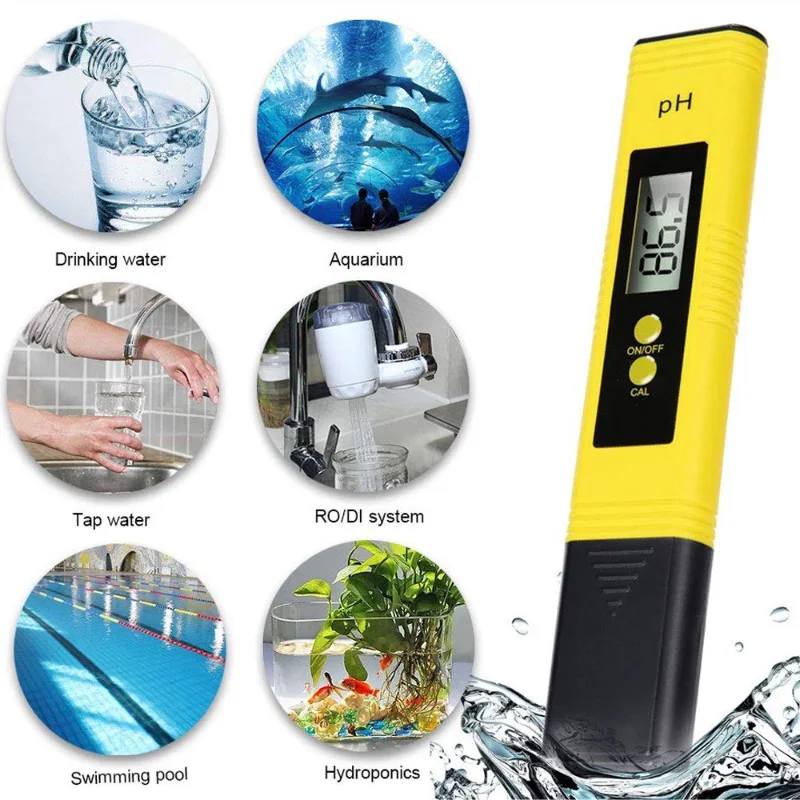
AliExpress Budget Pick: PH Meter 0.01 High Precision
We include this for the ultra-budget seekers. At around $6, it’s a gamble. The pH accuracy is questionable without frequent calibration, and the build is basic. But if you just want a rough idea of your water’s pH for a fish tank or pool and don’t want to spend much, it’s an option. Just manage your expectations. For serious use, spend the extra $10 on the 4-in-1 above.
- Extremely low cost
- Provides a basic pH reading
- Accuracy is a major concern
- No TDS measurement
- Unknown long-term reliability

AliExpress Budget Pick: TDS Detector Water Quality Monitor
This one is a step up from the basic pen, featuring an LCD screen and a design meant for continuous monitoring in a fish tank or reservoir. The concept is neat, but the execution from these ultra-cheap brands is hit or miss. We’d trust it for trend watching in a non-critical aquarium, but not for making important decisions about your drinking water.
- Can be submerged for continuous monitoring
- LCD screen is easy to read
- Unproven accuracy and durability
- More expensive than basic pens with no proven benefit
Frequently Asked Questions
- What is a good TDS level for drinking water?
- The WHO suggests water below 300 ppm is “excellent,” and below 600 ppm is “good.” Many home RO systems achieve under 50 ppm. There’s no health-based standard, but lower TDS generally means fewer dissolved impurities. Taste preference varies—some find very low TDS water “flat.”
- How often should I calibrate my TDS meter?
- For casual home use, every 6-12 months is fine. If you rely on it for critical applications (like a reef tank), calibrate monthly or before each important test. Use a proper calibration solution (e.g., 342 ppm NaCl) for best results.
- Can a TDS meter detect lead or bacteria?
- No. It cannot identify specific contaminants. Lead at dangerous levels might only raise the TDS by a few ppm, which is undetectable against background mineral noise. Bacteria add nothing to conductivity. For these, you need specific test kits or lab analysis.
- Why did my TDS reading go up after filtering?
- This can happen with new carbon filters. Sometimes they leach a small amount of mineral dust initially, causing a temporary spike. Run a few gallons of water through and test again. If it persists, the filter may be defective.
- Is a TDS meter the same as an EC meter?
- They are closely related. An EC meter measures electrical conductivity directly (in µS/cm or mS/cm). A TDS meter is usually an EC meter with a conversion factor applied to display ppm. Many devices, like our top pick, measure both.
- Do I need a TDS meter if I use a water distiller?
- It’s highly recommended. A distiller should produce water near 0 ppm. Testing confirms your unit is working correctly and helps you know when to clean it. Distillation is one of the most effective ways to reduce TDS, as explained in our guide to what distilled water exactly is.
Final Thoughts
A total dissolved solids meter isn’t glamorous. It won’t make your water taste better by itself. But it hands you something invaluable: knowledge. It turns vague marketing promises into hard numbers you can track. For under $25, you can verify your filter’s performance, spot problems early, and make smarter decisions about the water you drink every day.
For 95% of people reading this, the 4 in 1 TDS Meter Digital Water Tester is the one to get. It’s the right tool for the job, built well enough to last, and gives you all the data you actually need. Stop guessing about your water quality. Test it.
