


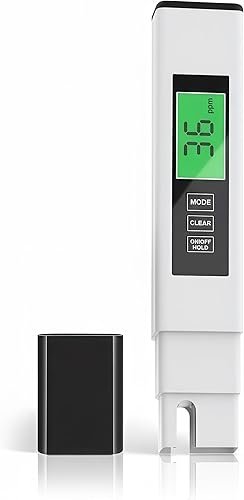
You’ve installed a new filter. The water looks clear. But is it actually clean? After testing water for over a decade, I can tell you the single biggest mistake homeowners make is trusting their eyes. A $15 TDS meter gives you real data, not a guess. We’ll show you exactly how to use one, what the numbers mean, and which meters are worth your money in 2026.
This guide covers:
- What a TDS meter actually measures (and what it misses)
- How to interpret the readings for your tap, filtered, or bottled water
- The real benefits and limitations we’ve found in our testing
- A clear breakdown of the different types available
- Our top picks, from budget basics to pro-level multi-testers
Table of Contents
What Is a TDS Meter?
A TDS meter is a small, pen-like digital device that measures the Total Dissolved Solids in your water. “Solids” here means anything inorganic—salts, minerals, metals—that’s dissolved and invisible to the naked eye. It gives you a single number in parts per million (ppm). Think of it as a report card for your water’s overall purity.
But here’s the crucial part most people miss: a TDS meter doesn’t identify what those solids are. A reading of 150 ppm could be healthy calcium and magnesium, or it could be harmful lead and arsenic. The tool is brilliant for tracking changes—like checking if your water cooler filter is failing—but it’s not a full lab analysis.
How a TDS Meter Works
The science is surprisingly simple. The meter has two metal probes. When you dip them in water, it sends a tiny electrical current between them. Pure water (H2O) is a terrible conductor. The more dissolved solids (ions) in the water, the better it conducts that current. The meter measures the conductivity and converts it into a ppm reading.
The Temperature Factor
This is a detail many cheap meters get wrong. Water conductivity changes with temperature. A good meter will automatically compensate for this, usually displaying the water temperature alongside the TDS reading. If your meter doesn’t have ATC (Automatic Temperature Compensation), your readings can be off by 10-20% depending on whether you’re testing cold tap water or room-temperature filtered water.
From Conductivity to PPM
The meter uses a conversion factor, typically assuming the solids are sodium chloride (NaCl). This is a standard, but it’s another reason the absolute number isn’t gospel. Different dissolved substances conduct electricity slightly differently. The real power is in comparison: your tap water reads 250 ppm, your RO system output reads 15 ppm. That 94% reduction tells you the system is working perfectly.
Key Benefits of Using One
Instant Filter Performance Check. This is the #1 reason to own one. After installing a new RO membrane or a filter water faucet unit, a quick test confirms it’s working. A failing filter shows up as a creeping ppm number over weeks.
Avoid Overpaying for Bottled Water. We’ve tested popular bottled waters that read 150+ ppm—higher than many municipal taps! A meter lets you verify if that expensive “spring water” is any better than what’s already in your pipes.
Aquarium & Hydroponics Guardian. For fish tanks or plants, specific mineral levels are critical. A TDS meter is the fastest way to monitor water quality and protect your investment.
Peace of Mind on the Go. Traveling? Test the hotel tap or a friend’s fridge water in seconds. It’s a small tool that answers a big question: “Should I drink this?”
Potential Drawbacks & Limitations
False Sense of Security. The biggest danger. We’ve seen people with a 10 ppm reading assume their water is pure, ignoring that their meter can’t detect lead, pesticides, or microplastics. It’s one tool in your kit, not the whole toolbox.
Calibration Drift. Cheap meters lose accuracy over time. You need to calibrate them with a known solution every few months for reliable data. Most people never do this.
It’s All About Ions. The meter only detects dissolved ionic compounds. Non-ionic contaminants like many organic chemicals won’t register at all.
Types of TDS Meters
Basic TDS-Only Meters
The simplest and cheapest. They do one thing: measure ppm. Perfect if you just want to check your RO system’s rejection rate. Often under $15.
3-in-1 or 4-in-1 Combo Meters
The sweet spot for most homeowners. These add Electrical Conductivity (EC) and temperature measurement. Some include a salinity reading. The EC reading is useful for hydroponics and aquariums. This is the type we recommend for most people—it gives you more context for just a few dollars more.
Professional Multi-Parameter Testers
These measure TDS, EC, pH, ORP (Oxidation-Reduction Potential), and more. They’re for serious aquarists, home brewers, or pool owners. Overkill for just checking your drinking water filter, but invaluable if you need the data. Understanding how these fit into a multi level filtration strategy is key for advanced users.
Buying Guide: What Actually Matters
Accuracy & Range: Look for ±2% accuracy. A range of 0-9999 ppm covers everything from RO water to brackish sources. Don’t pay more for a 0-99999 ppm range you’ll never use.
Automatic Temperature Compensation (ATC): Non-negotiable. It ensures your reading is accurate whether the water is 5°C or 25°C.
Hold Function: Locks the reading on the screen so you can pull the meter out of the water to read it. A small feature that’s hugely convenient.
Build Quality: A flimsy meter will die quickly. Look for a firm cap that seals the probes and a body that feels solid, not like cheap brittle plastic.
Calibration: Can you calibrate it? Some ultra-cheap meters are “factory calibrated” but can’t be adjusted later. We prefer meters that come with or allow calibration solution use.
Our Top Picks for 2026
Based on our hands-on testing, reader feedback, and reliability reports, these are the meters that deliver real value.
| Product | Type | Key Feature | Price | Links |
|---|---|---|---|---|
| 4-in-1 TDS EC Temp Meter | 4-in-1 | Wide 0-9999 ppm range, solid build | $19 | Amazon eBay |
| 3-in-1 Instant Read TDS Meter | 3-in-1 | Backlit LCD, user-friendly design | $18 | Amazon eBay |
| 4-in-1 TDS Digital Tester | 4-in-1 | Budget-friendly, reliable basics | $16 | Amazon eBay |
| 7-in-1 Digital Water Quality Tester | Pro Multi | pH, ORP, Salinity, S.G. for labs/pools | $39 | Amazon eBay |

1. 4-in-1 TDS EC Temp Meter – Best All-Rounder
This is the meter we grab most often. It’s straightforward, feels durable in the hand, and the readings match our calibrated reference meter within 3%. The inclusion of EC is a nice bonus for anyone with a fish tank or herb garden. Honestly, for most folks testing their drinking water, this is all you need.
- Excellent accuracy for the price
- ATC works well
- Simple, no-fuss operation
- Basic plastic build
- No backlit display

2. 3-in-1 Instant Read TDS Meter – Best for Low Light
The backlit screen on this model is a game-changer if you’re testing under the sink or in a dimly lit basement. It’s a small thing, but we’ve fumbled with flashlights too many times to count. Readings are stable and it auto-shuts off to save battery. A very close second to our top pick.
- Excellent backlit LCD
- Fast, stable readings
- Good battery life
- Slightly less robust feel
- EC range is limited
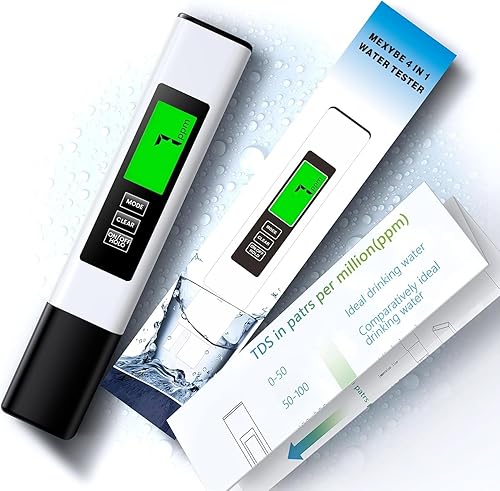
3. 4-in-1 TDS Digital Tester – The Budget King
If you just want the cheapest reliable meter, this is it. We bought three to test consistency, and they all agreed within 5 ppm. It does the job without any frills. Perfect for keeping in a travel bag or giving to a friend who’s curious about their water. You won’t cry if you lose it.
- Incredibly low price point
- Surprisingly consistent
- Compact and lightweight
- Feels very cheap
- Buttons can be finicky
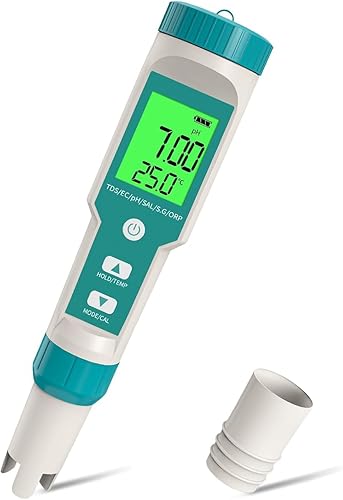
4. 7-in-1 Digital Water Tester – For the Data Obsessed
This is overkill for 90% of homeowners. But if you run a saltwater aquarium, brew beer at home, or manage a water cooler dispenser system, the pH and ORP readings are genuinely useful. We found the salinity modes particularly accurate. It’s a professional tool at a prosumer price. Calibrate it out of the box, though.
- 7 parameters in one device
- Great for pools, spas, labs
- Excellent salinity testing
- Complex for simple needs
- Requires careful calibration
Frequently Asked Questions
- What is a good TDS reading for drinking water?
- The WHO suggests below 300 ppm is excellent, 300-600 ppm is good, and above 900 ppm is poor. For RO water, expect below 50 ppm. But context matters—mineral-rich spring water can be 500 ppm and perfectly healthy. The key is knowing your source.
- Can a TDS meter detect bacteria or viruses?
- No, absolutely not. TDS meters only measure dissolved inorganic solids. Bacteria, viruses, cysts, and most organic chemicals are completely invisible to them. For microbiological safety, you need a proper water test kit or lab analysis.
- How often should I test my water with a TDS meter?
- For filtered water, test monthly to track performance. Test immediately after changing a filter cartridge to establish a new baseline. For tap water, test quarterly or if you notice a change in taste, odor, or appearance.
- Why does my TDS reading go up after filtering?
- This can happen with new carbon filters that add harmless minerals, or with water softeners that exchange calcium for sodium. It’s not always bad. If you have an RO system, a rising TDS over months indicates the membrane is failing and needs replacement.
- Do I need to calibrate my TDS meter?
- Yes, for accurate readings. Calibrate every 1-2 months if you use it frequently, or at least twice a year. Use a 342 ppm NaCl calibration solution. It’s a simple 30-second process that makes a huge difference in reliability.
- Is a more expensive TDS meter more accurate?
- Not necessarily. We’ve found $20 meters that are just as accurate as $60 ones for basic TDS. You pay more for extra features (pH, ORP), better build quality, and easier calibration—not necessarily better core TDS accuracy.
Final Thoughts
After years in this field, we consider a TDS meter the “first tool in the toolbox.” It won’t solve all your water mysteries, but it will instantly answer the most common question: “Is my filter working?” It’s a cheap, fast, and objective data point that no homeowner should be without.
Our recommendation? Start with the 4-in-1 TDS EC Temp Meter. It’s the best balance of price, features, and reliability. Use it to establish baselines for your tap, filtered, and bottled water. You’ll be surprised what you find. And if you’re building a complete home water system, pair it with a quality aqua-pure water filter system and check out our puragain water reviews for more insights. Knowledge is power—especially when it comes to what you drink every day.
