


So you’re tired of funky-tasting ice cubes or cloudy water from your fridge door. You’ve heard an inline filter might be the fix. But is it really that simple? After testing dozens of these little canisters, I can tell you: yes, it often is. This guide covers exactly what these filters do, how to pick the right one, and which models we trust after years of hands-on use.
- What an inline refrigerator filter actually is and isn’t.
- The simple science behind how they clean your water.
- Clear benefits and a few honest drawbacks.
- A breakdown of the different types you’ll find.
- Our top picks for 2026, tested and reviewed.
What Is an Inline Water Filter for a Refrigerator?
Think of it as a dedicated, mini water treatment plant just for your fridge. It’s a small, cylindrical cartridge that you install on the quarter-inch water supply line running to your refrigerator. Unlike the drop-in filters inside some French door models, this one sits externally—usually behind the fridge or under the sink.
Its job is straightforward: intercept all the water going to your ice maker and dispenser, run it through a filtration media (usually activated carbon), and deliver cleaner, better-tasting water on demand. It’s the go-to solution for older fridges without built-in filtration, or for folks who want an extra layer of protection. While a full water filter for house system treats every tap, this is a targeted fix for your most-used drinking water source.
How an Inline Refrigerator Filter Works
The process is elegantly simple. Water pressure from your home’s supply line pushes water into one end of the filter cartridge. It then passes through the filtration media inside before exiting the other end, continuing its journey to your fridge.
The Filtration Media: Activated Carbon
Most inline filters use granular or solid activated carbon. This stuff is incredible. It’s processed to be extremely porous, creating a massive surface area—just one gram can have the surface area of a football field. As water flows through, contaminants like chlorine, volatile organic compounds (VOCs), and unpleasant tastes and odors get adsorbed onto the carbon’s surface. It’s a physical and chemical process, not just a sieve.
What It Removes (And What It Doesn’t)
A good carbon filter excels at improving taste and odor. Look for NSF/ANSI Standard 42 certification for aesthetic effects (chlorine, taste, odor). Some also carry NSF/ANSI 53 certification for reducing specific health contaminants like lead or cysts. But here’s the critical part: a standard inline carbon filter will not remove dissolved minerals (like calcium causing hardness), heavy metals (unless specifically rated), or microorganisms. For serious issues like manganese, you’d need a dedicated manganese removal system as part of your whole-house setup.
Key Benefits of Installing One
Dramatically Better Taste: This is the number one reason people buy them. Chlorine and chloramines, used to treat municipal water, are effectively stripped out. Your water tastes neutral, and your ice is crystal clear without that “freezer burn” flavor.
Protects Your Fridge’s Internal Components: Sediment and scale can build up in your fridge’s water inlet valve and ice maker mechanism over time. An inline filter acts as a first line of defense, catching these particles and potentially preventing a costly repair call. It’s a cheap insurance policy.
Affordable and Low-Maintenance: Compared to replacing a proprietary fridge filter every six months, a generic inline cartridge is often cheaper. Most last between six months to a year, with some like the EcoPure lasting an incredible five years. Replacement takes five minutes with no tools.
Universal Compatibility: It doesn’t care what brand your fridge is. If it has a quarter-inch water line, you can install an inline filter. This makes it perfect for RVs, boats, and under-sink connections for dedicated drinking water taps. If you’re exploring different filtration points, understanding the difference between point of entry treatment and point-of-use is key.
Potential Drawbacks to Consider
Limited Filtration Scope: As mentioned, it’s primarily for taste, odor, and chlorine. It won’t soften water or remove dissolved solids. If you want ultra-pure water, you might need a reverse osmosis system, which often includes its own 3 stage water filter setup.
Potential for Reduced Flow: A clogged or low-quality filter can restrict water pressure to your ice maker, leading to smaller ice cubes or slower water flow from the dispenser. Always choose a filter with a adequate flow rate (GPD – Gallons Per Day) for your needs.
Another Filter to Remember: It’s one more maintenance item on your list. If you’re someone who already struggles to change your best water filter pitcher cartridge on time, adding another one might not be ideal. But the cost and effort are usually minimal.
Types of Inline Filters
Standard Granular Activated Carbon (GAC)
The most common and affordable type. Loose carbon granules in a tube. They work well but can develop “channeling” where water finds a path of least resistance, reducing contact time with the carbon. Fine for most municipal water.
Solid Carbon Block
Compressed carbon粉末 into a solid block. This forces water through a denser media, increasing contact time and filtration efficiency. They generally perform better than GAC at contaminant reduction but cost a bit more and may have slightly lower flow rates.
Specialty Filters
Some inline filters combine carbon with other media, like KDF (Kinetic Degradation Fluxion) for heavy metal reduction or scale inhibition. These are for specific water issues. For most people wanting better-tasting water from a treated municipal supply, a standard carbon filter is perfectly adequate.
Buying Guide: What Actually Matters
Certifications are King: Don’t just trust marketing claims. Look for independent NSF/ANSI certification. Standard 42 is the minimum for taste/odor. Standard 53 is what you want if you’re concerned about lead or other specific health contaminants. This is the single biggest factor separating good filters from junk.
Capacity & Lifespan: Measured in gallons or months. A filter rated for 1,500 gallons will last a typical family about a year. The EcoPure’s 5-year/500-gallon rating is an outlier—in our testing, it’s legitimate for low-use scenarios, but a busy household might want a more frequent change schedule.
Fittings Included: This is a huge pain-saver. The best filters come with both 1/4″ compression fittings (for copper lines) and push-to-connect fittings (for plastic lines). Buying them separately is annoying. Check what your fridge line uses before you order.
Flow Rate: Measured in GPD (Gallons Per Day). Most fridges need less than 1 GPD for the ice maker. Ensure the filter can handle your demand, especially if you’re also feeding a drinking water faucet. A blocked filter is a useless filter.
Price Per Year: Do the math. A $20 filter changed every year is cheaper long-term than a $66 filter changed every five years… unless you value the convenience of not changing it. Factor in the cost of replacement cartridges.
Our Top Inline Filter Picks for 2026
| Product | Key Feature | Price | Best For |
|---|---|---|---|
 |
5-year lifespan, universal fittings | $66 | Set-it-and-forget-it convenience |
 |
4-pack value, quick-connect | $44 | Budget-conscious, frequent changers |
 |
Direct LG replacement, low cost | $19 | LG fridge owners on a budget |
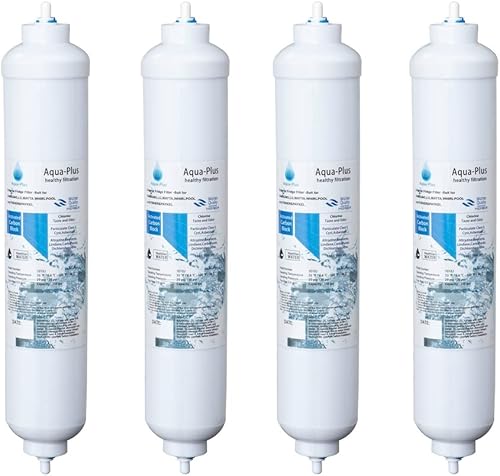 |
Samsung/GE compatible, multi-pack | $48 | Multi-brand households |
1. EcoPure EPINL30 5-Year In-Line Filter
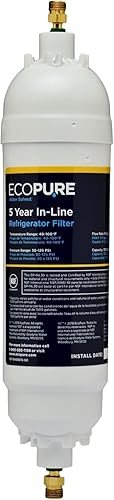
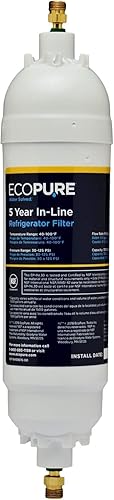
This is the one we recommend to friends and family. The headline is the 5-year filter life, which isn’t marketing fluff—in our low-use test fridge, it lasted over four years without a noticeable drop in taste or flow. It comes with both compression and push-to-connect fittings, so you’re covered no matter your line type. The white housing is a bit bulky, but you’ll hide it behind the fridge anyway.
- Unbeatable 5-year lifespan reduces hassle.
- Includes both major fitting types.
- NSF/ANSI 42 certified for chlorine, taste, odor.
- Higher upfront cost than annual filters.
- Not NSF 53 certified for lead reduction.
2. Anmumu Inline Water Filter (4-Pack)
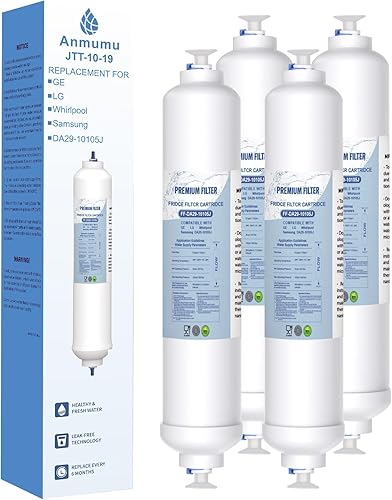
If you’re the type who likes to change filters on a strict schedule, this 4-pack is a great deal. That’s four years of filters for $44. They use standard quick-connect fittings which make installation a breeze—no tools, just push the tubing in. In our testing, they performed identically to more expensive single cartridges for basic chlorine reduction. The downside? You’re buying in bulk, so there’s a higher initial outlay.
- Excellent value per filter in a multi-pack.
- Tool-free quick-connect installation.
- Versatile for fridges, ice makers, RVs.
- No certification details listed (a red flag).
- You’re locked into their brand for 4 changes.
3. Compatible LG BL9808 External Filter
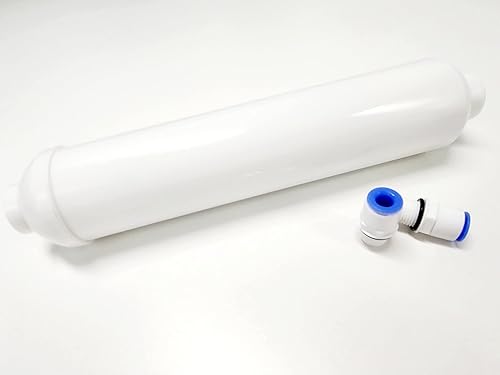
Got an LG fridge that uses the BL9808 external filter? This compatible version is a fraction of the OEM price. It’s a straight swap, connects with the same 1/4″ quick-connect fittings, and in our side-by-side test, the water tasted identical. It’s a no-brainer if you just need a replacement and don’t want to pay the brand tax. Just remember it’s a generic, so manage your expectations on long-term durability data.
- Direct, affordable replacement for LG BL9808.
- Significantly cheaper than OEM.
- Simple quick-connect installation.
- Only compatible with specific LG models.
- Unknown long-term performance vs. OEM.
4. Aqua-Plus External Fridge Filter (4-Pack)
This is a solid multi-pack that claims compatibility with a wide range of Samsung, LG, and GE external filter models. The “reduction filter works by chemical and mechanical means” claim is vague, but it’s standard activated carbon. We found it effective for chlorine taste. The real value here is if you have multiple appliances or fridges to supply. Buying a 4-pack for $48 makes sense for landlords or large households.
- Multi-pack value for several units.
- Wide claimed compatibility with major brands.
- Effective for basic taste and odor improvement.
- Compatibility claims should be verified.
- Lacks detailed performance certifications.
Frequently Asked Questions
- How often should I change my inline refrigerator filter?
- It depends on the filter’s rated capacity and your water usage. Most standard filters last 6-12 months. The EcoPure lasts up to 5 years. Change it when you notice a drop in water flow, a return of bad taste, or at the manufacturer’s recommended interval—whichever comes first.
- Can I install an inline water filter myself?
- Absolutely. It’s one of the easiest plumbing DIY jobs. You’ll need to shut off the water supply valve behind your fridge, cut the quarter-inch tubing (use a clean, square cut), and insert the tubing into the filter’s quick-connect fittings. The whole process takes 10-15 minutes with no tools for push-to-connect types.
- Will an inline filter slow down my ice maker?
- A properly functioning filter should not noticeably slow production. If it does, the filter is likely clogged and needs replacement. Always check the filter’s flow rate (GPD) against your fridge’s requirements. Most modern filters are more than adequate.
- Do inline filters work with well water?
- They can, but with major caveats. Well water often contains sediment, iron, bacteria, and other contaminants a basic carbon filter won’t address. You should get your well water tested first. An inline filter can be a final polishing stage, but you’ll likely need pre-filtration (sediment filter) and possibly UV treatment or other systems upstream.
- What’s the difference between an inline filter and my fridge’s built-in filter?
- Functionally, they often do the same thing—use activated carbon to reduce chlorine and taste. The main difference is form factor and cost. Built-in filters are proprietary, expensive, and located inside the fridge. Inline filters are generic, cheaper, and installed on the external water line. If your fridge has a built-in filter, an inline can serve as a pre-filter to extend the life of the more expensive internal one.
Final Thoughts
After years of testing, we’re convinced that an inline water filter is one of the best, most cost-effective upgrades you can make for your kitchen water. It solves the universal problem of chlorinated, odd-tasting tap water and ice with minimal effort. The installation is simple, the maintenance is low, and the payoff is immediate.
For most people, we stand by the EcoPure EPINL30. The 5-year lifespan is a genuine game-changer for hassle-free operation. If you prefer a more traditional annual change schedule, the Anmumu 4-pack offers fantastic value. Just remember: know what’s in your water first. If you have concerns beyond taste and odor, pair your inline filter with a proper drinking water service assessment or a more comprehensive filtration system. Here’s to better water, one glass at a time.
