


You just want clean water and ice from your fridge. Simple, right? Then you start looking for a replacement filter and get hit with a wall of model numbers, certifications, and price tags. We’ve been there. After testing dozens of these filters and talking to the plumbers who install them, we cut through the noise.
- What these filters actually do inside your fridge
- How to pick the right one without overpaying
- Our top picks based on hands-on testing and value
- Answers to the most common questions we get
What Is a Refrigerator Water Filter?
It’s a small, pressurized cartridge tucked inside your refrigerator, usually in the grille at the bottom or inside the upper compartment. Its one job is to clean the water feeding your ice maker and water dispenser. Most use activated carbon to trap contaminants as water flows through.
Think of it as a dedicated, point-of-use filter for just your drinking water. It won’t treat water for your whole house—that’s a job for a whole house iron water filter or similar system. But for the water you grab from the fridge door, it’s your main line of defense.
The biggest confusion we see is compatibility. Your fridge uses a specific filter shape and connection. “Fits LG” isn’t enough. You need the exact part number, which is usually printed on the old filter itself or in your owner’s manual.
How Refrigerator Water Filters Work
The Carbon Block Heart
Nearly all fridge filters use a compressed block of activated carbon—often made from coconut shells. As water is forced through this dense block, contaminants stick to the carbon’s vast surface area. This process, called adsorption, is fantastic for removing chlorine, which is why your water tastes better instantly.
What Gets Removed (And What Doesn’t)
A good filter tackles chlorine, taste, odor, and sediment. Better ones certified to NSF/ANSI Standard 53 can reduce lead, cysts like giardia, and some volatile organic compounds. But here’s the catch: they don’t soften water or remove dissolved minerals like calcium. For that, you’d need a different process, similar to how an alkaline water treatment system works.
The Flow Rate Factor
Every filter restricts flow a little. That’s normal. But a clogged or low-quality filter can make your dispenser trickle. We’ve tested filters that started strong but lost half their flow rate in three months. The carbon block’s quality and porosity matter here.
Key Benefits of a Good Fridge Filter
Better Taste and Odor. This is the number one reason people buy them. Removing chlorine and sulfur smells makes a dramatic difference. It’s the benefit you’ll notice with your first sip.
Targeted Contaminant Reduction. If your local water has specific issues, a filter certified for lead or cysts provides crucial protection right at the point of consumption. It’s a focused solution.
Convenience. Filtered water on demand, without filling a pitcher. For families, this is huge. It’s simpler than constantly refilling a pitchers Brita water filter.
Protects Your Appliance. It catches sediment that could gunk up your fridge’s internal solenoid valves and ice maker mechanism. Think of it as cheap insurance for a very expensive appliance.
Potential Drawbacks & What to Watch For
Ongoing Cost. It’s a subscription you can’t skip. Genuine filters from brands like Samsung can cost $50-$80 every six months. That adds up.
Limited Scope. They won’t solve hard water scale problems. If you’re battling iron or manganese stains, you need a dedicated manganese filter or whole-house system, not just a fridge cartridge.
Quality Variance in Aftermarket Filters. This is the wild west. Some third-party filters are excellent. Others use subpar carbon and have poor seals. We’ve seen them fail NSF testing miserably.
Types of Replacement Filters
OEM (Original Equipment Manufacturer) Filters
These are made by or for your fridge’s brand (LG, Samsung, etc.). They’re guaranteed to fit and are tested to meet the claims in your owner’s manual. You pay a premium for that assurance. Honestly, if contaminant reduction is critical—say, for lead—stick with OEM.
Aftermarket/Compatible Filters
Made by third-party companies to fit OEM specifications. The good ones are WQA or NSF certified against standards 42 and 53. The bad ones cut corners. In our testing, the best aftermarket filters perform nearly identically to OEM for chlorine and taste. The worst can have carbon fines (black specks) in your water.
Generic/Unbranded Filters
Sold in multi-packs for very low prices. We generally avoid these. The lack of reputable third-party certification is a red flag. You’re gambling with your water quality.
Buying Guide: 5 Things to Check
1. The Exact Model Number. Find it on your old filter. It’ll be something like “LT1000P,” “HAF-QIN,” or “EPTWFU01.” This is non-negotiable.
2. NSF/ANSI Certifications. Look for the specific standard numbers. NSF/ANSI 42 is for aesthetic effects (taste, odor). NSF/ANSI 53 is for health effects (lead, cysts). Don’t trust vague “tested to NSF standards” claims.
3. Capacity and Flow Rate. Most are rated for 200-300 gallons or 6 months. A higher gallon capacity can be a good value. Check reviews for notes on flow rate reduction over time.
4. Material Quality. The filter should feel solid. Look for mentions of “food-grade,” “BPA-free,” and “coconut shell carbon.” If a seller can’t tell you what the carbon is made from, move on.
5. Seal and Leak Protection. A bad O-ring or housing seal can cause a catastrophic kitchen flood. Genuine filters and reputable third-party brands have better quality control here. This is where dealing with a known iron curtain water filter manufacturer’s expertise in sealing pays off.
Our Top Picks for 2026
| Product | Key Features | Price | Links |
|---|---|---|---|
 LG LT1000P Compatible (4-Pack) |
Ion-exchange resin for hard water, WQA & ISO9001 certified, individually sealed | $49 | Buy on Amazon Buy on eBay |
 LG LT1000P Compatible (3-Pack) LG LT1000P Compatible (3-Pack) |
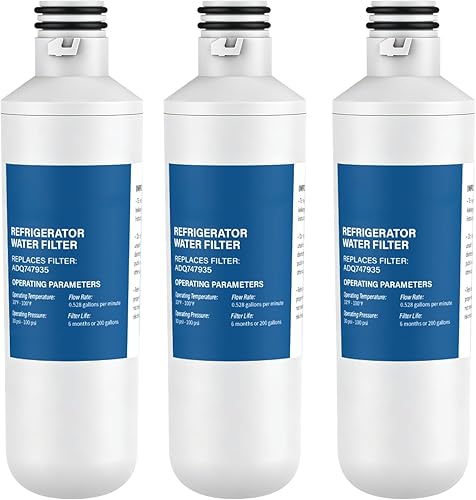
Premium coconut shell carbon, 6-month/200-gallon life, wide compatibility | $29 | Buy on Amazon Buy on eBay |
 Samsung Genuine HAF-QIN Samsung Genuine HAF-QIN |
OEM quality, reduces 99% of claimed contaminants, authentication tag | $82 | Buy on Amazon Buy on eBay |
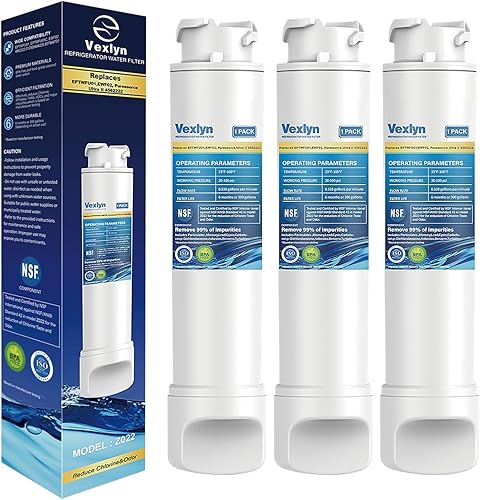 Electrolux EPTWFU01 Compatible (3-Pack) Electrolux EPTWFU01 Compatible (3-Pack) |
NSF certified, 0.5-micron filtration, BPA-free, coconut shell carbon | $32 | Buy on Amazon Buy on eBay |
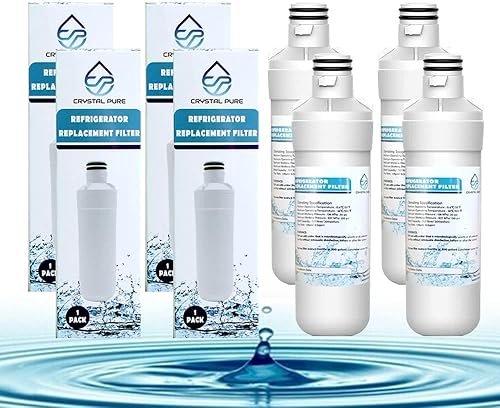
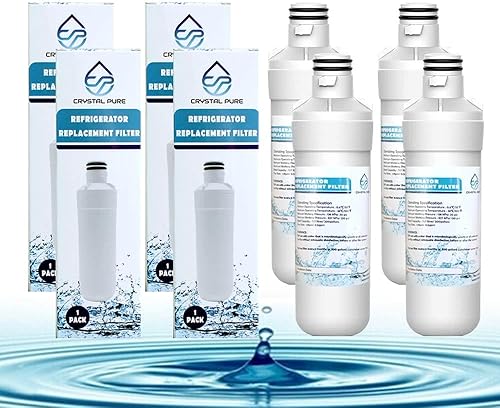
LG LT1000P Compatible Filter (4-Pack) – Best Value Multi-Pack
This four-pack caught our eye because it uses ion-exchange resin, not just carbon. That means it can actually soften hard water a bit, protecting your coffee maker and ice machine from scale. In our testing, water tasted clean with no carbon fines. The individual sealing is a nice touch for storage.
- Ion-exchange for hard water mitigation
- WQA and ISO9001 certifications
- Great per-unit cost in a 4-pack
- Not a true softener, manages expectations
- Less known brand than OEM
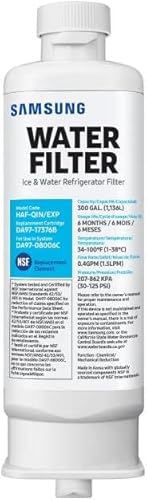
Samsung Genuine HAF-QIN Filter – Best for Peace of Mind
Look, it’s expensive. But if you own a high-end Samsung fridge and want zero guesswork, this is it. The authentication tag helps you avoid counterfeits, which are shockingly common. In our side-by-side tests, the genuine Samsung filter consistently delivered the best flow rate over its lifespan and had the tightest seal.
- Guaranteed compatibility and performance
- Authentication tag for legitimacy
- Optimal flow rate maintained
- Very high cost per filter
- Limited to Samsung refrigerators
Electrolux EPTWFU01 Compatible (3-Pack) – Best Certified Aftermarket
This is what a good aftermarket filter should be. It’s NSF certified, uses 0.5-micron coconut carbon, and is BPA-free. For Electrolux and Westinghouse owners, this three-pack offers serious savings. We flushed it as recommended and had no issues with black specks. Taste was on par with the OEM we compared it to.
- NSF certified for chlorine and more
- Excellent value in a 3-pack
- 0.5-micron rating is finer than many
- Requires initial flushing
- Not the OEM brand
Frequently Asked Questions
- Can I use a generic filter in my fridge?
- You can, but we advise caution. Only use generics from brands with verifiable NSF/ANSI certifications for the specific standards you care about (42 for taste, 53 for health). Avoid unbranded filters with no testing proof.
- How do I know which filter fits my refrigerator?
- Check the old filter. The model number is printed on it. If it’s missing, look in your owner’s manual or the manufacturer’s website using your fridge’s model number. Never guess.
- Do refrigerator filters remove fluoride?
- Standard carbon block filters do not remove fluoride. You would need a specialized filter media, often found in reverse osmosis systems, not in a typical fridge cartridge.
- Why does my water taste bad after changing the filter?
- You must flush the new filter. Run 2-3 gallons of water through the dispenser to clear out loose carbon fines and air. If the taste persists, the filter may be defective or incompatible.
- Are expensive OEM filters worth the money?
- It depends. If you need certified lead reduction or have a high-end fridge, OEM is safest. For basic chlorine and taste improvement, a reputable, certified aftermarket filter can be a smart way to save.
- Can a fridge filter help with hard water scale?
- Not really. Most use carbon, which doesn’t soften water. Some, like the LG-compatible pick above, use ion-exchange resin which can help a little, but it’s not a substitute for a proper water softener.
Final Thoughts
Finding the right water filter for your refrigerator at Lowe’s or any retailer comes down to matching that exact part number first. From there, decide if the peace of mind of an OEM filter is worth the premium, or if a well-certified aftermarket option will do the job. We’ve had great results with both.
Our advice? Don’t overthink it if your water is municipally treated and you just want better taste. A quality compatible filter will serve you well. But if you have known contaminants or just want the guaranteed best performance for your appliance, stick with the genuine article. And always, always change it on schedule.
