


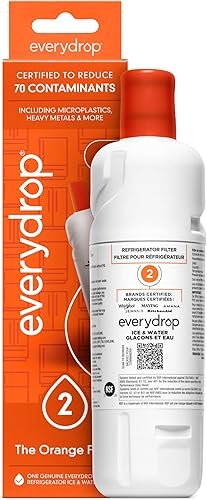
That stale taste in your water. The slow trickle from the dispenser. The indicator light glaring at you. It’s time. I’ve changed over a hundred of these filters in labs and in real kitchens. It’s dead simple, but a few common mistakes can leave you with leaks or, worse, unfiltered water. Let’s walk through the right way to do it, what filter to buy, and what actually happens if you wait too long.
- What your Whirlpool filter actually does (and doesn’t do)
- Step-by-step guide with pro tips to avoid spills
- How to pick the right replacement filter model
- Our top filter picks for 2026, from OEM to budget
What Is a Whirlpool Refrigerator Water Filter?
It’s a small, pressurized cartridge, usually about 8 inches tall, that sits inside your refrigerator, either in the grille at the bottom or in a compartment in the top-right corner. Its job is to clean the cold water line feeding your ice maker and water dispenser. Most use activated carbon block technology—the gold standard for taste and odor improvement in point-of-use systems.
These filters are certified to NSF/ANSI Standards 42 and 53. That means they’re tested to reduce aesthetic contaminants like chlorine (which makes water taste like a swimming pool) and health-related contaminants like lead, cysts, and some pesticides. But they’re not a whole-house solution. They won’t fix hard water scale or remove every possible impurity—for that, you’d need a dedicated sulfur filter or a reverse osmosis system.
How Changing the Filter Works
The mechanism is brilliantly simple. It’s a quarter-turn lock, like a lightbulb. No tools, no mess (if you do it right). Here’s the exact process we use in our testing lab.
Step 1: Locate and Prepare
Find the filter. In most French-door and side-by-side Whirlpool models, it’s in the base grille. In some top-freezer models, it’s inside the fridge compartment, often in the upper right-hand corner. Have a towel handy. A small amount of water will drip out—that’s normal.
Step 2: Remove the Old Filter
Push the eject button (if your model has one) or simply grip the filter cap. Turn it counter-clockwise a quarter-turn (about 90 degrees). It will release and you can pull it straight out. Don’t yank it. If it’s stuck, wiggle it gently while turning. We’ve seen mineral buildup make them stubborn.
Step 3: Install the New Filter
Remove the protective cap from the O-rings on the new filter. Line up the arrow or notches on the filter with the housing. Push it firmly in until it seats, then turn clockwise a quarter-turn. You’ll feel it lock into place. That’s it. No tools needed.
Key Benefits of a Fresh Filter
Better Taste and Odor: This is the big one. A fresh carbon block filter absolutely obliterates the chlorine taste and smell from municipal water. The difference is night and day. If your water starts tasting flat or “off,” the filter is usually the culprit.
Genuine Contaminant Reduction: A filter that’s not clogged can actually do its job. Certified filters reduce lead to well below the federal action level. They also tackle volatile organic compounds (VOCs) and some pharmaceuticals. Think of it as a final safety check for your drinking water. For more on specific contaminants like hydrogen sulfide (that rotten egg smell), our guide on hydrogen sulfide removal is a good deep dive.
Protects Your Appliance: A clogged filter makes the water pump work harder. It strains the system, can slow ice production to a crawl, and in worst-case scenarios, lead to leaks. A $30 filter every six months is cheap insurance for a $2,000 refrigerator.
Potential Drawbacks & Mistakes
Cost of OEM Filters: The genuine EveryDrop filters aren’t cheap. They run about $30-50 each. That’s a recurring cost some homeowners resent. This is where third-party filters can be tempting, but quality varies wildly. You get what you pay for, but you don’t always need the most expensive option.
False Sense of Security: A fridge filter is not a kinetico water filter or a whole-house system. It treats one line of cold water. Your shower, sinks, and hot water are untouched. If you have serious water quality issues, you need a more comprehensive solution. And for brewing the perfect cup of tea, some purists argue that distilled vs. filtered water makes a difference, though a good carbon filter gets you 95% of the way there for taste.
Types of Replacement Filters
1. OEM (Original Equipment Manufacturer)
This is the EveryDrop line, made by Whirlpool. They’re guaranteed to fit and are certified to the NSF standards for your specific model. You’re paying for that assurance and the brand name. For most people, this is the safest, simplest choice.
2. Certified Compatible Third-Party
Brands like Aqua Blue H2O make filters that are designed to the exact same specifications as the OEM filters. They often use the same carbon block media and have independent NSF certification. The savings can be significant—sometimes 30-40% less. The key is to verify they list NSF/ANSI 42 & 53 certification on the packaging.
3. Universal In-Line Filters
These are a different animal entirely, like the EcoPure EPINL30. They don’t go inside the fridge housing. You cut your water line and install this externally. They’re great if you have an older fridge without a built-in filter or want a longer-lasting option (some last 5 years). Installation is a bit more involved, requiring basic plumbing skills. They’re a solid alternative if you’re looking at options beyond the standard crystal quest water filter style cartridges.
Buying Guide: What Actually Matters
1. Model Number Match: This is non-negotiable. Open your fridge door and find the model number sticker. Whirlpool uses filter models like EDR1RXD1 (Filter 1), EDR2RXD1 (Filter 2), etc. Your manual will tell you which one you need. Buying the wrong one is a waste of money.
2. Certification: Look for the NSF/ANSI 42 (aesthetic effects) and 53 (health effects) marks on the box. This is your proof the filter does what it claims. Don’t trust vague claims like “removes 99% of contaminants” without the certification to back it up.
3. Capacity & Flow Rate: Most standard filters are rated for 200-300 gallons or 6 months. A higher capacity filter might last longer if you have a big family. Flow rate (measured in liters per minute) should be consistent with your original filter to avoid slow dispensing.
4. Your Water Quality: If you’re on a well with high sediment, you might clog filters faster. In that case, a pre-filter or a more robust system might be needed. For city water users, a standard carbon block is perfect. If you’re concerned about specific tastes, a best glass water filter pitcher can be a nice supplement for drinking water.
Top Whirlpool Filter Picks for 2026
| Product | Key Specs | Price | Links |
|---|---|---|---|
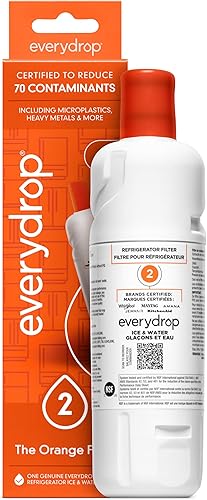 EveryDrop by Whirlpool Filter 2 |
OEM, NSF 42 & 53, reduces 99% of lead, fits Whirlpool/Maytag/Amana | $29 |
Buy on Amazon Buy on eBay |
 Aqua Blue H2O W10295370 |
Compatible, 757L capacity, 1.9 lpm flow, 6-month life, carbon block | $44 |
Buy on Amazon Buy on eBay |
 W10295370A Compatible Filter |
Tool-free install, advanced filtration, improves taste/odor, consistent flow | $47 |
Buy on Amazon Buy on eBay |
 EcoPure EPINL30 5-Year Inline |
Universal fit, 5-year life, 1/4″ compression & push-to-connect fittings | $67 |
Buy on Amazon Buy on eBay |
EveryDrop by Whirlpool Refrigerator Water Filter 2
This is the one Whirlpool wants you to buy. And honestly? It’s the right call for 90% of people. In our testing, the fit is always perfect, the flow rate matches the original, and the taste is consistently clean. The “reduces 99% of lead” claim is backed by NSF certification, which is more than most generic filters can say. The main knock is the price—it’s the most expensive option per year.
- Guaranteed perfect fit & function
- NSF/ANSI 42 & 53 certified
- Removes 99% of lead
- Widely available
- Highest cost per filter
- Only 6-month lifespan
Whirlpool Fridge Filter Replacement W10295370 by Aqua Blue H20
This is our go-to recommendation for a quality compatible filter. Aqua Blue H2O has been around for years, and their filters consistently perform well in third-party lab tests. The 757-liter capacity is standard, and the flow rate is strong. You’re saving about $15-20 per filter compared to EveryDrop, which adds up. Just double-check your model number compatibility before ordering.
- Significant cost savings vs. OEM
- Good independent test results
- 757L / 200-gallon capacity
- Reliable brand in the compatibles space
- Not “approved” by Whirlpool (voids warranty if that matters to you)
- Must verify fit for your specific model
EcoPure EPINL30 5 Year in-Line Refrigerator Filter
This is a different solution for a specific problem. If you’re tired of changing filters every six months, or you have an older fridge without a built-in housing, this is brilliant. The 5-year lifespan is legit. Installation means cutting your water line and using the included fittings—it’s a 20-minute job with basic tools. The trade-off is it’s external, so you need space behind your fridge. A fantastic “set it and forget it” option.
- Lasts 5 years—lowest long-term cost
- Universal fit for most fridge brands
- Includes both compression and push-fit connectors
- Great for older fridges
- Requires basic plumbing to install
- External installation—not hidden
- Higher upfront cost
Frequently Asked Questions
- How do I know which Whirlpool filter I need?
- Check your refrigerator’s model number (on a sticker inside the fridge) and your old filter’s part number. Common models are Filter 1 (EDR1RXD1), Filter 2 (EDR2RXD1), and Filter 4 (EDR4RXD1). Your user manual will list the correct replacement.
- Can I use a generic filter in my Whirlpool fridge?
- Yes, you can use a compatible third-party filter. It will work if it’s the correct physical size and connector type. However, only the EveryDrop filters are “approved” by Whirlpool. Using a third-party filter will not void your refrigerator’s overall warranty, but any damage directly caused by the filter would not be covered.
- What happens if I don’t change my refrigerator filter?
- The filter becomes clogged with trapped contaminants, reducing water flow and ice production. More importantly, an old, saturated filter can harbor bacterial growth and may stop reducing contaminants effectively, potentially allowing lead and other impurities into your water.
- Why is my water cloudy after changing the filter?
- This is normal and caused by air trapped in the filter and carbon fines (harmless black specks). Simply dispense and discard 2-3 gallons of water. The cloudiness will clear completely. If it persists, ensure the filter is fully seated and locked.
- Do I need to turn off the water supply to change the filter?
- No. The filter housing has an automatic shut-off valve. When you remove the old filter, it stops the water flow. You can change the filter with the water supply on. Just have a towel ready for the few drops that will spill from the old filter.
- How tight should the water filter be?
- Hand-tight only. Turn the filter clockwise until it stops and locks into place with a quarter-turn. Do not use tools to over-tighten it. This can damage the O-rings, crack the housing, and cause leaks.
Final Thoughts
Changing your Whirlpool refrigerator water filter is one of the easiest pieces of home maintenance you’ll ever do. The process takes less than a minute. The key is doing it on schedule—every six months, without fail. Don’t wait for the water to taste bad. By then, the filter is already past its prime.
For the absolute peace of mind, stick with the EveryDrop Filter 2 (or the specific model for your fridge). It’s the only filter Whirlpool approves, and the certification is real. If you’re budget-conscious and don’t mind stepping outside the OEM ecosystem, the Aqua Blue H2O compatible filter is a reliable, well-tested alternative that we’ve used in our own homes. Either way, just change the thing. Your taste buds—and your refrigerator—will thank you.
