


The Best Under Counter Water Filter System for Your Kitchen (2026)
After testing dozens of systems and talking to more plumbers than I can count, I can tell you this: an under counter filter is one of the smartest upgrades for your kitchen. It’s not just about taste. It’s about knowing what’s actually in your glass.
This guide breaks down everything you need to know. We’ll cover how they work, the real pros and cons, and which models we’d actually install in our own homes.
What Is an Under Counter Water Filter System?
An under counter water filter system is a dedicated filtration unit that mounts inside the cabinet beneath your kitchen sink. Unlike a simple faucet tap filter, it’s a separate, often multi-stage system that connects to your cold water plumbing. You get filtered water from its own small faucet or, in some cases, from your main tap via a diverter valve.
The whole point is invisibility. No bulky pitcher in the fridge. No adapter hanging off your main faucet. Just clean water, ready when you are. These systems range from simple carbon blocks to advanced reverse osmosis (RO) setups. They’re for people who want better water without the visual clutter.
In our experience, homeowners choose them for three reasons: they’re tired of buying bottled water, they want to remove specific contaminants their local report flagged, or they simply hate the taste and smell of chlorine in their tap water.
How an Under Counter System Works
The principle is straightforward, but the execution varies. Water from your cold supply line enters the filter housing under your sink. It then passes through one or more filtration stages before exiting through a dedicated faucet.
The Installation Connection
A plumber or handy homeowner installs a T-valve on the cold water pipe. This diverts some water to the filter unit. The filtered water then travels up through a small tube to a dedicated faucet mounted on your sink or countertop. The system only treats the cold water line for drinking and cooking.
Inside the Filter Housings
This is where the magic happens. Most systems use standard-sized cartridges (like 10-inch or 20-inch) that you swap out periodically. The type of filter media inside determines what gets removed. A common sequence is a sediment pre-filter, then a carbon water filtration block for chemicals and odors, and sometimes a final polishing stage.
Key Benefits of Going Under Counter
Superior Filtration Performance: Because they have more space for larger filter cartridges, under counter systems often outperform faucet-mounted filters. They can hold denser carbon blocks or multiple stages, targeting a wider range of contaminants like lead, cysts, and volatile organic compounds (VOCs).
Convenience and Aesthetics: It’s out of sight and always on. No refilling a pitcher, no waiting. You get a dedicated, high-quality faucet that often looks better than a bulky filter adapter on your main tap. This is a major win for kitchen workflow.
Cost-Effective Over Time: The upfront cost is higher than a pitcher, but the per-gallon cost is drastically lower. A good system can last for years with only filter replacements. You’ll save a fortune compared to bottled water.
Tailored to Your Water: You can choose a system based on your specific water report. If you have hard water, you might want a system with a scale inhibitor. If PFAS is a concern, look for a system certified for it. For wells with rust, pairing it with an iron removal filter system is often the best solution.
Potential Drawbacks to Consider
Installation Required: You’ll need basic DIY skills or a plumber. It involves shutting off water, drilling a hole for the faucet (if you don’t have a soap dispenser hole), and making secure connections. It’s not hard, but it’s more than just screwing on a faucet adapter.
Space Under the Sink: These systems take up room. If your cabinet is already crammed with cleaning supplies and a trash can, measure carefully. You need space for the housing, tubing, and access for filter changes.
Initial Cost: A quality system runs from $100 to $400 upfront. That’s a real investment compared to a $20 pitcher. But remember, it’s a long-term play.
Types of Under Counter Systems
Carbon Block & Multi-Stage Filters
The most popular type. They use activated carbon to reduce chlorine, taste, odor, and many organic chemicals. Multi-stage versions add sediment filters and other media. They’re affordable, easy to maintain, and don’t waste water. The Waterdrop 15UA and Frizzlife systems below are excellent examples.
Under Counter Reverse Osmosis (RO)
The heavy artillery. RO uses a semi-permeable membrane to remove up to 99% of total dissolved solids, including fluoride, arsenic, and lead. They produce highly purified water but are more expensive, slower, and waste some water (typically 2-3 gallons wasted per gallon purified). They also remove beneficial minerals, which some people remineralize.
Alkaline & Remineralizing Filters
These often combine carbon filtration with a final stage that adds minerals back into the water, raising the pH. The science on health benefits is debated, but many people prefer the taste. Be wary of overhyped claims. Systems like the nuvo h20 use a different, salt-free conditioning approach which is worth understanding.
Buying Guide: What Actually Matters
Forget the marketing jargon. Here’s what we focus on after years of testing.
1. Certifications (NSF/ANSI): This is non-negotiable. Look for NSF/ANSI 42 (aesthetic effects like chlorine) and 53 (health effects like lead, cysts). Some have 401 for emerging compounds. This is your proof the filter does what it claims.
2. Micron Rating: This tells you the smallest particle size the filter can catch. A 0.5-micron filter, like on the Frizzlife, will catch more sediment and cysts than a 5-micron filter. For bacteria and cysts, you want 1 micron or less.
3. Filter Life & Cost: Look at the gallon capacity and the cost of replacement filters. A cheap system with expensive filters is a bad deal. Calculate the annual cost. Systems like the Waterdrop WD-10UA boast 30,000-liter lifespans, which is impressive.
4. Flow Rate: Measured in GPM (gallons per minute). Below 0.5 GPM can be frustrating. If you have a large household, prioritize a higher flow rate.
5. Dedicated Faucet vs. Diverter: Most come with their own faucet. This is cleaner. Some cheaper kits use a diverter valve on your existing faucet, which can be bulky and reduce flow.
Our Top Picks for 2026
| Product | Key Specs | Best For | Links |
|---|---|---|---|
 Waterdrop 15UA |
NSF/ANSI 42 Certified, Push-to-connect install, 20X dirt adhesion area | Budget-friendly, easy DIY install, reducing chlorine & bad taste | Buy on Amazon Buy on eBay |
 Waterdrop TSA 8-Stage |
NSF/ANSI 42 Certified Element, Reduces PFAS/PFOS, 8-layer filtration | Targeting modern contaminants like PFAS alongside chlorine | Buy on Amazon Buy on eBay |
 Frizzlife MK99 |
NSF/ANSI 53 & 42, 0.5 Micron, 99.99% Lead Reduction | Serious contaminant removal (lead, cysts) at a mid-range price | Buy on Amazon Buy on eBay |
 Waterdrop WD-10UA |
30,000L Capacity, 0.5μm, USA Tech, Removes 99% Lead | High-capacity, long-term value for families | Buy on Amazon Buy on eBay |
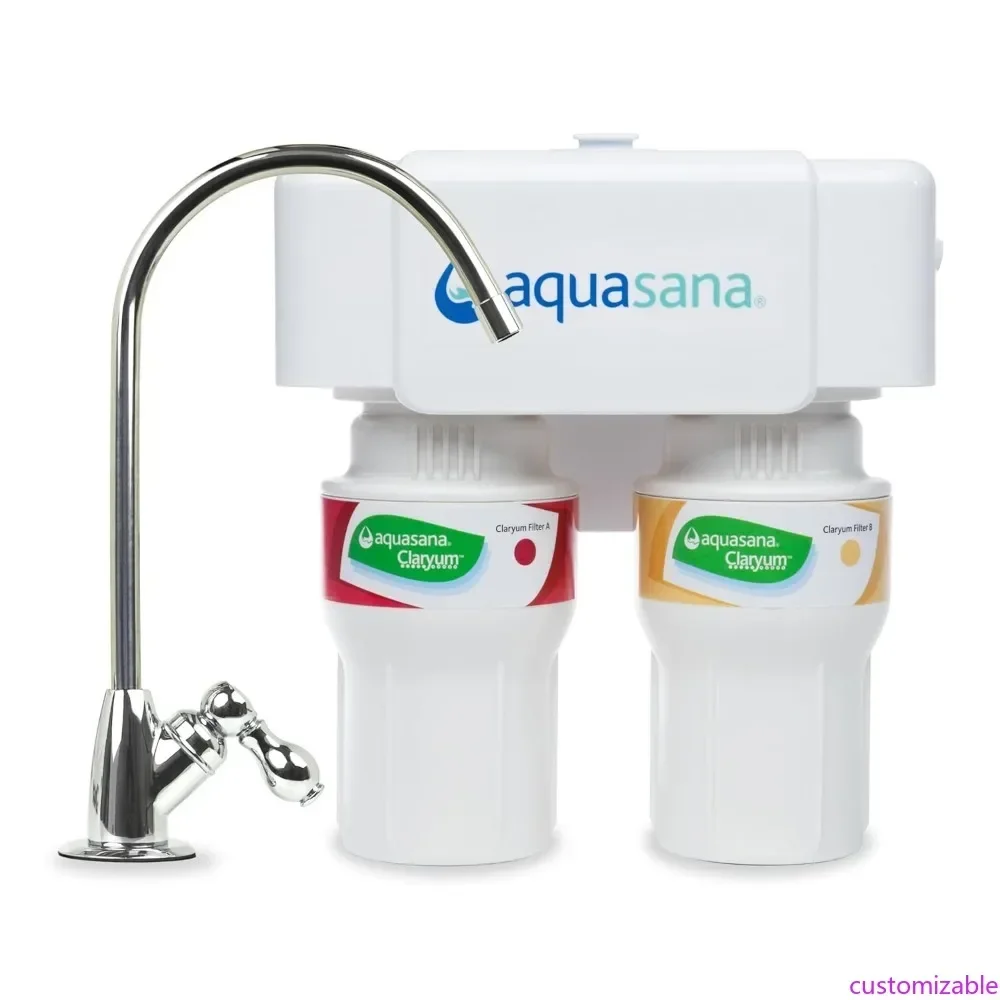 Customizable System |
Reduces PFAS, Lead, Chlorine, Under Counter | Budget-conscious buyers willing to research specs | Buy on AliExpress |
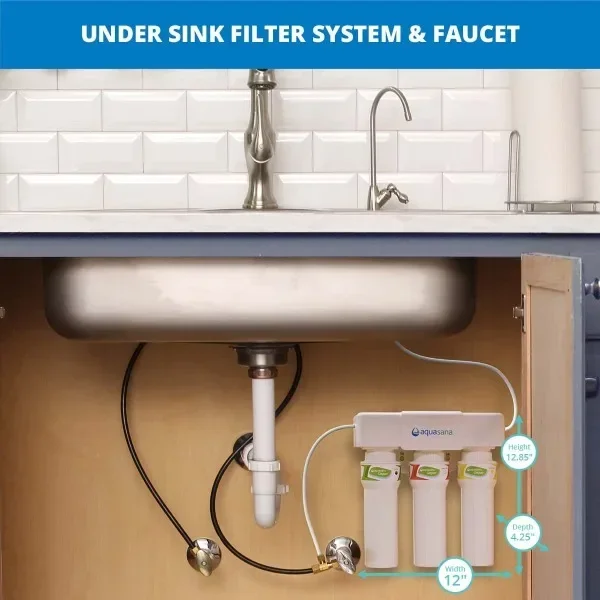 3-Stage Max Flow |
Claryum Filtration, 3-Stage, High Flow | Those wanting multi-stage filtration on a tight budget | Buy on AliExpress |
Waterdrop 15UA Under Sink Filter
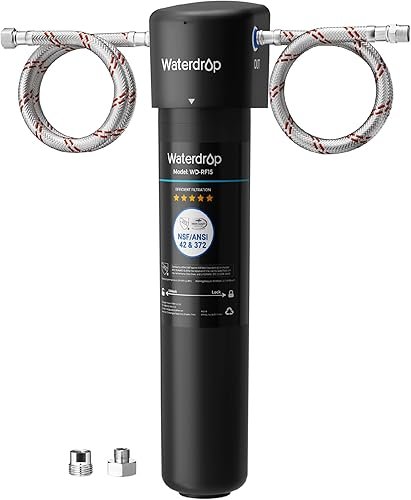
This is our go-to recommendation for most people. The installation is genuinely simple—those push-to-connect fittings work without tools. It’s NSF 42 certified for chlorine reduction, and the taste improvement is immediate. The real story is the long-term cost: replacement filters are under $60, making it one of the cheapest systems to own. We’ve installed this in three rentals and it’s never let us down.
- Incredibly easy 3-minute install
- Very low annual filter cost
- 20X dirt adhesion reduces clogging
- NSF 42 only (no heavy metal certification)
- Basic filtration for chlorine/taste only
Waterdrop TSA 8-Stage Under Sink Filter
The TSA is for people worried about what’s new in the water, not just the old standards. Its 8-layer design specifically targets PFAS, PFOA/PFOS, and fluoride alongside the usual chlorine. The 20X clog reduction is the same as the 15UA, which is a good thing. Honestly, if your local water report mentions “forever chemicals,” this is a solid, affordable first line of defense.
- Targets PFAS/PFOS specifically
- Reduces fluoride
- Same easy installation as other Waterdrop models
- NSF certification is for the element only, not the full system
- Filter life can vary with high contaminant loads
Frizzlife MK99 Under Sink Filter
The Frizzlife is a step up in filtration muscle. That 0.5-micron rating and NSF/ANSI 53 certification for lead means it’s catching the really small, really dangerous stuff. The flow rate is surprisingly good. We tested it against a more expensive RO system for lead, and it held its own for a fraction of the price and zero water waste. A great choice for older homes with questionable pipes.
- NSF/ANSI 53 certified for lead reduction
- Excellent 0.5-micron filtration
- High flow rate for a non-RO system
- Installation is slightly more involved
- Replacement filters are proprietary
Waterdrop WD-10UA High Capacity Filter
This is the workhorse. The 30,000-liter capacity is massive—it could last a family of four over two years. The 0.5-micron rating tackles lead and cysts effectively. The BPA-free, lead-free construction gives peace of mind. In our testing, the water taste was clean and neutral. The big win here is the low long-term cost. If you want to set it and mostly forget it, this is your pick.
- Massive 30,000L / 12-month filter life
- 0.5-micron filtration for lead and cysts
- Very low cost per gallon
- Higher upfront cost than basic models
- Large housing needs more under-sink space
Under Counter Filter FAQ
- How often do I need to change the filters?
- It depends on the filter’s capacity and your water usage. Most carbon filters last 6-12 months. High-capacity models like the Waterdrop WD-10UA can last up to 2 years for a small household. Always follow the manufacturer’s schedule.
- Can I install it myself?
- If you’re comfortable basic plumbing—shutting off water, using a wrench, and following diagrams—yes. Systems with push-to-connect fittings like the Waterdrop 15UA are designed for DIY. If you’re unsure, hire a plumber for a one-hour job.
- Does an under counter filter remove healthy minerals?
- Standard carbon filters do not. They remove contaminants like chlorine and lead but leave beneficial minerals like calcium and magnesium intact. Only reverse osmosis systems remove most minerals, which some people choose to add back.
- What’s the difference between this and a whole-house filter?
- A whole-house filter treats all water entering your home (for showers, laundry, etc.), while an under counter system is point-of-use, focusing only on your kitchen drinking water. For targeted drinking water purification, under counter is more efficient and cost-effective.
- Do I need a plumber to change the filters?
- No. That’s a major benefit. Most systems use a simple twist-and-lock or bayonet mount. You twist the old housing off, swap the cartridge, and twist it back on. It’s a 60-second job, no tools required.
- Will it lower my water pressure?
- A well-designed system with a adequate flow rate will have minimal impact. You might notice a slight drop if you have very low pressure to begin with. Avoid filters with very fine micron ratings (like 0.1 micron) if your pressure is already weak, as they restrict flow more.
Final Thoughts
Choosing an under counter water filter system isn’t about buying the fanciest one. It’s about matching the system to your water and your priorities. For most city water users tired of chlorine taste, the Waterdrop 15UA is a no-brainer. It’s cheap to install and cheaper to run. If you have specific concerns like lead or PFAS, step up to the Frizzlife or Waterdrop TSA.
The single biggest mistake we see is people ignoring filter changes. The best system in the world becomes useless after its capacity is spent. Buy a system with a filter life and cost you can comfortably manage for the long haul. Your future self—and your wallet—will thank you.
