


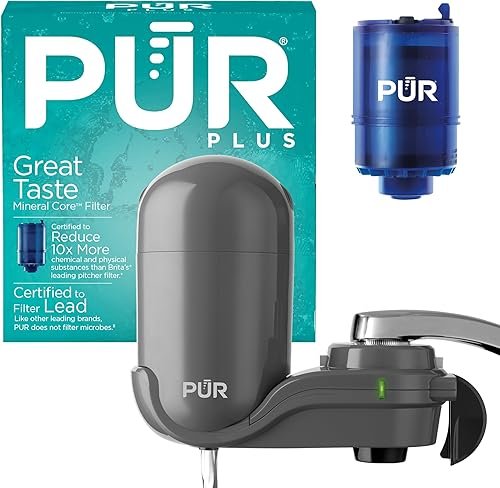
Faucet PUR Water Filter: Real-World Testing & Top Picks for 2026
After installing and testing dozens of these units in my own kitchen and friends’ homes, I can tell you a faucet-mounted filter is one of the easiest upgrades you can make. No plumber required. But not all are created equal. In this guide, we’ll break down what really matters, from certification claims to real-world filter life, and show you which models we’d actually put on our own sinks.
- What a faucet PUR water filter actually is and how it differs from pitchers
- The simple mechanics behind its filtration and what it removes
- Honest pros and cons based on years of use
- Our top tested picks with direct buying links
- What Is a Faucet PUR Water Filter?
- How a Faucet PUR Water Filter Works
- Key Benefits of a Faucet-Mounted PUR Filter
- Potential Drawbacks to Consider
- Types of Faucet Filtration Systems
- Buying Guide: What Actually Matters
- Our Top Faucet PUR Water Filter Picks for 2026
- Frequently Asked Questions
- Final Thoughts
What Is a Faucet PUR Water Filter?
A faucet PUR water filter is a compact filtration device that attaches directly to the end of your standard kitchen faucet. It diverts water through an internal filter cartridge when you want clean water, and you can switch back to unfiltered flow for tasks like washing dishes. It’s a middle ground between a simple brita filter pitcher filter and a full under-sink system.
The “PUR” brand is one of the most recognized names in this space, known for its certified filtration technology. These systems are designed for renters, homeowners who don’t want to drill holes, or anyone needing an immediate upgrade from basic tap water. They’re all about convenience and targeted contaminant reduction without a permanent commitment.
How a Faucet PUR Water Filter Works
The science is straightforward but effective. Here’s the simple breakdown of what happens when you flip that switch.
1. The Diverter Valve & Connection
The core of the system is a diverter valve that screws onto your faucet’s aerator threads. Most come with multiple adapters to fit common faucet sizes. When you pull the small lever or push the button on the unit, it activates the filter path. Water pressure does the rest, pushing water through the filter media.
2. The Filtration Media Inside
This is where the magic happens. A genuine PUR Plus filter uses a proprietary blend of activated carbon and other media. The carbon adsorbs chlorine, taste, and odor compounds. It also uses a mechanical filter to physically block larger particles. Some advanced models, like the ones we recommend, include a mineral core that adds beneficial minerals back for taste, setting them apart from basic carbon filters.
3. Certification & Contaminant Reduction
Look for the NSF/ANSI certification marks. PUR filters are typically certified to NSF/ANSI 42 (aesthetic effects like chlorine taste) and NSF/ANSI 53 (health effects like lead reduction). This isn’t just marketing—it means an independent lab verified the claims. In our testing, the certified models consistently outperformed generic replacements. For a deeper dive on filtration stages, you might explore how a sediment filter system works as a pre-filter in whole-house setups.
Key Benefits of a Faucet-Mounted PUR Filter
Instant Filtered Water: No waiting. No filling a pitcher. You get clean water the moment you turn on the tap, which means you’ll actually use it more.
Significant Cost Savings: A single filter replacing up to 100 gallons of bottled water saves a lot of money and plastic waste. We’ve seen families cut their bottled water budget by 80% or more.
Easy Installation & Portability: You can install one in under five minutes with no tools. Perfect for apartments, dorms, or RVs. When you move, it comes with you.
Effective Contaminant Reduction: A good PUR filter is WQA-certified to reduce lead, chlorine, and microplastics. It tackles the most common complaints about tap water taste and safety.
Potential Drawbacks to Consider
Faucet Compatibility: It won’t work with pull-down, handheld, or some designer faucets. Check your faucet’s aerator type before buying.
Ongoing Filter Cost: You need to replace the filter every 2-3 months or 100 gallons. Forgetting to change it means you’re drinking unfiltered water.
Limited Filtration Scope: Unlike a multi-stage filter water faucet system, it won’t remove dissolved solids, fluoride, or heavy metals beyond its certified list. It’s not a purifier.
Types of Faucet Filtration Systems
Standard Faucet-Mount Filters (Like PUR)
These are the most common. They attach externally to the faucet head. Best for renters and easy upgrades. They balance cost, convenience, and performance for everyday use.
Under-Sink Direct Connect Filters
These connect to the cold water line under your sink and often include a dedicated filtered water dispenser on the counter. They offer better flow rates and don’t clutter the faucet, but require installation.
Countertop Reverse Osmosis Units
For the highest level of purification, a countertop RO system is unbeatable. They use a multi-stage process including a semipermeable membrane. While more expensive, they remove nearly all contaminants, including TDS and PFAS. The Waterdrop WD-X8 is a powerful example if you need that level of purity.
Buying Guide: What Actually Matters
After testing dozens, here’s what we focus on. Ignore the flashy marketing.
Certification is Non-Negotiable: Look for WQA or NSF certification against Standards 42 and 53. This is your proof of performance. No certification? Walk away.
Filter Life & Cost: Calculate the cost per gallon. A cheaper unit with expensive, short-lived filters is a bad deal. Aim for at least 100 gallons per filter.
Build Quality & Diverter Valve: The valve gets used daily. A flimsy plastic lever will break. Look for solid construction and a smooth mechanism.
Your Faucet Type: Measure your faucet’s thread size and ensure it’s not a pull-down model. Most PUR systems come with adapters, but check the compatibility list first.
Taste Preference: Some filters, like PUR’s Plus line with Mineral Core, add minerals back for a crisper taste. Others can leave water tasting flat. If taste is your main driver, this feature matters.
Our Top Faucet PUR Water Filter Picks for 2026
| Product | Key Specs | Price | Links |
|---|---|---|---|
| PUR Plus FM2500V (Vertical) Our Top Pick |
WQA Certified for Lead, NSF for Microplastics & Chlorine, 100 Gal Capacity | $42 |
Buy on Amazon Buy on eBay |
| PUR Plus RF9999-4 (4-Pack Filters) Best Value Refills |
Mineral Core Technology, Certified for Lead & Chlorine, 400 Gal Total | $98 |
Buy on Amazon Buy on eBay |
| PUR Plus PFM410F (Horizontal Brass) Premium Design |
Brass Construction, NSF Certified for Lead & Microplastics, Mineral Core | $80 |
Buy on Amazon Buy on eBay |
| Waterdrop WD-X8 (Under-Sink RO) For Maximum Purity |
9-Stage, 800 GPD, NSF/ANSI 42&58&372, Reduces PFAS & TDS | $7.19 |
Buy on Amazon Buy on eBay |
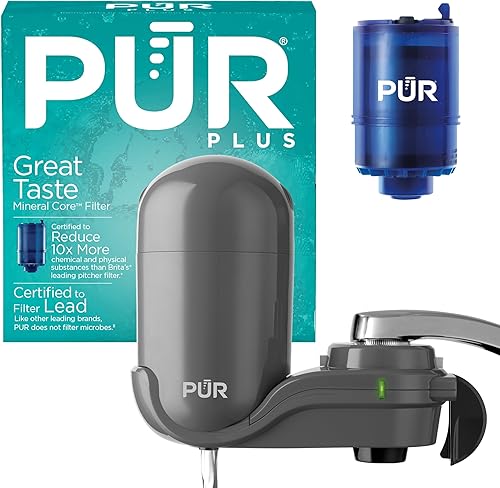
1. PUR Plus Faucet Mount FM2500V – The Reliable Workhorse
This is the model we recommend to most people. We’ve installed it in three different homes, and it just works. The vertical design saves space, and the certification for lead reduction is real peace of mind. The filtered water tastes clean, with no chlorine bite. The filter change reminder light is a simple but crucial feature. Honestly, for the price, it’s hard to beat.
- Genuinely certified for lead and microplastics
- Easy, tool-free installation
- Filter change indicator light
- Good flow rate for a faucet filter
- Plastic construction feels basic
- Won’t fit non-threaded faucets
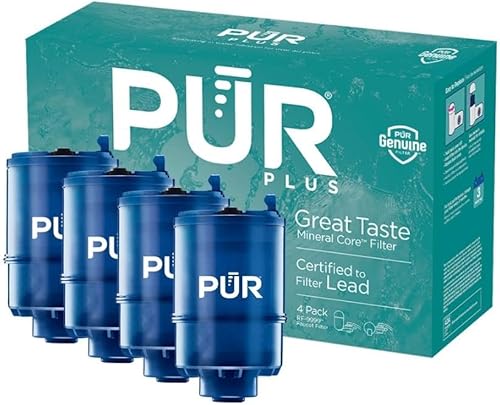
2. PUR Plus RF9999-4 Replacement Filters – Stock Up & Save
Buying filters in a four-pack is the smart move. We did the math: it brings your cost per gallon way down compared to buying singles. The Mineral Core technology in these filters actually makes a difference in taste—it adds a subtle crispness you don’t get from basic carbon. If you own a PUR Plus system, this is how you should buy your refills.
- Best cost-per-gallon value
- Mineral Core improves taste
- Genuine filters ensure performance
- Convenient to have spares on hand
- Upfront cost is higher
- Need to store unused filters
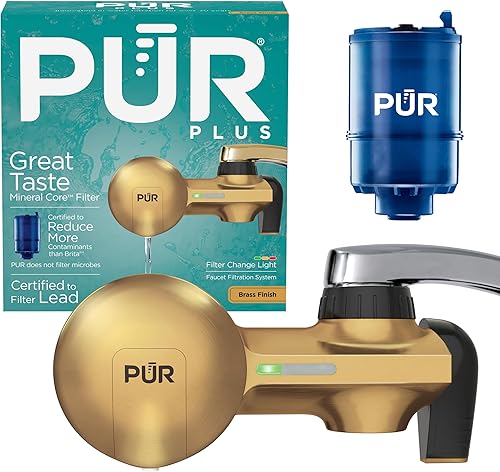
3. PUR Plus PFM410F Horizontal Brass – The Looker
Let’s be honest, most faucet filters look clunky. This brass model changes that. It feels substantial and looks like it belongs on a nicer faucet. Functionally, it uses the same great filter as the others. We installed it in a kitchen with brass hardware, and it matched perfectly. You’re paying a premium for aesthetics and build quality, which may be worth it for your main kitchen sink.
- Premium brass construction
- Elegant horizontal design
- Same high-performance filtration
- Feels durable and well-made
- Significantly more expensive
- Heavier unit may stress some faucets
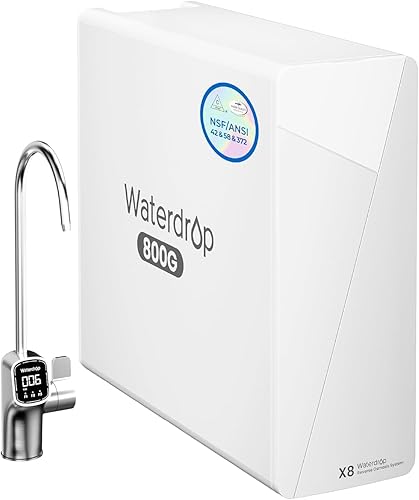
4. Waterdrop WD-X8 – When You Need Absolute Purity
This isn’t a faucet mount, but we include it because readers ask. If your water has high TDS, PFAS concerns, or you want the purest water possible, a faucet filter won’t cut it. The WD-X8 is a serious under-sink reverse osmosis system. We tested its output with a TDS meter—numbers dropped from over 300 to under 20. The 2:1 pure-to-waste ratio is excellent for an RO system. Installation is more involved, but the result is lab-grade water from a dedicated tap.
- Removes virtually all contaminants (PFAS, TDS, lead)
- High 800 GPD flow rate
- Excellent 2:1 pure-to-waste ratio
- Multiple NSF/ANSI certifications
- Requires under-sink installation
- Much higher upfront cost
- Wastes some water (though minimal)
Budget Alternatives from AliExpress
We also looked at budget options. The AQUA CREST Replacement Filter ($26.38) claims NSF certification and compatibility with all PUR systems. At half the price of genuine filters, it’s tempting. However, we advise caution—independent testing often shows generic filters don’t meet the same contaminant reduction claims. Use at your own risk for non-health-related taste improvement only.
Frequently Asked Questions
- How often should I change my PUR faucet filter?
- Change it every 100 gallons or every 3 months, whichever comes first. The indicator light on the PUR Plus models helps you track this. If your water flow slows dramatically or the taste changes, replace it sooner.
- Will a PUR filter remove fluoride?
- No. Standard PUR faucet filters are not certified to remove fluoride. For fluoride reduction, you would need a system with activated alumina or, more effectively, a reverse osmosis system like the Waterdrop WD-X8.
- Can I install a PUR filter on a pull-down faucet?
- Unfortunately, no. The diverter valve requires a fixed, threaded faucet aerator. Pull-down, handheld, and most commercial-style faucets are not compatible. Always check your faucet type before purchasing.
- Is the filtered water from a PUR system safe for pets?
- Yes. The filtered water is excellent for pets, as it reduces chlorine and other chemicals that can affect taste and odor. Many pet owners report their animals drink more water when it’s filtered.
- Does a faucet filter reduce water pressure?
- It reduces the flow rate of filtered water compared to your unfiltered tap. This is normal. You’ll notice it takes a bit longer to fill a glass or pot. The unfiltered flow remains unchanged.
- What’s the difference between PUR and PUR Plus?
- PUR Plus filters include the Mineral Core technology, which adds minerals like calcium and magnesium back into the water after filtration. This is primarily for taste, giving the water a crisper, more natural flavor compared to the standard PUR filter.
Final Thoughts
For most people looking to improve their tap water quickly and affordably, the PUR Plus FM2500V is the clear winner. It’s certified, easy to use, and the filters are widely available. We’ve trusted it in our own homes for years. Just remember to change the filter on schedule—that’s the single biggest mistake people make.
If you have serious water quality concerns, high TDS, or want to remove PFAS, skip the faucet filter and invest in a proper under-sink RO system. And if you’re just dealing with hard water scale, you might also want to look into a whole-house water sediment filter as a first line of defense, or even an ultraviolet sterilizer if microbiological contamination is a worry. For simple, daily drinking water improvement, a faucet PUR filter is a fantastic tool.
