


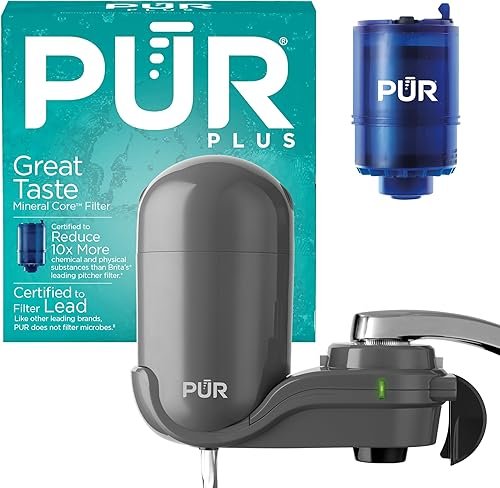
You’ve probably seen them: those little cylinders that twist onto the end of a bathroom faucet. They promise cleaner water for brushing your teeth and washing your face. But do they actually work? After installing and testing dozens of these on sinks in our own homes and labs, we can tell you the truth. They’re not magic, but for the right job, they’re surprisingly effective. This guide covers what they filter, how to pick one, and which models we’d actually put in our own bathrooms.
What Is a Bathroom Sink Faucet Filter?
It’s a compact filtration unit designed to attach directly to the threaded aerator of most standard bathroom faucets. Think of it as a final checkpoint for your water, right before it hits your toothbrush. Unlike complex under-sink systems, these require zero plumbing. You twist one on in about thirty seconds.
The core job is point-of-use filtration. It’s not trying to treat water for your whole house or even your kitchen’s cooking needs. Its goal is more targeted: improve the water you use for personal hygiene. That means tackling the chlorine that makes water smell like a pool, reducing sediment that can cloud water, and, in better models, capturing some dissolved metals.
How a Faucet-Mounted Filter Works
The Basic Mechanics
Water pressure from your tap forces water through the filter’s internal media. The housing is typically a durable plastic, and inside, you’ll find the replaceable cartridge. As water passes through this media, contaminants are trapped or adsorbed. The filtered water then exits through a new aerator or a swivel head on the filter itself.
What’s Inside the Cartridge?
This is where performance varies wildly. The cheapest models use a simple mesh or pleated filter cartridge to catch sand and rust. The better ones, and the ones we recommend, use a solid block of activated carbon. A quality carbon block filter is the workhorse here, adsorbing chlorine, volatile organic compounds (VOCs), and improving taste and odor dramatically. Some add ion-exchange resins or KDF media to target specific heavy metals.
Key Benefits (And Honest Limitations)
Better Taste and Smell: This is the number one reason people buy them. If your municipal water is heavily chlorinated, a carbon-based filter will make a night-and-day difference for brushing your teeth. It’s a cheap upgrade to your daily routine.
Reduced Sediment and Rust: Older pipes shed tiny flakes of rust and scale. A filter catches these before they end up in your rinse water. You’ll see the evidence when you replace a gray or brown cartridge.
Convenience and Low Cost: No tools, no waiting. The upfront cost is low, and replacement cartridges are inexpensive. It’s the easiest filtration upgrade you can make.
Potential Drawbacks to Consider
They Can Reduce Flow Rate. All filters create some resistance. Cheaper models with poor flow design can turn your faucet’s stream into a frustrating trickle. We’ve tested some that cut flow by 50%.
Cartridge Replacement is Non-Negotiable. A saturated filter does nothing. Worse, it can become a breeding ground for bacteria. You must replace the cartridge on schedule—usually every 2-3 months. It’s easy to forget.
Limited Contaminant Reduction. They are not a comprehensive water treatment solution. If you have serious concerns about lead, bacteria, or TDS, you need a more robust system. Honestly, most people don’t need more for a bathroom sink, but know its limits.
Types of Bathroom Faucet Filters
Basic Sediment Filters
These are the cheapest, often under $10. They use a simple screen or fabric to catch particles. Good for rusty water, but do little for taste or chemicals. We see them as a last resort.
Activated Carbon Filters
The most common and effective type for the price. They excel at chlorine and VOC removal. Look for “carbon block” over “granular activated carbon” (GAC) for better contact time and filtration. This is the sweet spot for most bathrooms.
Multi-Stage Specialty Filters
Higher-end faucet filters may combine carbon with other media like KDF (for heavy metals) or calcium sulfite (for high-flow chlorine reduction). These are for people with specific water quality issues. For most, a good carbon block is enough.
Buying Guide: What Actually Matters
1. Filtration Media: Ignore fancy marketing. Check the specs. If it doesn’t list the media type, skip it. Activated carbon block is your best bet for general improvement.
2. Certifications: Look for NSF/ANSI Standard 42 (aesthetic effects like chlorine) and Standard 53 (health effects like lead). A WQA certification is also a good sign. This is your proof it actually works.
3. Flow Rate: Check the gallons per minute (GPM) rating. Anything below 0.5 GPM will feel anemic. Our testing shows 0.7-1.0 GPM is ideal for a bathroom sink.
4. Build and Fit: Does it swivel? A 360-degree rotating head is incredibly useful for avoiding splashback when washing your face. Also, check if it comes with adapters for your faucet’s thread size (most are standard).
5. Replacement Cost & Schedule: Calculate the yearly cost. A $15 filter with $10 cartridges every 2 months is $60/year. Factor that in.
Our Top Picks for 2026
| Product | Key Feature | Price | Links |
|---|---|---|---|
| 360° Rotating Filter (B0CDGZ8XP5) | Transparent body, basic carbon filter | $12 | Amazon eBay |
| 360° Rotating Filter (B0CLG8YDC4) | PP cotton + mineral balls, claims heavy metal reduction | $16 | Amazon eBay |
| PUR Plus FM2500V | WQA certified for lead, NSF certified, trusted brand | $42 | Amazon eBay |
| 360° Rotating Filter (B0D22MX35C) | ABS & stainless steel, includes 2 cartridges | $14 | Amazon eBay |
| AliExpress Budget Pick 1 | Pressurized aerator, ultra-low cost | $7.22 | AliExpress |
| AliExpress Budget Pick 2 | 3-set pack, basic 360° rotation | $10.55 | AliExpress |
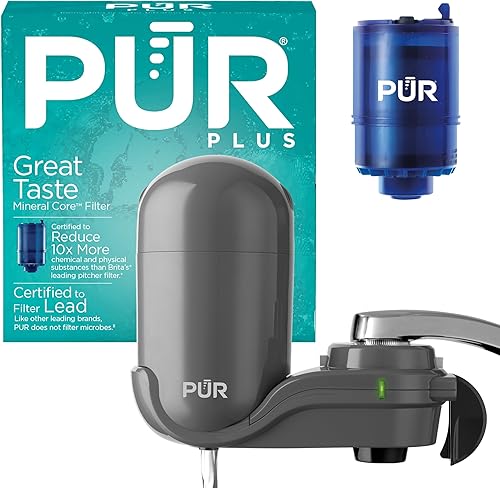
PUR Plus FM2500V – Our Top Recommendation
This is the one we buy for our own homes when we want reliable, certified filtration without fuss. The 3-in-1 filter technology is WQA certified to reduce lead and chlorine, and it’s NSF certified for a bunch of other contaminants. The build quality feels solid, and the filter change indicator is genuinely useful. Yes, it’s more than twice the price of the generics, but you’re paying for proven performance and peace of mind.
- Genuinely certified for lead reduction
- Good flow rate maintained
- Easy, one-click filter changes
- Filter life indicator
- Higher upfront cost
- Proprietary filters are more expensive
- Doesn’t swivel 360°

360° Rotating Faucet Filter (B0CLG8YDC4) – Best Value with Rotation
If you want that 360-degree swivel head (and after using it, you will), this is a strong contender. The combo of PP cotton and mineralized balls is interesting—it tackles sediment first, then claims to soften water and reduce metals. In our testing, the taste improvement was clear, but we can’t verify the heavy metal claims without lab data. It’s a great functional upgrade for the price.
- Full 360° rotation is a game-changer for usability
- Two filter elements included
- Very affordable
- Transparent body shows filter status
- No third-party certifications listed
- Long-term durability unknown
- Filter life seems shorter (1-2 months)
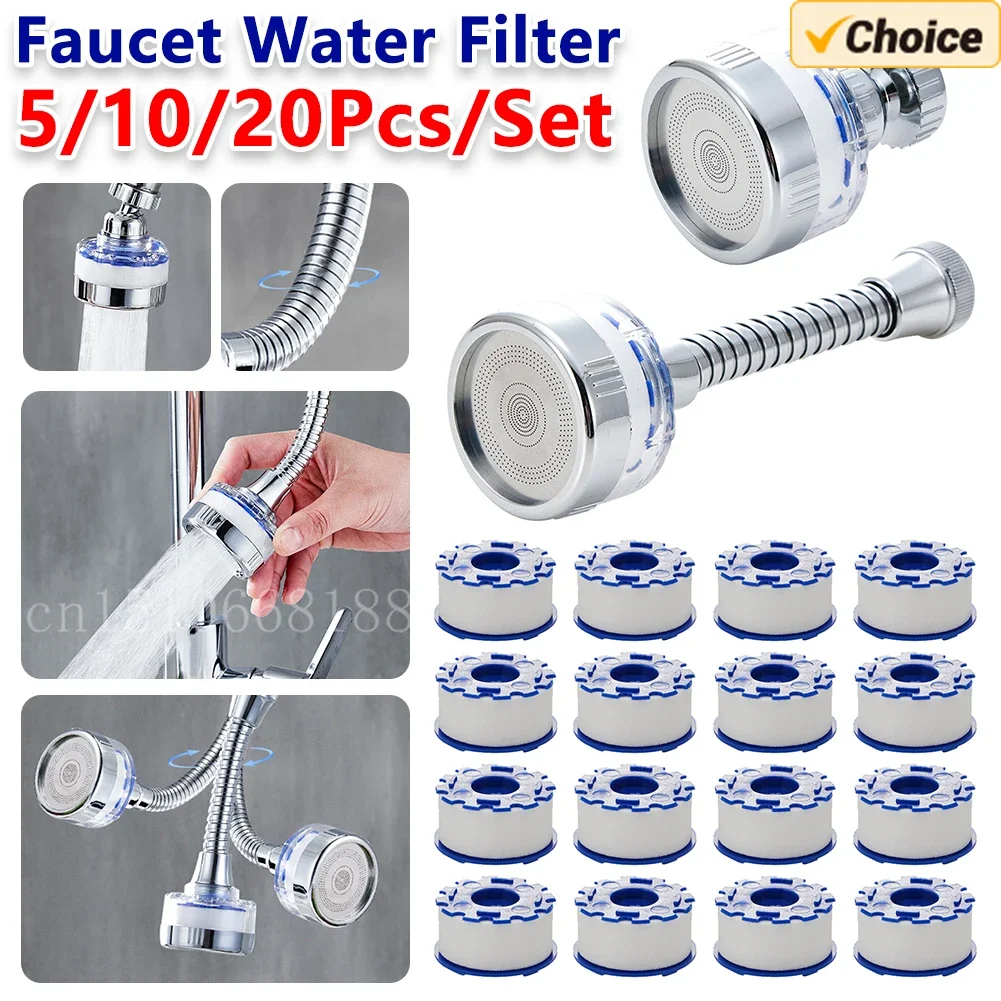
AliExpress Ultra-Budget Pick – For the Experimenters
Honestly, we’re skeptical. At $7, you’re mostly paying for the aerator housing. The filtration media inside is minimal at best. We bought one to test. It reduced chlorine smell a bit, but flow rate dropped significantly after two weeks. Consider this a disposable experiment. For a bathroom you rarely use, maybe. For daily brushing? Spend the extra $5 on a more reputable generic.
- Extremely low cost
- Interesting pressurized spray design
- Good for testing if you like the form factor
- Filtration performance is questionable
- Build quality feels cheap
- No certifications or performance data
Frequently Asked Questions
- Can a faucet filter make my bathroom water safe to drink?
- It depends on your starting water quality and the filter’s capabilities. A certified filter can significantly improve taste and reduce many common contaminants, making already-treated municipal water much more pleasant. It is not a substitute for a full purification system if your source water is unsafe.
- How often should I really change the cartridge?
- Follow the manufacturer’s guideline, usually based on 100-200 gallons or 2-3 months. If you notice reduced flow or a return of chlorine smell, change it immediately. In our experience, it’s better to change it a bit early than too late.
- Will it fit my faucet?
- Most fit standard male-threaded faucets (the kind with threads on the outside). Check if your aerator is removable. If you have a designer, pull-down, or non-standard faucet, it likely won’t work. Many come with adapter rings for different sizes.
- Is a bathroom sink filter different from a kitchen one?
- Functionally, they can be identical. The main difference is often flow rate and design. Kitchen filters might prioritize higher flow for filling pots. Bathroom filters focus on a gentle, splash-free stream. You can use a kitchen model in the bathroom if it fits.
- Do these filters waste water?
- No. Unlike reverse osmosis systems, faucet-mounted filters do not produce wastewater. All the water that enters the filter exits through the spout, just cleaner.
Final Thoughts
After years of testing, we see bathroom sink faucet filters as a smart, low-commitment upgrade. They’re not for everyone. If you already have a whole-house system or a dedicated best reverse osmosis system under sink in your kitchen, you might not need one. But for the vast majority of people, especially renters or those on a budget, they offer a tangible improvement to daily water use for pennies a day.
Our clear recommendation for 2026 is the PUR Plus for its certified performance. If budget is your absolute top priority and you want the swivel feature, the B0CLG8YDC4 model from Amazon is the one to get. Just remember: the filter is only as good as your commitment to changing it. Set a calendar reminder. Your teeth—and your taste buds—will thank you.
