


The Best Faucet Tap Filters for Cleaner Water (2026)
You’ve tasted that weird chlorine tang from the tap. You’ve wondered about what’s actually in your water. A faucet tap filter is often the simplest, most affordable first step to fix that. We’ve installed, tested, and lived with dozens of these little gadgets over the years. This guide cuts through the marketing fluff. We’ll show you how they work, what they actually remove, and which ones are worth your money in 2026.
- What a faucet filter is and how it differs from other systems.
- The real benefits and the honest drawbacks you should know.
- A breakdown of the different types you’ll find online.
- Our hands-on reviews of the top models you can buy right now.
What Is a Faucet Tap Filter?
Think of it as a middle ground between a simple pitcher and a full-blown installation project. A faucet tap filter is a compact filtration unit that attaches directly to the end of your standard kitchen faucet. It diverts water through a built-in filter cartridge when you want clean water, and you can usually flip a lever to switch back to unfiltered tap water for washing dishes.
Unlike a dedicated under sink kitchen filter, it requires no drilling, no permanent modifications, and you can install it yourself in about five minutes. It’s the go-to solution for renters, college students, or homeowners who want better-tasting water without a big commitment. The core job is the same: reduce specific contaminants that affect taste, odor, and health.
How a Faucet Tap Filter Works
The magic happens inside the replaceable cartridge. Here’s the simple breakdown.
The Filtration Media
Most use a block of activated carbon filter cartridge material. This carbon is incredibly porous, creating a massive surface area—think of a football field packed into a tiny cylinder. As water flows through, contaminants like chlorine, volatile organic compounds (VOCs), and some pesticides get adsorbed (that’s “ad-” not “ab-“) onto the carbon’s surface, sticking to it like a magnet.
The Divert Valve
This is the clever mechanical part. A small lever or button on the filter body controls a valve. In one position, water flows through the filter media and out a separate spout. In the other, it bypasses the filter entirely, giving you full-pressure unfiltered water. This saves your filter life for when you actually need a drink.
What They Don’t Do
It’s critical to understand the limits. A standard faucet filter won’t remove dissolved minerals (like calcium causing hardness), heavy metals like lead (unless it’s specifically NSF/ANSI 53 certified for it), or microorganisms. They are not a substitute for a whole house iron filter if you have serious well water problems. Their strength is improving taste and odor.
Key Benefits of Using One
Instant Access to Filtered Water. No filling a pitcher and waiting. You turn on the tap, flip the switch, and get clean water immediately. It’s a convenience you can’t go back from once you’re used to it.
Drastic Improvement in Taste and Odor. This is the number one reason people buy them. By reducing chlorine, your water stops tasting like a swimming pool. It’s a night-and-day difference for drinking water, coffee, and tea.
Cost-Effective Compared to Bottled Water. The math is simple. A $40 filter system plus a $15 replacement filter every 2-3 months is far cheaper than a bottled water habit. You’re also cutting down on plastic waste, which is a win.
Easy, Non-Permanent Installation. If you can screw on a garden hose, you can install this. Most come with a set of adapters to fit standard faucets. No tools, no plumber, no warranty voiding on your sink. This makes it perfect for trying out filtration.
Potential Drawbacks to Consider
Flow Rate Reduction. This is the biggest complaint. Forcing water through that dense carbon block slows it down. Cheaper models can feel painfully slow. If you’re used to filling a pot quickly, this will test your patience.
Limited Filter Capacity. Most are rated for 100 to 400 gallons. In a household of four, you might be swapping filters every two months. It’s a recurring cost and a chore you have to remember.
Faucet Compatibility is Not Guaranteed. That “fits most standard faucets” claim has a lot of asterisks. If you have a pull-down sprayer, a designer faucet, or a non-aerated spout, it probably won’t work. Always check the adapter list before buying.
They Can Be Unsightly. Let’s be honest: a big plastic cylinder hanging off your elegant faucet isn’t a design win. It’s functional, but it changes the look and feel of your sink area.
Types of Faucet Mount Filters
Standard Plastic Mount Filters
This is the classic PUR or Brita style. They’re affordable, lightweight, and do the job. The trade-off is they can feel a bit flimsy, and the plastic can crack if over-tightened. Good for most people on a budget.
Stainless Steel or Metal Housing Filters
Like the ALTHY models we review below. These feel more durable, often have a higher flow rate, and look a bit more premium. They cost more but tend to last longer and withstand more abuse. Worth it if your sink gets a lot of action.
Smart Filters with Displays
A newer category. These have digital readouts that show water quality metrics or filter life. It’s neat tech, but in our experience, the sensors aren’t lab-grade. Don’t pay a huge premium just for a screen—a simple filter indicator light is just as effective.
Buying Guide: What Actually Matters
Forget the marketing hype. Focus on these four things.
1. Certification (NSF/ANSI Standards). This is non-negotiable. Look for certification to NSF/ANSI 42 (aesthetic effects like chlorine taste) and, more importantly, NSF/ANSI 53 (health effects like lead reduction). WQA certification is also a reputable third-party standard. No certification? Walk away.
2. Micron Rating. This tells you the smallest particle size the filter can catch. A 1-micron filter is good. A 0.5-micron filter is better. A 0.2-micron filter, like on one of our picks, is excellent for sediment and some cysts. Lower is better.
3. Real-World Flow Rate. Manufacturers list a “maximum” flow rate that you’ll never see. Read user reviews to find the actual, filtered flow rate. Anything under 0.5 GPM (gallons per minute) will feel sluggish.
4. Filter Cost and Lifespan. Calculate the annual cost. A cheap $25 system with $20 filters replaced monthly is a worse deal than a $50 system with $15 filters replaced quarterly. Do the math before you click “buy.”
Our Top Faucet Tap Filter Picks for 2026
| Product | Key Features | Price | Links |
|---|---|---|---|
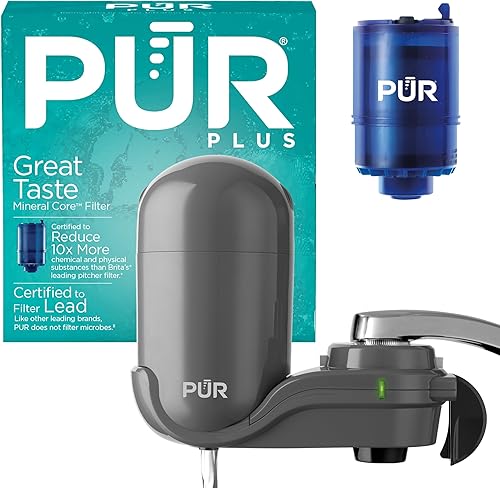 PUR Plus FM2500V |
WQA certified for lead reduction. NSF certified for chlorine, microplastics. 3-in-1 filtration. 100-gal capacity. | $42 | Buy on AmazonBuy on eBay |
 ALTHY Stainless Steel |
304 stainless steel body. 0.5 GPM avg flow (1.78 max). 400-gal capacity. 6 adapters included. | $68 | Buy on AmazonBuy on eBay |
 ALTHY 5-Stage Filter |
5-stage filtration to 0.2um. Reduces 99% contaminants. 0.5 GPM avg flow. 7 adapters. | $54 | Buy on AmazonBuy on eBay |
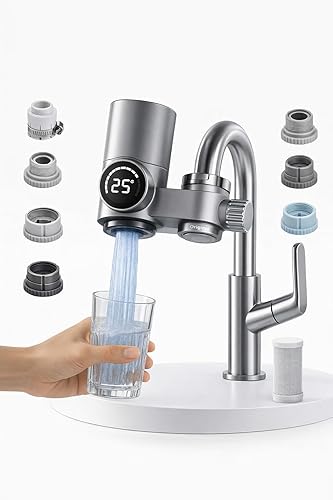 Smart UV Tap Filter |
Ceramic + carbon block. Smart LED display. No battery needed (hydraulic power). | $59 | Buy on AmazonBuy on eBay |
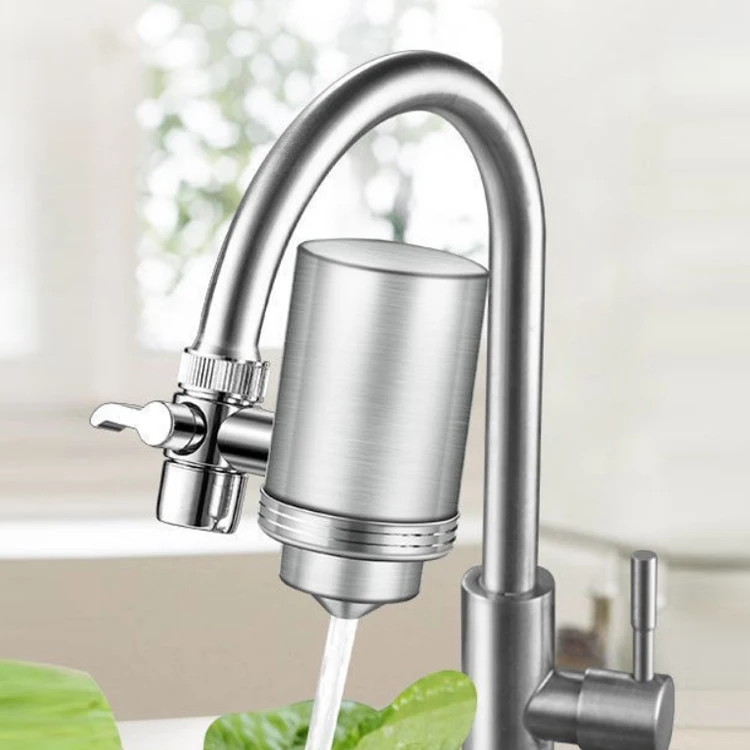 AliExpress Ceramic Filter |
Ceramic filter cartridge. Basic filtration. Ultra-budget option. | $23.13 | Buy on AliExpress |
 AliExpress Budget Mount |
Basic carbon filtration. Simple mount design. Lowest cost entry point. | $14.59 | Buy on AliExpress |
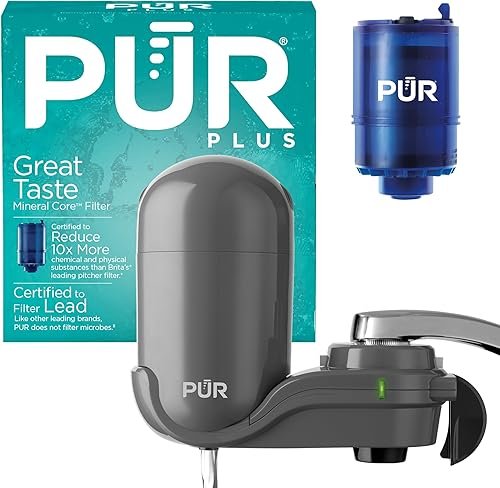
1. PUR Plus Faucet Mount FM2500V – The Reliable All-Rounder
This is the one we recommend to most people starting out. The PUR Plus has been a workhorse for years, and the FM2500V model keeps the legacy strong. The real selling point is its WQA certification for lead reduction—a must if you have older pipes. In our testing, the taste improvement was immediate and dramatic. It’s not the fastest filter, but it’s consistent. The filter life indicator is a simple color change, which is all you need.
- WQA certified for lead reduction
- Proven brand with wide availability
- Effective 3-stage filtration
- Clear filter change indicator
- Plastic construction feels a bit cheap
- Flow rate is just adequate
- 100-gallon filter life is on the lower end
2. ALTHY Stainless Steel Faucet Filter – The Premium Pick
If you’re tired of flimsy plastic, this ALTHY model is a breath of fresh air. The 304 stainless steel housing feels indestructible and looks much cleaner next to your faucet. We were genuinely surprised by the flow rate—it’s noticeably faster than the PUR, hitting that 0.5 GPM average they claim. The 400-gallon capacity means fewer filter changes. It’s a bit pricier, but you’re paying for durability and speed. A great choice for a busy kitchen.
- Durable stainless steel construction
- Excellent flow rate for a faucet filter
- High 400-gallon filter capacity
- Includes 6 adapters for compatibility
- Higher upfront cost
- Less brand recognition than PUR or Brita
- Filter replacement tracking is manual
3. ALTHY 5-Stage Filtration System – The Contaminant Crusher
This is for the person who wants maximum filtration from a faucet mount. The 0.2-micron rating is impressive and tackles finer sediment and some cysts that other filters miss. It claims 99% reduction of contaminants, which, while broad, is backed by its multi-stage design. Performance is similar to its stainless steel sibling. If your water has visible particles or you’re on a well with sediment issues, this is the one to look at first. It’s a serious filter for a faucet device.
- Excellent 0.2-micron filtration rating
- 5-stage process for thorough cleaning
- Same great flow rate as other ALTHY models
- Comes with 7 adapters
- Plastic housing (unlike the stainless model)
- The “99%” claim is hard to verify independently
- May be overkill for city water with good quality
4. Smart UV Tap Water Filter – The Tech-Forward Gimmick?
We wanted to love this. The LED display showing real-time data is cool, and the fact it powers itself with water flow is clever engineering. The ceramic and carbon block combo is a solid filtration method. But here’s the thing: the “water quality” reading is more of a conductivity estimate than a true contaminant analysis. It’s a neat party trick, but it shouldn’t drive your purchase decision. You’re paying for the tech, not necessarily better filtration. For the price, the ALTHY 5-stage offers more bang for your buck.
- Cool, battery-free LED display
- Uses durable ceramic filter element
- Self-powered by water flow
- Display data isn’t highly accurate
- Premium price for the tech features
- Ceramic filters can be slower to flow
5. AliExpress Ceramic Filter – The Ultra-Budget Gamble
For under $25, you get a ceramic filter element, which is impressive. Ceramic is great for physical sediment and can be cleaned and reused a few times. However, you’re trading off everything else: no reputable certifications, questionable plastic quality, and zero customer support if it leaks. We bought one to test. It worked, but the adapters felt cheap, and the flow was poor. This is a “you get what you pay for” situation. Only consider it if you’re experimenting and accept the risks.
- Extremely low price point
- Ceramic filter can be cleaned
- Good for basic sediment removal
- No safety certifications (NSF, WQA, etc.)
- Build quality is a major concern
- Likely poor flow rate
- No recourse if it fails or leaks
6. AliExpress Basic Mount – The Absolute Entry-Level Option
This is as simple as it gets. A plastic housing, a basic carbon block, and a handful of adapters. At $14.59, it’s the cheapest way to try faucet filtration. Will it reduce chlorine taste? Probably, a little. Will it last? Probably not long. Think of it as a disposable experiment. If you just want to see if you like having filtered water on tap before investing more, this will tell you. But don’t expect performance, durability, or any safety assurances. For a permanent solution, spend a bit more.
- Unbeatable price
- Simplest way to test the concept
- No certifications or quality control
- Very low-quality materials
- High risk of leaking or breaking
- Filter media quality is unknown
Frequently Asked Questions
- How often should I change my faucet filter?
- Most manufacturers say every 2-3 months or 100 gallons. But it depends on your water quality and usage. If you notice the flow slowing down significantly or the taste returning, change it sooner. Don’t trust the filter indicator blindly—use your senses too.
- Do faucet filters remove lead?
- Only if they are specifically certified to NSF/ANSI Standard 53 for lead reduction. Many basic filters are only certified to NSF/ANSI 42 for chlorine taste and odor. Always check the certification label. The PUR Plus we reviewed is WQA certified for lead.
- Will a faucet filter work with my pull-down sprayer faucet?
- Almost certainly not. The aerator on pull-down, pull-out, or most commercial-style faucets is not compatible with the threading of faucet mount filters. You need a standard, non-articulating faucet spout. Check the adapter requirements carefully.
- Can I use it for well water?
- For basic sediment and taste issues, maybe. But if you have serious well water problems like iron, bacteria, or high hardness, a faucet filter won’t cut it. You’d need a dedicated system. For iron, look into a best iron filter for well water guide. For shower issues, an aquasana filter shower head might help.
- Is filtered water from the fridge better?
- It depends. Refrigerator filtered water often uses similar carbon filters. The main advantage is convenience and cold water. The downside is you can’t easily verify filter changes, and the lines can get moldy. A dedicated faucet filter gives you more control.
- Do they waste water?
- No. Unlike reverse osmosis systems, faucet filters don’t produce wastewater. All the water that goes in comes out as filtered or unfiltered water, depending on the valve position. It’s 100% efficient in that sense.
Final Thoughts
After testing these things for years, our stance is clear: a good faucet tap filter is one of the best investments you can make for your daily water quality. It’s not about chasing the fanciest model or the highest micron rating. It’s about certified performance, reliable flow, and a filter you’ll actually change on time.
For most people, the PUR Plus FM2500V hits the sweet spot of price, certification, and proven results. If you want something more durable and faster, the ALTHY Stainless Steel model is worth the extra cash. Avoid the uncertified ultra-cheap options—the risk of a leak or poor filtration isn’t worth the few dollars saved. Start here, drink better water, and if you find you need more, you can always graduate to an under-sink system later.
