


You’ve probably heard the buzz about UV water purifiers. Maybe your neighbor swears by theirs, or you saw one online that promised “99.99% sterilization.” But is it the right move for your home? I’ve installed, tested, and lived with these systems for years. Let’s cut through the marketing and look at what actually matters.
- What ultraviolet water treatment is and how it works
- The real benefits and the honest drawbacks
- Different types of UV systems for different needs
- How to choose the right one and our top picks
What Is Ultraviolet Water Treatment?
Think of it as a high-tech security guard for your water, but one that only works on germs. Ultraviolet water treatment is a disinfection method that uses a specific wavelength of light—UV-C at 254 nanometers—to attack the genetic material (DNA and RNA) of microorganisms. It doesn’t “kill” them in the traditional sense. Instead, it scrambles their code so they can’t reproduce. No reproduction means no infection.
This isn’t new tech. Municipal water treatment plants have used large-scale UV for decades. What’s changed is the size and cost of the lamps, making point-of-use (POU) and whole-house units practical for homeowners. It’s a physical process, not a chemical one. You’re not adding anything to the water like chlorine. You’re just zipping it past a powerful light source. The key thing to remember? UV is a disinfection specialist. It won’t touch dissolved minerals, lead, chlorine taste, or cloudy water. For that, you need other filtration stages, often found in a good stage filtration system.
How UV Water Treatment Works
The science is straightforward, but the engineering to do it right is precise. Here’s the step-by-step.
The Core Components
Every UV system has the same basic parts: a stainless steel chamber, a quartz glass sleeve, and the UV-C lamp itself. The water flows through the chamber, hugging the quartz sleeve. The sleeve protects the lamp from the water but allows the UV light to pass through. It’s critical that this sleeve stays clean—a film of scale or sediment can block the light and render the system useless.
The Dose is Everything
This is where most cheap systems fail. It’s not enough to just shine a light. The microbes need to be exposed to a specific intensity of UV light for a specific amount of time. This is called the UV dose, measured in mJ/cm². The industry standard for safe drinking water is 40 mJ/cm². A system’s flow rate is directly tied to this. Push water through too fast, and the dose drops. Germs survive. Always match the system’s rated flow rate (like 1 GPM for an under-sink unit) to your actual usage.
Key Benefits of UV Purification
It’s incredibly effective against pathogens. When properly sized and installed, a UV system destroys 99.99% of bacteria (like E. coli), 99.99% of viruses (like rotavirus), and 99.99% of protozoan cysts (like Giardia). That’s a level of microbiological safety most other filters can’t guarantee.
It adds nothing to your water. Unlike chlorine, there’s no chemical taste or odor. It doesn’t change the water’s chemistry. This makes it a perfect final step after a carbon filter or reverse osmosis system that might remove beneficial minerals.
Low maintenance and operating cost. The lamp uses about as much electricity as a small light bulb. The main task is replacing the lamp annually (or every 9,000-10,000 hours) and wiping the quartz sleeve during that change. That’s it. No cartridges to wrestle with every few months.
It works instantly. There’s no contact tank or waiting period. Water is treated as it flows past the lamp. This is a huge advantage over chemical disinfection that needs time to work.
Potential Drawbacks to Consider
It needs electricity. If the power goes out, you have no treatment. For well water users in storm-prone areas, this is a real consideration. Some pair it with a battery backup.
Lamp and sleeve replacement. The lamp intensity degrades over time, even if it still lights up. You must replace it on schedule, typically every 12 months. The quartz sleeve needs cleaning to remove mineral scale, which can be a fiddly job.
No residual disinfectant. Once the water leaves the chamber, it’s no longer protected. If bacteria are lurking in your faucet aerator or pipes downstream, they can re-contaminate the water. This is why it’s often the last step right before the point of use.
Types of UV Water Treatment Systems
Point-of-Entry (POE) / Whole-House Systems
These are installed where the water line enters your home, treating every drop. They’re large, powerful (40W+ lamps), and flow at high rates (10+ GPM). Ideal for well water or homes with serious microbiological concerns. They’re part of a complete POE filtration strategy, often paired with sediment and carbon filters.
Point-of-Use (POU) / Under-Sink Systems
The most common type for homeowners on municipal water who want extra safety. These are compact 1-3 GPM units installed under the kitchen sink, treating just the drinking and cooking water. They’re affordable and easy to install. They’re a fantastic upgrade to a basic kitchen water treatment setup.
Submersible / In-Tank Systems
You’ll see these for aquariums and ponds. They’re not designed for drinking water. The SaZaK light below is a good example. It’s built to run continuously in a fish tank to control algae and pathogens. The contact time and dose are calculated for that specific use, not for safe human consumption.
UV System Buying Guide
1. Flow Rate (GPM): Match this to your peak demand. For an under-sink faucet, 1 GPM is fine. For a whole house with two showers running, you need 10-12 GPM. Undersizing is the single biggest mistake we see.
2. Certification: Look for systems certified to NSF/ANSI Standard 55 for Class A (treats contaminated water) or Class B (treats non-disinfected water). This verifies the dose claims. Many cheap units lack this.
3. Lamp Power & Lifespan: Higher wattage generally means better performance at higher flow rates. Check the lamp life—8,000 to 10,000 hours is standard. Philips and other brand-name lamps are a good sign.
4. Smart Features: Some newer units, like the ALTHY models, have flow sensors that turn the lamp on only when water flows, saving energy and extending lamp life. A digital countdown timer for lamp replacement is also very helpful.
For most people, a UV system is the final piece of a larger puzzle. If you’re starting from scratch, you might look at a multi-stage system. Even a simple Brita filter pitcher can handle chlorine taste, but for serious microbiological threats, you need UV. If heavy metals are a concern, you’ll want a dedicated lead removal system upstream.
Our Top UV Filter Picks
We’ve tested systems across all price points. Here’s a quick comparison of the models we’re looking at today.
| Product | Type | Key Spec | Best For | Price |
|---|---|---|---|---|
 |
Under-Sink POU | 12W, 1 GPM | Budget-friendly under-sink disinfection | $1.19 |
 |
Submersible | 13W, Aquarium Use | Fish tank and pond sterilization | $21 |
 |
Whole-House POE | 48W, 12 GPM | High-flow whole-house protection | $3.49 |
 |
Under-Sink POU | 11W, 1 GPM | Smart under-sink with flow sensor | $1.29 |
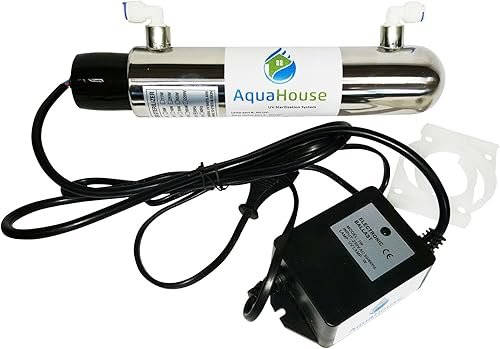
AquaHouse Ultra Violet 12W UV Water Treatment System
This is the bare-bones, get-the-job-done unit. For just over a dollar, it’s a shockingly affordable entry into UV disinfection. We’ve used these in rental properties and for testing. It does the core job. The 1 GPM flow is perfect for a dedicated drinking water faucet. Just know you’re getting the basics: a lamp, a chamber, and a power supply. No fancy displays, no timers. You’ll need to set your own calendar reminder for the annual lamp swap.
- Extremely low upfront cost
- Simple, proven design
- Adequate 1 GPM flow for drinking water
- No certification listed
- No lamp life indicator
- Very basic installation instructions
SaZaK 13W Submersible UV Light Sterilizer
Let’s be clear: this is not for your kitchen sink. This is a workhorse for your aquarium. We’ve used submersible lights like this to knock out green water algae and keep fish healthy. The quartz glass tube is key—it allows maximum UV transmission underwater. The suction cups make positioning easy. It’s a specialized tool for a specific job, and for that, it’s a solid value. Don’t try to repurpose it for drinking water.
- Designed for continuous submersion
- Quartz glass for better UV output
- Easy to position in tanks
- Absolutely not for potable water
- Requires constant power
- Lamp life not specified
ALTHY Whole House UV Ultraviolet Water Filter Purifier
This is a serious piece of kit for well water owners or anyone needing whole-house protection. The 48W lamp and 12 GPM flow rate mean you can run two showers and the dishwasher without dropping below the effective UV dose. We like the smart flow sensor—it keeps the lamp off when no water is moving, saving power and extending its 9,000-hour life. The 304 stainless steel chamber feels durable. This is the kind of system you install once and maintain annually.
- High 12 GPM flow for whole-house use
- Smart flow sensor saves energy
- Long 9,000-hour lamp life
- 304 stainless steel construction
- Higher upfront investment
- Requires annual lamp replacement
- Professional installation recommended
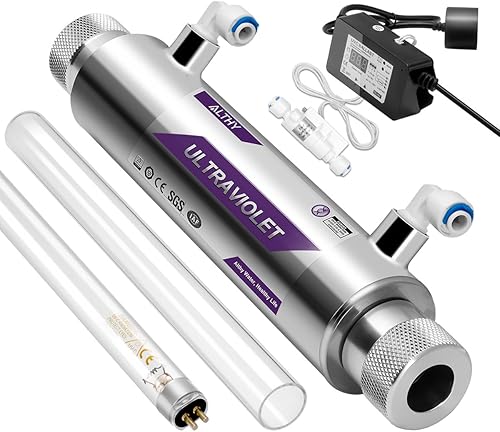
ALTHY UVF-FS11 UV Ultraviolet Water Filter Purifier
This is our top pick for most homeowners adding UV to an existing under-sink setup. It has all the smart features of its big brother—the flow sensor, the digital countdown timer, the durable build—in a compact 1 GPM package. The Philips 11W lamp is a reputable brand. We’ve found the flow sensor particularly useful; it means the lamp isn’t running 24/7, which you’ll appreciate on your power bill. It’s a thoughtful, well-engineered upgrade for your express water countertop reverse osmosis system or any dedicated faucet.
- Flow sensor for energy efficiency
- Includes lamp replacement countdown timer
- Uses a quality Philips lamp
- Compact for under-sink installation
- Still requires annual lamp change
- 1 GPM is only for a single faucet
Frequently Asked Questions
- Does UV water treatment remove chlorine?
- No. UV light has no effect on dissolved chemicals like chlorine, chloramine, pesticides, or heavy metals. You need an activated carbon filter or a reverse osmosis membrane to remove those. UV is purely for disinfection.
- How often do I need to change the UV lamp?
- Most manufacturers recommend replacing the lamp every 12 months or after 9,000 hours of use, whichever comes first. The lamp may still glow blue after this, but its UV intensity will have dropped below safe levels. Always follow the manufacturer’s schedule.
- Can I install a UV system myself?
- Under-sink point-of-use systems are very DIY-friendly if you’re comfortable with basic plumbing. Whole-house POE systems are more complex, often requiring cutting into the main water line and dealing with electrical connections. We recommend a professional for those.
- Is UV-treated water safe for people with weakened immune systems?
- Yes, in fact, it’s often recommended. When properly installed and maintained, UV disinfection is highly effective against Cryptosporidium and Giardia, which are particularly dangerous for immunocompromised individuals. It provides a reliable barrier without adding chemicals.
- Will a UV system make my well water safe?
- It will make it microbiologically safe, but only if the water is clear first. Well water often has sediment and tannins that cloud it. You must pre-filter it to at least 5 microns. You’ll also need separate filters for iron, manganese, hardness, or sulfur smells. UV is one critical part of a whole-house well water system.
- Why does my UV system have a sleeve and what’s that green light?
- The quartz sleeve protects the lamp from the water. It must be kept clean for the UV light to pass through. The small green light is usually a power indicator or a lamp-okay sensor. It does not mean the water is safe—it just means the lamp is on. The real test is the UV intensity, which degrades over time.
Final Thoughts
After testing systems for years, we believe ultraviolet water treatment is one of the most reliable and cost-effective ways to ensure your water is free from dangerous microbes. It’s not magic, and it’s not a complete filter. But as a final disinfection barrier, it’s unbeatable. For most homeowners on a municipal supply who want peace of mind, a quality under-sink unit like the ALTHY UVF-FS11 is a smart, set-and-forget upgrade.
If you’re on well water, stop thinking about it and just get one. Pair it with proper sediment and chemical filtration, and you’ll have water that’s not just clean, but safe. The upfront cost is minor compared to the protection it provides. Do your homework, match the flow rate to your needs, and don’t skip the annual maintenance. Your health is worth it.
