


POU Filtration: The Complete Guide to Point-of-Use Water Filters (2026)
Forget the jargon for a second. You want cleaner water from your tap. You’ve heard terms like “POU filtration” thrown around, but what does it actually mean for your glass? After testing systems for over a decade, I’ll break it down simply: it’s about putting the filter right where you need it most.
This guide covers what point-of-use filtration really is, how the technology works, the honest pros and cons, the different system types, and how to choose the right one for your home. We’ll also look at some specific products that fit the bill.
What Is POU Filtration?
POU stands for Point-of-Use. It’s a simple concept. Instead of filtering all the water entering your home (that’s Point-of-Entry or whole-house), you filter it at the specific “point” where you’ll “use” it. Think your kitchen sink, a dedicated drinking water tap, or even a refrigerator water line.
The goal is targeted treatment. You’re not wasting filtration capacity on water you’ll use to flush toilets or water the lawn. Every drop of filtered water goes to drinking, cooking, or making coffee. In our experience, this is where most homeowners get the best bang for their buck. It’s a practical, efficient filtered water solution for daily life.
You’ll find POU systems everywhere: under sinks, on countertops, in pitchers, or built into appliances. They range from simple carbon filters to complex reverse osmosis units. The common thread is their placement—right at the tap.
How POU Filtration Works
These systems use various physical and chemical processes to clean your water as it flows to the faucet. The mechanics differ, but the principle is the same: force water through a barrier that captures contaminants.
The Core Filtration Mechanisms
Most systems combine a few methods. Mechanical filtration is the first line of defense—a physical barrier, like a sediment filter, that blocks particles based on size. Think of it like a screen door for your water. Then there’s adsorption, usually via activated carbon. This is a superstar for improving taste and odor by grabbing chlorine and organic compounds. If you’re dealing with city water, a good chlorine filter is often the main goal.
More advanced systems use reverse osmosis (RO). Water is forced through a super-fine membrane that blocks almost everything—dissolved salts, heavy metals, you name it. It’s incredibly effective but also creates wastewater. Ion exchange is another player, swapping bad ions (like hardness minerals) for less harmful ones, often used in water softeners.
The Flow: From Pipe to Glass
Here’s the typical journey. Water enters the system from your cold water line. It passes through one or more filter stages—maybe a sediment pre-filter, then a carbon block, then the RO membrane if it’s an advanced unit. Each stage removes different contaminants. The purified water is stored in a small tank (for RO) or flows directly to a dedicated faucet. The whole process takes seconds.
Key Benefits of Going Point-of-Use
Targeted Contaminant Removal. This is the biggest win. You can choose a filter specifically for your water problems. Got lead pipes? Install a dedicated lead removal filter at the kitchen sink. It’s far more efficient than treating the whole house for a single-issue concern.
Cost-Effectiveness. You’re only filtering a fraction of your water use. That means smaller, cheaper filters and lower maintenance costs compared to whole-house systems. Your wallet will thank you.
Superior Water Quality at the Tap. Because the filter is right there, there’s no risk of re-contamination in your home’s pipes. What leaves the filter is what you drink. Honestly, most people notice the taste improvement immediately.
Flexibility and Easy Upgrades. You can start with a simple under-sink carbon filter and later upgrade to an RO system without redoing your plumbing. Systems are modular. Renters can use countertop or pitcher models with zero installation.
Potential Drawbacks to Consider
Limited Flow Rate. Some filters, especially RO units, can slow down your water flow. If you’re trying to fill a pot quickly, you might notice. Tankless RO systems have gotten better, but it’s a trade-off for purity.
Regular Maintenance is Non-Negotiable. Filters clog. Membranes wear out. If you don’t change them on schedule, you can actually make your water quality worse. We’ve tested filters 6 months past their change date—they were growing bacteria. Set a calendar reminder.
Wastewater Production. Reverse osmosis systems create a brine stream to flush away contaminants. For every gallon of pure water, you might send 2-3 gallons down the drain. It’s a consideration for the eco-conscious or those on metered water.
Types of POU Systems
Under-Sink Carbon Filters
The most popular type. Installed under your kitchen sink, it connects to the cold water line and dispenses through a dedicated faucet. Great for improving taste, removing chlorine, and reducing common contaminants. A quality faucet filter cartridge can last 6-12 months. Simple, effective, and affordable.
Reverse Osmosis (RO) Systems
The heavy hitters. They use a multi-stage process (usually 3-7 stages) including sediment filters, carbon filters, the RO membrane, and often a post-filter for polishing. They remove up to 99% of contaminants, including dissolved solids, fluoride, and arsenic. The gold standard for purity, but they require more space and maintenance.
Countertop & Pitcher Filters
No installation required. Pitchers use gravity; countertop units often attach to your faucet with a diverter valve. Perfect for renters or as a starter option. An alkaline water pitcher can add minerals back after filtering. Limitations include slower flow and smaller capacity.
Refrigerator & Specialty Filters
Built into your fridge’s water and ice dispenser. These are POU by definition. They’re usually carbon-based and need annual replacement. The convenience is unbeatable, but performance varies wildly by brand. Always check the NSF certification.
Buying Guide: What Actually Matters
Forget the marketing hype. Focus on these four things.
1. Your Water Report. This is step one. Get your municipal water quality report or, better yet, do your own drinking water testing. You can’t choose the right filter without knowing what you need to remove. Don’t guess.
2. Certifications (NSF/ANSI). Look for independent certification to NSF/ANSI standards. Standard 42 is for aesthetic effects (taste, chlorine). Standard 53 is for health effects (lead, cysts). Standard 58 is for RO systems. This is your proof the filter does what it claims.
3. Filter Capacity & Cost. Check the filter’s rated capacity in gallons or months. Calculate the annual cost of replacement filters. A cheap system with expensive filters is no bargain. We’ve seen a $100 system cost $150 a year to maintain.
4. Flow Rate & Space. Make sure the system’s flow rate (gallons per minute) meets your needs. Measure the space under your sink. An RO system with a tank needs about 1 cubic foot. A simple carbon filter needs much less.
Top Picks & Product Reviews
Here are some products that exemplify different aspects of POU filtration, from filter housings to complete dispensing solutions.
| Product | Type | Best For | Price | Links |
|---|---|---|---|---|
| ABOOFAN Filter Housing | 10″ Standard Housing | DIY custom filter setups | $34 |
Amazon eBay |
| Devanti 6-Stage Filter Set | Replacement Cartridge Set | Water cooler/dispenser filtration | $33 |
Amazon eBay |

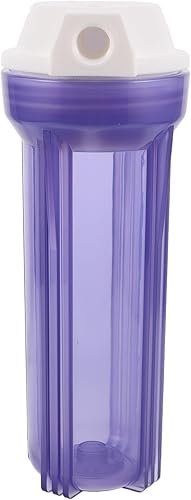
ABOOFAN Filter Housing 10 Inch
This is the workhorse of DIY POU filtration. It’s a standard, clear 10-inch housing that lets you see your filter—and that’s a bigger deal than you think. You can instantly tell when a sediment filter is clogged with rust or a carbon block is exhausted. We’ve used these housings for years to build custom under-sink rigs.
The upgraded connectors do seem to prevent the slow drips that plagued older generic housings. It’s compatible with any standard 10-inch cartridge, giving you total freedom to choose your filtration method. Want a 5-micron sediment filter? Done. A 1-micron carbon block for cyst removal? Pop it in.
- Universal compatibility with standard 10″ cartridges
- Clear sump allows visual inspection of filter condition
- Robust sealing for leak prevention
- Perfect for custom multi-stage setups
- Requires DIY plumbing knowledge to install
- Only the housing—you must buy filters separately
- No faucet included

Devanti 6-Stage Filter Set
This set is for those with a compatible water cooler or dispenser. The promise of 6-stage filtration is compelling—it aims to tackle everything from sediment and chlorine to bacteria and unpleasant tastes. The inclusion of ceramic and mineral cartridges suggests it’s trying to both filter and enhance the water.
In our view, multi-stage sets like this are about convenience. You get all your replacement cartridges in one box. The key is verifying your dispenser model is compatible. The claim of adding beneficial minerals to correct pH is common in this category, but take it with a grain of salt unless you have specific mineral deficiency concerns.
- All-in-one replacement set for compatible dispensers
- Targets a wide range of impurities in stages
- Claims to add back beneficial minerals
- Convenient single-purchase maintenance
- Only works with specific Devanti or compatible dispensers
- Effectiveness depends heavily on the host unit’s design
- Mineral addition benefits are hard to verify without testing
Frequently Asked Questions
- Is POU filtration better than a whole-house system?
- It’s not better, it’s different. POU is for targeted drinking water quality. Whole-house (POE) treats water for every use, protecting pipes and appliances from scale or chlorine. Most homes benefit from a simple POU system for the kitchen sink. Add POE only if you have widespread hard water or specific whole-house concerns.
- How often do I need to change POU filters?
- It varies wildly. Carbon filters typically last 6-12 months. RO membranes can last 2-4 years. Sediment filters might need changing every 3 months if you have rusty pipes. Always follow the manufacturer’s rated capacity in gallons, not just time. A filter used by a family of four will exhaust twice as fast as one used by a single person.
- Can a POU system remove lead?
- Absolutely, but you must choose one certified to NSF/ANSI Standard 53 for lead reduction. Not all carbon filters do this. Look for the specific certification on the packaging. A dedicated lead removal filter is your safest bet if lead is your primary concern.
- Do POU systems waste a lot of water?
- Only reverse osmosis systems produce wastewater. Traditional carbon filters do not. Modern RO systems have improved ratios, with some offering 1:1 or 2:1 (pure:waste). You can collect the reject water for plants or cleaning if you’re concerned about waste.
- Can I install a POU system myself?
- Many under-sink carbon filters are designed for DIY installation with basic tools—usually just a wrench and a drill for the faucet hole. RO systems are more complex. If you’re not comfortable cutting into your plumbing or installing a saddle valve, hire a plumber. A bad install can cause serious leaks under your sink.
- What’s the difference between a faucet filter and an under-sink system?
- A faucet filter cartridge attaches directly to your existing faucet aerator. It’s small, cheap, and easy. An under-sink system is a separate unit with its own dedicated faucet, offering higher capacity, better flow rates, and more advanced filtration stages. Faucet filters are great for renters; under-sink is the permanent solution.
Final Thoughts
After years in this field, I’m a firm believer in the POU approach for most households. It’s sensible. You get clean, great-tasting water exactly where you need it without the expense and complexity of treating every gallon that enters your home. The single biggest mistake we see is overbuying—getting a complex RO system when a quality carbon filter would solve the taste and odor issues perfectly.
Start simple. Get your water tested. Identify your top two or three concerns. Then choose a certified POU system that targets those specific issues. Whether it’s a sleek under-sink unit or a reliable pitcher, the point is to take control of what comes out of your tap. Your morning coffee will thank you.
