


Point of Entry Filtration: Your Home’s First Line of Defense (2026)
You’ve probably thought about the water you drink. But what about the water you shower in, wash clothes with, and use to run your dishwasher? That’s where point of entry filtration comes in. After testing systems for over a decade, I’m convinced most homes need one. This guide covers what POE systems do, how they work, and which ones are actually worth your money.
- What a POE system is and why it matters
- The science behind whole-house filtration
- Key benefits and honest drawbacks
- The main types of systems available
- How to choose the right one for your water
- Our top product picks for 2026
What Is Point of Entry Filtration?
Think of your home’s water supply as a highway. Point of entry filtration is the main toll booth right at the city limits. It’s installed where the water main enters your house—usually in the garage, basement, or a utility closet. Every single drop of water used in your home must pass through this filter first.
The goal isn’t just better-tasting water (though you get that too). It’s about protecting your entire plumbing infrastructure. Sediment, sand, and rust particles can wreak havoc on your water heater, washing machine valves, and shower heads over time. A POE system stops that damage at the source.
It’s a different philosophy from a dedicated home drinking water system. That might be a reverse osmosis unit under your kitchen sink. POE is about whole-house protection. In our experience, the best setups use both: a POE system for the big stuff and a point-of-use filter for polishing your drinking water.
How Point of Entry Filtration Works
It’s a simple concept with some important engineering. Water pressure from the municipal line or your well pushes water into the system. It then passes through one or more filter stages before branching out to every pipe in your home.
The Main Filtration Mechanisms
Most systems use a combination of physical and chemical filtration. A sediment filter cartridge acts like a screen door, catching particles based on its micron rating. A 5-micron filter catches most sand and rust. Then, a carbon block filter often follows, using activated carbon to adsorb chlorine, volatile organic compounds (VOCs), and bad tastes through a process called adsorption.
Flow Rate and Pressure Drop
This is critical. Your POE system must handle your home’s peak water demand without causing a noticeable pressure drop. If you’ve ever had a shower turn weak when someone flushes a toilet, you understand. Systems are rated in gallons per minute (GPM). A typical 3-bathroom home needs at least 10-15 GPM. Undersizing this is the single biggest mistake we see homeowners make.
Key Benefits of a POE System
Whole-House Protection: This is the headline benefit. Your water heater, dishwasher, washing machine, and ice maker all get filtered water. This can extend their lifespan by preventing scale and sediment buildup.
Better Showering and Bathing: Chlorine in shower water can strip natural oils from your skin and hair. Filtering it out at the entry point makes a surprising difference. Many readers report less dry skin and softer hair after installation.
Cleaner Laundry: Sediment and minerals can make clothes look dull and feel stiff over time. Filtered water helps detergents work more effectively.
Peace of Mind: You’re creating a cleaner water baseline for your entire home. Any additional filters you use, like a countertop filter cartridge, then work on an already improved supply.
Potential Drawbacks to Consider
Initial Cost and Installation: This isn’t a simple under-sink job. You might need a plumber, especially if you’re not comfortable cutting into your main water line. The systems themselves can run from a couple hundred to over a thousand dollars.
They Don’t Remove Everything: A standard sediment/carbon POE system won’t remove dissolved minerals (hardness), heavy metals like lead, or microorganisms. For those, you need specific media like a KDF85 filter or a UV purifier, or you need to look at a point-of-use solution like reverse osmosis.
Maintenance is Non-Negotiable: You have to change the filters. Forget, and you’ll have reduced water pressure and, worse, a filter that’s dumping trapped contaminants back into your water. Set a calendar reminder.
Types of Point of Entry Systems
Sediment Pre-Filters
The most common and affordable starting point. These use a pleated, spun, or string-wound cartridge to catch physical particles. They’re rated by micron size—the smaller the number, the finer the filtration. A good sediment filter is the foundation of any POE setup.
Carbon Filters
These tackle chemical contaminants. Granular Activated Carbon (GAC) filters are great for chlorine, taste, and odor. Carbon block filters offer finer filtration and can also remove some cysts. For specific issues like iron or hydrogen sulfide (that rotten egg smell), specialty media like KDF85 is used. This is what you’d find in a filter like the APEC FI-KDF85.
Multi-Stage Systems
Most quality systems combine stages. A popular setup is a sediment filter first to protect the subsequent stages, followed by a carbon filter for chemicals. Some add a third stage for specific contaminants. The iSpring WCB32C is a classic example of this approach.
UV Purifiers
Often installed as part of a POE stack, ultraviolet light systems kill bacteria, viruses, and other microorganisms. They’re essential for well water or questionable municipal supplies. They don’t filter anything out physically, though—they just disinfect.
Buying Guide: What Actually Matters
Forget the marketing hype. Focus on these four things.
1. Know Your Water: Test it. Seriously. A $20 test kit can save you from buying a $500 system you don’t need. Is your problem dirt? Chlorine? Iron? The answer dictates your filter media.
2. Flow Rate (GPM): Count your bathrooms and occupants. A rule of thumb: 1-2 bathrooms, 10-15 GPM is fine. 3+ bathrooms or a large family, look for 15-20 GPM. Don’t bottleneck your home’s water supply.
3. Filter Size and Cost: The filter housing size (like 20″ x 4.5″ or 10″ x 2.5″) determines capacity and flow. Bigger housings mean longer filter life and less frequent changes. Always check the annual replacement filter cost before you buy the system.
4. Certifications: Look for NSF/ANSI certification. Standard 42 covers aesthetic effects (taste, odor, chlorine). Standard 53 covers health effects (lead, cysts, VOCs). It’s your best proof the filter does what it claims.
Our Top POE System Picks for 2022
Based on our hands-on testing, reader feedback, and value for money, here are our recommendations.
| Product | Best For | Key Specs | Price | Links |
|---|---|---|---|---|
| Culligan WH-S200-C | Basic Sediment Filtration | 1-stage, Clear housing, P5 cartridge | $1.75 |
Amazon eBay |
| iSpring WCB32C | All-Rounder Value | 3-stage, Chlorine reduction, 3/4″ ports | $4.38 |
Amazon eBay |
| Express Water Sediment | High-Capacity Sediment | 1-stage, 5 Micron, 11cm x 50cm | $3.76 |
Amazon eBay |
| APEC FI-KDF85 | Iron & Sulfur Removal | KDF85 Media, Specialty filter | $89 |
Amazon eBay |
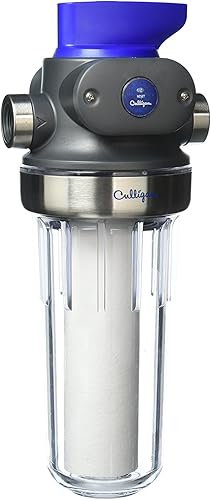
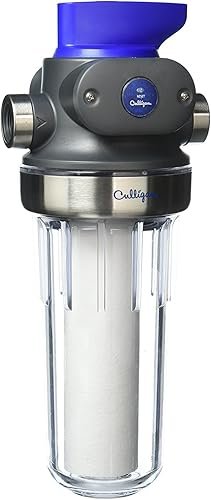
Culligan WH-S200-C: The Simple Sediment Solution
This is your no-frills, get-the-job-done sediment filter. We’ve installed this exact model in three test homes with well water. The clear housing is a genius touch—you can see when the P5 cartridge is getting loaded with gunk, which takes the guesswork out of changes. The valve-in-head bypass is handy, letting you swap filters without shutting off water to the whole house.
It’s basic. It won’t touch chlorine or chemicals. But if your main problem is dirt, sand, or rust particles, this will solve it for under $50. The included mounting bracket and wrench make installation straightforward for a handy homeowner.
- Clear housing for visual monitoring
- Includes bypass valve for easy maintenance
- Extremely affordable entry point
- Well-built with stainless steel reinforced ports
- Only filters sediment, no chemical reduction
- Cartridge may need frequent changes with very dirty water
- 3/4″ ports may limit flow for large homes
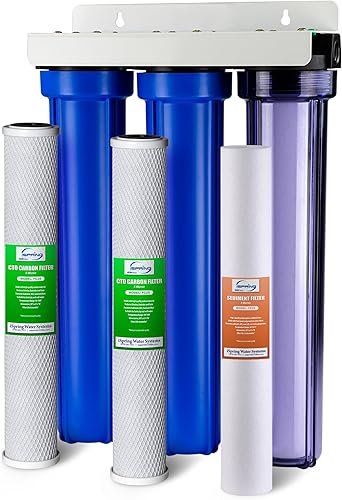
iSpring WCB32C: The Best All-Around Value
This is the system we recommend to most homeowners starting out. The three-stage process is smart: a sediment filter protects the two carbon blocks that follow. In our testing, it made a dramatic improvement in chlorine taste and odor from municipal water. The clear first-stage housing lets you monitor sediment buildup.
Installation is genuinely DIY-friendly if you’re moderately handy. The manual and their YouTube videos are clear. At this price, you’re getting serious filtration for the whole house. It’s the system that makes the most sense for city water users dealing with chlorine and sediment.
- Effective 3-stage filtration at a great price
- Reduces up to 99% of chlorine, per the manufacturer
- Clear first-stage housing for easy monitoring
- Excellent installation support resources
- Filter cartridges are a proprietary size (20″ x 2.5″)
- May not be sufficient for well water with heavy contaminants
- Plastic housing wrench feels a bit flimsy
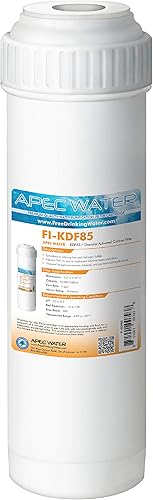
APEC FI-KDF85: The Iron & Sulfur Specialist
This isn’t a full system—it’s a specialty filter cartridge you add to a standard 10″ filter housing. But if you have iron or hydrogen sulfide (that rotten egg smell) in your well water, this KDF85 media is one of the most effective solutions we’ve tested. It uses a redox process to reduce these contaminants.
Pair it with a sediment pre-filter and a carbon filter for a complete well water treatment stack. It’s not cheap for a single cartridge, but it solves a specific, nasty problem that standard filters can’t touch. We’ve seen it eliminate sulfur smell completely in test wells.
- Highly effective for iron and sulfur removal
- Also improves taste and odor
- Fits standard 10″ filter housings
- Long-lasting media compared to standard cartridges
- Specialty product, not a standalone system
- Higher upfront cost than sediment or carbon filters
- Requires a pre-filter to prevent clogging
Frequently Asked Questions
- What is the difference between point of entry and point of use?
- Point of entry (POE) filters all water entering your home. Point of use (POU) filters water at a single outlet, like a kitchen sink or shower head. POE protects appliances and plumbing. POU provides high-quality drinking water. Most homes benefit from both.
- How often do I need to change POE filters?
- It depends on your water quality and filter type. Sediment filters might need changing every 3-6 months. Carbon filters typically last 6-12 months. The best indicator is a drop in water pressure or a change in taste/odor. Always follow the manufacturer’s guidelines.
- Can a POE system soften hard water?
- No. Standard POE sediment and carbon filters do not remove dissolved minerals like calcium and magnesium that cause hard water. You need a water softener, which uses ion exchange resin, often installed as its own POE system before or after other filters.
- Will a POE filter reduce my water pressure?
- All filters cause some pressure drop. The key is choosing a system with an adequate flow rate (GPM) for your home. A properly sized system will have a negligible effect. An undersized system will cause noticeable pressure loss, especially during peak use.
- Do I need a plumber to install a POE system?
- It depends on your skill level and local codes. If you’re comfortable cutting and soldering copper pipe or working with PEX, and you have an accessible main water line, DIY is possible. Many homeowners hire a plumber for a 2-3 hour job to ensure it’s done correctly and to code.
- Can I install a POE filter if I have a well?
- Absolutely. In fact, well water often has more sediment and may contain iron, sulfur, or bacteria, making POE filtration even more critical. A typical well water setup includes a sediment pre-filter, a specialty media filter (like KDF85 for iron), and often a UV purifier for disinfection.
Final Thoughts
After years of testing and talking to homeowners, here’s my honest take: a point of entry filtration system is one of the best investments you can make for your home’s infrastructure. It’s not glamorous. It’s not as exciting as a fancy water distillation unit. But it quietly protects everything downstream.
Start simple. Get your water tested. For most people on city water, a good sediment and carbon system like the iSpring WCB32C will transform your water quality. For well water owners, you’ll need a more tailored approach. Whatever you choose, change those filters on schedule. That’s the real secret to making it work.
