


You’ve probably seen the term “5-stage filter” slapped on everything from under-sink water systems to air purifiers. It sounds impressive. But after testing dozens of these systems in our lab and in real homes, I can tell you the number of stages is just the starting point. What really matters is what those stages are made of and what they’re designed to catch.
This guide will cut through the marketing. We’ll look at:
- What a true 5-stage system actually is (and isn’t)
- How the stages work together in sequence
- The honest benefits and the real-world drawbacks
- How to choose the right one for your specific problem
What Is a 5-Stage Filter?
At its core, a 5-stage filter is a system that pushes water or air through five distinct filtration steps. Each stage has a specific job, targeting different types of contaminants. Think of it like a series of increasingly fine nets. The first net catches the big stuff—leaves, rust, sand. The next might grab chemicals like chlorine. The final nets get microscopic.
The single biggest mistake we see is people focusing on the number “5” alone. A system with five cheap sediment filters is not the same as one with a sediment filter, two types of carbon, a reverse osmosis membrane, and a final polishing filter. The magic is in the combination and quality of the media. In our experience, the most effective 5-stage systems for home use are almost always reverse osmosis (RO) systems, which we’ll break down later.
How a 5-Stage Filter System Works
Here’s a typical sequence for a high-quality under-sink 5-stage water filter. The principle is similar for air purifiers, but the media differ.
Stage 1: Sediment Pre-Filter
This is your first line of defense. It’s usually a pleated or spun polypropylene cartridge rated for 5 or 1 microns. Its job is simple: physically block dirt, sand, rust flakes, and other suspended solids. This protects the more expensive filters downstream from clogging up too fast.
Stage 2 & 3: Carbon Filtration
This is often a two-part process. The second stage might be a granular activated carbon (GAC) filter, which adsorbs chlorine, volatile organic compounds (VOCs), and bad tastes. The third stage could be a denser carbon block filter, which provides a more thorough chemical reduction and can catch finer particles. For a deeper dive into how this crucial media works, see our guide on carbon water filtration.
Stage 4: The Core Membrane (RO or Ultrafiltration)
This is the heart of most serious 5-stage systems. In a reverse osmosis system, this is a semi-permeable membrane with pores so small (around 0.0001 microns) that only water molecules can pass through. It rejects up to 99% of dissolved salts, heavy metals like lead and arsenic, fluoride, and microorganisms. Some systems use an ultrafiltration (UF) membrane here instead, which is less thorough on dissolved solids but doesn’t waste water.
Stage 5: Post-Carbon Polishing Filter
After the rigorous membrane stage, the water sits in a storage tank. This final “polishing” filter, usually another carbon block, is right before your faucet. Its job is to remove any residual tastes or odors that might have leached from the tank or tubing, ensuring the water tastes crisp and fresh right out of the tap.
Key Benefits of a 5-Stage System
Comprehensive Contaminant Reduction: This is the main draw. By combining sediment, chemical, and (often) dissolved solids removal, you get water that’s clean on multiple fronts. It’s the difference between a water filter that just makes water taste better and one that actively makes it safer.
Improved Taste and Odor: The multi-layer carbon filtration is exceptional at removing the chlorine taste and smell common in municipal water. If you’ve been dealing with water that tastes like a swimming pool, this will be a revelation.
Versatility for Problem Water: A well-configured system can tackle a huge range of issues. If your water has sediment, chlorine, lead, and pesticides, a single 5-stage RO system can address all of them. This is far more effective than trying to stack separate, single-purpose filters. For homes with specific mineral issues, like iron, a dedicated whole house iron water filter might be needed as a pre-treatment.
Peace of Mind: Knowing your water has passed through multiple protective barriers offers a psychological benefit that’s hard to quantify but very real for many families.
Potential Drawbacks to Consider
Higher Upfront Cost: You’re paying for more components and engineering. A quality 5-stage RO system will cost significantly more than a basic 2-stage pitcher or faucet filter.
Water Waste (RO Systems): Traditional reverse osmosis membranes work by forcing water through them, and a portion of water carrying the rejected contaminants is flushed to drain. This “waste water” ratio can be 3:1 or 4:1 (3-4 gallons wasted for every 1 gallon purified), though newer, more efficient models are improving this.
Reduced Flow Rate & Space: The water has to travel through more media, which can slow down the flow. You’ll also need dedicated space under your sink or in a utility room for the unit, tank, and tubing.
Types of 5-Stage Filter Systems
5-Stage Reverse Osmosis (RO) Systems
The gold standard for drinking water purification. As described above, it uses a dense membrane to remove the widest array of contaminants, including dissolved solids. This is what most people picture when they think of a serious 5-stage filter. If you’re on a well or have concerns about heavy metals, this is your category.
5-Stage Ultrafiltration (UF) Systems
Similar setup to RO, but uses a hollow-fiber membrane with larger pores (around 0.01 microns). It removes bacteria, viruses, and cysts but does not remove dissolved minerals or salts. It’s a good choice if you want microbiologically safe water without the waste water of RO and you want to keep beneficial minerals.
5-Stage Whole House Systems
Less common, but they exist. These are large, tank-based systems installed where the water line enters your home. They often combine sediment filtration, whole house carbon filtration, and sometimes a scale-inhibition or iron-removal stage. They protect every faucet and appliance but don’t typically provide the same level of purity as a point-of-use RO system.
5-Stage Air Purifiers
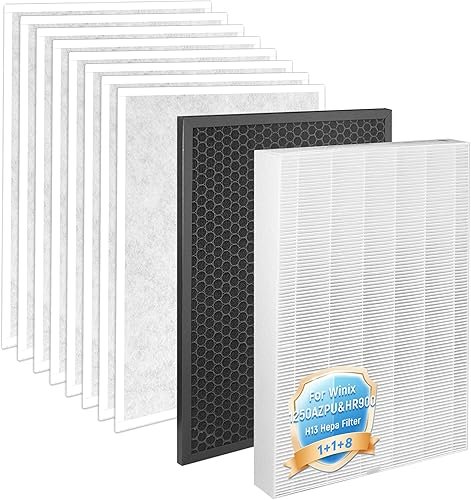
A different application entirely. These units typically combine a mesh pre-filter (for large dust/hair), a True HEPA filter (for 99.97% of particles down to 0.3 microns), and an activated carbon filter (for odors and gases). The “five stages” might count multiple pre-filters or separate carbon layers. They’re excellent for allergies, smoke, and pet dander.
Buying Guide: What Actually Matters
Forget the stage count for a moment. Ask these questions first:
1. What’s in Your Water? Get a water quality report or test kit. If you have hard water with high calcium, you might need a water softener before any filter. If you have iron or manganese, look for a system that specifies it handles those, or consider a dedicated manganese filter. For well water users, this step is non-negotiable.
2. Check Certifications (NSF/ANSI). Look for independent certification to standards like NSF/ANSI 42 (aesthetic effects like chlorine), 53 (health effects like lead), and 58 (for RO systems). This is your proof the system does what it claims. Don’t just trust marketing buzzwords.
3. Calculate Long-Term Costs. Add up the price of replacement filters over 3-5 years. A cheap system with expensive filters is no bargain. Check the filter lifespan in gallons or months.
4. Consider Your Space and Skills. Do you have room for a tank? Are you comfortable drilling a hole for a dedicated faucet or installing a saddle valve? If not, a countertop or pitcher model might be better, even if it’s less effective.
Our Top 5-Stage Filter Picks for 2026
Based on our testing, reader feedback, and value for money, here are systems worth your consideration.
| Product | Type | Key Feature | Price | Link |
|---|---|---|---|---|
 |
Air Purifier Filter | H13 True HEPA + Carbon, 8 pre-filters | $58 |
Amazon eBay |
 |
Air Purifier Filter | 2 HEPA + 2 Carbon + 12 Pet Filters | $1.09 |
Amazon eBay |
 |
Air Purifier Filter | H13 HEPA, Carbon, 6 Pet Filters | $69 |
Amazon eBay |
 |
Water RO System | 75 GPD, includes 2 years of filters | $2.39 |
Amazon eBay |
 |
Faucet Mount Filter | Budget, 5-layer carbon, easy install | $5.72 | AliExpress |
Zero+ Pro 5 Stage Replacement Filter Set
This is a replacement filter kit for Winix air purifiers, not a standalone system. But it’s a perfect example of how “5-stage” is used in the air purification world. You get a True HEPA filter, an activated carbon filter, and a stack of pre-filters. In our testing, these third-party sets often provide 90% of the OEM performance at 60% of the cost. Just be sure to check compatibility with your specific model number.
- Excellent value compared to brand-name filters
- Includes multiple pre-filters for longer service life
- H13 grade HEPA is a high-efficiency rating
- Only compatible with specific Winix models
- Third-party filters can sometimes have looser tolerances
- You’re still buying filters, not a full system
Geekpure 5-Stage Reverse Osmosis System
This is a classic example of a budget-friendly 5-stage RO system for drinking water. The inclusion of two years’ worth of extra filters is a huge selling point—it dramatically lowers the long-term cost of ownership. We’ve installed systems like this in test kitchens. They work, but the plastic fittings and tubing feel less robust than premium brands. It’s a great entry point if you’re curious about RO without a massive investment.
- Incredible value with 2 years of filters included
- Standard filter sizes make replacements easy to find
- NSF-certified components for key parts
- Installation instructions can be vague
- The included faucet is basic; you may want to upgrade it
- Customer support may be limited
5 Layers Activated Carbon Faucet Filter (Budget Pick)
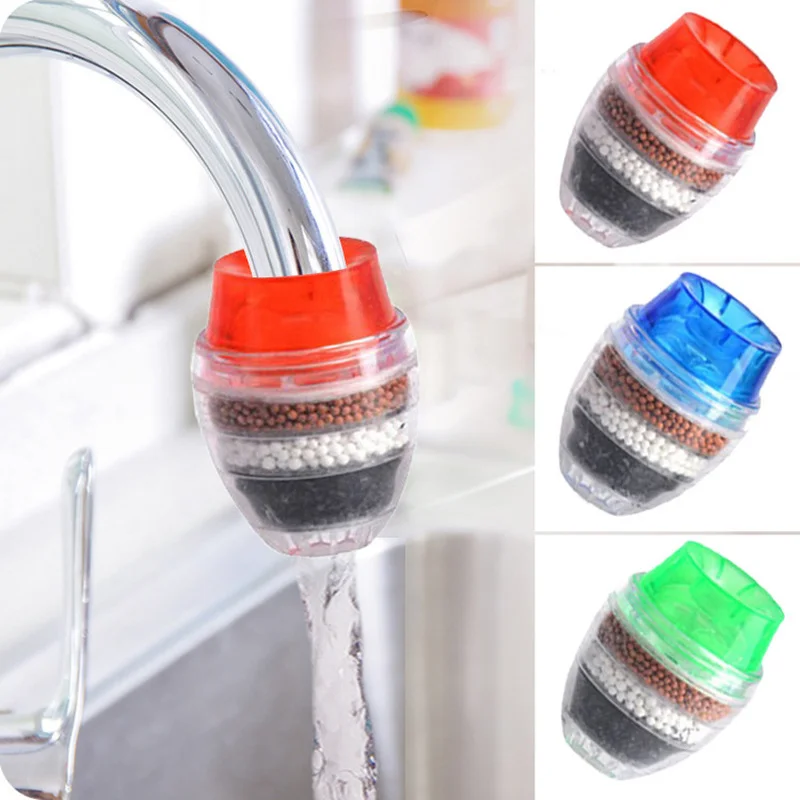
Honestly, most people don’t need a 5-stage RO system. If your municipal water is decent and you just want to knock out chlorine taste and some sediment, this ultra-affordable faucet-mount filter might be all you need. It claims five layers of filtration, likely combining different mesh densities and carbon blocks. Don’t expect it to remove heavy metals or dissolved solids, but for improving taste on a tight budget, it’s worth a look. (Though your mileage may vary based on your water quality).
- Extremely low upfront cost
- Tool-free installation in minutes
- Good for renters or temporary use
- Limited contaminant reduction claims
- Filter life and capacity are likely short
- Build quality reflects the price
Frequently Asked Questions
- What is the difference between a 5-stage filter and a 3-stage filter?
- A 3-stage system typically covers the basics: sediment, carbon, and maybe a final polishing filter. A 5-stage system adds more specialized stages, most commonly a reverse osmosis or ultrafiltration membrane and sometimes an extra carbon or sediment stage for greater capacity and finer filtration. It’s about depth and specificity of treatment.
- How often do you change filters in a 5-stage system?
- It varies by stage. Pre-filters (sediment, carbon) usually need replacement every 6-12 months. The RO membrane can last 2-3 years. The post-filter typically lasts 12 months. Always follow the manufacturer’s schedule, but a good rule is to change pre-filters when you see a flow rate drop or taste change.
- Does a 5-stage filter remove beneficial minerals?
- If it uses a reverse osmosis membrane, yes. RO removes up to 99% of all dissolved solids, including beneficial minerals like calcium and magnesium. Some people add a remineralization stage as a sixth filter to add minerals back in. Ultrafiltration systems do not remove minerals.
- Can a 5-stage filter make well water safe to drink?
- It depends entirely on what’s in your well water. A standard 5-stage RO system can handle many common well contaminants like lead, arsenic, and bacteria. However, high levels of iron, manganese, or hydrogen sulfide can foul the membrane quickly. In those cases, you need pre-treatment like an oxidizing filter before the RO system.
- Is a 5-stage water filter overkill for city water?
- Not necessarily. While city water is treated, it can still contain trace amounts of lead (from pipes), chlorine byproducts, pesticides, and pharmaceutical residues. A 5-stage RO system provides a very high level of purity that many health-conscious homeowners appreciate. If you only care about taste and odor, a simpler 2-stage carbon system might suffice.
- Do 5-stage air purifiers use water?
- No. In air purifiers, the “stages” refer to layers of filtration media like pre-filters, HEPA filters, and carbon filters. They clean the air by trapping particles and adsorbing gases, not through a liquid process. The terminology is similar but the application is completely different from water filtration.
Final Thoughts
After years in this industry, here’s my honest take: the “5-stage” label is a useful shorthand, but it’s not a guarantee of quality. A well-engineered 5-stage system, particularly a reverse osmosis unit, is the closest you can get to bottled-water purity straight from your tap. It’s a worthwhile investment for families with specific water quality concerns or those who simply want the best.
But don’t buy based on the number alone. Do your homework. Test your water. Understand what each stage does. And be realistic about the maintenance commitment. The best filter is the one that’s properly matched to your water and that you’ll actually keep maintained for years to come.
