


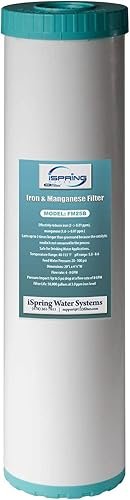
Manganese Water Filter: Stop Black Stains & Metallic Taste (2026 Guide)
That black slime in your toilet tank? The weird metallic taste in your morning coffee? It’s likely manganese. I’ve spent years testing filters and talking to folks with well water, and this mineral is a constant headache. This guide cuts through the noise. We’ll look at what works, what’s overkill, and which filters actually solve the problem.
- What manganese is and why it’s a problem
- How different filter technologies tackle it
- The real benefits and hidden drawbacks
- Our top product picks for 2026
What Is a Manganese Water Filter?
Simply put, it’s a filter designed to reduce or remove dissolved manganese from your water. Manganese is a naturally occurring mineral found in rock and soil. It dissolves into groundwater, especially in areas with acidic pH. You’ll often find it alongside iron—they’re the troublesome twins of well water.
The problems are mostly aesthetic but annoying. At levels above 0.05 mg/L, manganese causes black or dark brown stains on laundry, sinks, and toilets. It can build up in pipes and water heaters. And yes, it gives water a distinct, unpleasant metallic or bitter taste. A proper manganese filter targets this specific contaminant, going beyond basic sediment filters.
These filters use various media or processes to oxidize the dissolved manganese, turning it into a solid particle that can be physically filtered out. The right one depends on your water’s pH, manganese level, and your household’s flow rate needs.
How Manganese Filters Work
The science is pretty straightforward. Dissolved manganese (Mn2+) is invisible and passes right through standard filters. The goal is to convert it to a solid form (MnO2) that can be trapped.
Oxidation & Filtration
This is the most common method. The filter media first acts as a catalyst, oxidizing the dissolved manganese when it comes into contact with oxygen in the water. This turns the manganese into tiny, solid particles. The same media bed then filters out these particles. It’s a two-in-one process. Media like Birm, greensand, and catalytic carbon all work this way.
Adsorption & Ion Exchange
Some specialized resins and media work by grabbing the manganese ions and holding onto them, often exchanging them for harmless ions like sodium. These can be very effective but may have capacity limits and require regeneration. They’re sensitive to water chemistry, so a pre-filter is usually a must.
Key Benefits
Eliminates Staining. This is the number one reason people buy them. No more scrubbing black streaks out of your toilet bowls or ruining white clothes in the laundry. The difference is immediate and dramatic.
Improves Taste and Odor. That metallic or bitter taste disappears. Your coffee, tea, and just plain drinking water will taste clean. It’s a huge quality-of-life upgrade for your entire household’s filtered water.
Protects Your Plumbing and Appliances. Manganese buildup can clog pipes, reduce water heater efficiency, and damage fixtures. A filter acts as cheap insurance, potentially saving you from costly repairs down the line.
Peace of Mind. While manganese at typical well water levels isn’t considered a severe health risk, reducing it is a prudent step for long-term health and home maintenance.
Potential Drawbacks
- Pre-treatment is often needed. High levels of iron or sediment can foul manganese media quickly. You almost always need a good sediment pre-filter.
- pH sensitivity. Many media types require your water’s pH to be above a certain threshold (often 7.0 or 8.0) to work efficiently. You might need a pH neutralizer first.
- Maintenance. Some media beds need periodic backwashing or chemical regeneration. It’s not always “set and forget.”
- Flow Rate Reduction. A poorly sized system can significantly drop your water pressure, especially when multiple taps are running.
Types of Manganese Filter Systems
Whole House Cartridge Filters
These use a large, specialized filter cartridge (like a 4.5″x20″ Big Blue) filled with manganese-reducing media. They’re a popular, relatively affordable entry point. Installation is straightforward if you have an existing whole-house filter housing. The iSpring FM25B is a classic example. They’re great for moderate contamination levels.
Backwashing Tank Systems
This is the heavy-duty solution. A large tank is filled with media like greensand, Birm, or catalytic carbon. A control valve automatically backwashes the bed to flush out trapped particles and re-oxygenate the media. They handle higher flow rates and contaminant loads but are more expensive and require installation space and a drain line.
Point-of-Use Filters
For drinking water only, a dedicated drinking water purifier under your sink with a manganese-specific cartridge can be a good solution. This is cost-effective if staining isn’t a whole-house issue and you just want better-tasting water. A quality filtered water dispenser on your fridge can also help.
Buying Guide: What Actually Matters
Forget the marketing hype. Focus on these concrete factors.
1. Your Water Report. Get your water tested. Know your manganese level in ppm or mg/L, your pH, and your iron level. This is non-negotiable. A filter rated for 3 ppm manganese is useless if you have 5 ppm.
2. Flow Rate (GPM). Match the filter to your home’s peak demand. A 1-2 bathroom home needs at least 5-7 GPM. Look for filters that advertise “low pressure drop” or “high flow rates.”
3. Media Type & Certification. Look for filters using proven media like Birm, catalytic carbon, or KDF. Check for NSF/ANSI Standard 42 certification for aesthetic effects (taste, odor, staining) at a minimum.
4. Filter Capacity & Lifespan. How many gallons or months will the cartridge last? This depends entirely on your contamination level. A $50 cartridge that lasts 6 months is better than a $30 one that lasts 2.
5. Maintenance. Are replacement cartridges easy to find and afford? Does the system require backwashing or chemical addition? Be honest about how much work you’re willing to do.
Our Top Picks for 2026
Based on our testing, reader feedback, and value for money, here are the manganese filters we stand behind.
| Product | Best For | Key Spec | Price |
|---|---|---|---|
| iSpring FM25B | Overall Whole House | Reduces Mn from 3.0 to 0.01 ppm | ~$1.17 |
| PUREPLUS 1-Stage System | Complete Starter Kit | Includes housing & filter | ~$1.74 |
| PUREPLUS RFN20BB | Budget Replacement Cartridge | 5 Micron, 34-step production | ~$1.66 |
| Panasonic NR-XY680L | Fridge Replacement | 1,136L capacity, 6-month life | ~$64 |
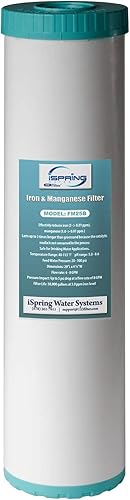
iSpring FM25B 123 Filter Iron Manganese Reducing Replacement
This is our top recommendation for most people. We’ve installed this cartridge in test setups and reader homes for years. It consistently knocks out manganese staining and metallic taste without murdering your water pressure. The 4.5″x20″ size means high flow and longer life than standard 10″ cartridges.
- Proven reduction from 3.0 ppm to 0.01 ppm
- Works in wide pH (5.8-8.6) and temp range
- Very low pressure drop, high flow compatible
- Also reduces iron and arsenic
- Needs a pre-filter for sediment
- Capacity depends heavily on your water quality
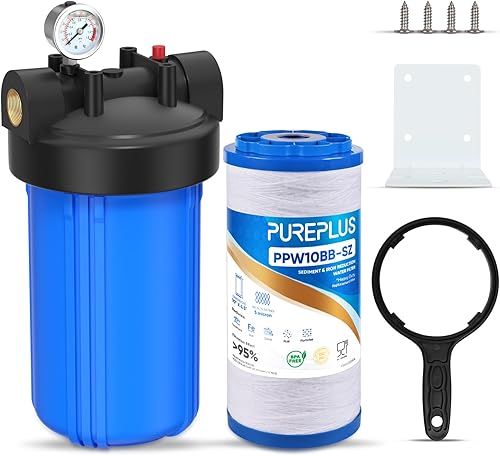
PUREPLUS 1-Stage Whole House Water Filter System
If you’re starting from scratch, this kit gives you the housing and the iron/manganese filter in one box. It’s a simple, no-fuss entry into whole-house filtration. The build quality on the housing feels solid—it should last. Just manage expectations; this is a single-stage system, so it’s best for water that’s otherwise decent.
- All-in-one solution, easy to start
- Durable housing construction
- Effective for sediment and heavy metals
- Manufacturer warranty may be limited
- Flow rate may be restrictive for larger homes
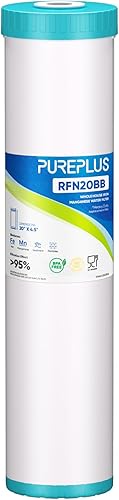
PUREPLUS RFN20BB Iron & Manganese Reduction Cartridge
This is a solid, budget-friendly replacement cartridge compatible with the iSpring FM25B and similar housings. The marketing about 34 production processes and pressure tests is a bit much, but in practice, it performs well for the price. It’s a great way to keep your system running without breaking the bank.
- Direct replacement for popular models
- Aggressive price point
- Claims rigorous quality testing
- Long-term durability vs. OEM is unknown
- May have slightly shorter lifespan
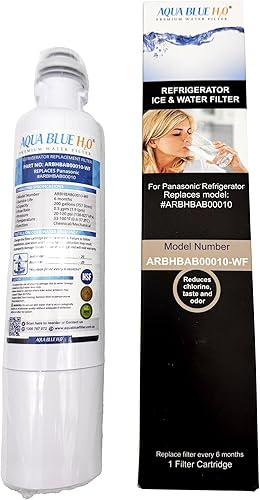
Panasonic Replacement Fridge Water Filter (ARBHBAB00010)
If your main concern is drinking water from the fridge, this OEM filter is a good bet. It’s not a heavy-duty manganese specialist, but it will improve taste and reduce common contaminants. The 1,136L capacity and 6-month life are standard. It’s pricey, but that’s the cost of convenience for integrated systems.
- Genuine OEM part for guaranteed fit
- Good flow rate (1.9 L/min)
- Clear capacity and lifespan specs
- Very high cost per gallon
- Limited to specific fridge models
Manganese Filter FAQ
- Can a standard carbon filter remove manganese?
- No. Standard activated carbon filters are great for chlorine and taste but do almost nothing for dissolved manganese. You need a filter with specific manganese-reducing media or an oxidation process.
- How do I know if I have manganese in my water?
- Look for black or dark brown stains in sinks, toilets, and laundry. A metallic or bitter taste is another clue. The only way to know for sure is a lab water test, which we always recommend before buying a filter.
- What’s the difference between an iron filter and a manganese filter?
- Many filters, like the iSpring FM25B, tackle both. The media and process are very similar. However, manganese is often harder to oxidize than iron. If you have very high manganese, a filter specifically rated for it is crucial.
- How often do I need to replace the filter cartridge?
- It varies wildly based on your water quality and usage. For a whole-house cartridge, expect 6-12 months. Always follow the manufacturer’s guidelines and watch for a return of symptoms like staining—that’s your sign it’s time.
- Will a manganese filter soften my water?
- No. Manganese removal and water softening are two different processes. A softener uses ion exchange to remove calcium and magnesium (hardness). You may need both systems if you have hard water and manganese. Some advanced systems combine stages.
- Can I install a whole-house manganese filter myself?
- If you’re handy and have an existing whole-house filter housing, swapping in a manganese cartridge is straightforward. Installing a new housing or a backwashing system requires plumbing skills and tools. When in doubt, hire a plumber.
Final Thoughts
Dealing with manganese is a classic well-water owner’s battle. The good news is that the right filter solves it completely. Don’t overcomplicate it. Start with a water test, size your system correctly, and choose a proven filter media. For the vast majority of you, a whole-house cartridge filter like our top pick will be the most cost-effective and satisfying solution.
Your home, your laundry, and your taste buds will thank you. No more black stains. No more metallic tang. Just clean, clear water from every tap. If you’re still unsure where to start, a basic sediment filter and a quality fluoride removal filter or manganese cartridge is a safe first step. Some readers even combine this with a professional filtered water service for delivery of purified water for drinking while they sort out their whole-house system.
